
CHINA’S WILD SOUTHWEST
GUIZHOU
OCTOBER - NOVEMBER 2027
Duration
Group Size
12 nights / 13 days
Oct 24 - Nov 5, 2027
Max 12 guests
Min 4 guests
Starting Point
Ending Point
Guiyang
Guizhou Province
Guiyang
Guizhou Province
Access
Beijing: ~8.5 hour train
Shanghai: ~7 hour train
Flights: ~3 hours from both
Price
Estimated
AUD $8,000 - $11,000
Final price TBC
Guizhou sits in China's southwest, landlocked and mountainous enough that much of what defines it has stayed intact. The karst geography that makes farming nearly impossible has also kept eighteen different ethnic minority groups holding onto their own food, festivals, and traditions without much pressure to change. Guizhou's cooking reflects that isolation — sour, smoky, and built on fermentation in a way that sets it apart from every other regional cuisine in the country. We're going there in late October, when the harvest light is on the rice paddies and Miao New Year is just around the corner.
The trip loops west from Guiyang, where breakfast means a bowl of blood, offal, and crispy pork over noodles, through the stone-walled Tunpu villages of the Anshun area, with a stop at Huangguoshu, Asia's largest waterfall. We drive south across the Huajiang Canyon Bridge, the tallest in the world, and on to Wanfenglin, where ten thousand cone-shaped peaks rise out of rice paddies farmed by Buyi villagers. Heading north through Zunyi, we stop at the 1935 conference site where Mao consolidated Long March leadership, and call in at Xiazi Town, China's national chili wholesale market, before climbing to Fanjingshan and the twin temple-topped towers of the Red Cloud Golden Summit. The final stretch takes us east into the Miao heartland, visiting Buyi and Miao villages along the way, including the terraced stilt-house village of Langde, before we arrive in the Leishan area for Miao New Year, one of the most spectacular festivals in China.
The tour will be led by Michael, who has been travelling and eating his way through China since 2005, including almost a decade living there, and speaks Mandarin.
TRIP HIGHLIGHTS
MIAO NEW YEAR
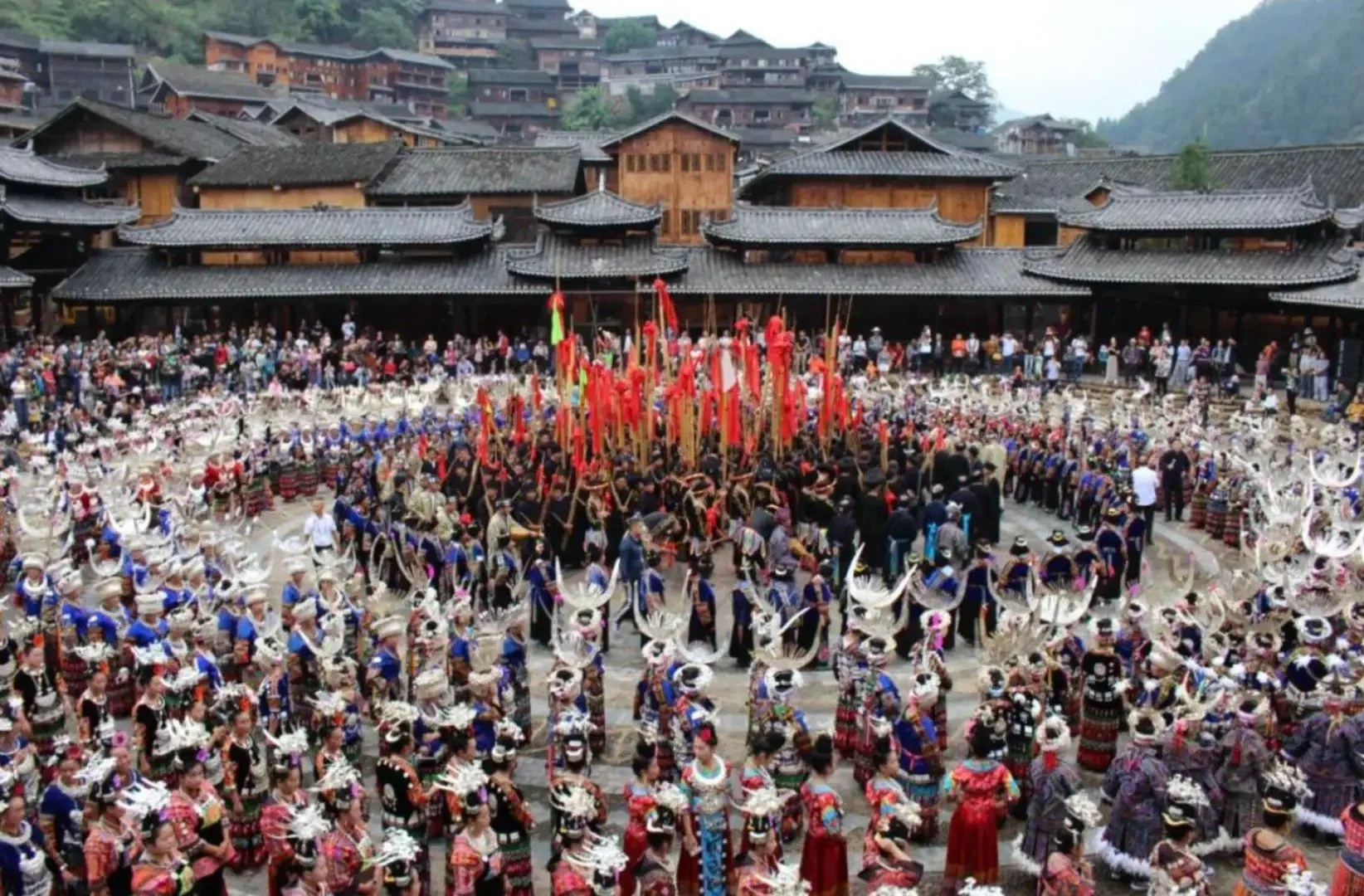
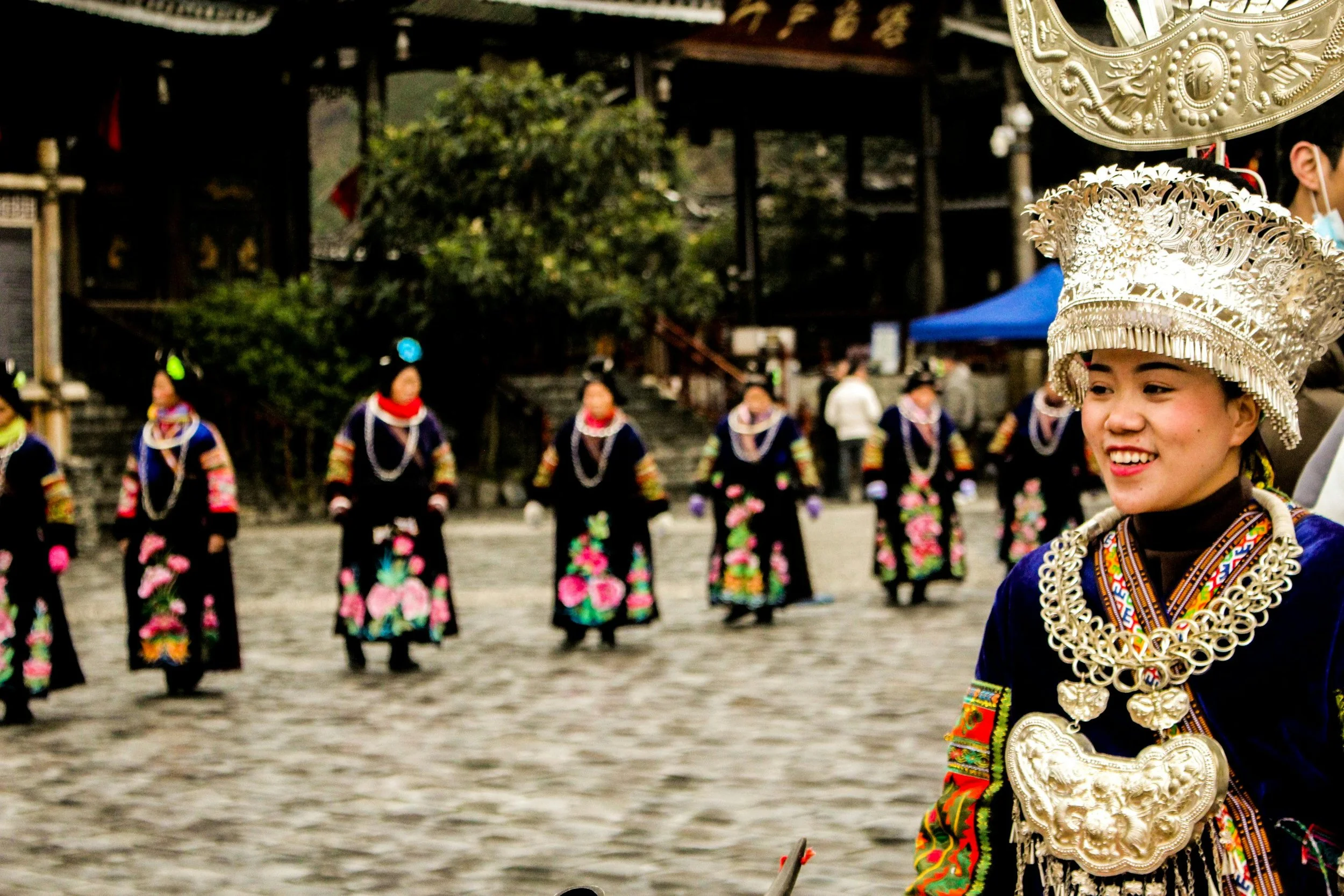
Miao New Year falls on the fourth day of the tenth lunar month, and in the Leishan area it fills every open space with bullfights, horse racing, parades of silver headdresses that weigh several kilograms each, and lusheng pipe ensembles playing music that hasn't changed in centuries. The silver worn at New Year is a family's accumulated wealth on display, hammered into headpieces, collars, and bracelets over generations. It's not a heritage performance put on for visitors. It's the community's actual new year, and we've timed the whole trip around it.
THE FOOD OF GUIZHOU
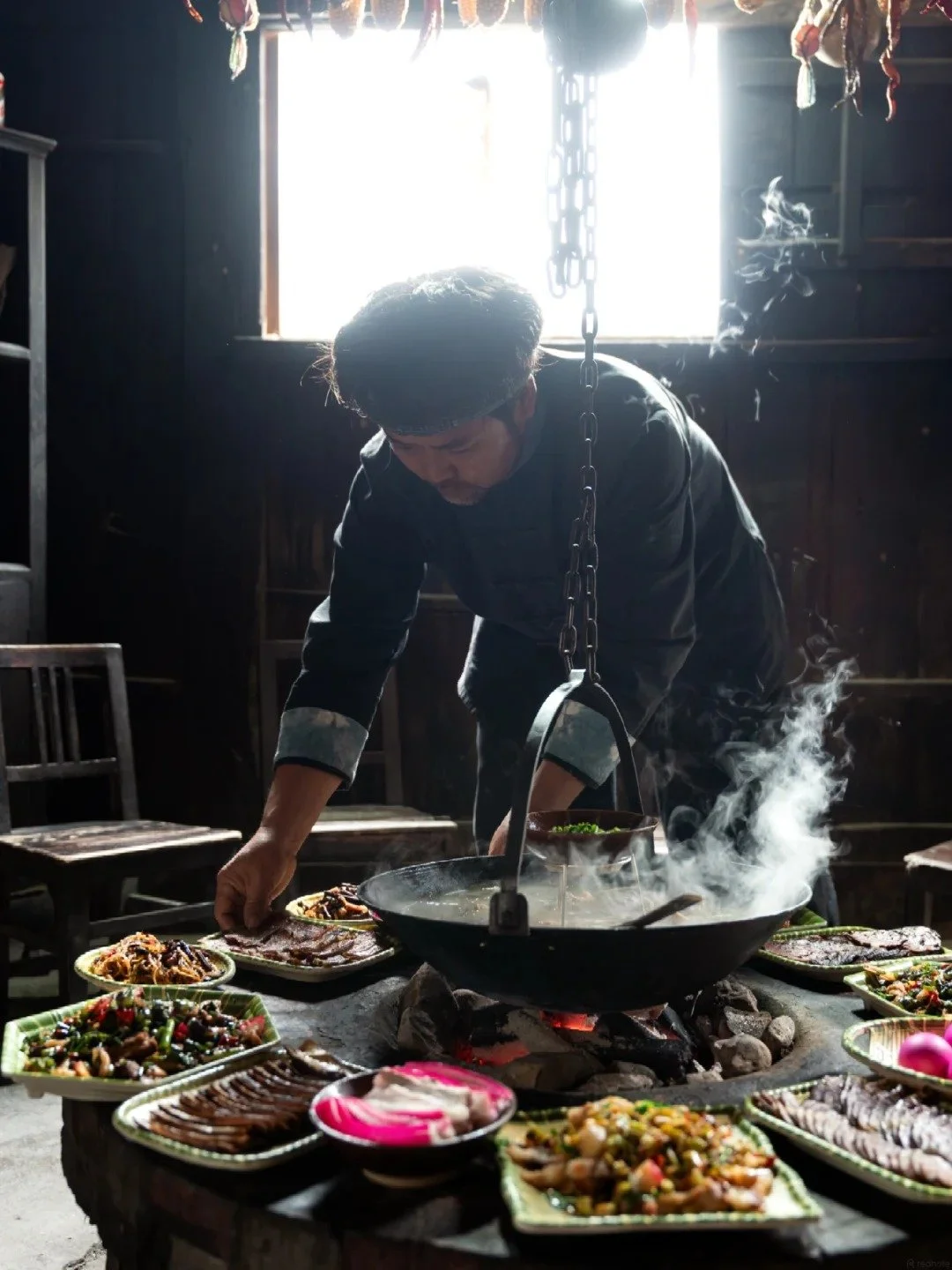
Guizhou cooking is built on a combination of sour and spicy that sets it apart from every other regional cuisine in China. The sour comes from fermentation rather than vinegar, and it shows up everywhere: in the fish simmered in sour soup until the broth turns a deep, complex amber, in noodle bowls that hit you with funk and heat at the same time, and in the condiments that appear on every table. The smoked and cured meats are another obsession. La rou, the local smoked pork, is dry-cured and hung over wood smoke until the fat turns translucent and the flavour concentrates into something you'll find yourself thinking about for years. Chili runs through all of it, and we'll see where it comes from at Xiazi Town, China's national wholesale chili market, where brokers have been grading peppers on a 12-step heat scale for 400 years.
WILD GUIZHOU
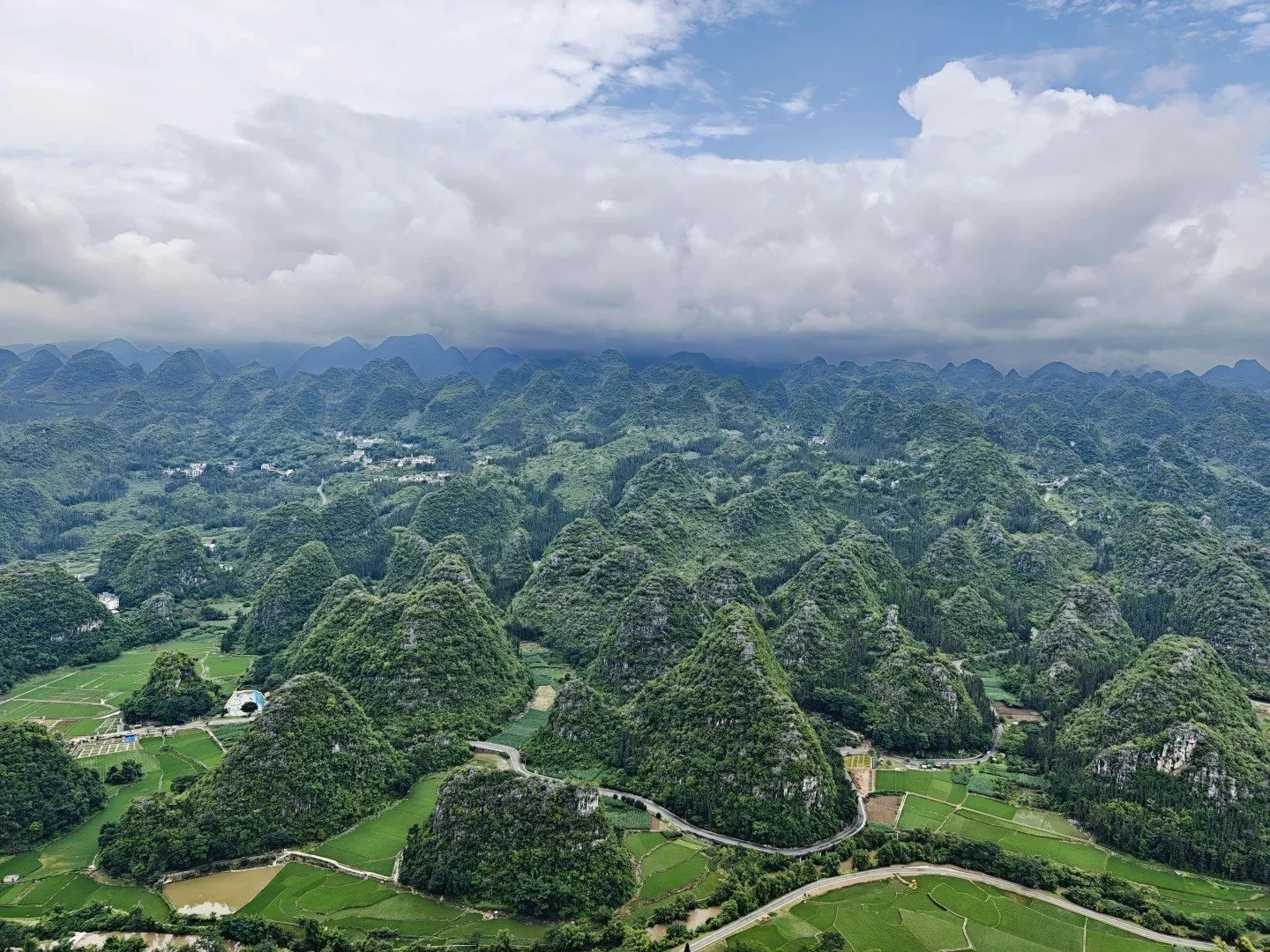
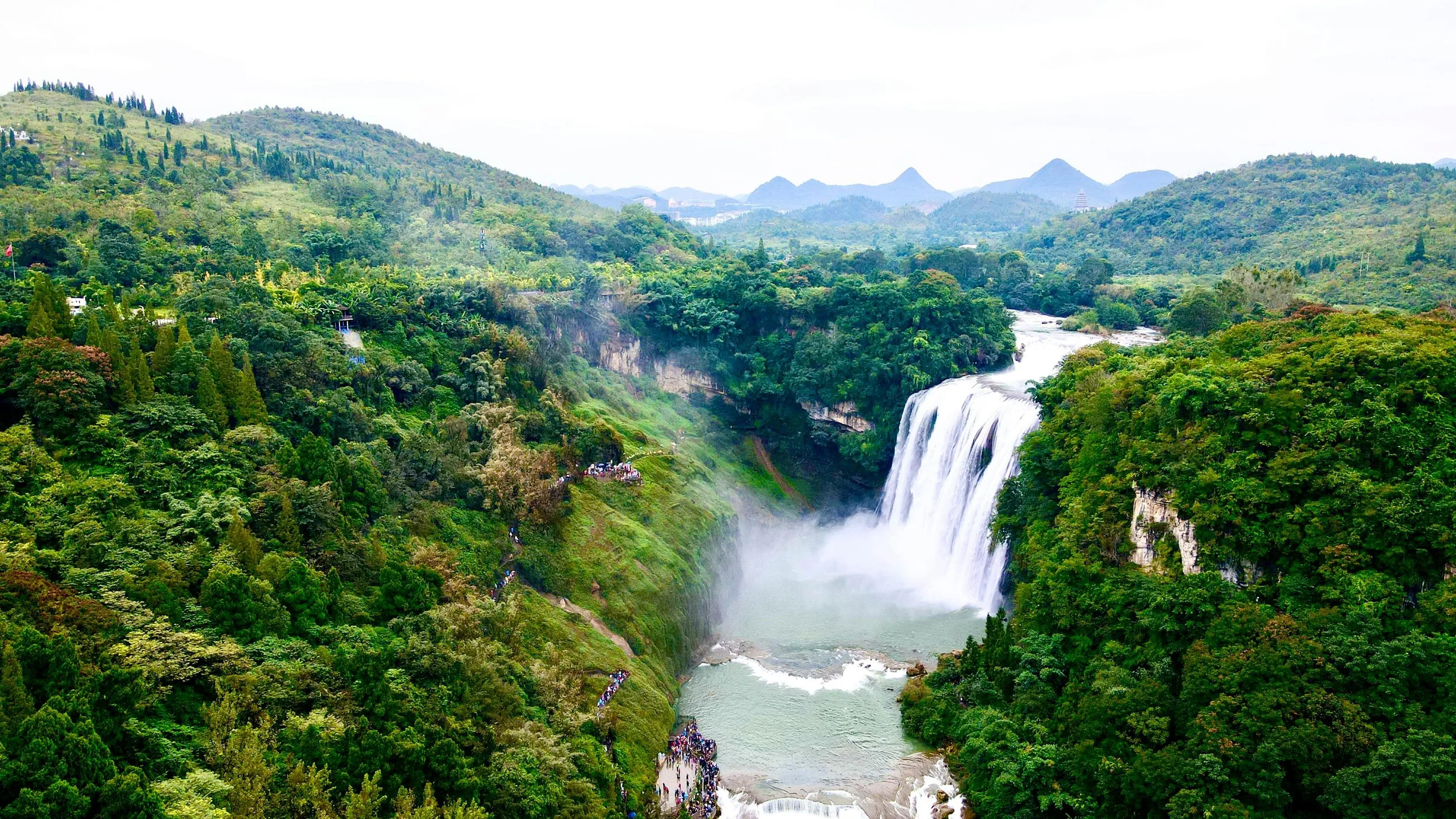
The landscapes here tend to stop people mid-sentence. At Wanfenglin, ten thousand cone-shaped peaks rise directly out of rice paddies, with Buyi villages scattered between them and late-October harvest light on everything. Huangguoshu is Asia's largest waterfall, 77 metres high and 101 metres wide, with a walkway cut through the cave behind the falls. The Huajiang Canyon Bridge, the tallest in the world at 625 metres above the Beipan River, has a glass walkway and a view straight down. And in Anlong County, two naturally formed pyramid mountains that went viral in 2024 with conspiracy theories about a buried Ming emperor's tomb turn out to be 400 million years of dolomite carved by water into perfect cones.
THE PEOPLE
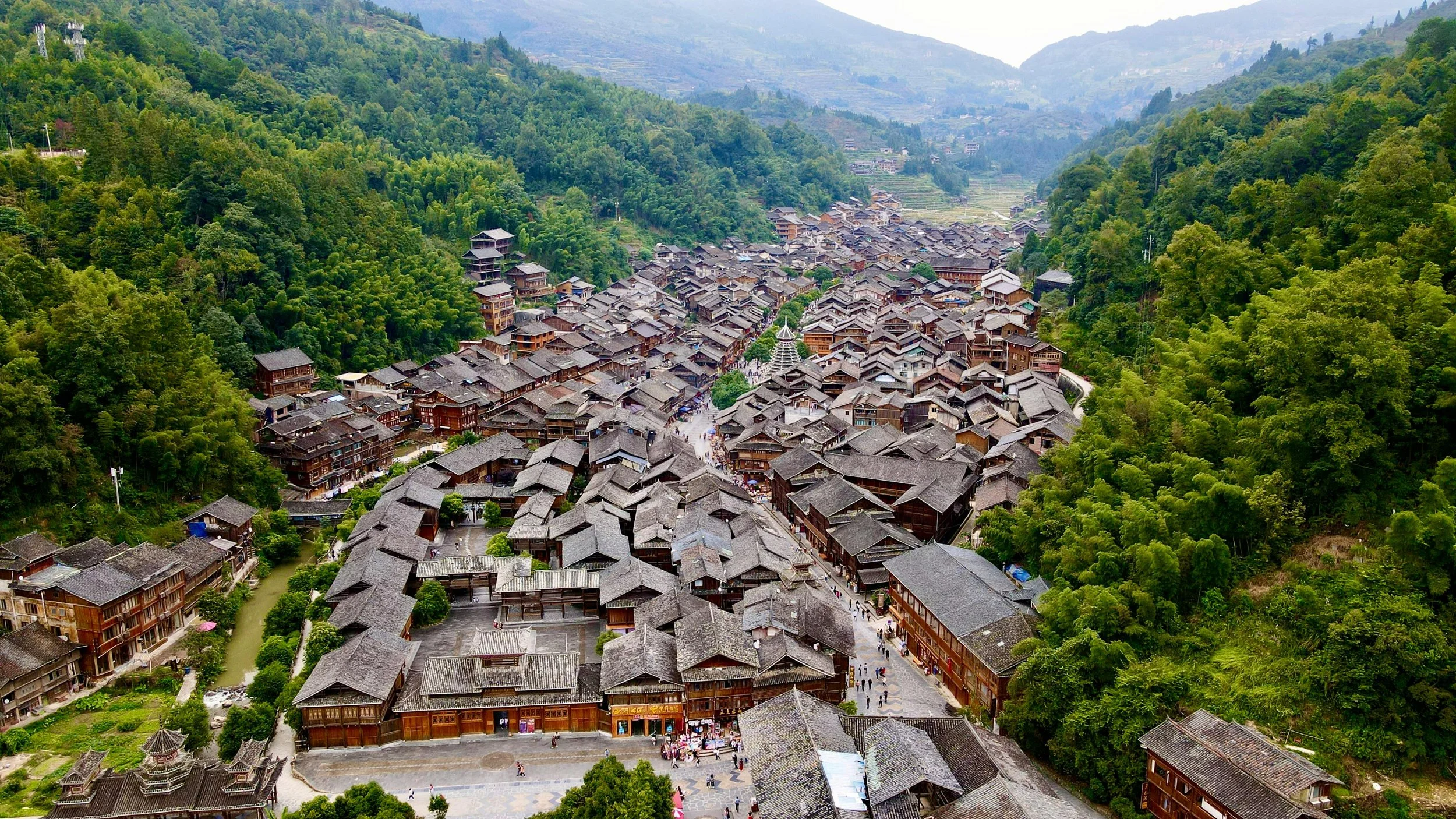
Guizhou is home to eighteen ethnic minority groups, and this trip moves through the territory of several of them. The Tunpu people of the Anshun area are descendants of Ming-dynasty garrison soldiers who arrived in the 14th century and never left. The Buyi, one of Guizhou's largest minorities, farm the river valleys and karst lowlands around Xingyi, where their villages sit between the peaks of Wanfenglin. Further east, the Miao have maintained some of the most distinctive cultural traditions in China, from the intricately worked silver jewellery that families accumulate over generations to the lusheng pipe music that anchors every major celebration. We'll visit stilt-house villages, be welcomed with considerable quantities of rice wine, and arrive in the Leishan area in time for the Miao New Year itself.
FANJINGSHAN
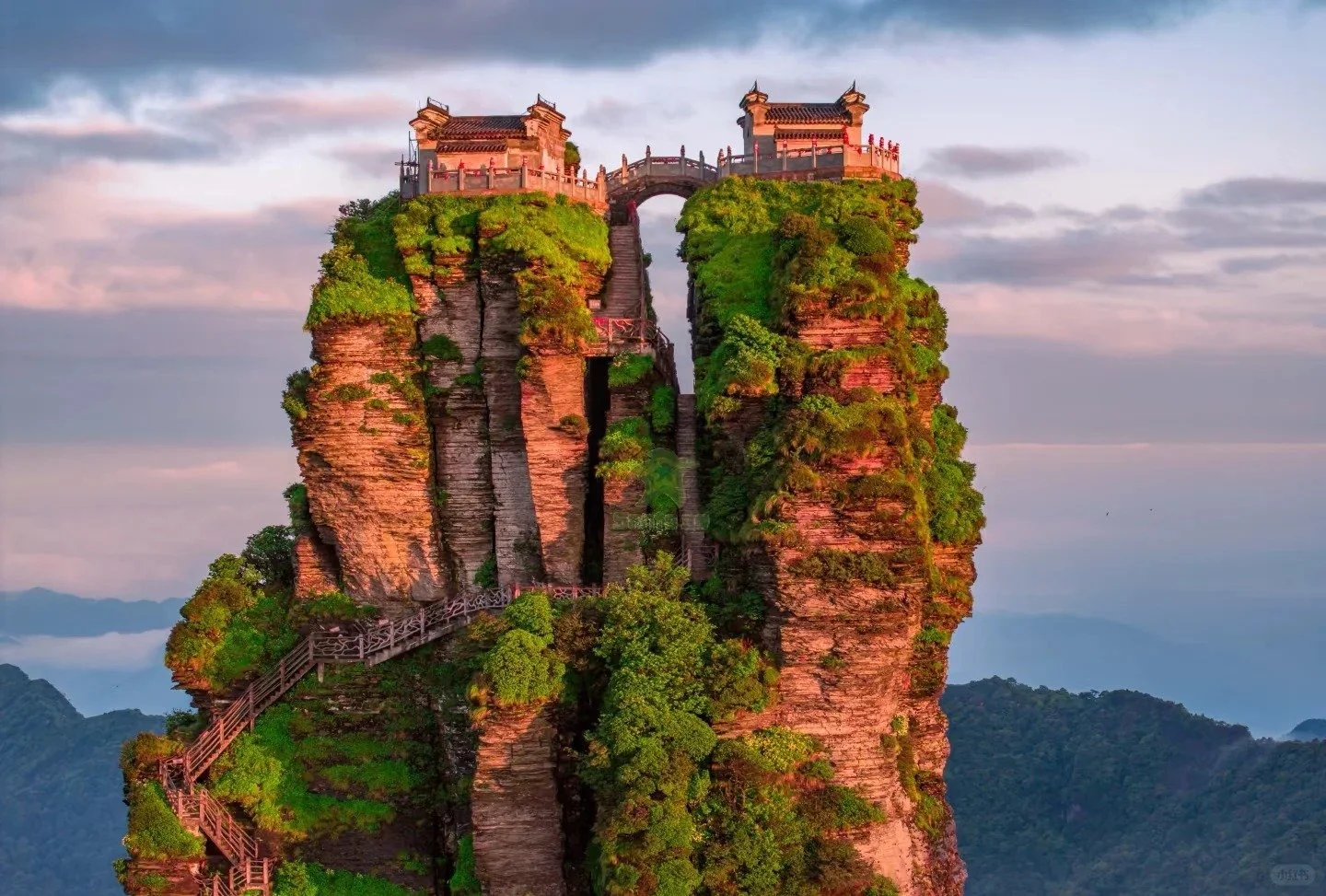
Guizhou's sacred mountain is the only peak in China dedicated to Maitreya, the future Buddha, and the twin sandstone towers at its summit have supported temples since the Tang Dynasty. Getting there means either a cable car or a long staircase through cloud forest, emerging above the treeline to find two towers barely wide enough for the temples sitting on top of them, joined by a stone bridge across open air. The Guizhou golden snub-nosed monkey, found nowhere else on Earth, lives in the forest below. The Mushroom Rock, a sandstone formation that looks exactly as described, adds a note of absurdity to what is otherwise one of the most striking places we've been anywhere in China.
GET OFF THE EATEN TRACK WITH US
Want to know more? Here's how it works.
Register your interest using the form and we'll be in touch to set up a quick call, a chance to answer your questions and give you a deeper look at what the trip involves. From there, a 25% non-refundable deposit secures your spot. The remaining balance is due 60 days before departure. Check our full T&Cs here.
The full day-by-day itinerary and accommodation guide are coming soon, and formal bookings will open then. In the meantime, our FAQ covers everything from what's included to our cancellation policy.
We cap the group at twelve. Small enough to get into workshops and restaurants that don't accommodate larger groups, and to move at a pace that's actually about the place.
See our other China Tours here.
FREQUENTLY ASKED QUESTIONS
General Guizhou FAQ
-
Guizhou is a landlocked province in southwest China, bordered by Sichuan, Chongqing, Yunnan, Guangxi, and Hunan. It is one of China's most mountainous provinces, with a landscape dominated by karst formations, river gorges, and forested peaks. Historically it was one of the last regions to come under firm central Chinese control, which partly explains why so many of its eighteen ethnic minority groups have maintained distinct languages, festivals, and cultural traditions into the present day.
-
Guizhou is known within China for its dramatic natural landscapes, its concentration of ethnic minority cultures, and a food culture built on sour fermentation, smoked meats, and chili heat that has developed largely independently of the better-known regional cuisines further east. The province has some of Asia's most spectacular waterfall systems, a growing reputation for its rice wine and baijiu production, and the Miao heartland of Qiandongnan, where festivals like Miao New Year draw visitors from across the country.
-
Guizhou's food is defined by sourness from fermentation and chili heat, a combination that distinguishes it from Sichuan's numbing spice or Cantonese restraint. Sour fish soup and sour noodle soups are everyday staples. La rou, dry-cured smoked pork, appears across the province in different forms. Chang wang mian, a morning noodle bowl with blood, offal, and crispy pork, is the standard Guiyang breakfast. The province also produces some of China's most significant baijiu, including Moutai, and Xiazi Town in Zunyi has been the country's primary chili trading hub for 400 years.
-
Miao New Year, or 苗年 (Miáo Nián), is the most important festival in the Miao calendar, falling on the fourth day of the tenth lunar month. In the Leishan area of Qiandongnan, celebrations include bullfights, horse racing, lusheng pipe dancing, and parades of silver headdresses that can weigh several kilograms each. The date shifts each year according to the lunar calendar; in 2027 it falls on 4 November.
-
Late October to early November is one of the best times to visit. The summer rains have cleared, temperatures are mild, the rice harvest is underway across the valleys, and Miao New Year falls in early November in the Qiandongnan region. Spring is also good, particularly April and May when wildflowers are out in the mountains. Summer brings heavy rainfall across much of the province, and some roads and trails can be affected.
-
The tour starts and ends in Guiyang, Guizhou's capital, which is well connected by high-speed rail and has an international airport with direct flights to most major Chinese cities. Beijing is approximately 8.5 hours by high-speed train, Shanghai around 7 hours. Flying from Beijing or Shanghai takes around 2.5 to 3 hours. Most international travellers will route through a major hub such as Beijing, Shanghai, or Guangzhou before connecting to Guiyang.
Tour FAQ
-
The Guizhou October–November 2027 tour is estimated at AUD $8,000–$11,000 per person. Final pricing will be confirmed when the full itinerary and accommodation guide are released. For a guide to what's typically included and excluded in OTET tour pricing, see our FAQ page.
-
The tour covers Guiyang, the Anshun area including the Tunpu villages and Huangguoshu waterfall, Xingyi and the Wanfenglin peaks, Zunyi, Fanjingshan, and the Qiandongnan Miao heartland including Langde village and the Leishan area. The full day-by-day itinerary is coming soon.
-
We stay in a mix of four and five star hotels, often with Chinese chains like Atour and Orange Hotel, which offer a consistently high standard and are well located in most cities. In more out-of-the-way places, we'll use the best local accommodation available — sometimes a local guesthouse, sometimes a boutique property of a four or five star standard. A full accommodation guide will be published alongside the itinerary.
-
Most Western nationalities require a visa to enter China. Visa requirements and exemption agreements do change, so we recommend checking the current requirements for your passport well in advance of travel. You can check with your government and the Chinese embassy of your home country.
-
The tour is led by Michael Minsky, who has been travelling and eating his way through China since 2005 and speaks Mandarin. He has personal experience of most of the places on this itinerary.
-
Register your interest using the form on this page. We'll be in touch to set up a call, answer your questions, and walk you through the trip in more detail. A 25% non-refundable deposit secures your spot, with the remaining balance due 60 days before departure. Full details are in our Terms of Service.