
HOKURIKU
ISHIKAWA, TOYAMA & FUKUI
MAY 2027
Duration
Group Size
May 12 - 22, 2027
10 nights / 11 days
Max 8 guests
Min 3 guests
Starting Point
Ending Point
Kanazawa
Ishikawa Prefecture
Kanazawa
Ishikawa Prefecture
Train Access
Tokyo: ~3 hours
Kyoto/Osaka: ~2 hours
Price
AUD $9,973.99
based on double occupancy
Solo supplement available
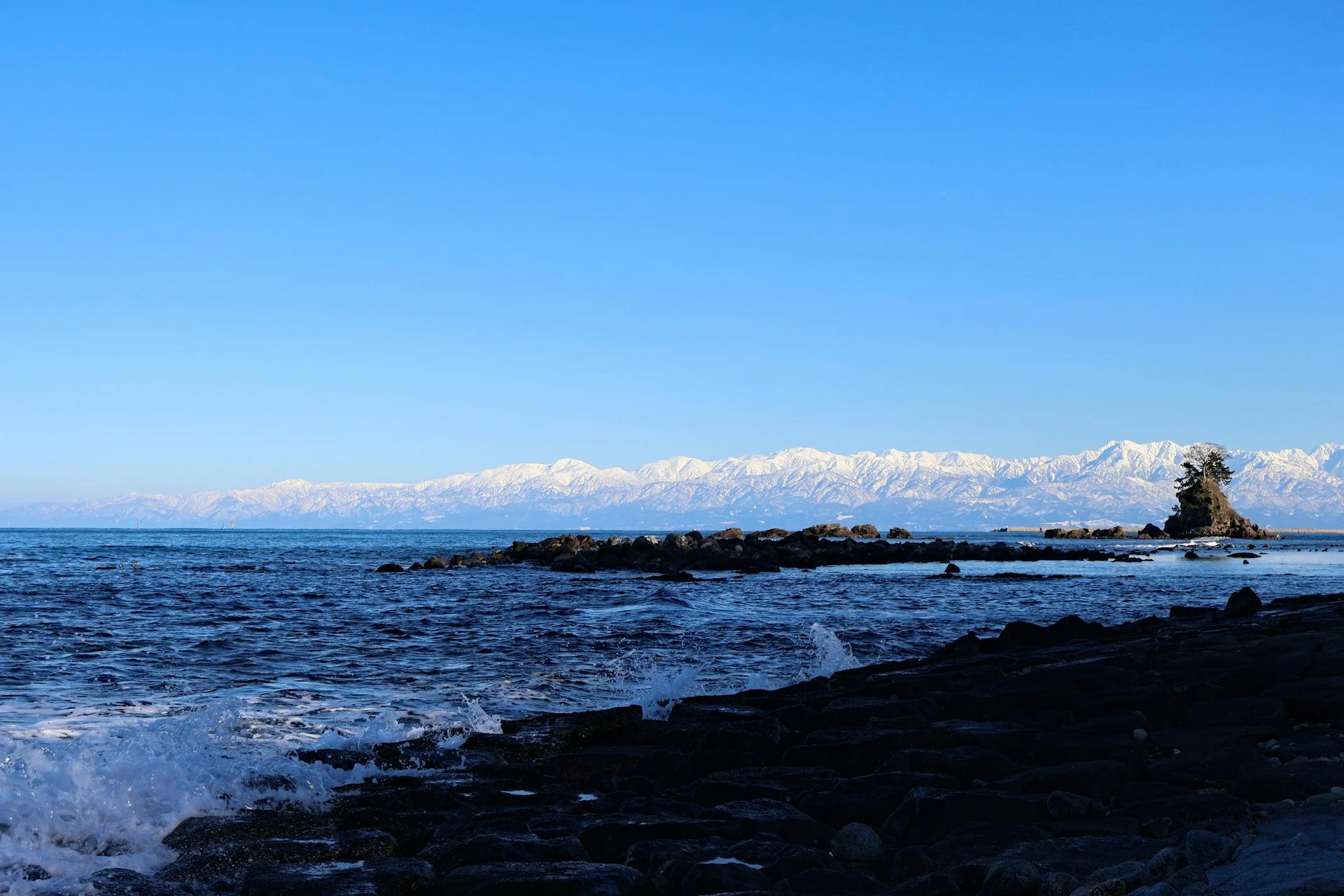
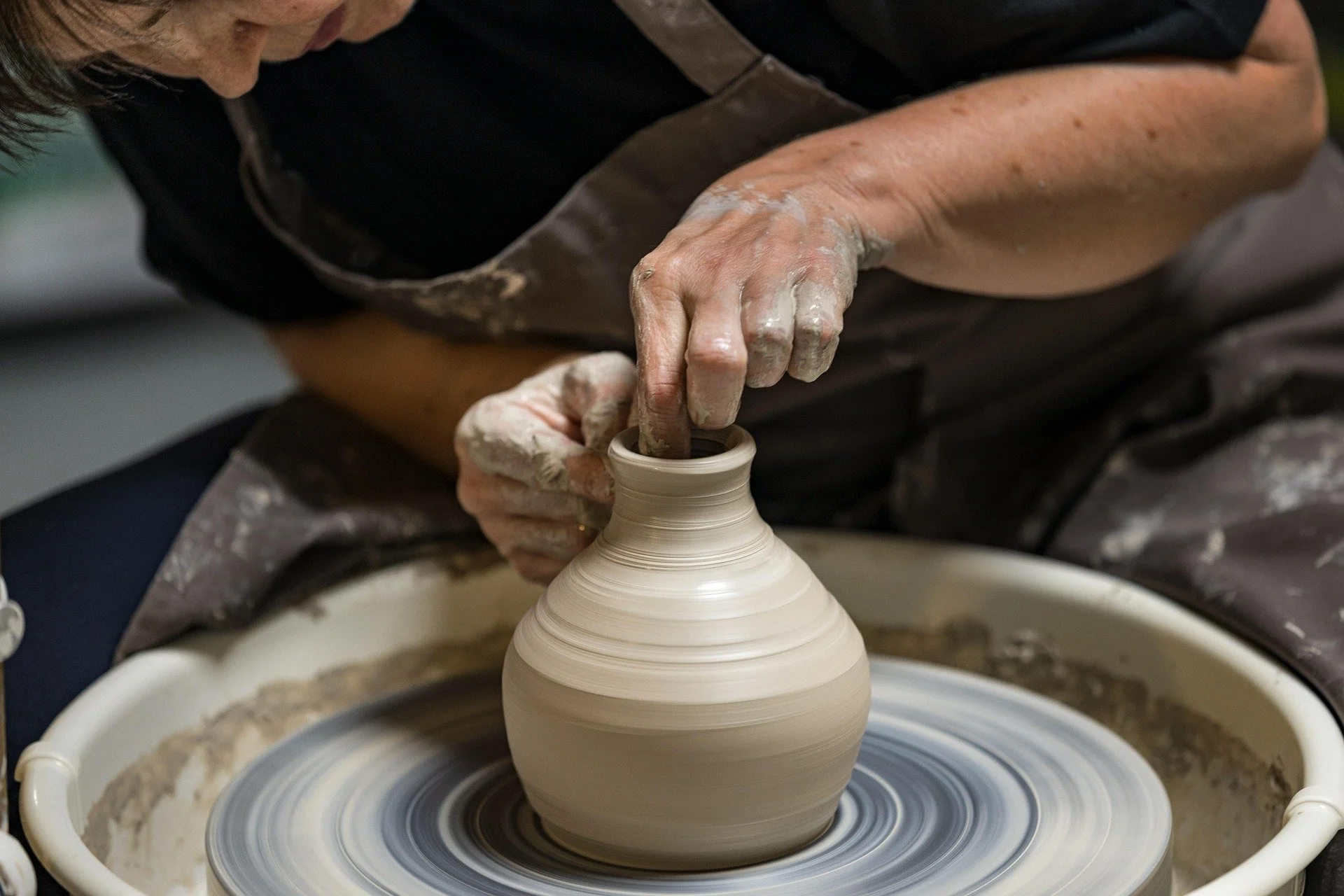
Hokuriku sits on the far side of Japan's mountains, which means this stretch of the Sea of Japan coast has been left to do its thing without much outside interference for a very long time. The result is a region that has been making things — sake, swords, bronze, lacquerware, paper, knives, ceramics — at a level that is hard to find anywhere else in the country.
The trip starts in Kanazawa, where we visit a working swordsmith and sit in Japan's oldest operating sake brewery, before heading north into Toyama, where the deep cold waters of the bay draw a squid that glows and 400 years of bronze casting produced most of Japan's cast metal goods. We cross the mountains through gassho farmhouses, nestled into river valleys that saw almost no outside traffic for centuries, trying our hand at traditional papermaking along the way, and pass through a well-preserved Edo castle town tucked into the Fukui foothills before landing in Echizen, home to one of Japan's six ancient kiln traditions and a knife-forging town that banded together to save its own trade from dying out. From there it's the basalt sea cliffs of Tojinbo, timed to land on the Mikuni Matsuri, one of Hokuriku's three great festivals, before winding down in the hot spring town of Awara, where Kutani porcelain, lacquerware, and a moss-covered cliff temple round out one of the most quietly extraordinary regions in Japan.
The tour will be led by Michael, who has been travelling and eating his way through Japan since 2007, including time living there, and speaks Japanese.
DAY BY DAY ITINERARY
DAY 1 - MAY 12
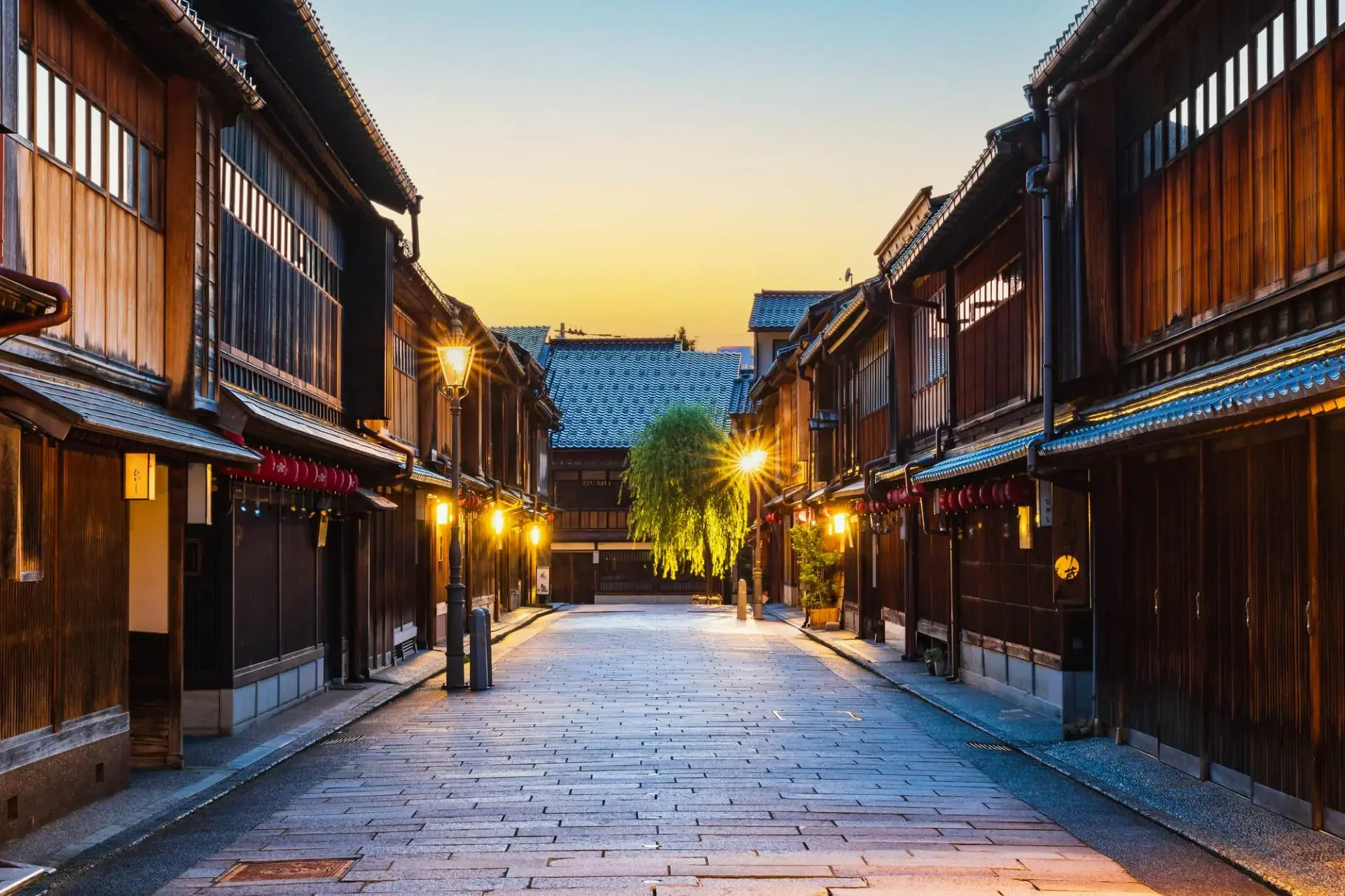
Everyone arrives into Kanazawa in their own time today, so take it easy and get settled. Once the group's together, we sit down for a welcome dinner, the first taste of what Hokuriku's food scene has in store and a chance to meet everyone before the trip properly gets moving. Afterwards, we walk through Higashi Chaya and Nishi Chaya, the city's two geisha districts on opposite sides of the river, no stops or agenda, just the wooden lattice-fronted teahouses and lantern light to wander through on the first night.
Included: Dinner, Accommodation
DAY 2 - MAY 13
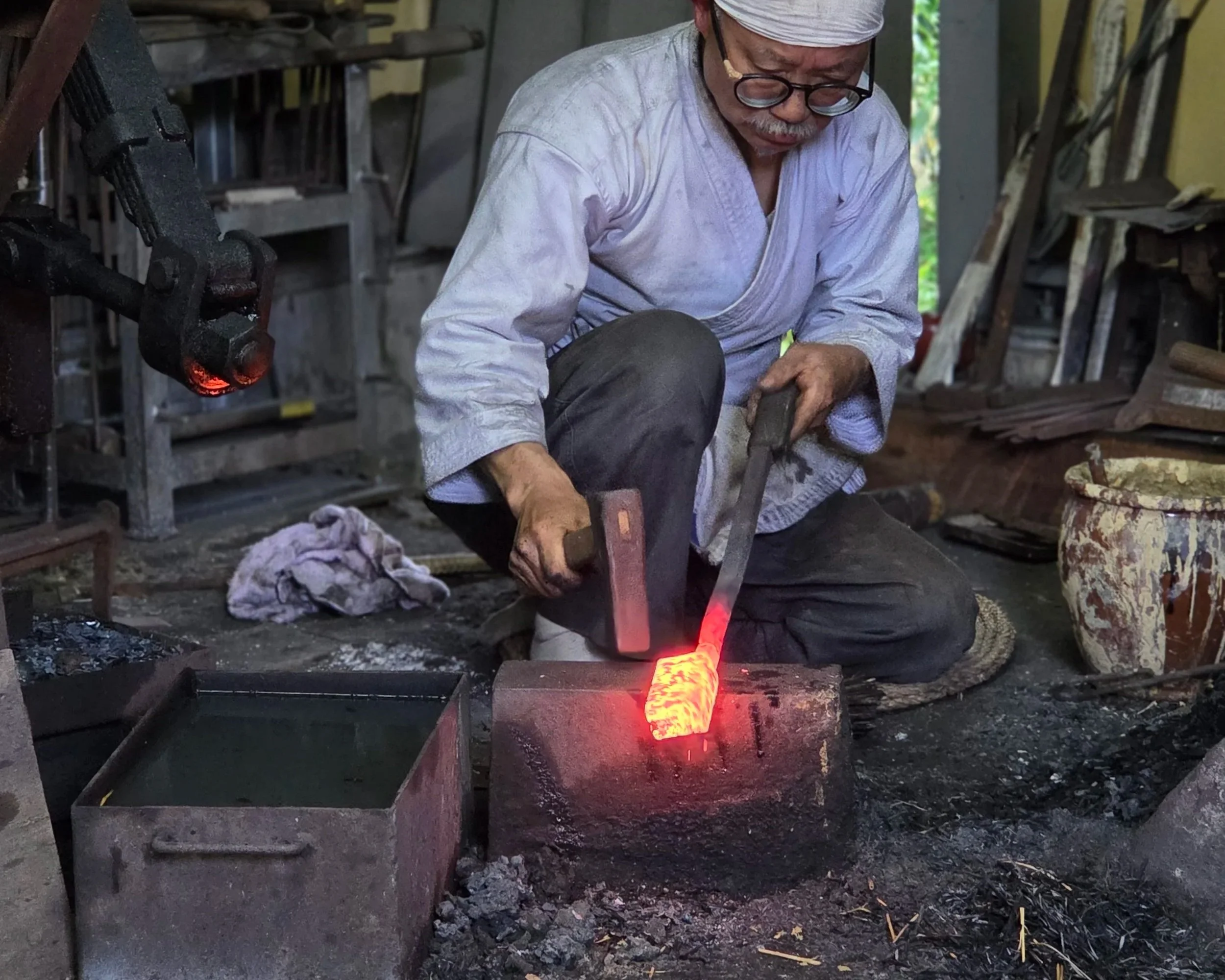
The morning starts at a working swordsmith's forge, watching a blade take shape by hand, the blacksmith heating and hammering the steel, sparks flying with each strike, folding and re-folding the metal to build up its edge. In the afternoon we head to Fukumitsuya, the oldest sake brewery still operating in Kanazawa, founded in 1625, for a guided tasting through several of their Junmai styles, with the story of the brewery and the water behind it along the way. Walking back into town, we cut through the quiet lanes of the old samurai quarter before a free evening among the sake bars of Higashi Chaya, some of the best in the city.
Included: Breakfast, Swordsmith visit, Fukumitsuya visit & sake tasting, Accommodation
DAY 3 - MAY 14
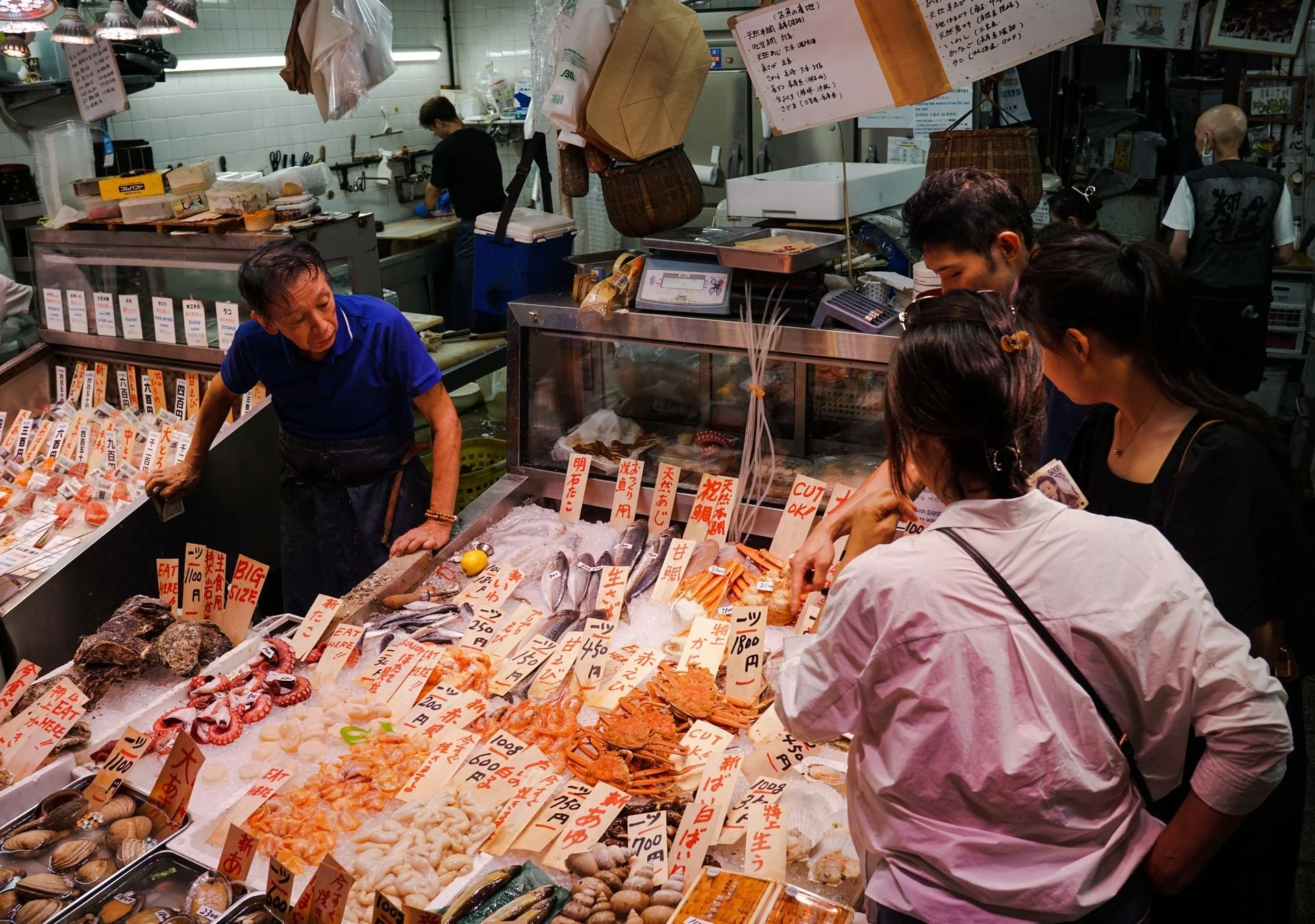
We start the morning at the Kanazawa Central Wholesale Market, a working trade market that doesn't turn up in guidebooks, where locals go for fresh fish at wholesale prices. From there it's Kenroku-en, one of Japan's three great classical gardens, home to the country's oldest working fountain and its most photographed lantern, the two-legged Kotoji-toro. The rest of the day is free to explore Kanazawa at your own pace, whether that's the D.T. Suzuki Museum, the National Crafts Museum, or Kaikaro, a working geisha teahouse in Higashi Chaya open to the public by day.
Included: Breakfast, Fish market visit, Lunch, Kenroku-en entry, Accommodation
DAY 4 - MAY 15
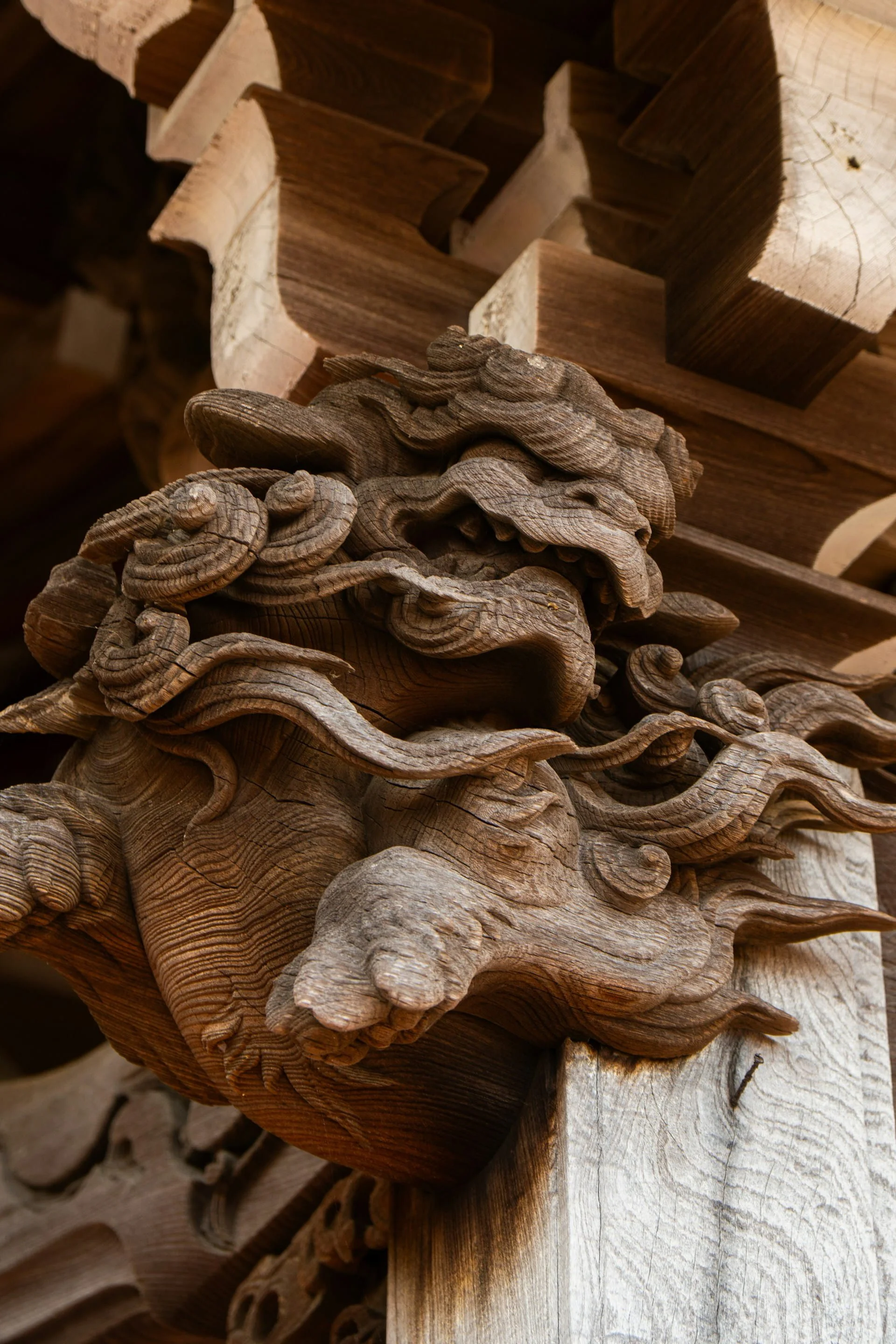
We leave Kanazawa for Inami, a woodcarving town built around Zuisenji Temple. The tradition began when Kyoto temple carvers came to rebuild Zuisenji temple after a fire and stayed on to train the next generation of local carvers, and the town never stopped. The street up to the temple is lined with open workshops, and Zuisenji itself works as a wood-carving museum on its own, with two and a half centuries of carved detail across every surface. From there we drive to Takaoka's Kanaya-machi casting district, 400 years deep in bronze and tin work, and visit Nousaku to see the sand-casting process up close and learn how the craft has developed here. We end the day in Toyama City.
Included: Breakfast, Zuisenji, Metal casting workshop visit, Accommodation
DAY 5 - MAY 16
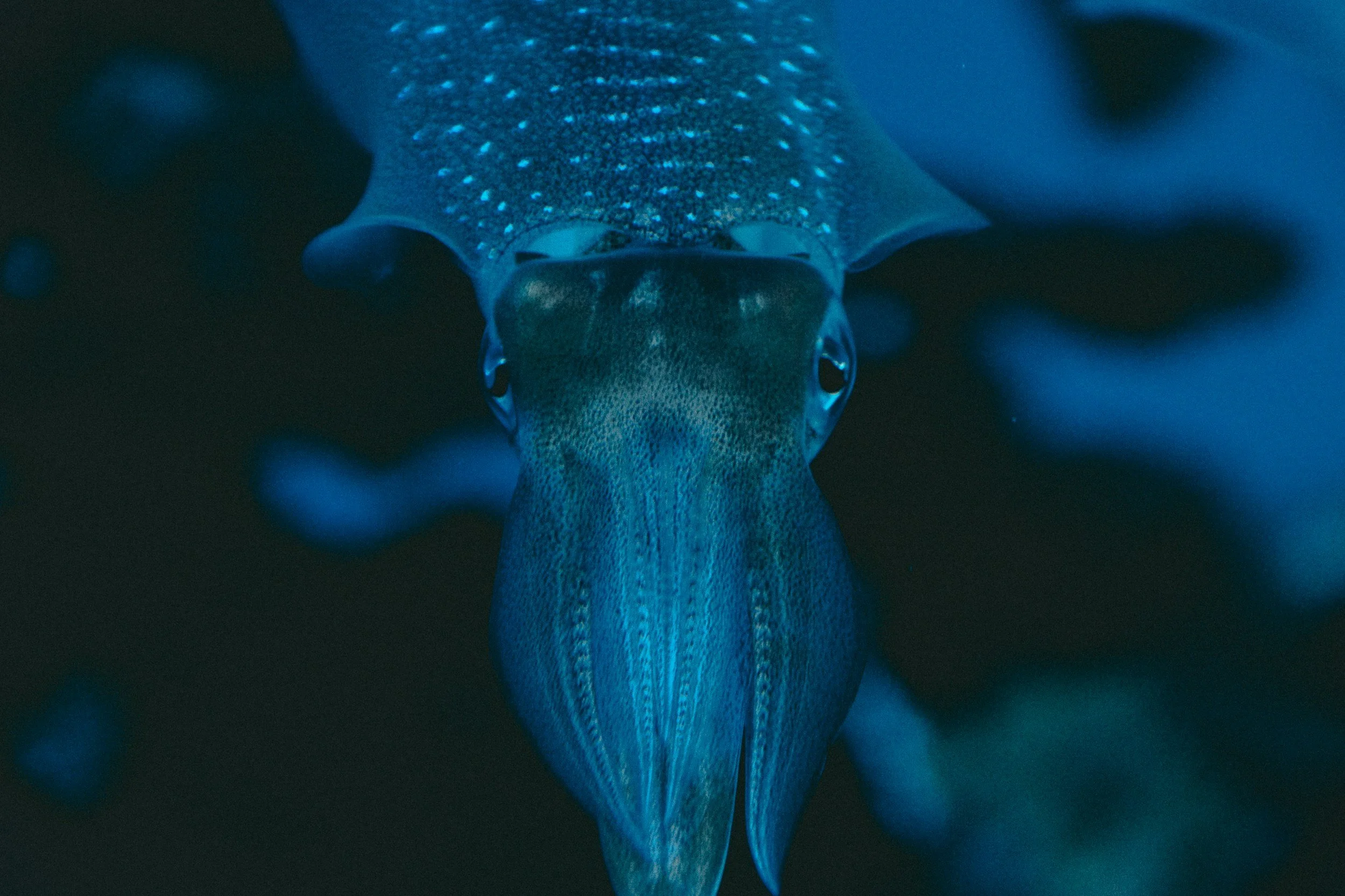
We start at Himi, twenty minutes from Takaoka, at the Hotaru Ika Museum, the only museum in the world dedicated to the firefly squid, with live tanks showing the bioluminescence that makes Toyama Bay one of the best places on earth to see it. Firefly squid are also one of the bay's great spring dishes, eaten raw, boiled, or dressed in vinegar miso, and this trip lands right in peak season for it. From there we take a 45-minute cruise along the old canal network in Shinminato, a former fishing and shipping port in Imizu, a gentle way to see the town from the water. The rest of the afternoon is free in Toyama City, worth spending at the Toyama Glass Art Museum, a Kengo Kuma-designed building holding a permanent Dale Chihuly installation, or wandering the canal-side park at Fugan Kansui, home to one of the city's best-known cafes.
Included: Breakfast, Hotaru Ika Museum, Lunch, Canal cruise, Accommodation
DAY 6 - MAY 17
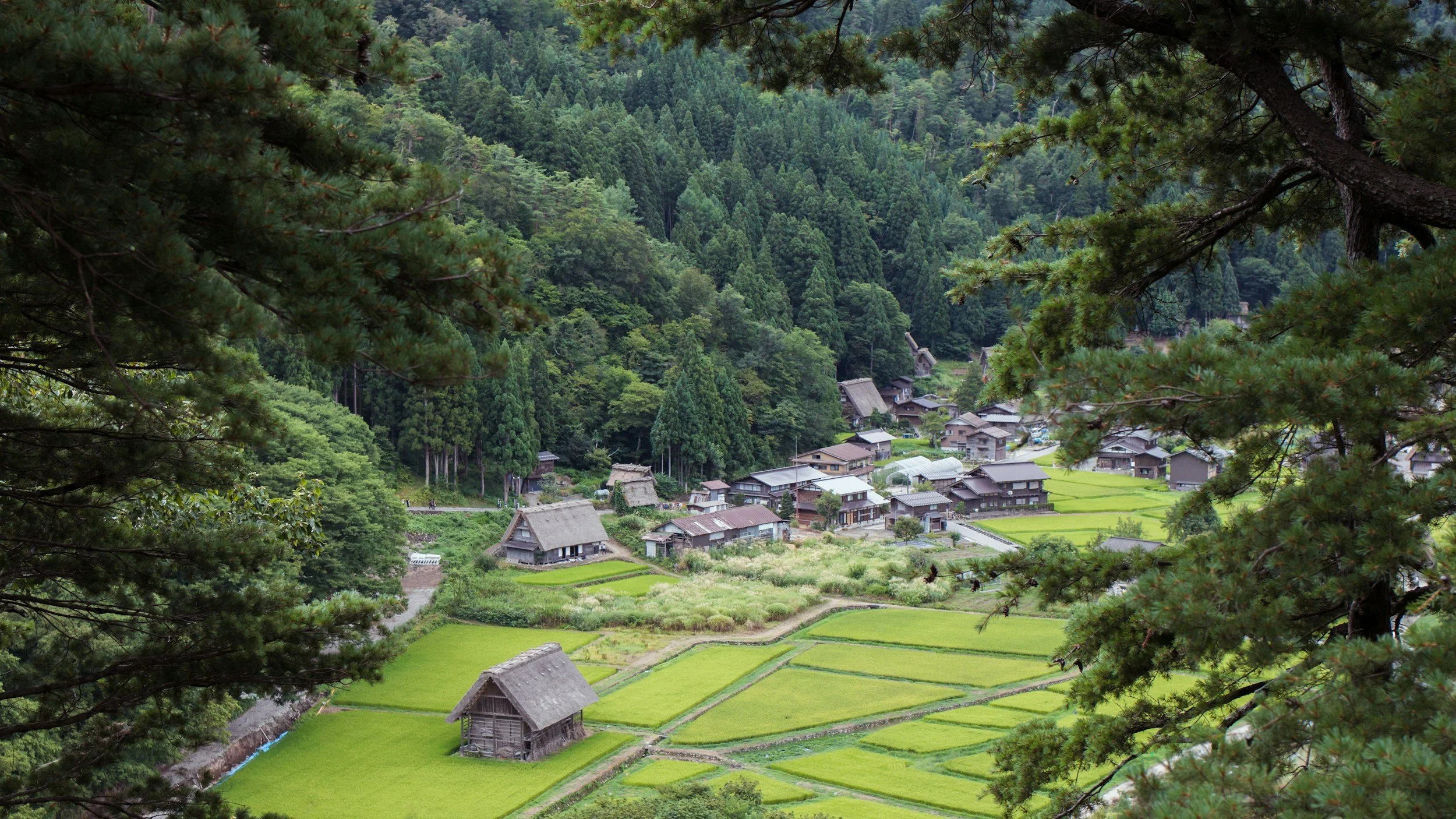
Today's route cuts south through the mountains, one of the most scenic drives of the whole trip. We stop first at Ainokura in Gokayama, a gassho-zukuri village smaller and quieter than Shirakawa-go, with rice paddies on three sides and no tour buses, for a hands-on washi papermaking session. We also stop at Suganuma, five minutes away and the smallest of the three gassho villages in the area, usually near-empty, with local history museums in the houses. On the way we stop at a michi-no-eki for lunch, one of the roadside stations that dot rural Japan and double as a treasure trove of local food, produce and craft. Our next stop is Ono, an Edo-period castle town, its castle sitting on a hill above a preserved merchant street and known as the "castle in the sky" for the sea of cloud that often wraps it. We arrive into Fukui City in time for dinner.
Included: Breakfast, Paper-making, Gassho museum entry, Lunch, Accommodation
DAY 7 - MAY 18
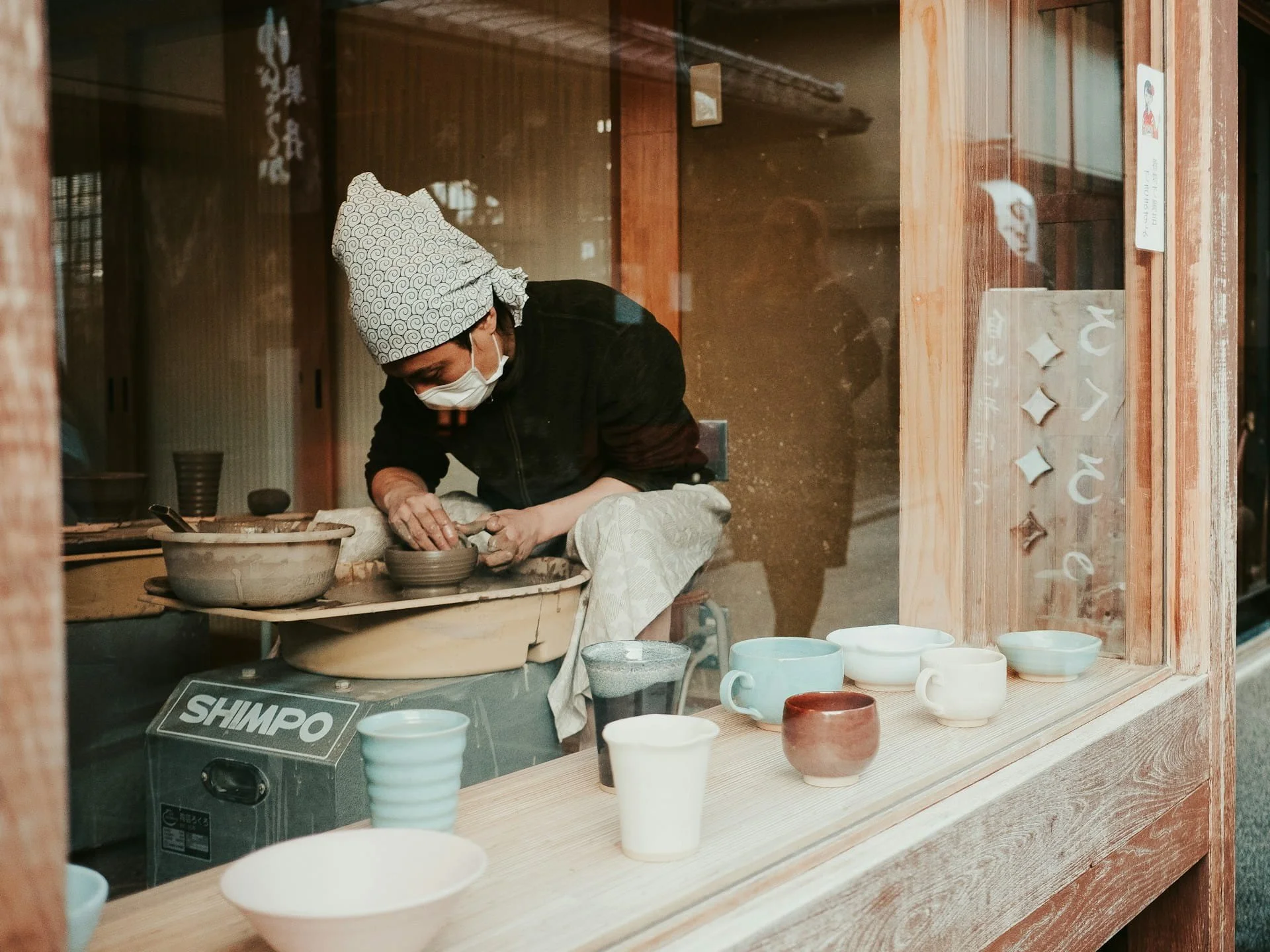
We start at the Ichijodani Asakura Family Ruins, the excavated remains of a major Sengoku-era castle town destroyed by Oda Nobunaga in 1573 and left largely untouched since. From there we visit the Echizen ceramics village, one of Japan's six ancient kilns, with nearly 850 years of unglazed stoneware still being made around the same kilns today. Next is Takefu Knife Village, where a group of young craftsmen banded together decades ago to save a 700-year-old trade that was dying out as machine-made blades and cheap imports pushed most of the old family forges out of business, and built a shared workshop where you can watch the whole process, from the forge to the final hand-sharpening, with a retail shop selling the knives and a chance to buy one for yourself.
Included: Breakfast, Echizen kiln visit, Takefu Knife Village visit, Accommodation
DAY 8 - MAY 19
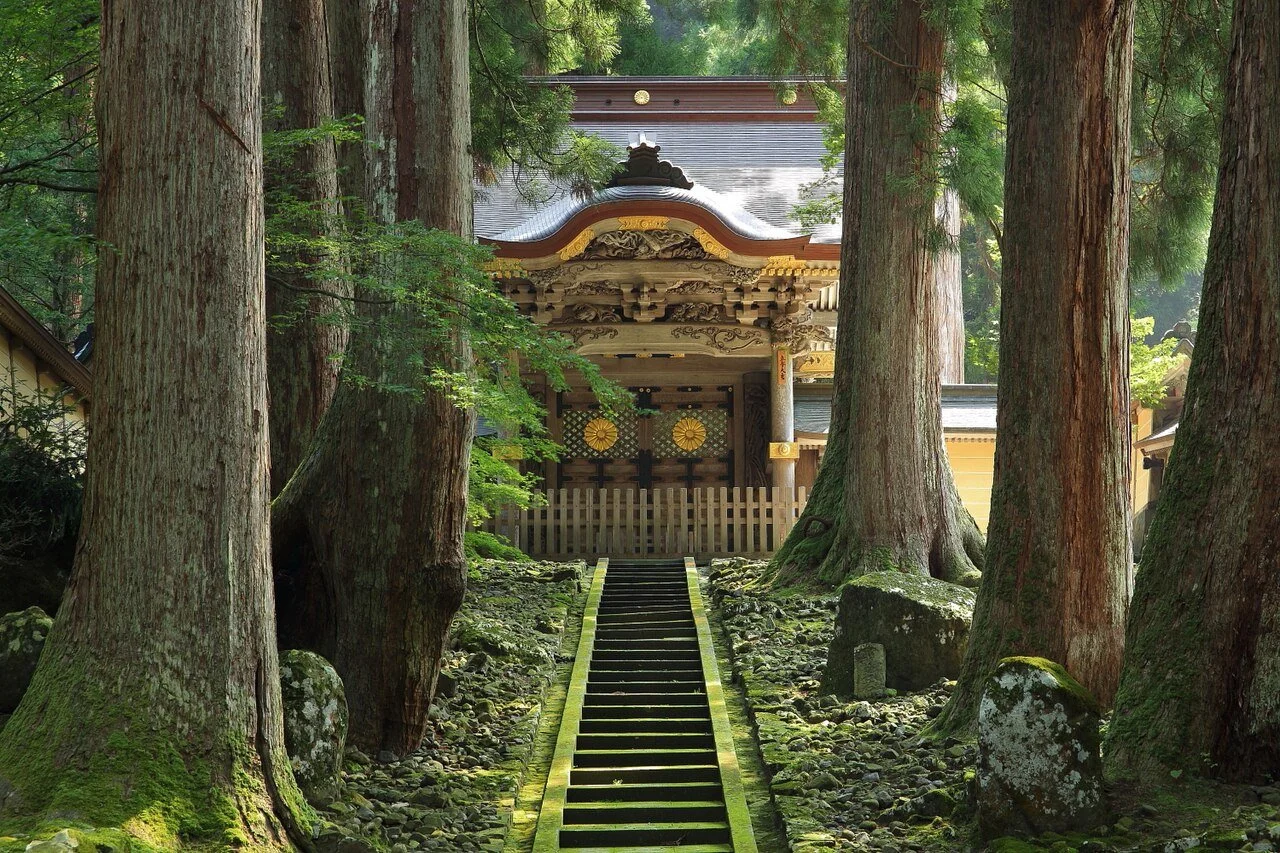
The morning is Eiheiji, one of the two head temples of Soto Zen Buddhism, a working monastery with monks in active training, set inside old-growth cedar forest, more austere than most Japanese temples and more alive because of it. The afternoon is free to explore Fukui City itself, worth spending at Dinosaur Plaza right by the station, where roaring, moving dinosaur robots nod to the fact that several species were first discovered nearby and named for the prefecture, including Fukuiraptor and Fukuisaurus; the Fukui Castle ruins, with their original stone walls and moat still standing; or the Fukui City Museum of Local History, covering the castle town under the Matsudaira lords.
Included: Breakfast, Eiheiji, Accommodation
DAY 9 - MAY 20
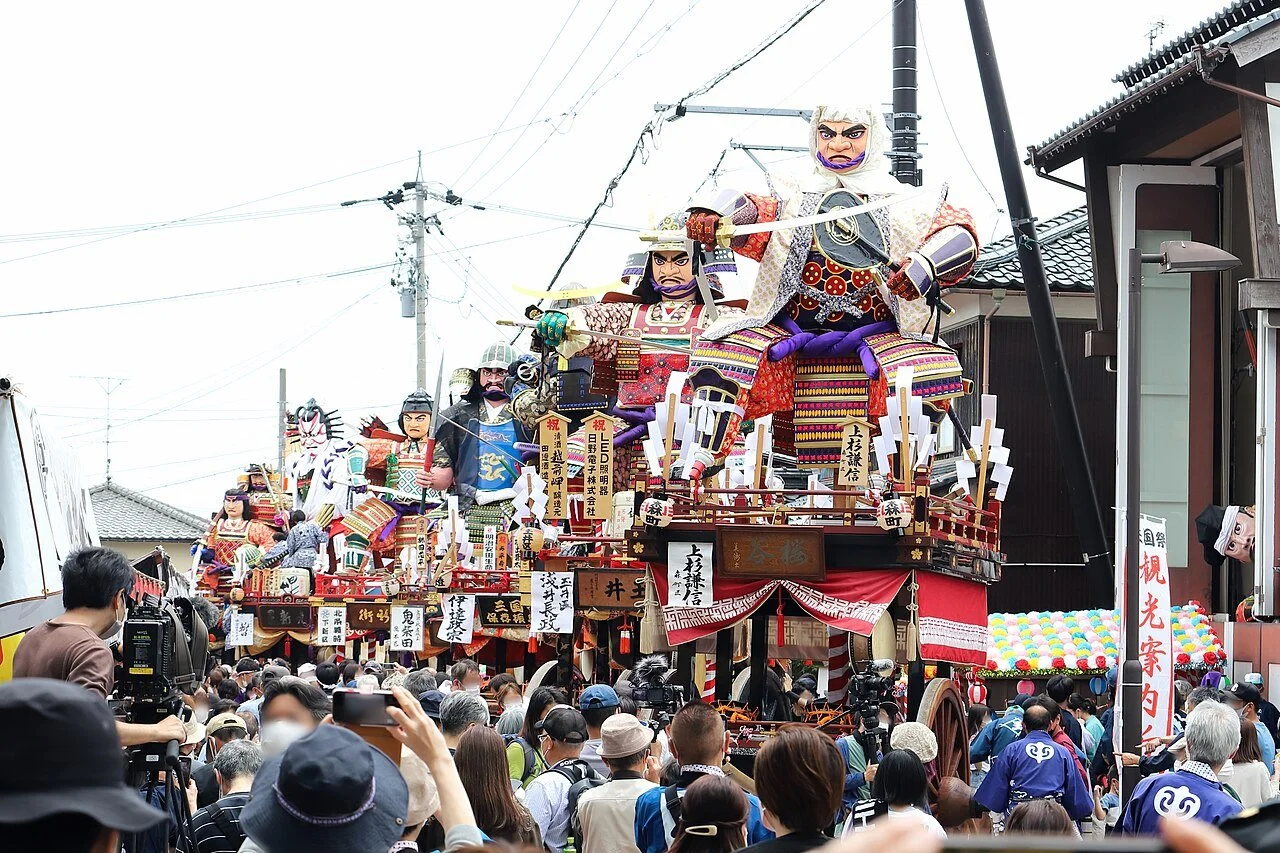
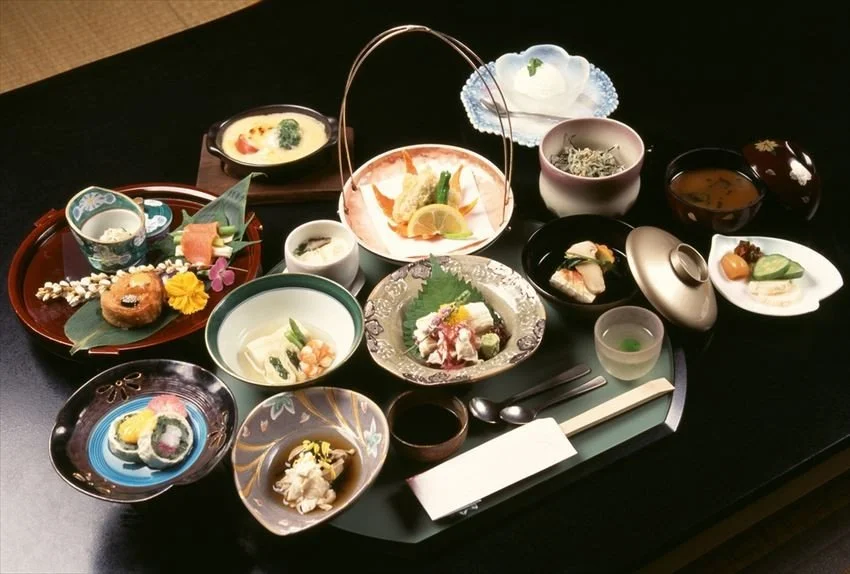
Today we head northwest from Fukui City to Tojinbo, where we spend some time walking the dramatic coast with basalt sea pillars dropping straight down into the Sea of Japan. From there it's a short drive to Mikuni, timed to land on the main day of the Mikuni Matsuri, one of Hokuriku's three great festivals. Six floats, each about 6.5 metres tall and carrying mounted warrior figures, parade through the streets, squeezing past shopfronts down lanes barely wider than they are while the whole town turns out to watch. Once the parade's through, we make our way to Awara Onsen and check into our ryokan, where we relax for the evening in the onsen baths and enjoy a traditional, multi-course kaiseki dinner.
Included: Breakfast, Tojinbo, Mikuni Matsuri, Dinner, Accommodation
DAY 10 - MAY 21
We loop north into the Kaga Onsen area for the day, starting at Natadera, a 1,300-year-old temple built into a moss-covered cliff riddled with caves and strange rock formations, the path weaving through rock people have been walking for over a thousand years. From there it's a Kutani-yaki studio, home to a porcelain tradition dating back over 370 years to the early Edo period, known for its distinctive five-colour overglaze palette. Next is a Yamanaka lacquerware studio, home to 450 years of wood-turning tradition, where you can watch craftspeople shape bowls and trays on a lathe with a precision that's considered some of the finest in Japan. We finish with a walk along Kakusenkei Gorge, a gentle, shaded riverside path near Yamanaka Onsen, before heading back to Awara for a farewell kaiseki dinner together, the last evening of the trip.
Included: Breakfast, Natadera, Craft studio visits, Dinner, Accommodation
DAY 11 - MAY 22
A last, easy morning before the short drive back to Kanazawa, plenty of time to enjoy a final coffee or wander before saying goodbye. From here everyone heads their own way, whether that's flights home or onward travel elsewhere in Japan.
Included: Breakfast
Itinerary and price are subject to change based on availability, seasonal conditions, and local circumstances.
GET OFF THE EATEN TRACK WITH US
Want to know more? Here's how it works.
Register your interest using the form and we'll be in touch to set up a quick call, a chance to answer your questions and give you a deeper look at what the trip involves. From there, a 25% non-refundable deposit secures your spot. The remaining balance is due 60 days before departure. Check our full T&Cs here.
Our FAQ covers everything from what's included to our cancellation policy.
We’ll be traveling around by van, which is the only way to reach some of the places we're going, so group size is intentionally capped at eight.
See our other Japan Tours here.
FREQUENTLY ASKED QUESTIONS
General Hokuriku FAQ
-
Hokuriku is the collective name for the prefectures lining the Sea of Japan coast on the western side of Japan's central mountain range — primarily Ishikawa, Toyama, and Fukui. The region has historically been isolated enough from the main Pacific coast corridor that it developed its own distinct food cultures, craft traditions, and regional identity. Kanazawa, the largest city, was the seat of the Kaga domain, one of the wealthiest feudal domains outside Edo, and the region's prosperity funded craft traditions that have been running ever since.
-
Hokuriku is known for an unusually high concentration of living craft traditions — Kutani porcelain, Wajima and Yamanaka lacquerware, Echizen ceramics and washi paper, Takaoka bronze casting, and Kanazawa gold leaf, among others. The region is also known for exceptional seafood, particularly from Toyama Bay, one of Japan's deepest bays. Kanazawa is often cited as one of Japan's best food cities. The Noto Peninsula, in Ishikawa Prefecture, was designated a UNESCO Globally Important Agricultural Heritage System site.
-
Toyama Bay produces some of Japan's most prized seafood, including hotaru ika (firefly squid), shiro ebi (tiny white shrimp found almost nowhere else), and buri (yellowtail) caught in winter. Kanazawa's Omicho Market is one of Japan's best fish markets, and the city has a strong culture of kaiseki dining rooted in the Kaga domain's culinary traditions. Fukui is known for its echizen crab, its soba, and Sauce Katsu-don, a local variation on the katsu-don that is the prefecture's unofficial dish. The region also has a strong sake culture, with Kanazawa home to several significant breweries.
-
Spring and autumn are the best seasons. May is an excellent time to visit — the rice paddies in the mountain villages are being planted, the cedar forest at Eiheiji is at its most vivid, and the weather is mild before the summer humidity sets in. The region also has a strong winter culture, particularly around snow crab season (November to March) and the dramatic winter landscapes of the gassho villages, but road conditions in the mountains can be challenging.
-
The Hokuriku Shinkansen connects Tokyo to Kanazawa in approximately three hours, and to Fukui and Tsuruga in around two and a half hours. From Kyoto or Osaka, the journey to Kanazawa takes around two hours by limited express. The tour begins and ends in Kanazawa, which is straightforward to reach from either direction.
Tour FAQ
-
The Hokuriku May 2027 tour is AUD $9,973.99 per person, based on double occupancy. A solo supplement is available, so please get in touch if you’re travelling on your own. Inclusions are listed in the daily itinerary, and for information on what's typically included and excluded in OTET tour pricing, see our FAQ page.
-
The tour covers Kanazawa in Ishikawa, the Takaoka casting district and Toyama Bay in Toyama, the mountain villages of Gokayama, Fukui City and the Echizen craft district, the Fukui coast at Tojinbo and Mikuni, and the hot spring town of Awara, with a day trip into the Kaga Onsen craft towns. See the full day-by-day itinerary above.
-
We generally stay in a mix of three and four star hotels, with at least one stay at an onsen hotel during the trip. We always choose onsen hotels that allow for private bathing, ensuring all guests have a chance to experience an onsen, even if they have tattoos or are uncomfortable with nudity. A full accommodation guide will be published alongside the itinerary.
-
Eight people fit comfortably in a van. It's that simple. Travelling as a small group means we can reach places a coach tour never could, eat at restaurants that wouldn't seat big groups, and visit producers who work on a scale that doesn't accommodate large groups.
-
The tour is led by Michael Minsky, who has lived in Japan and travelled there regularly since 2007. He’s been been organising and guiding food-focused tours in Japan for years, speaks Japanese and has personal experience of most of the places on this itinerary.
-
Register your interest using the form on this page. We'll be in touch to set up a call, answer your questions, and walk you through the trip in more detail. A 25% non-refundable deposit secures your spot, with the remaining balance due 60 days before departure. Full details are in our Terms of Service.