
TOHOKU FESTIVAL CIRCUIT
IWATE, AOMORI, AKITA & FUKUSHIMA
AUGUST 2027
Duration
Group Size
11 nights / 12 days
July 31 - Aug 11, 2027
Max 8 guests
Min 3 guests
Starting Point
Ending Point
Morioka
Iwate Prefecture
Fukushima
Fukushima Prefecture
Train Access
Tokyo: ~3 hours
Price
Estimated
AUD $9,000 - $12,000
Final price TBC
Tohoku is Japan's far north, a region of deep winters, hot springs tucked into mountain valleys, castle towns with real samurai history, and food cultures built around the cold ocean currents, preservation, and cold-climate rice farming. And in August, for about two weeks, it erupts into a giant party.
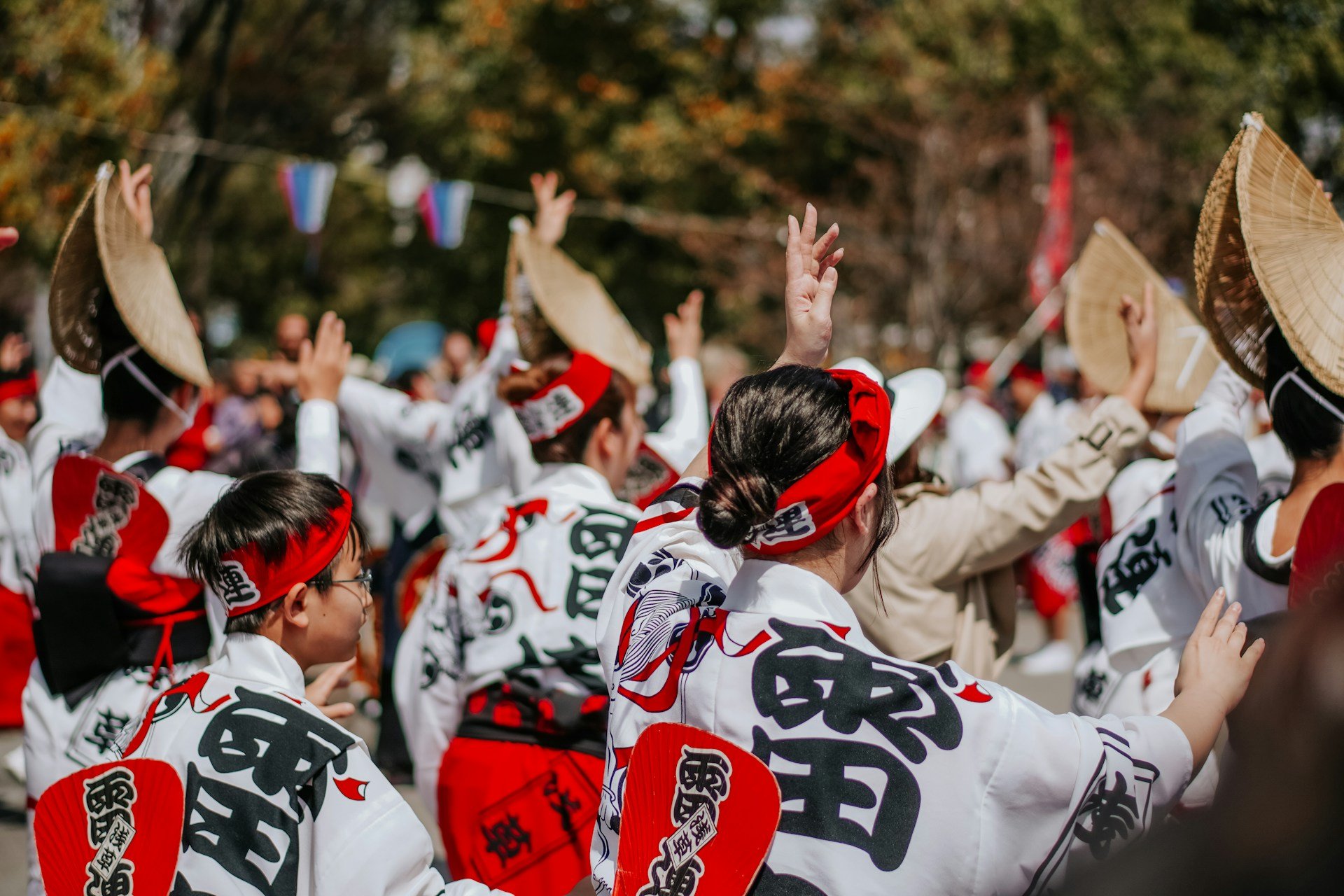
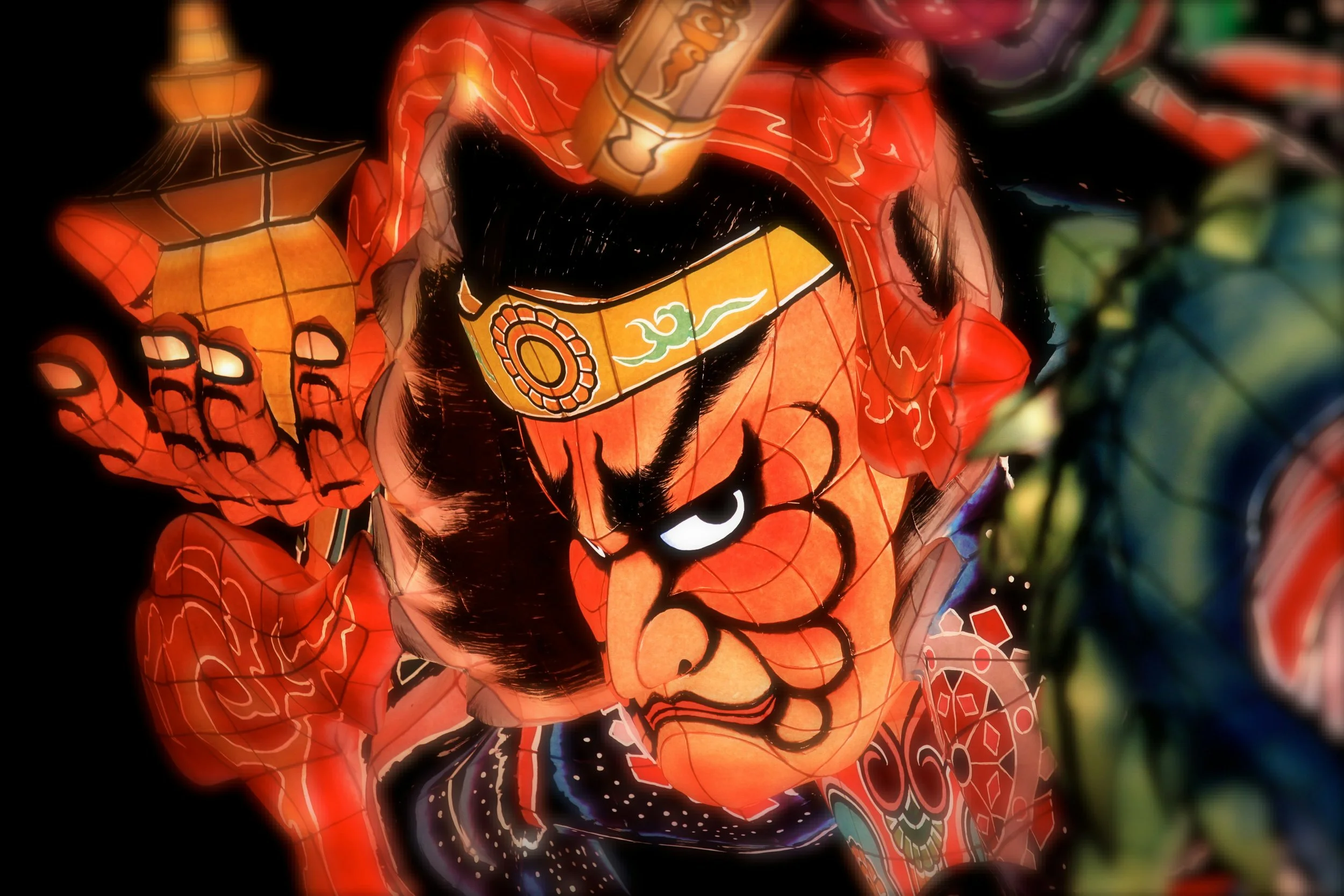
We start right in the middle of it, in Morioka for the opening night of Sansa Odori and a first bowl of wanko soba, where tiny bowls keep arriving until you cover yours with the lid to call it quits. From there we race north to Kuroishi, one of the only places in Japan where fan-shaped and doll-shaped Neputa floats parade side by side, and spend time with local artisans working in Tsugaru lacquerware and kokeshi dolls. On to Aomori for Nebuta, one of Japan's three largest festivals, where towering floats of warriors and demons move through the city to taiko and flute, and a stop at the fish market to build our own seafood rice bowl. We cross to Akita for the finale of Kanto Matsuri, working through kiritanpo nabe and tomburi along the way. Then south to Fukushima for the Waraji Festival's giant straw sandal parade, before winding the trip down through the volcanic scenery of the Bandai Azuma Skyline and the coloured ponds of Goshiki-numa into Aizu, a region of samurai history, onsen, and a preserved Edo-era post town.
The tour will be led by Michael, who has been travelling and eating his way through Japan since 2007, including time living there, and speaks Japanese.
TRIP HIGHLIGHTS
THE FESTIVAL RUN
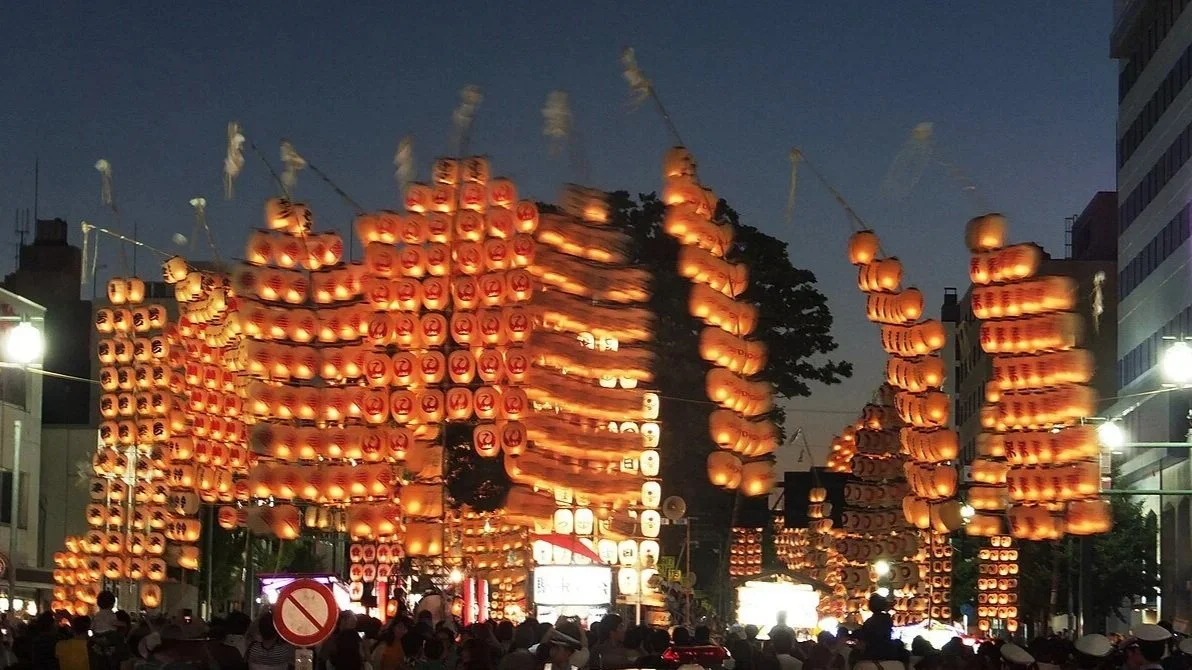
We start in Morioka for the opening night of Sansa Odori, one of the world's largest drum processions, with dancers moving through the streets in coordinated routines that the whole city joins. From there it's north to Kuroishi for Neputa Matsuri, where fan-shaped floats and elaborately built doll floats parade side by side, a pairing found nowhere else in the Neputa and Nebuta tradition. Then Aomori, one of Japan's three largest festivals, where a thundering parade of warrior- and demon-shaped lantern floats moves through the city streets, taiko echoing off the buildings, dancers leaping alongside in elaborate costumes. We cross to Akita for Kanto Matsuri, where 250 performers balance 12-metre bamboo poles weighing up to 50 kilograms on their foreheads, shoulders, and hips. And we finish in Fukushima for the Waraji Festival, where a 12-metre straw sandal is paraded through the streets to waraji odori dancing.
THE FOOD OF TOHOKU
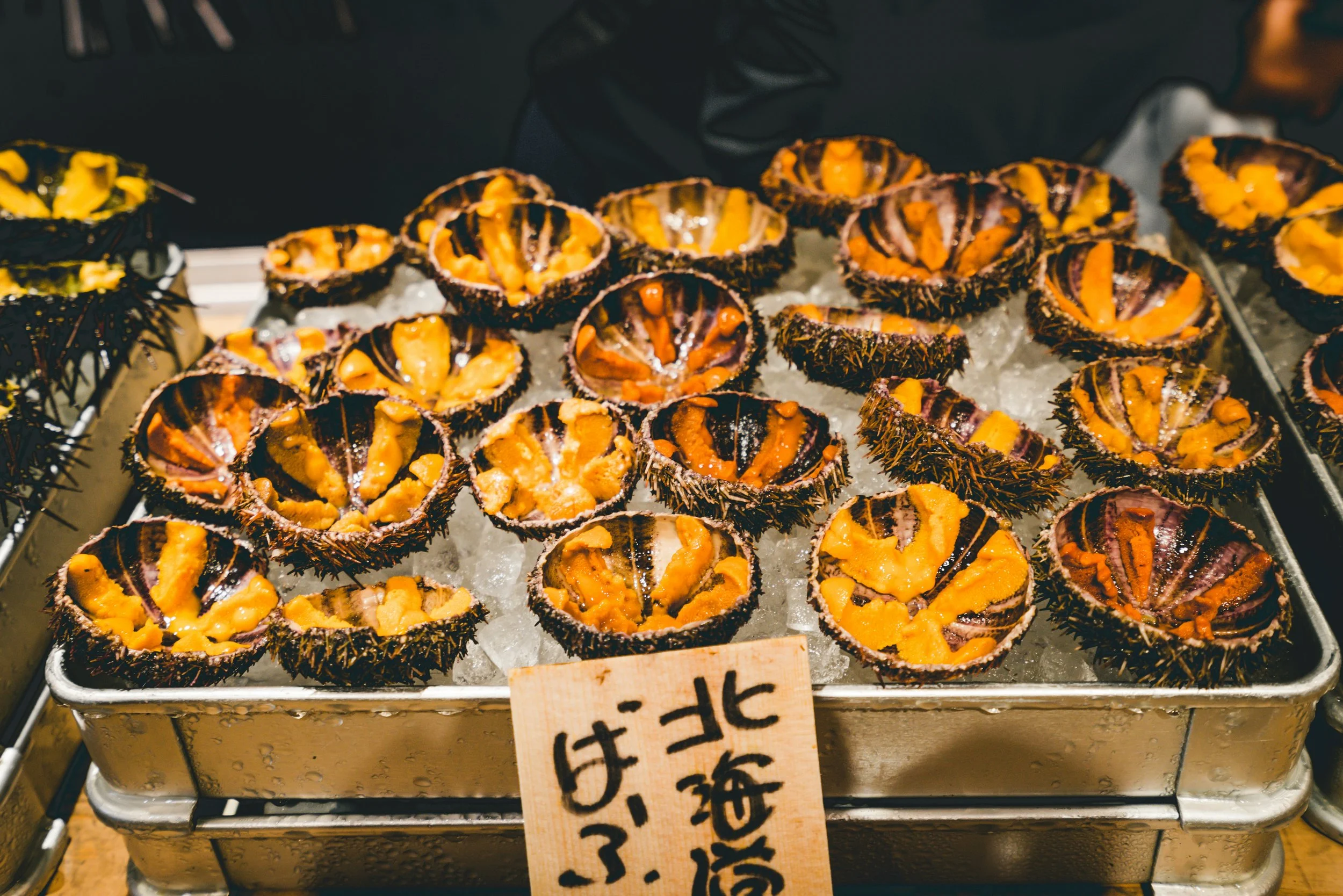
Cold climate, short growing season, and long winters. The food here was built for preservation and ended up being very good. Morioka is home to wanko soba, where tiny bowls keep arriving until you physically cover yours with the lid, and jajamen, a thick miso meat sauce on flat noodles that ends with a raw egg cracked into the remaining broth. In Kuroishi we're after kuro curry and tsuru tsuru udon, two local specialities of the town. Akita brings kiritanpo nabe, toasted rice skewers simmered in Hinai chicken broth, and tomburi, tiny seeds with a texture close enough to caviar that locals call it land caviar. In Aomori we build our own seafood rice bowl at the fish market, working through some of the best uni, scallops, and tuna in the country. And in Aizu, depending on the day, it's either a ramen-making workshop in Kitakata, one of Japan's three great regional ramens, or negi soba in Ouchi-juku, eaten using a whole green onion as chopsticks.
ONSEN AND NATURE
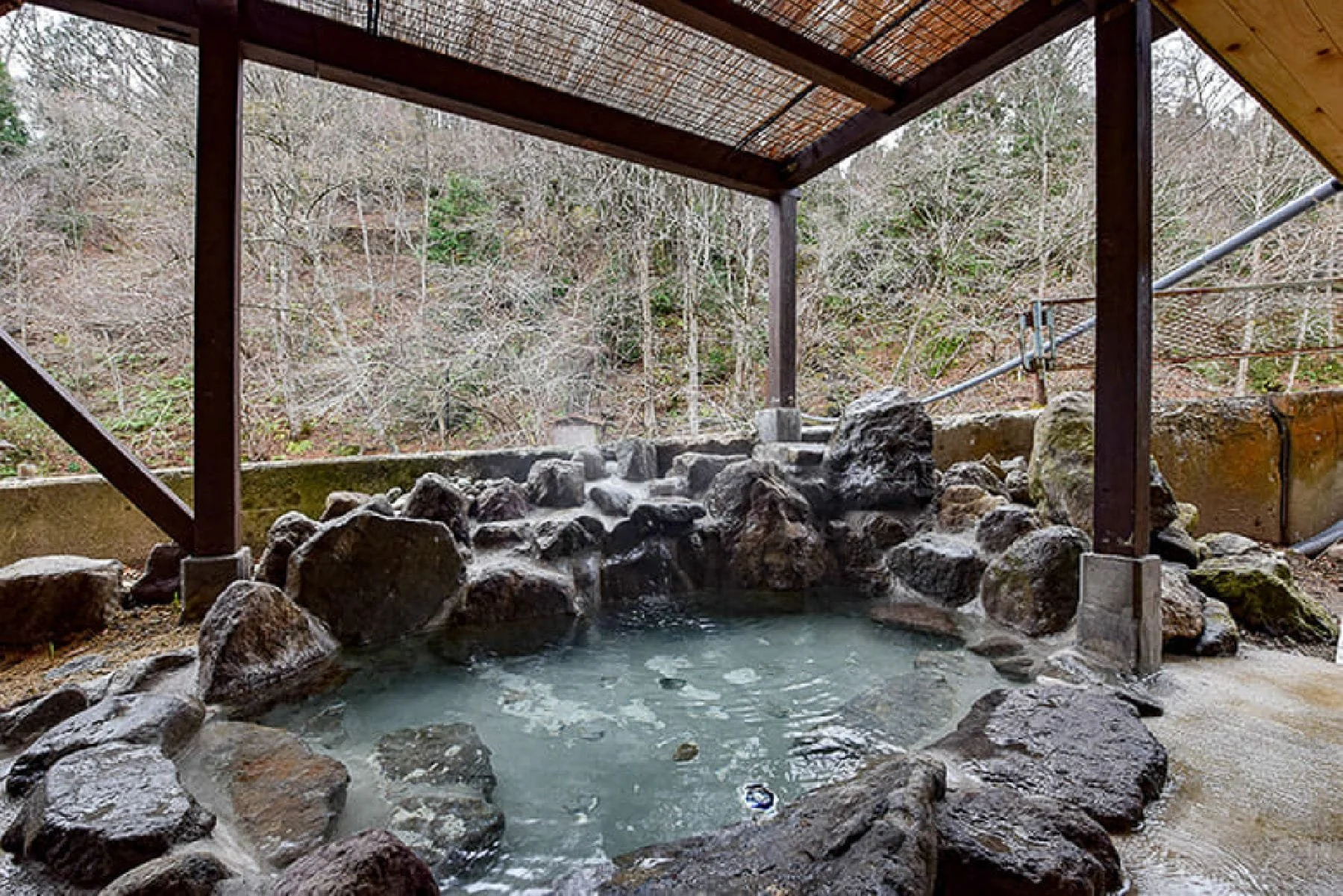
The trip closes out in Aizu, a proper wind-down after five festivals in eight days. The drive in crosses the Bandai Azuma Skyline, a volcanic plateau road climbing over Mt Azuma with sulphur vents steaming beside the road and panoramic views opening up across the mountains, before dropping through Ura-Bandai and the coloured ponds of Goshiki-numa, a chain of volcanic lakes that range from cobalt to jade to murky green-brown depending on each one's mineral content. On the other side is Higashiyama Onsen, a hot spring town 1,300 years old and once the private retreat of the Aizu domain's feudal lords, its sulphurous waters credited with healing wounded samurai during the Boshin War. We'll soak in private, open-air baths along the Yugawa River, then sit down to a kaiseki dinner built around Aizu's river fish, beef, and mountain vegetables.
SAMURAI COUNTRY AND OLD JAPAN
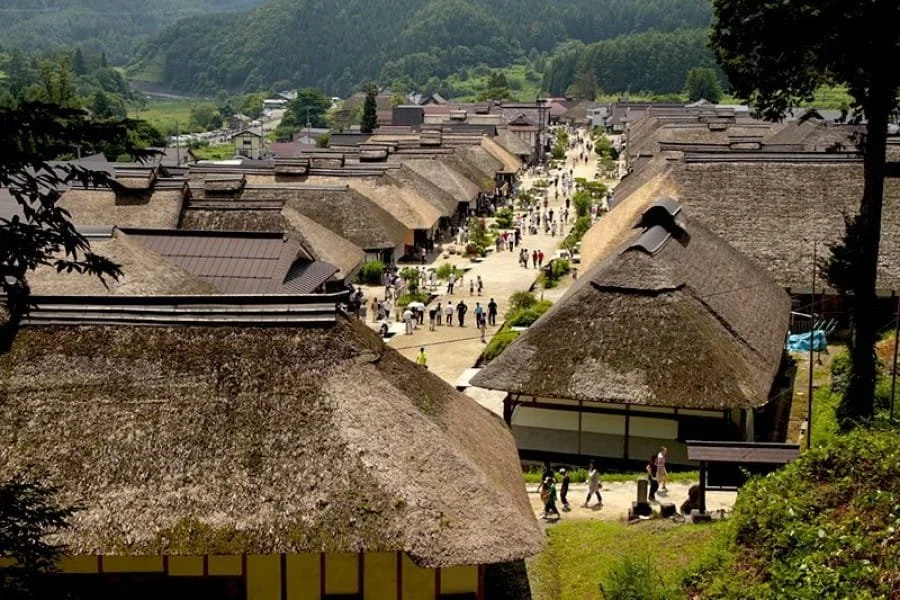
Aizu is one of Japan's most storied samurai regions, home to the Byakkotai, a corps of teenage samurai who died defending the domain during the Boshin War. Tsurugajo Castle, rebuilt with its distinctive red-tiled roof, unique among Japanese castles, anchors the old town. Nearby, Sazaedo is a strange and beautiful piece of Edo-period design: a wooden temple structure built as a double-helix spiral, where pilgrims climb up one ramp and down another without ever crossing paths. We'll also take a day trip out to Ouchi-juku, a preserved Edo-period post town in a mountain valley where thatched-roof buildings now operate as restaurants and shops, largely unchanged for centuries.
CRAFT AND THE UNEXPECTED
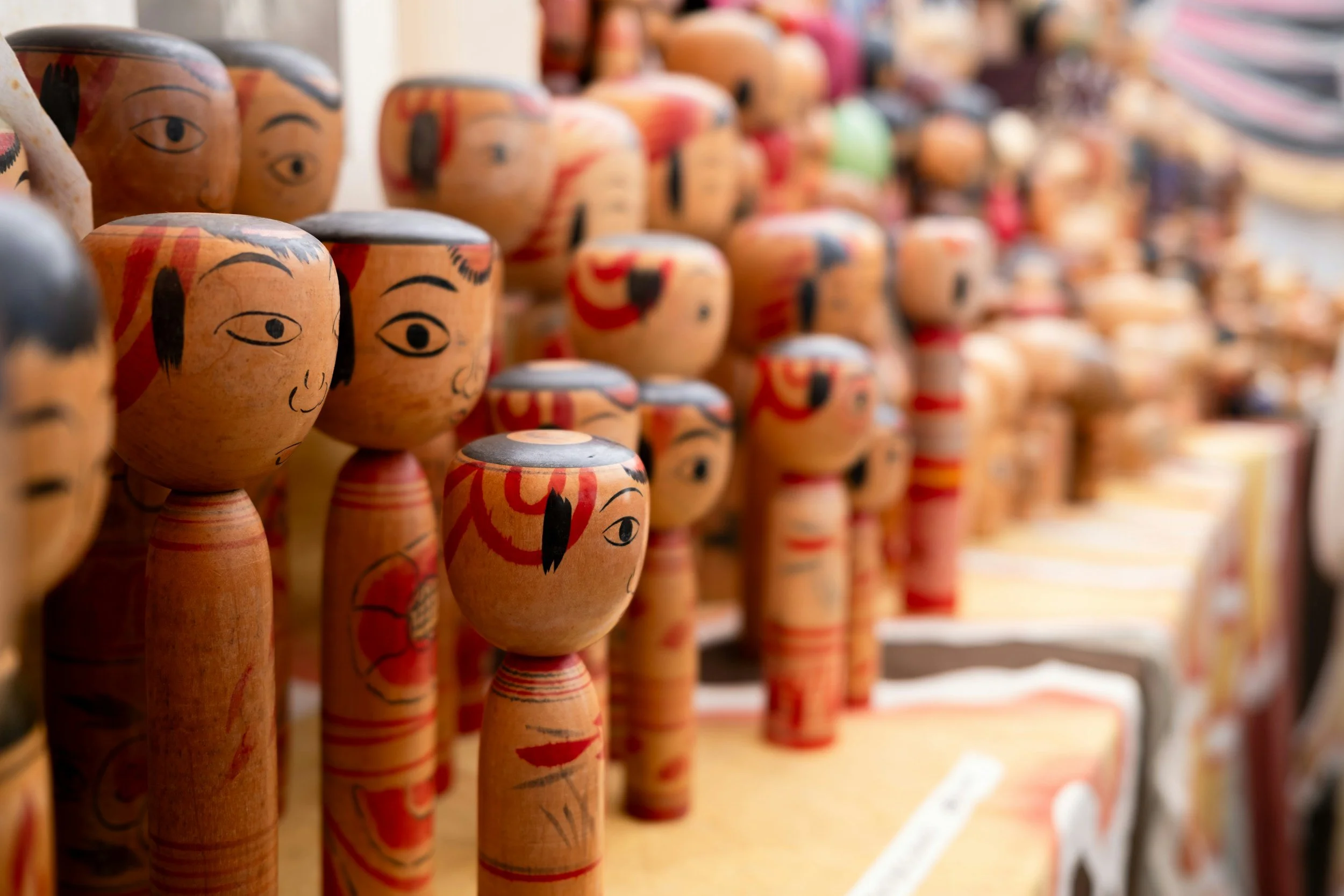
Kuroishi is a serious craft town, home to generations of kokeshi doll makers and a broader tradition of Tsugaru crafts. At the Kogei Denshokan we'll get hands-on with a craft experience, and the town's Kokeshi Museum runs through the history and regional variations of the dolls. On the way out of town, we stop at Inakadate, where farmers have spent decades turning rice paddies into enormous works of art, planting different coloured rice varieties to create huge images visible only from an observation tower. One of the stranger sights in Tohoku, and a genuine pit stop rather than a destination in its own right.
GET OFF THE EATEN TRACK WITH US
Want to know more? Here's how it works.
Register your interest using the form and we'll be in touch to set up a quick call, a chance to answer your questions and give you a deeper look at what the trip involves. From there, a 25% non-refundable deposit secures your spot. The remaining balance is due 60 days before departure. Check our full T&Cs here.
The full day-by-day itinerary and accommodation guide are coming soon, and formal bookings will open then. In the meantime, our FAQ covers everything from what's included to our cancellation policy.
We’ll be traveling around by van, which is the only way to reach some of the places we're going, so group size is intentionally capped at eight.
See our other Japan Tours here.
FREQUENTLY ASKED QUESTIONS
General Tohoku FAQ
-
Tohoku is the northern region of Japan's main island of Honshu, covering six prefectures: Aomori, Iwate, Akita, Miyagi, Yamagata, and Fukushima. Historically isolated from the main population centres to the south by mountains and harsh winters, the region developed distinct food cultures, craft traditions, and local identities that remain strong today. It is one of Japan's most agricultural regions, producing some of the country's finest rice, sake, and seafood.
-
Tohoku is known for its summer festival circuit, which includes three of Japan's largest and most spectacular matsuri: Aomori Nebuta, Akita Kanto, and Morioka Sansa Odori, all held within days of each other in early August. The region is also known for its onsen, particularly the remote mountain clusters of Nyuto Onsen in Akita; its seafood, drawn from the cold nutrient-rich waters of the Sanriku coast; its sake, with Akita alone home to 36 breweries; and the Jomon archaeological sites of Aomori, including the UNESCO-listed Sannai Maruyama settlement.
-
Akita is known for kiritanpo nabe, toasted rice skewers simmered in Hinai chicken broth, and iburigakko, radish pickled in the smoke of an open hearth. Iwate's Morioka is known for its three noodle dishes: wanko soba, jajamen, and reimen. Aomori produces some of Japan's finest seafood, including uni, scallops, and tuna from the cold waters of the Tsugaru Strait and Sanriku coast. The region also has a strong fermentation culture, with shottsuru fish sauce and numerous miso and soy sauce traditions.
-
The three main Tohoku summer festivals all take place in early August and are among the largest in Japan. Aomori Nebuta Matsuri (August 2–7) features enormous illuminated floats depicting warriors and demons paraded through the streets at night. Akita Kanto Matsuri (August 3–6) sees performers balancing bamboo poles hung with up to 46 paper lanterns on their foreheads, shoulders, and hips. Morioka Sansa Odori (August 1–4) is one of the world's largest drum processions, with tens of thousands of people dancing through the streets on the final night.
-
Early August is the peak of the festival season and the best time to experience the three major matsuri. Summers in Tohoku are warm and humid, cooler than Tokyo but still hot enough that evenings at the festivals are lively and comfortable. Autumn (October to November) brings spectacular foliage across the mountain regions. Spring is known for cherry blossoms, particularly the weeping cherries of Kakunodate's samurai district, which bloom in late April. Winter is long and heavy with snow, which makes Tohoku one of Japan's better skiing destinations, with resorts in Zao and Hakkoda drawing serious powder hounds. Outside of the August festival period, the region sees far fewer visitors than the main tourist corridors, though transport between smaller towns can require more planning, as local train and bus services are less frequent than in central Japan.
-
The Tohoku Shinkansen connects Tokyo to the major cities of the region. Sendai is around 90 minutes, Morioka around two hours, and Shin-Aomori around three hours. Akita is reached via the Akita Shinkansen from Tokyo in around four hours, with a stop at Kakunodate. Domestic flights from Tokyo's Haneda airport to Aomori and Akita are also an option, with flights taking around 75 minutes.
Tour FAQ
-
The Tohoku August 2027 tour is estimated at AUD $9,000–$12,000 per person. August is high season in Tohoku due to the festival circuit, which means accommodation and transport run at a premium compared to other times of year. Final pricing will be confirmed when the full itinerary and accommodation guide are released. For a guide to what's typically included and excluded in OTET tour pricing, see our FAQ page.
-
The tour covers Morioka for the opening night of Sansa Odori, Kuroishi for Neputa Matsuri and craft, Aomori city for Nebuta, Akita city for the finale of Kanto Matsuri, Fukushima for the Waraji Festival, and Aizu for samurai history, onsen, and a preserved Edo-era post town. The full day-by-day itinerary is coming soon.
-
We generally stay in a mix of three and four star hotels, with at least one stay at an onsen hotel during the trip. We always choose onsen hotels that allow for private bathing, ensuring all guests have a chance to experience an onsen, even if they have tattoos or are uncomfortable with nudity. A full accommodation guide will be published alongside the itinerary.
-
Eight people fit comfortably in a van. It's that simple. Travelling as a small group means we can reach places a coach tour never could, eat at restaurants that wouldn't seat big groups, and visit producers who work on a scale that doesn't accommodate large groups.
-
The tour is led by Michael Minsky, who has lived in Japan and travelled there regularly since 2007. He's been organising and guiding food-focused tours in Japan for years, speaks Japanese and has personal experience of most of the places on this itinerary.
-
Register your interest using the form on this page. We'll be in touch to set up a call, answer your questions, and walk you through the trip in more detail. A 25% non-refundable deposit secures your spot, with the remaining balance due 60 days before departure. Full details are in our Terms of Service.