
主食 (Zhǔshí): Why "Does It Come With Rice?" Is the Wrong Question
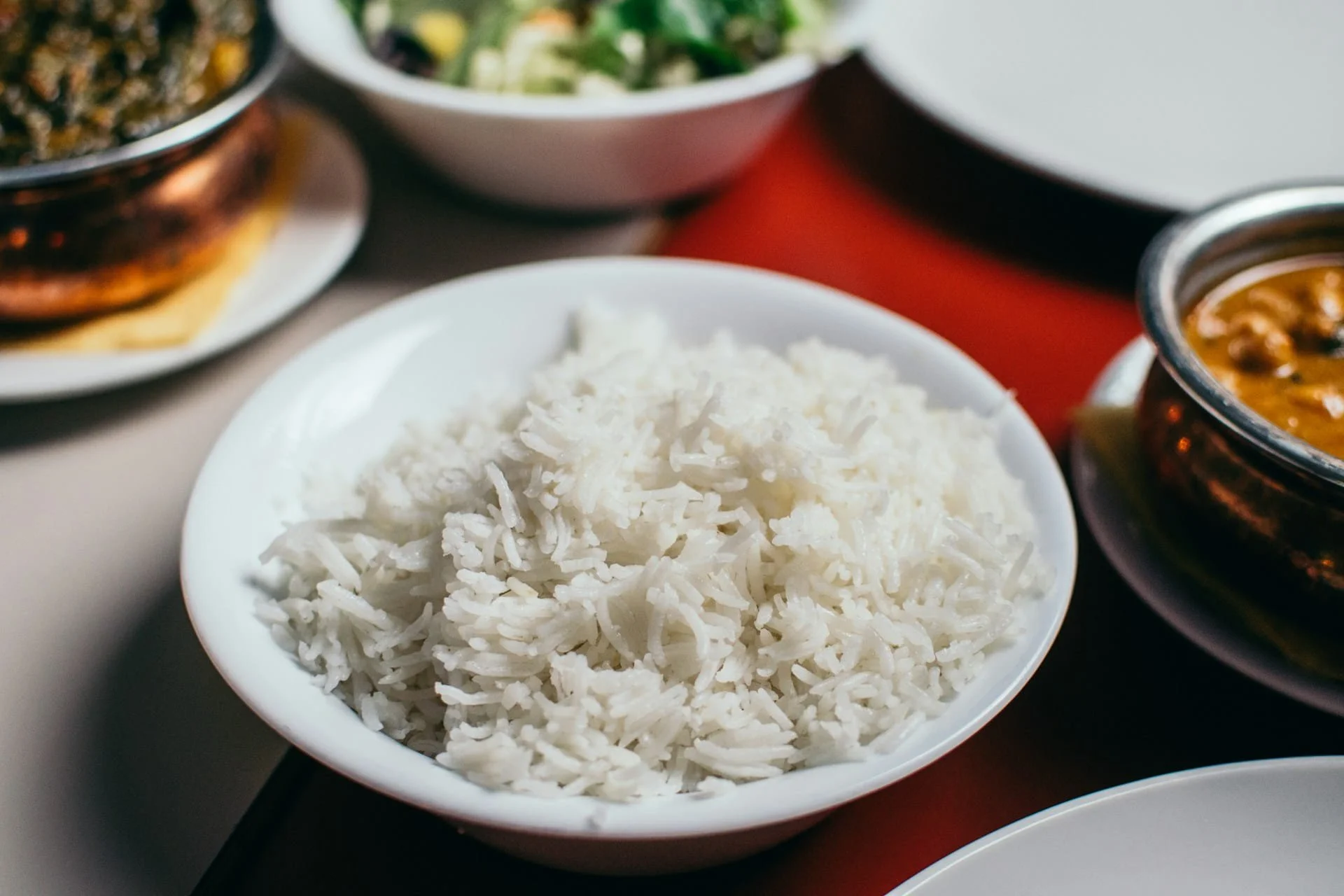
Ask for Chinese food in most Western countries and somewhere in the ordering process, the question comes up: does it come with rice? For a lot of people, rice and Chinese food are so intertwined they are practically the same thing. Walk into a Chinese restaurant at home, and there it is — that bowl of steamed white rice sitting alongside your stir-fry, reliably bland, reliably there.
The thing is, that's not really how Chinese food works in China. You'll figure this out on your first sit-down meal in the country. China is a vast, wildly varied place. The distance from Harbin in the far north to Hainan Island in the south is almost as far as London to Lagos. The idea that one billion-plus people all eat the same staple is, to put it gently, a bit of an oversimplification.
What Chinese people actually eat every day are Chinese staple foods (主食, zhǔshí), and depending on where you are in the country, you’ll find Chinese regional foods that might be steamed rice, hand-pulled noodles, fluffy steamed buns, a charred flatbread cooked in a clay oven, or a dense paste of roasted barley flour mixed with yak butter. The diversity of Chinese staple eating is one of the things that makes eating your way through the country so endlessly surprising and enjoyable, and it's one of the things that gets almost completely lost when Chinese food travels abroad.
How Is Rice Actually Eaten in China?
Here's something that catches a lot of first-time visitors off guard. You sit down at a Chinese restaurant in China, the food arrives and there's no rice. Those in the know, know that you have to ask for it, and if you want it to arrive with the food rather than at the end of the meal, you need to say so.
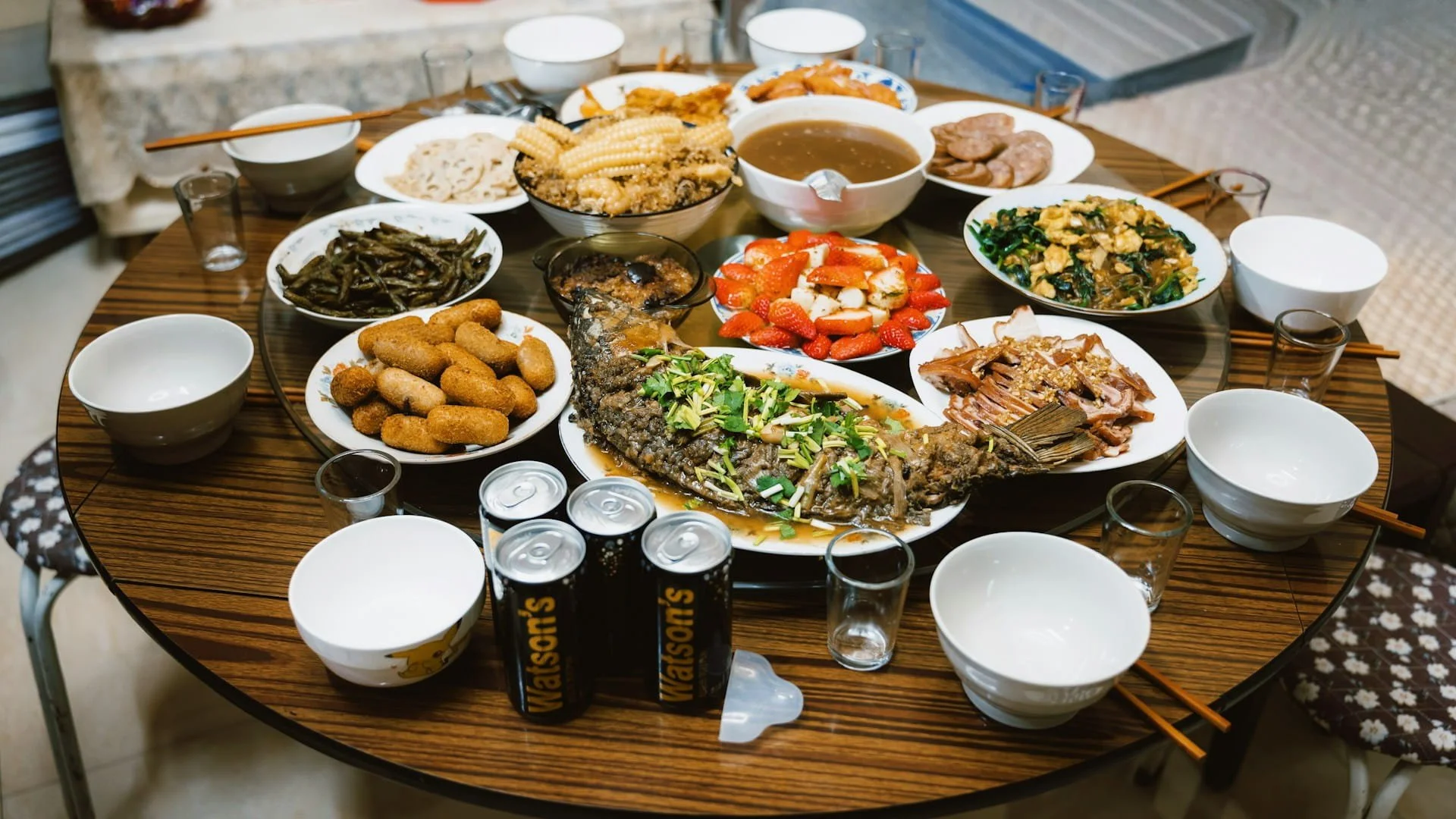
In the West, rice is the foundation to a Chinese meal. It arrives first, fills half your plate, and you pile everything else on top. In China, a meal is all about the dishes. The fish, the vegetables, the braised pork — those are the stars. Rice is a necessary accompaniment, but it’s something you eat alongside your food, not underneath it. At a banquet or a big group dinner, asking for rice too early raises eyebrows. It signals you haven't properly enjoyed the real food. At a smaller restaurant, rather than asking if it comes with rice, you're more likely to be asked: "do you want a staple (主食, zhǔshí) with that?" Because rice isn't assumed, and in plenty of places across the country, it isn't even what people eat.
Then there's fried rice (炒饭, chǎofàn). In the West it often gets ordered as a main alongside the other dishes. In China, fried rice is fundamentally a way to use up yesterday's cold rice. The origin story is exactly that: noon's leftover rice, thrown into a hot pan that evening with an egg and a handful of spring onion. The elaborate Yangzhou-style fried rice that became internationally famous was carried abroad by Cantonese and Fujianese emigrants, which is why the fried rice most people outside China know is actually a southern emigrant dish, not a national staple. In Cantonese restaurants today, you can order a chǎo dǐ (炒底, chǎo dǐ), swapping your plain steamed rice base for fried rice. It's an upgrade option, but not the centrepiece.
The South: where rice really is king
South of the Yangtze River, rice is genuinely at the heart of every meal. Guangdong, Fujian, Zhejiang, Hunan, Jiangxi, Guangxi — this is rice country, and the food culture here has been built around the grain for thousands of years. It’s where the type of rice matters and the way it's cooked matters. Whether it arrives as individual fragrant grains, as rice cakes at a festival, or slow-cooked into congee.
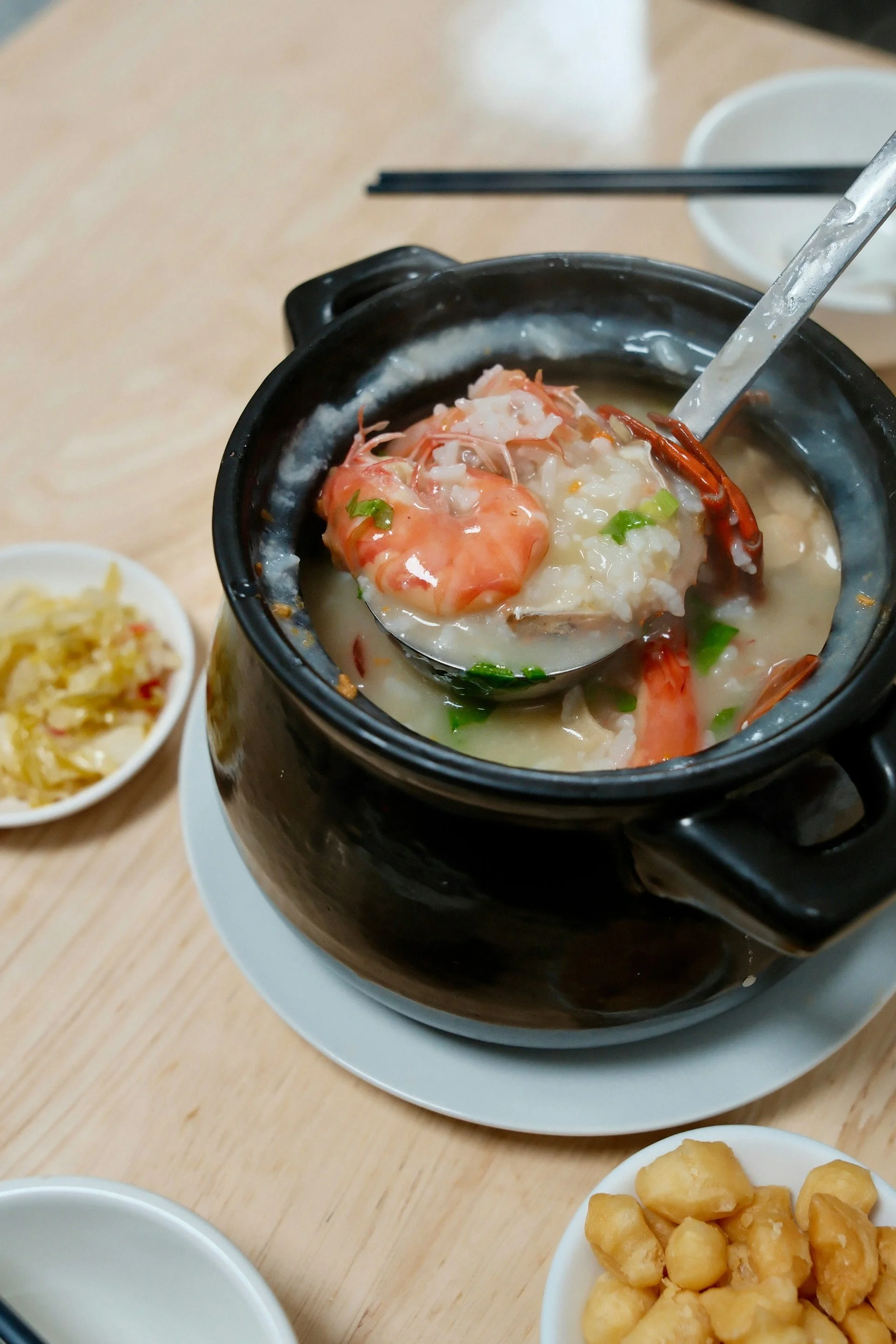
And about that last one – Congee (粥, zhōu) is worth a mention because it illustrates just how different rice eating can be within rice country itself. In the north, congee tends to be plain, thin, and bland. To me, it’s just wet rice. In the south, especially in Guangdong, it is an entirely different dish. Slow-cooked to a silky, almost creamy consistency and then loaded with fresh seafood: fish, scallops, shrimp, sometimes a whole crab. Seasoned with ginger, spring onion, white pepper, a drizzle of sesame oil. It becomes a hearty, deeply flavoured dish that bears no relation to its northern cousin. The first time I had a proper southern congee with fresh seafood I was in Guangzhou, and it reframed the whole thing for me. It's one of those moments where something you thought you knew turns out to be completely different and turns out I was a fan. Beth and I always say, you don’t have to like it, but you do have to try it, precisely for this reason. In China sometimes what you assume is just the same dish can be completely different depending on where you eat it.
The South and Southwest: rice noodles
Stay south but push west into Yunnan, Guangxi, Guizhou and Hunan, and the staple begins to shift form. The grain is still rice, but instead of eating it steamed, here it gets ground and shaped into noodles. Rice noodles (米粉, mǐfěn) are the daily staple across this region, and the variety is staggering.
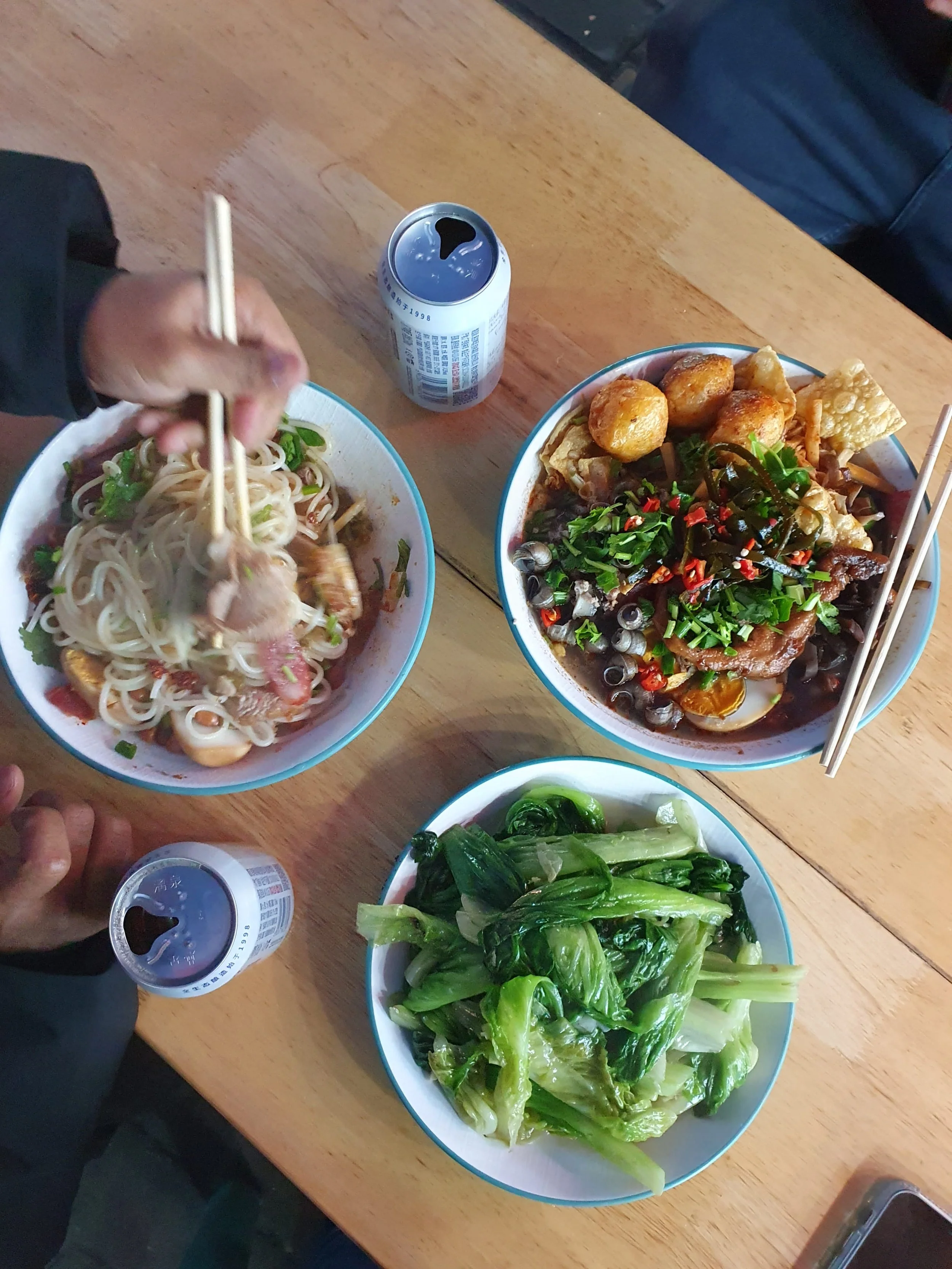
Guangxi's most famous rice noodle is Guilin Rice Noodle (桂林米粉, Guìlín mǐfěn). It's everywhere in China now, not just in Guangxi. The bowl arrives with smooth, silky noodles in a clean, lightly seasoned broth. Then you head to the toppings bar and make it your own: pickles, peanuts, spring onion, an extra ladle of broth, chilli oil. You pile on as much or as little as you want. It's one of those dishes that's simple in theory but becomes deeply personal in the eating, and people take their topping ratios very seriously.
Then there's snail noodle soup (螺蛳粉, luósī fěn), which went from regional Guangxi speciality to nationwide obsession almost overnight. The reason it became famous is also the reason it's an acquired taste: it smells genuinely alarming. Fermented bamboo shoots, dried tofu skin, pickled vegetables, chilli oil. The first time you encounter it, something in your brain says something has gone wrong. Then you taste it and you’re going back for more.
This is a pattern you'll notice across the southwest. If something smells that bad, it's probably going to taste incredible! The Guizhou school of rice noodles takes this principle seriously. Bold, sour, ferociously spicy. The stink is part of the deal, and once you understand that, a whole world opens up.
Rice noodles in this region are a completely different eating experience to wheat noodles. Silkier, softer, and less chew. The flavour profiles run sour and spicy rather than the deeper, more savoury notes of northern noodle culture. They're built for a different climate and a different kind of hunger.
The North: bread country
Cross the Huai River heading north, and the landscape changes. Colder, drier, with long winters and low rainfall. This is wheat country, and it became wheat country for a very simple reason: wheat thrives where rice cannot. Rice needs warmth and standing water. Wheat is stubborn, cold-hardy and drought-tolerant. The north didn't choose wheat so much as the climate ruled everything else out. The result, over centuries, is a bread and noodle culture as deep and varied as the rice culture of the south.
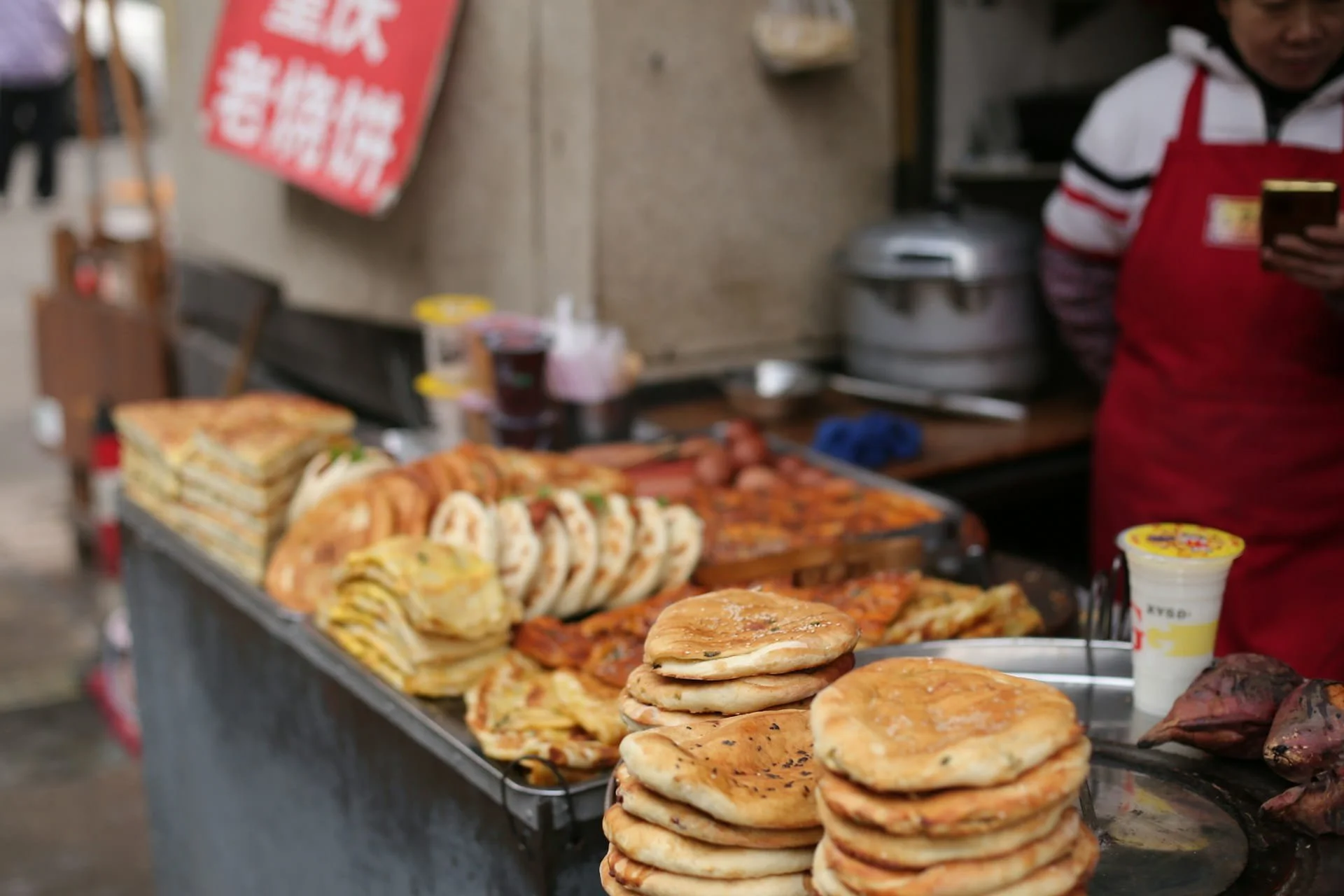
What wheat looks like in Chinese hands, though, has almost nothing in common with the bread traditions of the West. No sourdough loaves or baguettes. Instead, a distinct tradition of steamed, stuffed and pan-fried wheat foods.
The most universal northern bread is steamed bun (馒头, mántou): plain, soft, made from fermented wheat dough with nothing added. In the north, a steamed bun is what rice is in the south: the thing you eat alongside your dishes to round out the meal. Mild by design, built to soak up sauce.
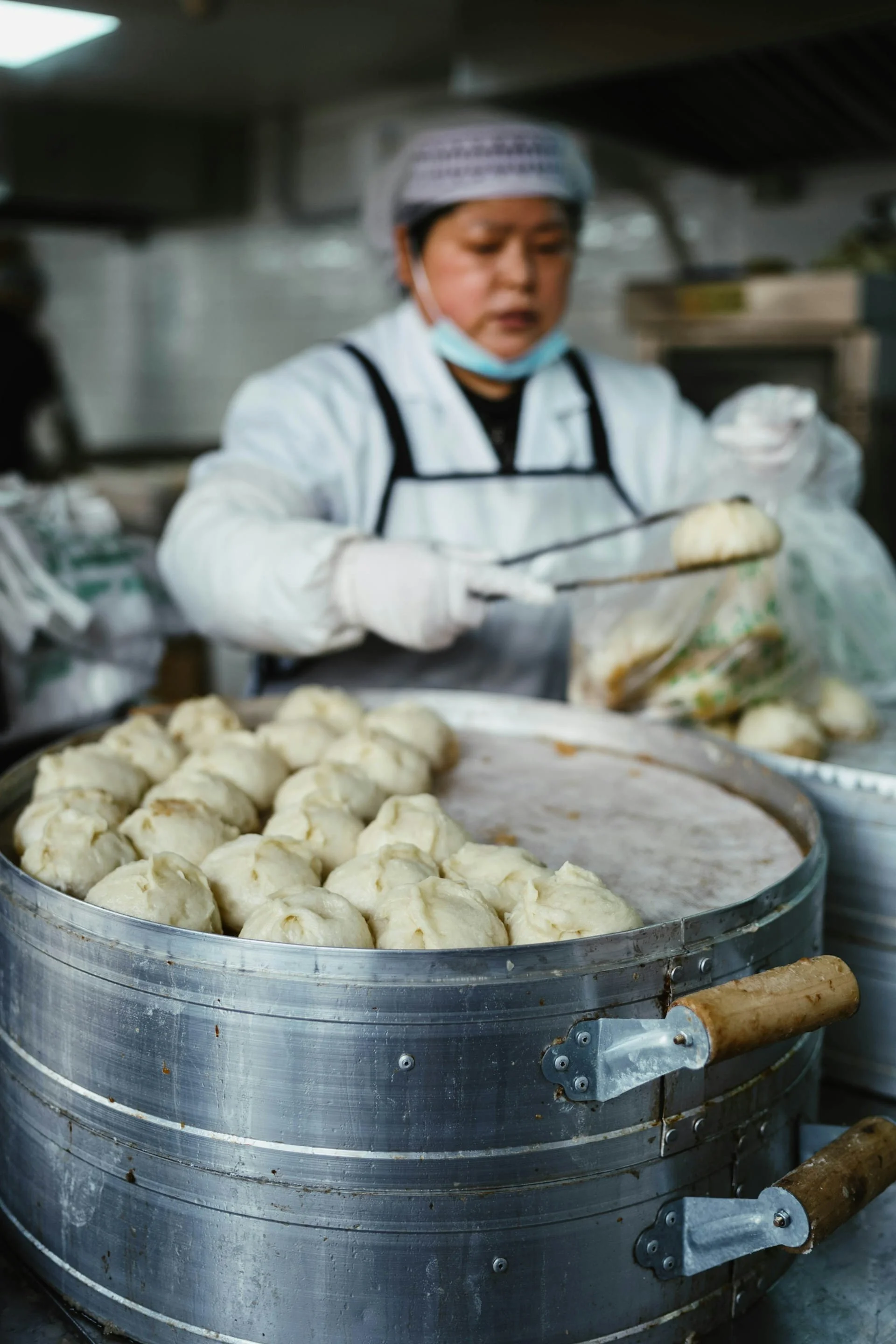
But then it gets more interesting.
Filled steamed buns (包子, bāozi) are everywhere. Every neighbourhood has a bun shop (包子铺, bāozi pù), with bamboo steamers stacked out front. On a cold morning, the steam rolling off those baskets onto the street is one of the great sensory pleasures of Chinese city life. When I first moved to China as a student, I ate so many steamed buns that I genuinely burned myself out on them. For years I couldn't look at one. But now I'm fully back on board. Time heals all wounds, and a good steamed bun is worth the wait. The combination of soft, yielding dough and a hot filling — pork and cabbage, egg and chive, vegetables and glass noodles — is one of the most satisfying fast foods that exists. Smash two of them and you're set for the morning. They're also economical, which is part of why they became a staple in the first place.
Then there's a real Beijing local treasure that's getting harder and harder to find: Mending Roubing (门钉肉饼, méndīng ròubǐng). Named after the round brass studs on the old city gates, these thick pan-fried meat cakes have a crispy base, a soft steamed top, and a rich pork filling inside. They're more substantial than a soup dumpling, more doughy, with a specifically Beijing character that doesn't travel far. Finding a good one is worth the detour.
Speaking of pan-fried buns (生煎包, shēngjiān bāo): this is Shanghai's contribution to the stuffed bun universe. The bottom gets pan-fried until golden and crisp, the top stays soft, dusted with sesame seeds and spring onion, and there's hot soup inside. Bite in carefully. That soup will absolutely mess up your shirt, scald your mouth and ruin your day if you're not paying attention.
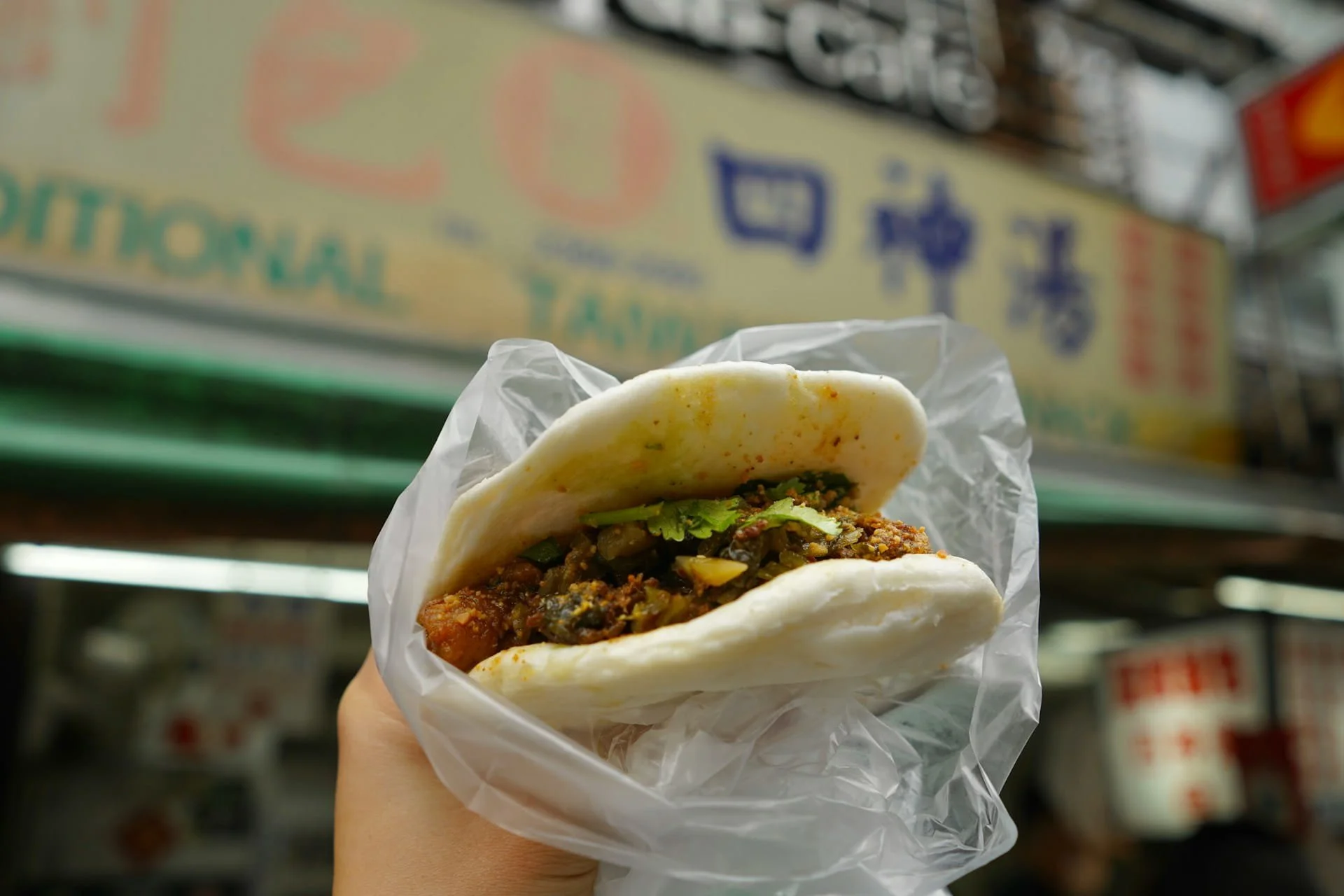
Roujiamo (肉夹馍, ròujiāmó) from Shaanxi is one of the great street foods in the world. Locals will cheerfully tell you it's the world's oldest sandwich, a claim the evidence doesn't completely discourage: the bread dates back to the Qin dynasty, over 2,200 years ago. Slow-braised pork, glossy and falling apart, stuffed inside a crispy sesame flatbread with that perfect contrast of crunch on the outside and chew in the middle. The pork has been cooked in a master stock with over 20 spices, sometimes kept going for generations at the same shop. Just writing about it makes me want one immediately. That's usually the sign of a dish doing something right.
Then there's Xianbing (馅饼, xiànbǐng), the pan-fried stuffed flatbread that I love deeply. When I lived in Shandong in 2009, Xianbing was part of daily life in a way that still makes me happy to think about. Whether it's a chewy, slightly doughy version or a hot-off-the-griddle one where the base has gone golden and crackling, there's something about the contrast between the crisp casing and the juicy filling that hits differently to any other bread. It's almost like the love child of a dumpling and a pizza. You pick it up with your hand, dip it in vinegar and chilli oil, or tear into it with your chopsticks. Either way, it’s an amazing combination.
The North and Northwest: wheat noodles
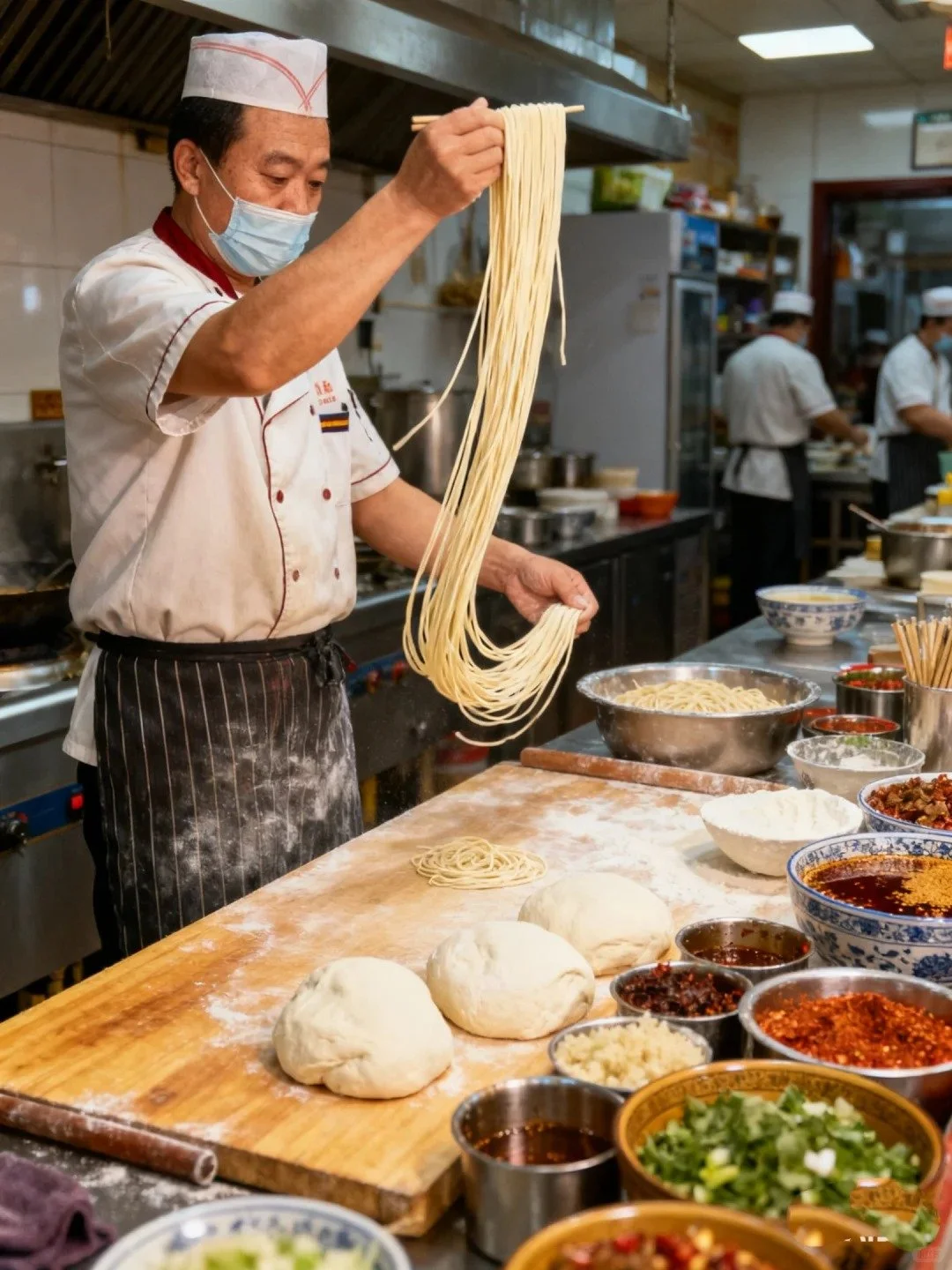
The wheat culture of the north also produced one of the most complex and regional noodle traditions in the world, and if you want to understand the full scope of it, you need to spend time in Shanxi and Shaanxi.
Shanxi is the noodle capital of China. There's a running joke that if you want rice there, you have to say so explicitly, because the word for "meal" in Chinese just means noodles in Shanxi. There are reportedly over 100 different noodle forms in the province, made using everything from board scrapers to scissors to curved blades. Knife-shaved noodle (刀削面, dāo xiāo miàn) is the most famous: thick, ridged slabs shaved directly from a block of dough into boiling water, with a satisfying chew and an uneven texture that holds sauce beautifully.
Shaanxi has hot oil noodle (油泼面, yóu pō miàn): wide, hand-pulled noodles topped with dried chilli and spring onion, finished at the table with a ladleful of smoking oil poured directly over the top. The sizzle and the bloom of fragrance that follows is one of those small dining theatrics that never gets old.
From Gansu comes Lanzhou beef noodle (兰州牛肉面, Lánzhōu niúròu miàn), arguably the most replicated noodle dish in China: clear golden broth, white radish, a slick of chilli oil, and noodles pulled to your preferred thickness right in front of you. There are Lanzhou noodle shops in every city in the country.
This is only a taster. Wheat noodles in China deserve a full article of their own, which we’ll be bringing you soon.
The North: dumplings
You cannot talk about northern Chinese staple eating without talking about dumplings (饺子, jiǎozi). In the north, a plate of dumplings is a meal in itself.
They're also one of the great communal foods. Making dumplings is a family activity. Everyone around the table, rolling wrappers and folding, and the conversation moving faster than the production line. In northern China especially, this is tied to Chinese New Year. The whole family comes together to make them, staying up past midnight to have them ready as the new year arrives. There's something about that combination of repetitive work and togetherness that makes the eating feel like it means more.
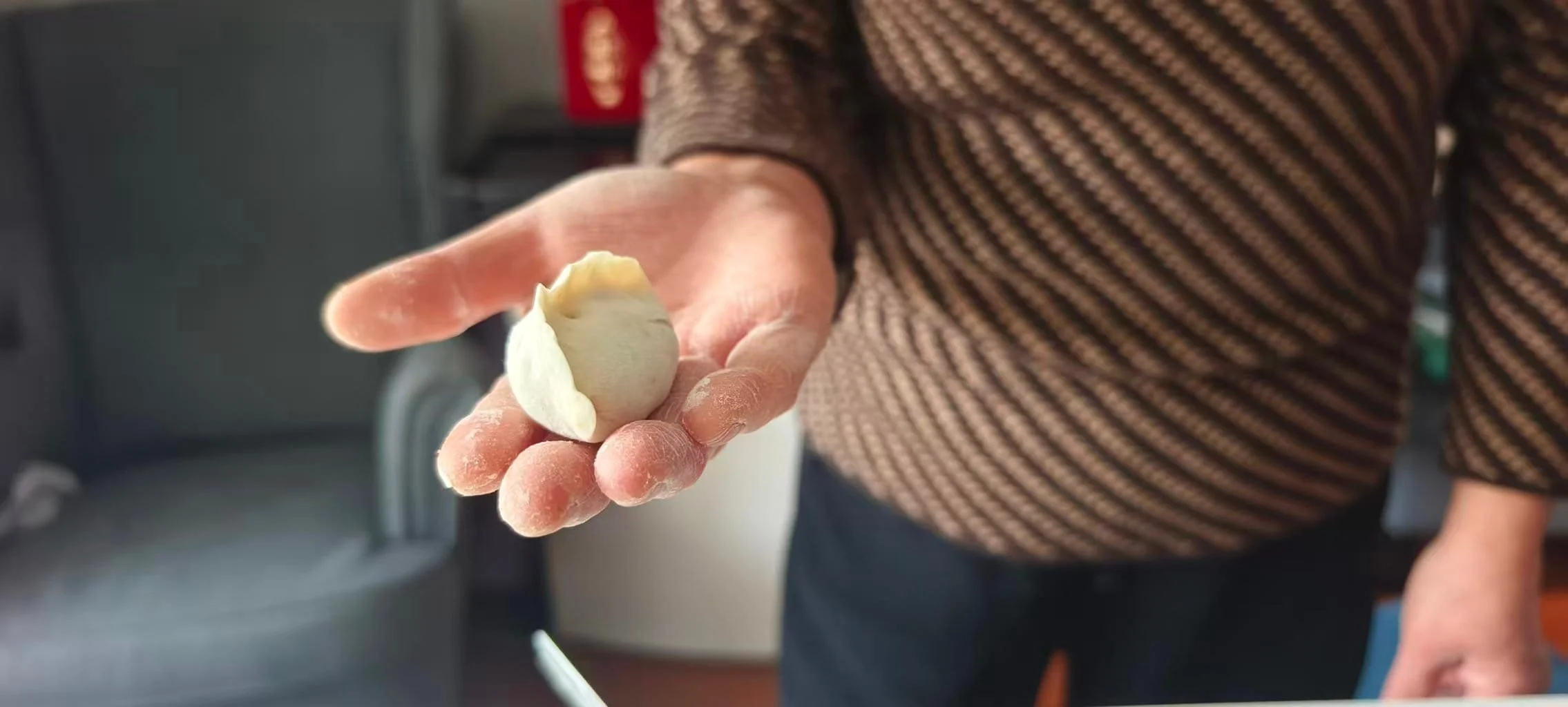
When I lived in Shandong, a region with serious dumpling credentials, we ate them a couple of times a week. Our regular spot in Jining, the small city I lived in, was in an alley right outside the back door of someone's house. A couple of low stools, a tarp overhead, and two aunties and an uncle who had clearly been doing this their entire lives. The aunties wrapped while the uncle cooked, and the whole setup had the calm efficiency of people who don't need to think about what they're doing anymore. The dumplings were extraordinary.
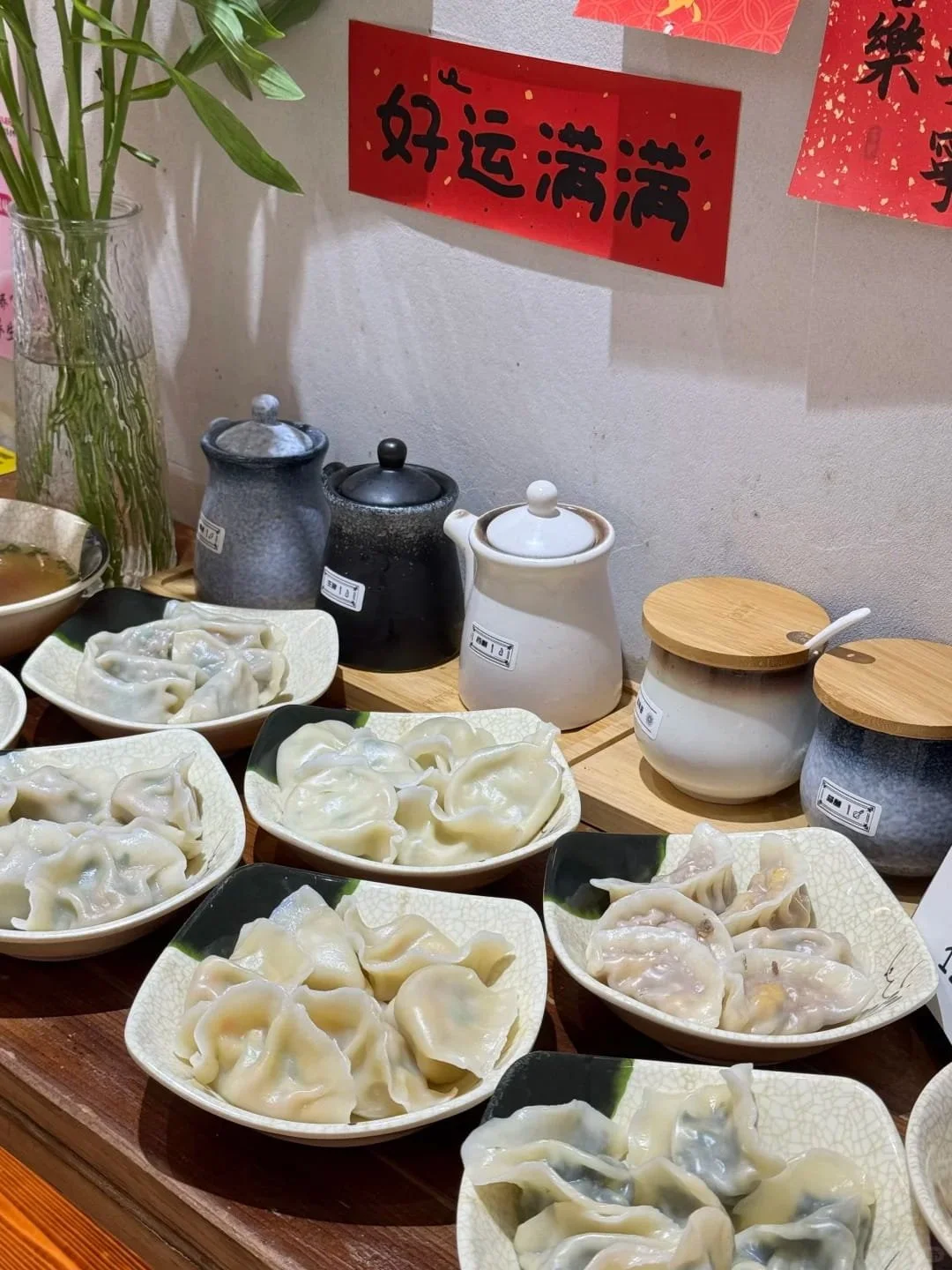
You ordered by liǎng (两, liǎng) or half liǎng, a unit of measure for dumplings that varies between restaurants. At this place, a liǎng was 18. The lamb dumplings were the most expensive at 18 RMB for a liǎng. That’s under $3 USD. The basic pork and cabbage were 8 RMB. At those prices, we ate hundreds.
What dumplings are served with matters too. In the West, you'll often see them with soy sauce. In northern China, you eat them with black vinegar — most often from Shanxi or Zhenjiang — and chilli oil. The vinegar cuts through the richness of the filling and lifts everything with a sharpness that soy sauce simply cannot replicate. Once you've eaten them this way, the soy sauce habit feels like a waste of a dumpling.
Within the single concept of a dumpling, there's a universe of variation. The filling changes by season and by household. The wrapper can be thick or thin. They can be boiled, pan-fried, or steamed, and each method produces something that eats completely differently. We could write a separate article on dumplings also, and we probably will.
The Far West and the Roof of the World: two outliers
This is where the story gets genuinely surprising.
Xinjiang: where China meets Central Asia
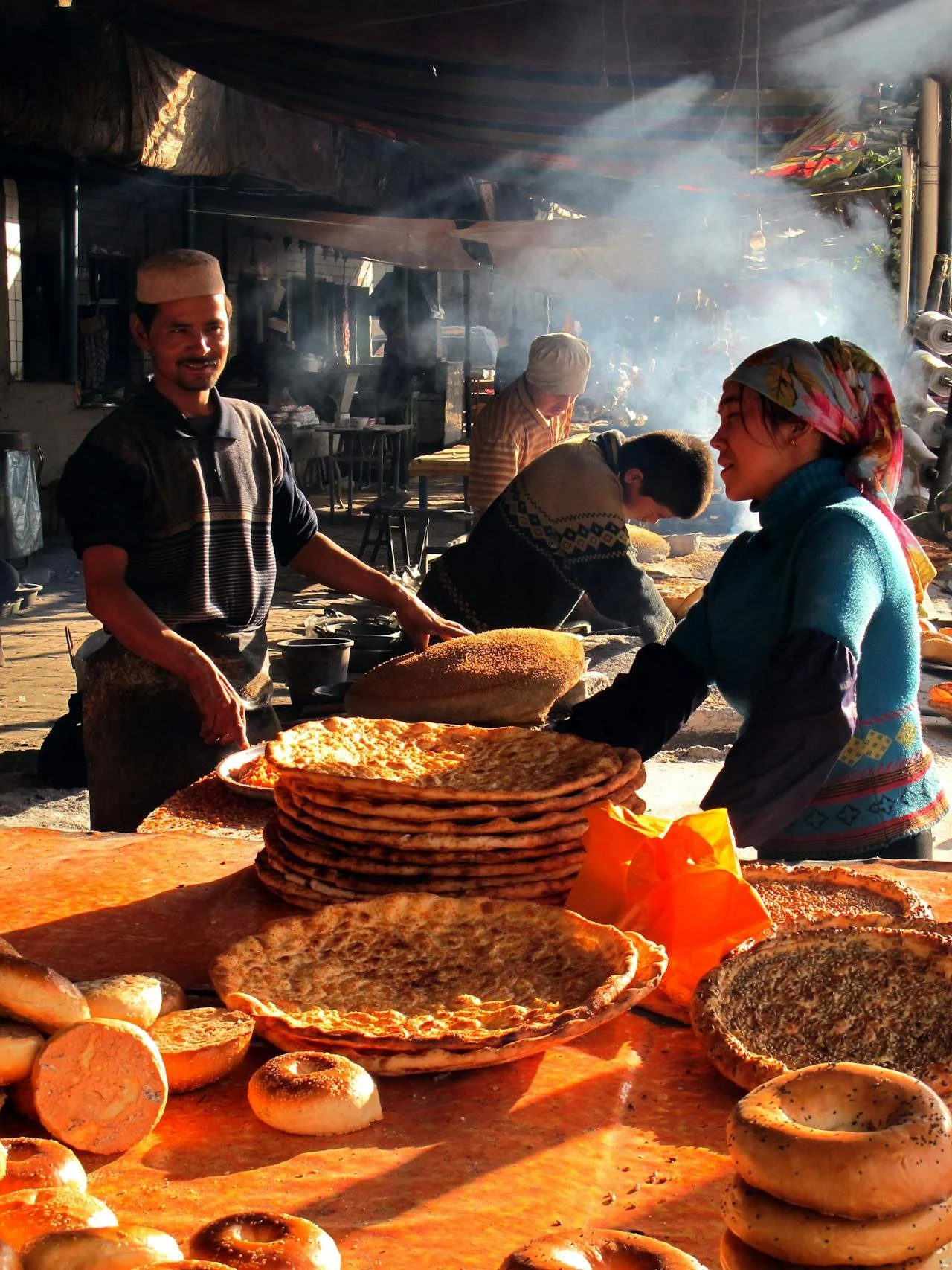
Xinjiang is where everything you thought you knew about Chinese food quietly steps aside. The staple here is naan bread (馕, náng), baked in a clay tandoor oven. Crispy and slightly charred on the outside, chewy and malty inside, often studded with sesame seeds or scattered with onion. It looks more at home in Istanbul or Tehran than it does in Beijing, and that's because culinarily, it is. Xinjiang sits at the western edge of China, and the food culture here has been shaped far more by Central Asian and Middle Eastern tradition than by the Han Chinese cooking most people associate with the country.
A freshly baked naan bread straight from the oven is one of those simple eating pleasures that's hard to improve on. The crust snaps, the inside is warm and fragrant with the deep wheat smell you only get from a clay oven, and you tear off pieces and dip them into whatever's in front of you. The bread absorbs everything around it. My personal favourite is dipping into sauce from Big Plate Chicken (大盘鸡). There are reportedly over 300 varieties, from plain to stuffed with spiced lamb and onion to sweet versions with raisins. Naan bread also gets broken up and cooked through directly with meat and sauce in a way that functions almost like a Xinjiang version of fried rice, the bread soaking up all the flavour of the dish until the two become inseparable.
The other great Xinjiang staple is lamb pilaf (抓饭, zhuāfàn), slow-cooked lamb and carrot pilaf, eaten traditionally with your hands. The name literally means "grab rice." It's a direct cousin to Uzbek plov or Persian polo, and eating it, you feel the full weight of the Silk Road.
You don't need to go to Xinjiang to find this. Xinjiang restaurants have spread across China and tend to be excellent wherever you find them, recognisable by the large flatbreads in the window, the scent of cumin and lamb, and often have a live musician in the corner or a full on dance show during your meal. I’ve eaten my way through plenty of Xinjiang restaurants in Beijing, Shanghai and plenty of other places. If you're in any major Chinese city, you can find one.
Tibet: the edge of the map
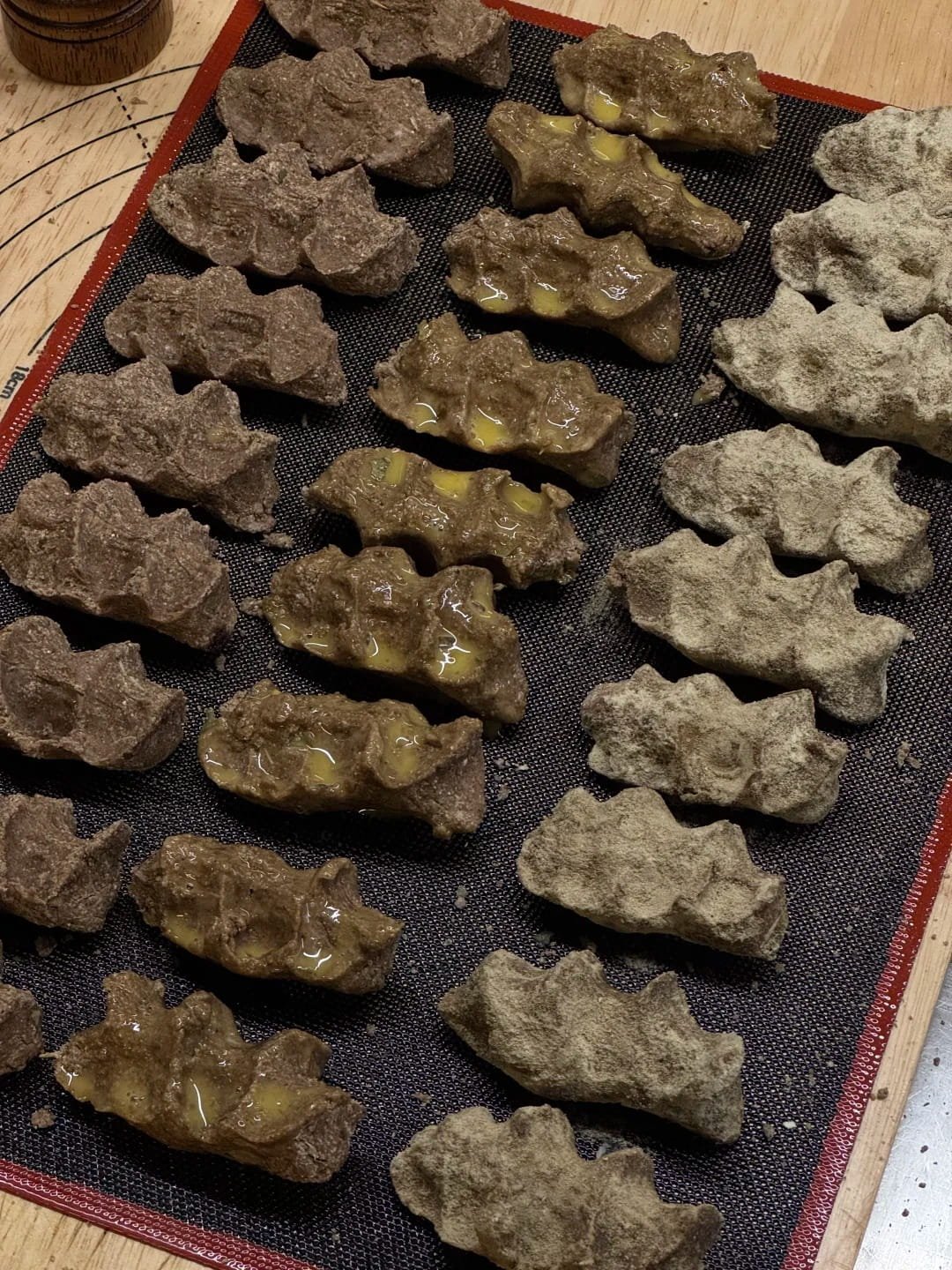
Tibet is where the staple food story reaches its most extreme point. The altitude of the Tibetan Plateau makes growing almost anything genuinely difficult, and the food culture reflects that in a way that feels unlike anywhere else in the world.
The Tibetan staple is tsampa (糌粑, zānbā): roasted barley flour worked with yak butter tea into a thick paste or formed into dense balls. It's not bread, not noodles, not rice. The roasting gives it a deep, nutty, slightly smoky character, and it's dense in a way that makes sense when you understand it developed as survival food at altitude, built for bodies working hard in the cold at 4,000 metres. Tibetans have eaten it daily for centuries, and it remains a deeply cultural food tied to identity, ritual and place in a way that goes well beyond nutrition.
It's the most vivid illustration of this whole article's central point. China's staple eating is not one thing. It is many things, shaped by landscape and climate and history in ways that produce something radically different depending on where you stand.
Why Does Chinese Food Look So Different Abroad?
Rice is the national story. It's available everywhere in China now, and it's genuinely the heart of southern Chinese food culture. But the idea that Chinese food equals rice tells you less about China than it does about which part of China first went out into the world. The fried rice at your local takeaway, the steamed rice under your kung pao chicken — that's a southern emigrant food tradition, carried abroad from Guangdong and Fujian. It's one slice of the Chinese staple foods in a country where the wheat noodle culture of the north is just as ancient and just as deep, where the bread traditions of Shaanxi and the flatbreads of Xinjiang represent completely different food worlds, and where on the Tibetan plateau, the whole framework of grain and flour and noodle quietly gives way to something else entirely.
Next time someone asks "does it come with rice?", you can smile and say: depends which part of the country you're in.
Frequently Asked Questions
-
China does not have a single staple food. In southern China, rice is the daily staple, while northern China relies primarily on wheat-based foods such as noodles, steamed buns, and dumplings. In Xinjiang, flatbread baked in a clay oven is the primary staple, and in Tibet, roasted barley flour called tsampa is the traditional staple food. What Chinese people eat depends largely on which region of the country they are in.
-
In southern China, rice is eaten at most meals, though it is ordered separately rather than served automatically. In northern China, many people eat rice rarely or not at all, preferring noodles, steamed buns, or dumplings as their daily staple. At formal meals across China, rice is typically requested toward the end, as the focus of the meal is on the shared dishes.
-
Zhǔshí (主食) is the Chinese term for staple food — the carbohydrate base of a meal. Depending on the region, this might be steamed rice, hand-pulled noodles, steamed buns, dumplings, flatbread, or roasted barley flour. In a Chinese meal, the zhǔshí is secondary to the shared dishes of meat and vegetables, which are considered the main event.
-
Northern China is wheat country. The daily staples are hand-pulled noodles, knife-shaved noodles, steamed buns (mántou), filled steamed buns (bāozi), and dumplings (jiǎozi). Flatbreads such as roujiamo from Shaanxi are also popular. Rice is available in the north but plays a secondary role to these wheat-based foods.
-
The most fundamental difference is the staple grain: southern Chinese cuisine is built around rice, while northern Chinese cuisine centres on wheat. This shapes the entire food culture of each region — the south favours rice dishes, rice noodles, and congee, while the north specialises in hand-pulled noodles, steamed buns, and dumplings. Southern Chinese food also tends toward lighter, fresher flavours, while northern cooking often features heartier, saltier profiles.
-
Xinjiang's staple food is naan bread (馕, náng), baked in a clay tandoor oven, reflecting the region's Central Asian and Middle Eastern culinary heritage. Lamb pilaf (抓饭, zhuāfàn), a slow-cooked dish of lamb and carrot rice eaten with the hands, is another daily staple. The food of Xinjiang has more in common with Uzbek and Turkish cuisine than with the Han Chinese cooking of eastern China.
-
Tsampa (糌粑, zānbā) is roasted barley flour, the traditional staple food of Tibet. It is typically mixed with yak butter tea to form a thick paste or dense balls eaten by hand. Tsampa has sustained Tibetan communities for centuries and remains a deeply cultural food tied to Tibetan identity, ritual, and daily life at high altitude.