
Tokyo from above: Seven viewpoints that aren’t the obvious ones
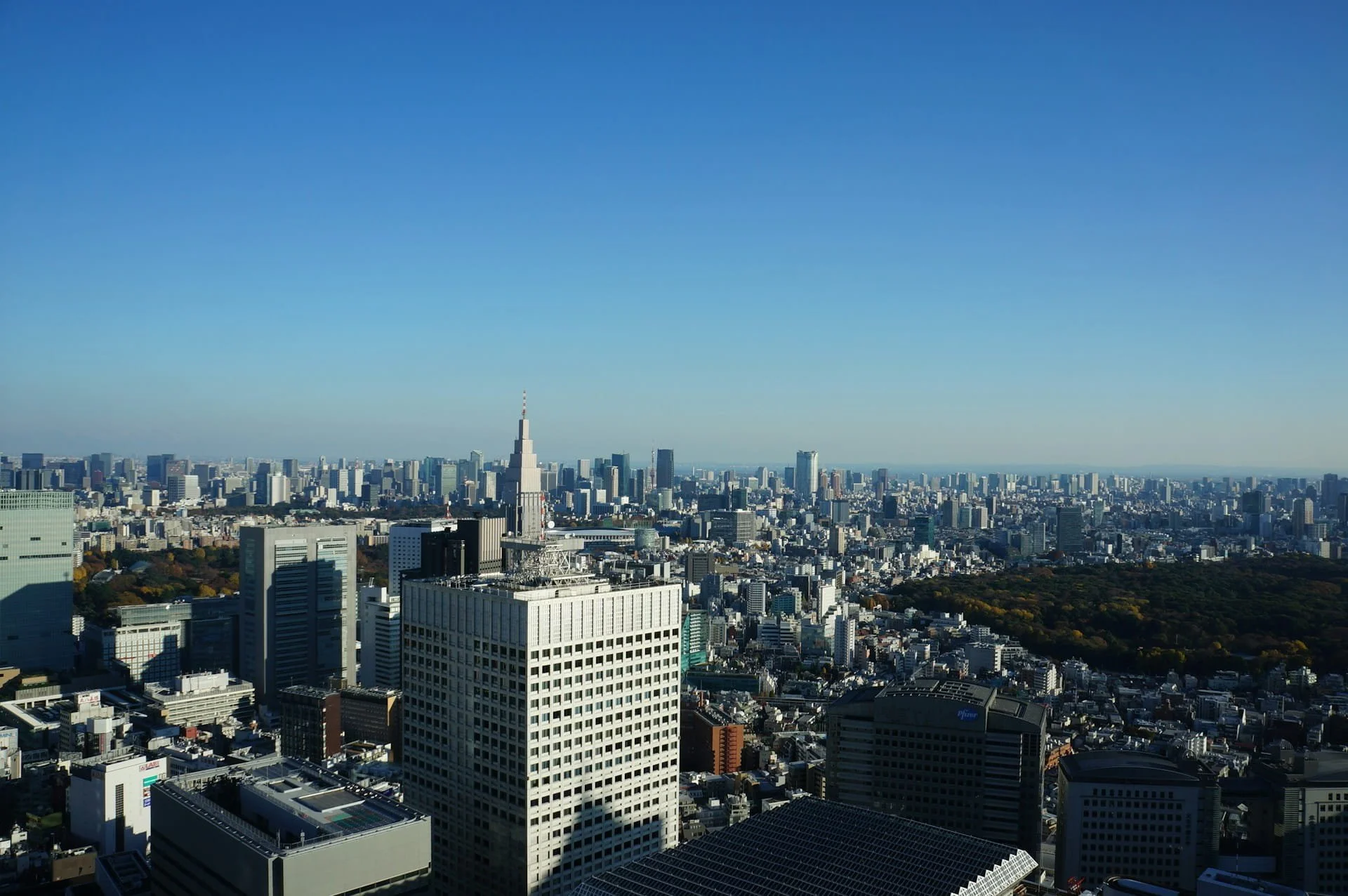
Tokyo is a city that makes more sense from above. Down on the ground, you're in one neighbourhood, surrounded by tall buildings and neon. Get up to a high viewpoint and suddenly the sheer scale of it clicks into place: thirty-five million people spread across a hilly, river-laced plain all the way to the bay, with Fuji floating on the horizon if the weather is on your side.
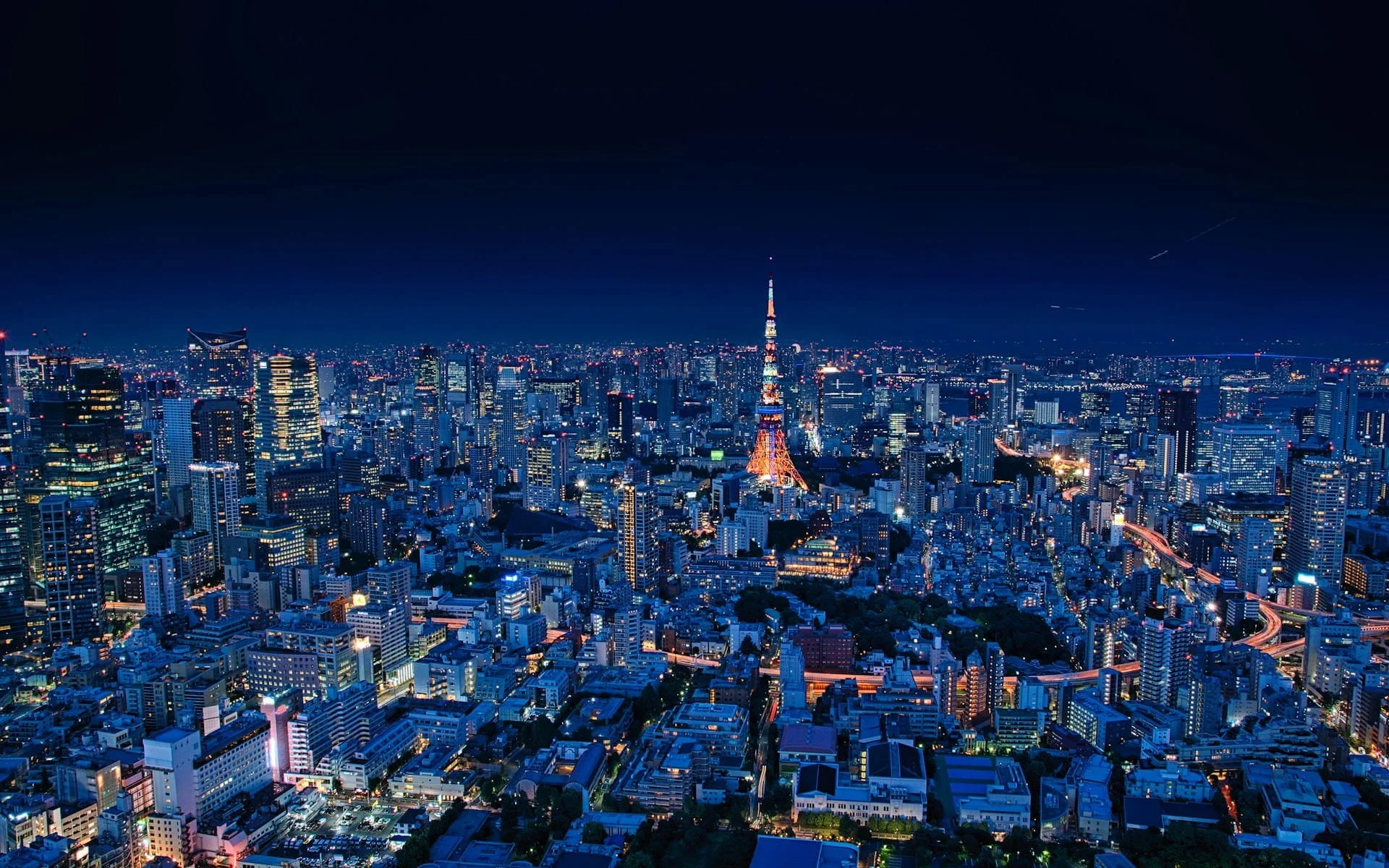
The obvious Tokyo observation decks are fine. Tokyo Skytree is tall. Tokyo Tower is iconic. But you'll pay for both, queue for both, and share the experience with every tour group in the city. There's a better way to see things from free observation decks.
These are the seven Tokyo viewpoints and observation decks we actually use, all but one of which are absolutely free.
1. Tokyo Metropolitan Government Building (Tocho), Shinjuku
Free | 202m | North and South towers | Google Maps
The obvious objection to putting Tocho on this list is that it's not exactly a secret. Fair enough. But it earns its place here for one simple reason: it's genuinely good, and it's free, and most people walk straight past it on their way to pay ¥3,000 for a view that's marginally better.
I've brought dozens of people here over the years and I've never had to wait more than a few minutes. You can visit both viewpoints in the North and South towers, so pick whichever is open and has the shorter line. If you want to see Mt. Fuji, the best time is when the air is clear: winter mornings are your best bet, or right after rain. Then you can pick out Fuji from the west-facing windows, rising up behind the Shinjuku skyline.
The building itself is worth a look. Designed by Kenzo Tange and opened in 1991, it's sometimes called Japan's Gothic cathedral, with twin towers and a honeycomb facade that somehow looks both very old and very modern (aka very Japanese). So it’s worth taking a moment to rest in the courtyard of the Tokyo Metropolitan Assembly Building across the street and look at the building before you go up. Tocho is also one of the best nighttime viewpoints. You not only get an incredible view of the city at night, but you can also view the nighttime projections from the plaza at its base.
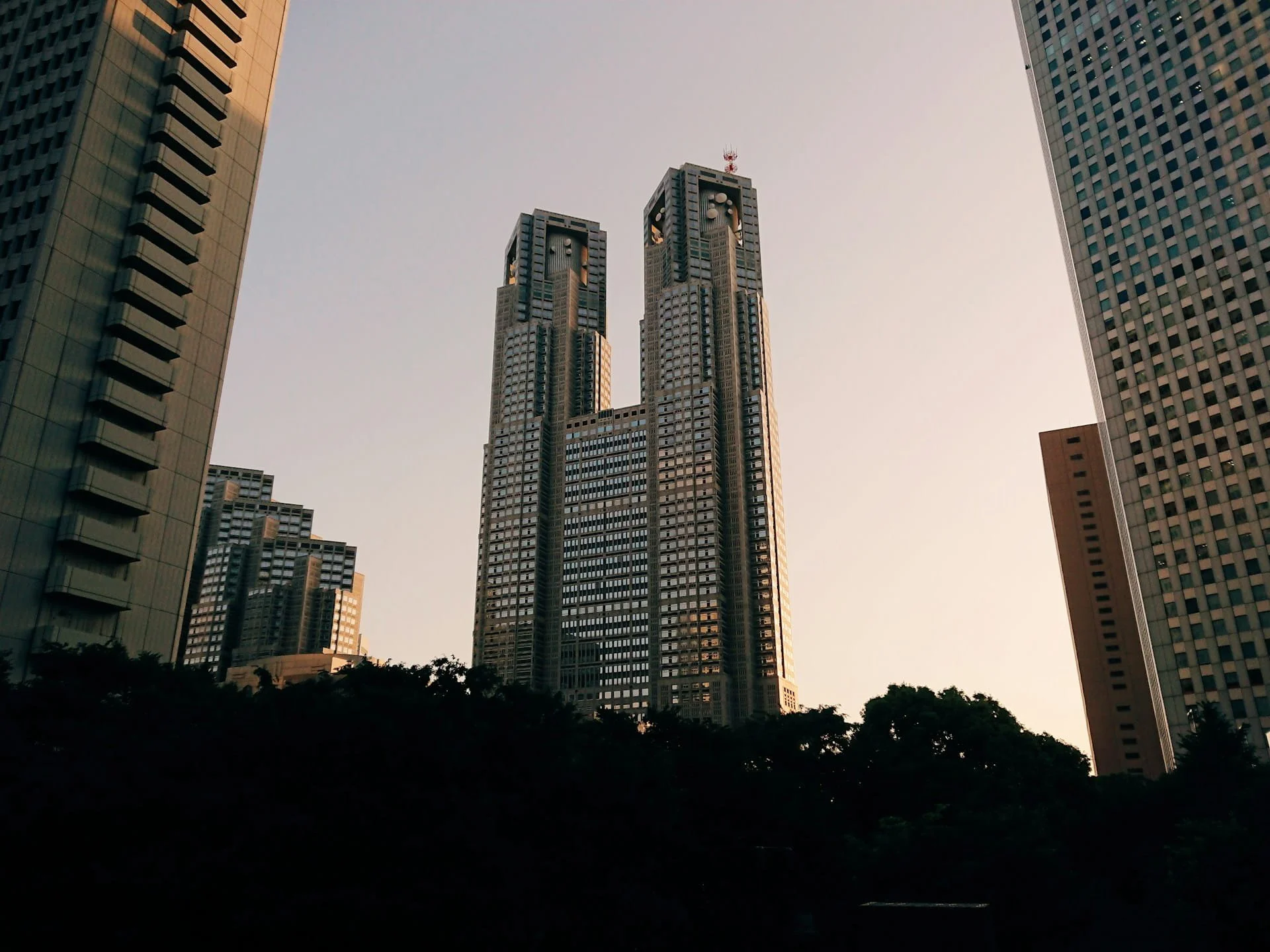
After: Head into Omoide Yokocho (Memory Lane) for a beer and some skewers of yakitori. The contrast between the polished government building you just came from and the narrow, smoke-filled alley of tiny restaurants crammed together is very Tokyo.
2. Bunkyo Civic Centre, Bunkyo
Free | 105m | 25th floor observation lounge | Google Maps
Photographers know about this one. The rest of the world mostly doesn't, which is why you'll often find it near-empty, which is why you should go.
The key detail here is the windows. They're angled outward at the bottom, specifically designed to reduce interior light reflections. That means you can actually get a clean photo through them, even on a bright day. From the west-facing windows, the view frames the entire Shinjuku skyline with Mt. Fuji sitting directly behind it. It's the shot that makes people ask where you were standing.
The lounge itself runs 330 degrees and stays open until 8:30pm, so you can catch the evening light shift over the city too. It's connected directly to the Metro at Korakuen Station, so there's no faff getting there.
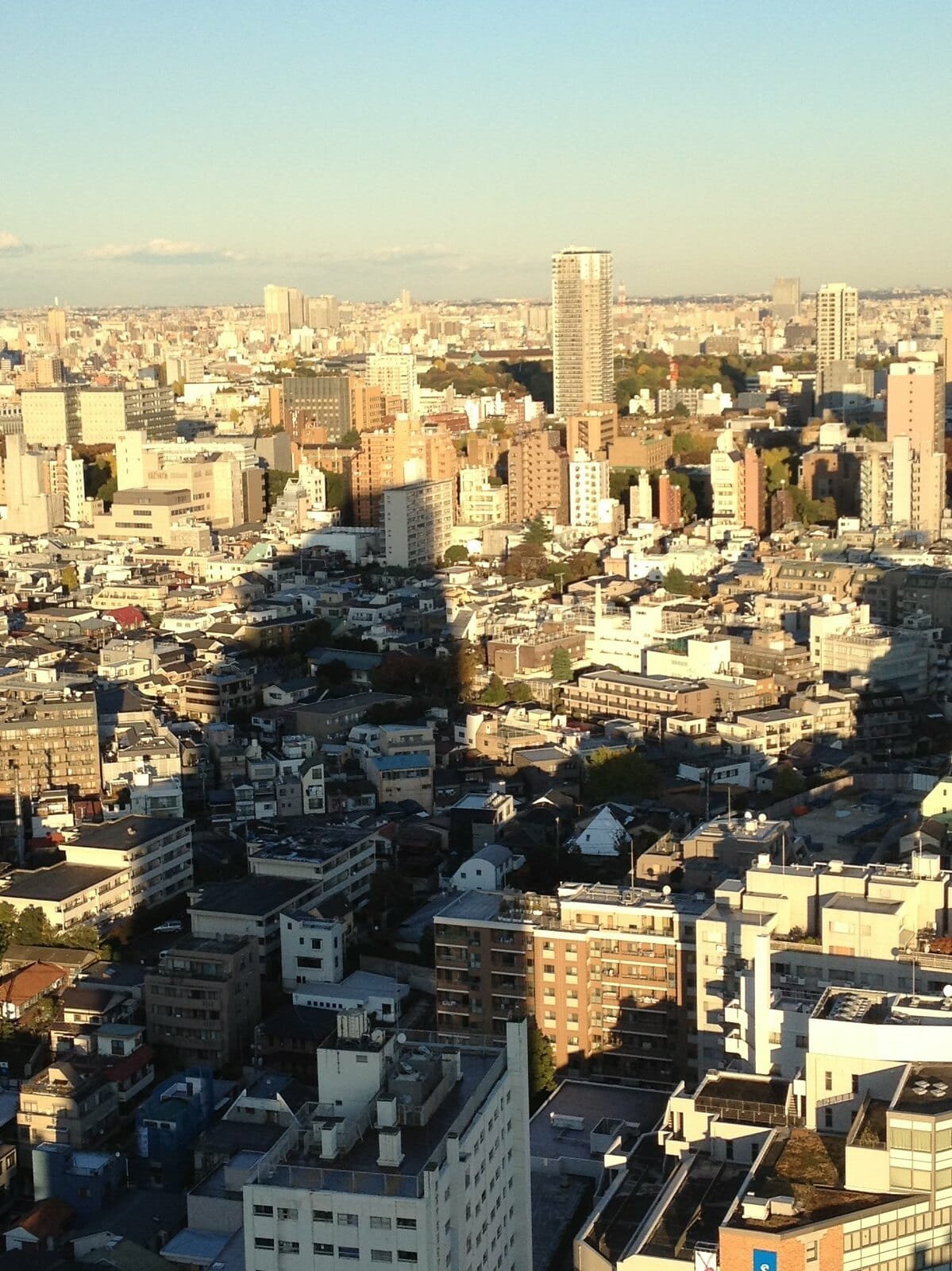
After: The Tokyo Dome City area is a couple of minutes' walk, which means you're right next to Korakuen, one of Tokyo's great Edo-period gardens. If you have the time, it's worth a loop. For food, the streets around the Dome are full of casual restaurants that serve the office workers from the area. Nothing flashy, just solid food.
Note: The Bunkyo Civic Centre viewpoint is closed for renovations until December 2026
3. Asakusa Culture Tourist Information Centre, Asakusa
Free | 8th floor observation deck | Google Maps
This is the one I always take people to before we walk into Asakusa. Before going into the temple complex, head across the street and go up to the 8th floor. From there you look directly down onto the roof of Senso-ji Temple, across the Nakamise-dori market, and straight at the Skytree on the other side of the Sumida River. It gives you a map of the whole neighbourhood in your head before you're swallowed up by it.
The building itself is designed by Kengo Kuma and worth taking a moment to appreciate. Plus there’s genuinely helpful tourist information on the ground floor if you need it. The view isn't the highest on this list by a long stretch, but it might be the most useful. You get context, and then you walk across the road and feel it.
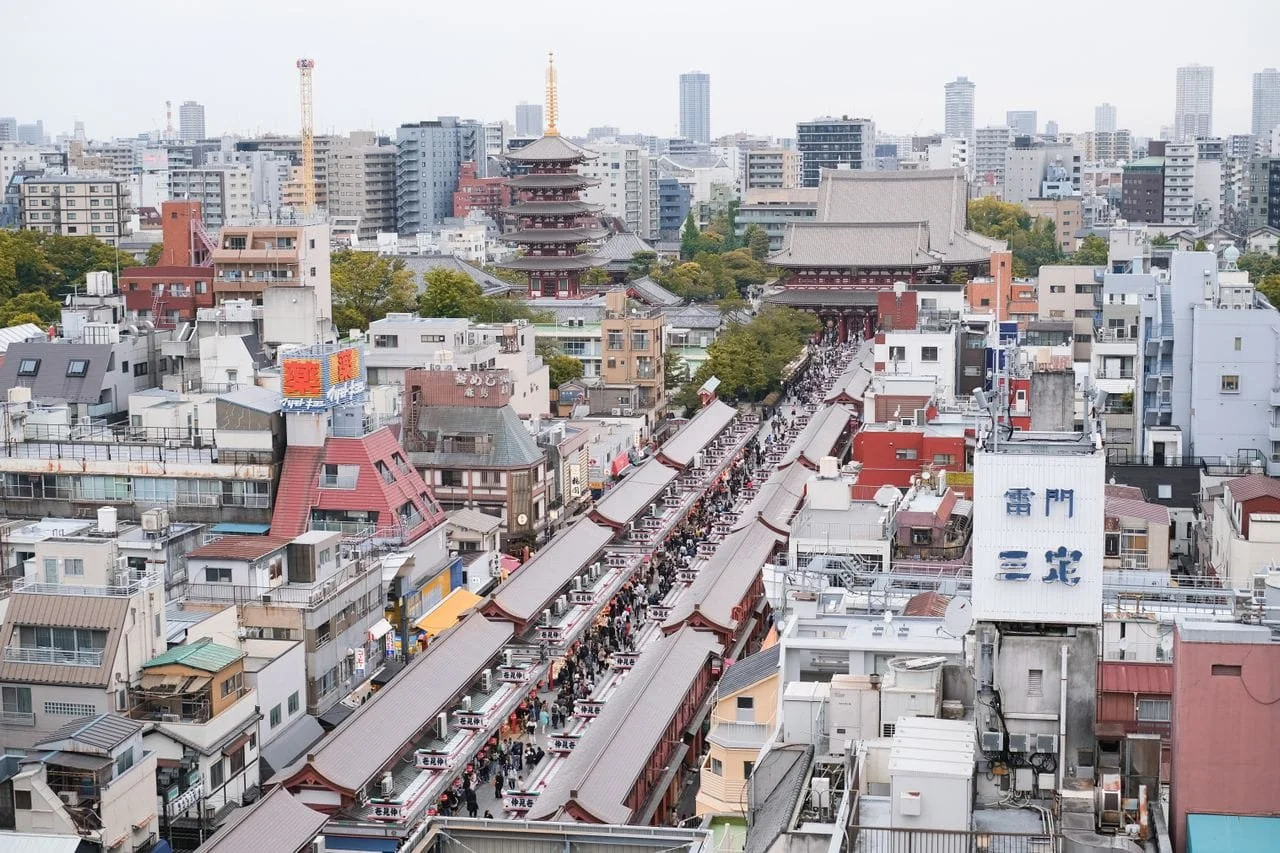
After: The one food recommendation I always give people here is よ兵衛 (Yohei), just off Nakamise-dori. It's a small shop that's been in Asakusa since 1986, and they make their dango (skewered rice-flour dumplings) fresh to order. Get the mitarashi, grilled over charcoal and brushed with a salty-sweet soy glaze, eaten standing up outside. If you want something more unusual, duck down into the Asakusa Underground Street (浅草地下街, Asakusa Chikagai), Japan's oldest underground shopping arcade, open since 1955. Fifty metres of post-war Showa-era atmosphere: standing bars, old barber shops, pipes and wires overhead. It was a filming location for Perfect Days. Nothing has been renovated since approximately forever, and it's wonderful.
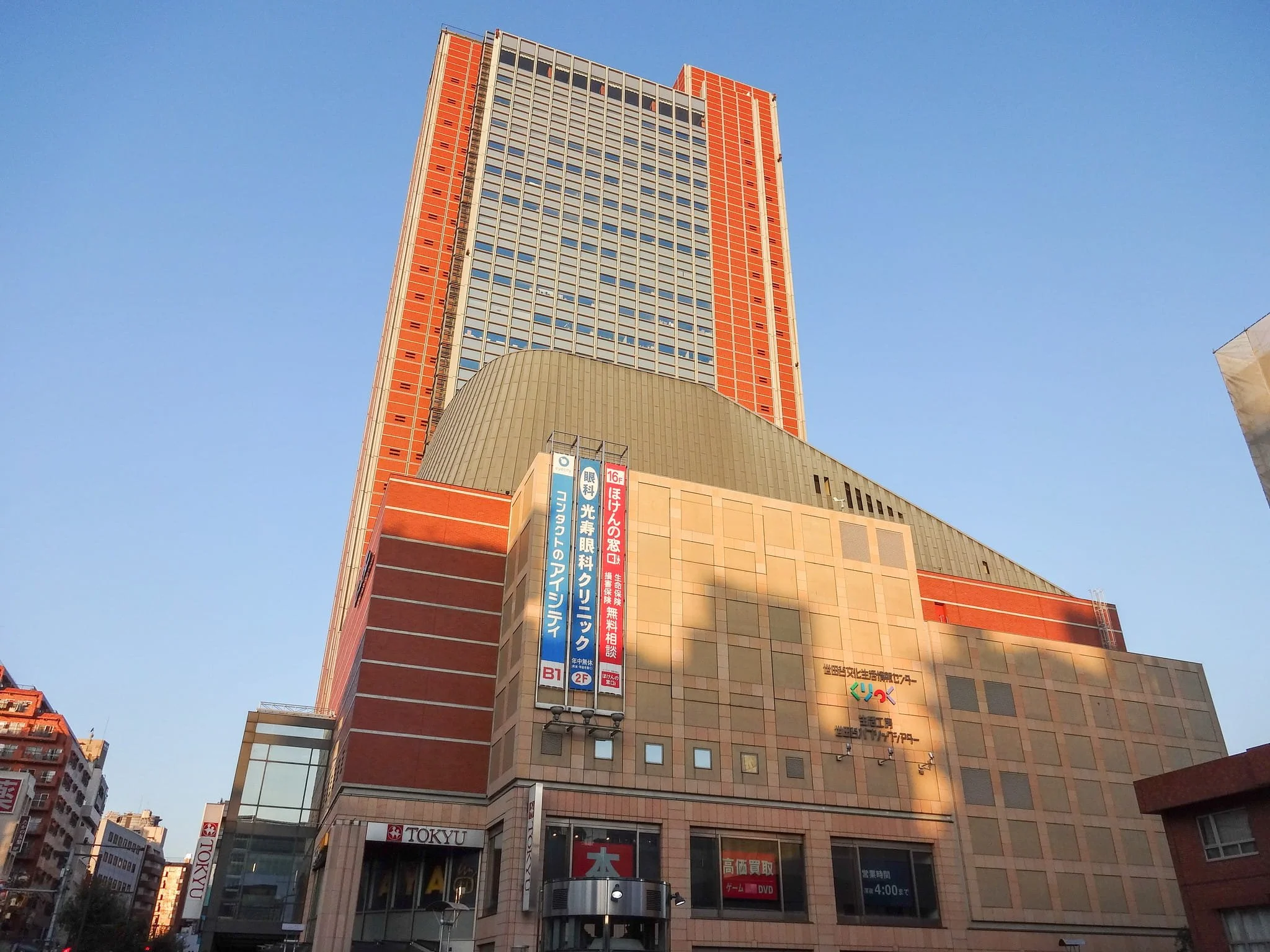
4. Carrot Tower, Sangenjaya
Free | 124m | 26th floor observation lobby | Google Maps
Sangenjaya, or Sancha to the people who live there, is the kind of Tokyo neighbourhood that doesn't have a single landmark you'd put on a postcard. What it has instead is a dense tangle of covered arcades, independent coffee shops, vinyl record stores, and small izakayas. It’s the kind of neighbourhood that nobody is writing about yet, but that everyone living in Tokyo is talking about.
The Carrot Tower is easy to spot. It's bright orange, named after the vegetable, and cannot be missed. From 124 metres up, what you're looking at is residential western Tokyo. No Skytree on the skyline, no neon of Shibuya. Just rooftops and train lines stretching toward the bay, and on a clear day, Fuji hanging above the low-rise grid. Elderly couples come up here to point out their houses. Students come up here to study. It's more for the locals than the tourists.
After: The best thing to do after the Carrot Tower is just wander Sancha. The covered arcades near the station have plenty of independent shops and standing bars to browse or get a meal. You’re also not far from Gotokuji Temple, the claimed birthplace of the maneki-neko lucky cat. Sangenjaya is also just two stops from Shimokitazawa on the Odakyu Line, one of our favourite neighbourhoods in Tokyo.
5. Top of Ebisu, Yebisu Garden Place
Free | 38th and 39th floors, Yebisu Garden Place Tower | Google Maps
Ebisu has always felt different from its more famous neighbour Shibuya. The pace is slower, the restaurants and bars are better, the whole area has a quiet sophistication that comes partly from the old Sapporo brewery that used to occupy the land it's built on. Yebisu Garden Place, the complex that replaced the brewery, kept the brick and the scale, and the result is one of the more pleasant places in the city to just kill some time.
The Top of Ebisu observation floors are free and open to anyone. The view faces Tokyo Tower and the Shinjuku skyline, and at night, when the city lights come up, it's a warm and glittering perspective of the city. The floors have a cluster of restaurants, which makes it an easy place to turn a view into a dinner if you’d like.

After: Instead of eating at the observation level, head down to Ebisu Yokocho for something more interesting. It's a covered arcade of small, packed restaurants and standing bars that runs parallel to the station. It's noisier, cheaper, and more fun than anything upstairs. Pull up a stool at whichever place looks busiest. There’s plenty of amazing restaurants and bars right by Ebisu station and the nearby Naka-meguro Station as well. If you’re looking for something during the day, we also love the Tokyo Photographic Art Museum.
6. Hachitama Spherical Observatory, Fuji TV Building, Odaiba
¥800 | 25th floor (inside the sphere) | Google Maps
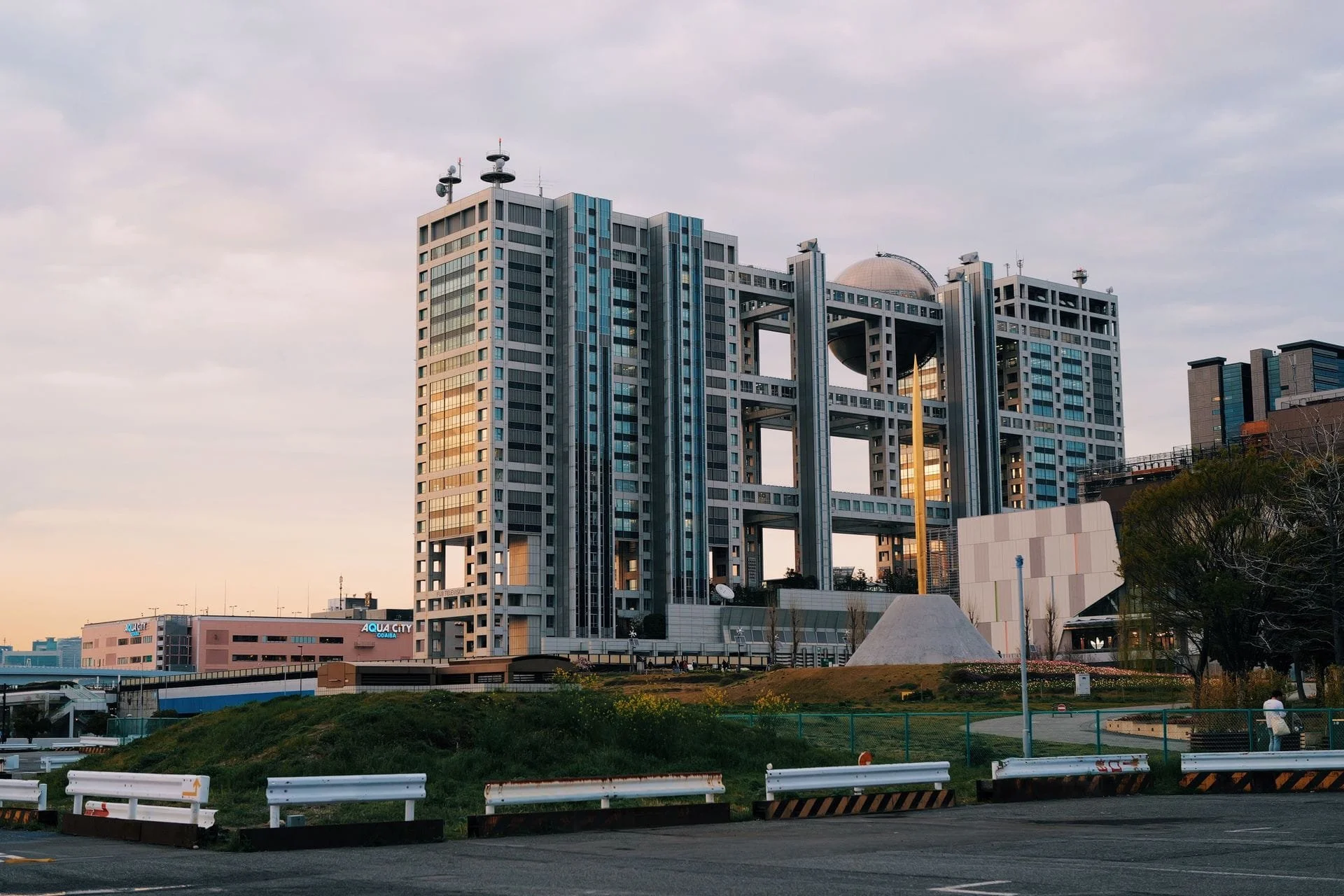
Every time I've been past the Fuji TV building in Odaiba I've wanted to go in, and it took me embarrassingly long to finally do it. From the outside the building looks like something designed for a science fiction film: a titanium-panelled sphere, 32 metres across and weighing around 1,200 tonnes, suspended inside an open grid framework about a hundred metres off the ground. The sphere was built on the ground during construction, and then a crane spent more than ten hours lifting it into position. One crane. Over ten hours. For a ball the size of a small apartment block.
The observatory on the 25th floor gives you a 270-degree view of the Tokyo waterfront: Rainbow Bridge, Tokyo Bay, the Skytree and Tokyo Tower lined up on the horizon, and on clear days, Fuji behind all of it. There's also a fifth-floor studio area where you can see props, sets and mascots from Japanese TV shows, which is either charming or bewildering depending on how much Japanese variety television you've watched. Either way, it's very Odaiba.
Odaiba itself is worth understanding before you go: it's an artificial island, built on reclaimed land in the 1990s as a grand vision of futuristic living, which explains why everything out there feels slightly science-fictional and slightly theme-park-ish. Arriving on the Yurikamome Line, the driverless monorail that loops around the island, is half the experience.
After: Walk along the Odaiba waterfront toward the beachfront park for the best unobstructed view of Rainbow Bridge with the city behind it. If you want to keep the day going, TeamLab Planets is nearby in Toyosu, a short ride on the same Yurikamome Line you came in on. It's worth booking tickets well in advance; it sells out regularly. It’s one of those viral Tokyo experiences that’s actually worth doing. There's a stretch of casual restaurants along the Odaiba waterfront too. Nothing groundbreaking, but cold drinks and a view of the bridge at dusk is a pretty good way to end a day.
7. Tower Hall Funabori, Edogawa
Free | 115m | observation tower | Google Maps
This is the one that nobody goes to, and that's exactly why you should.
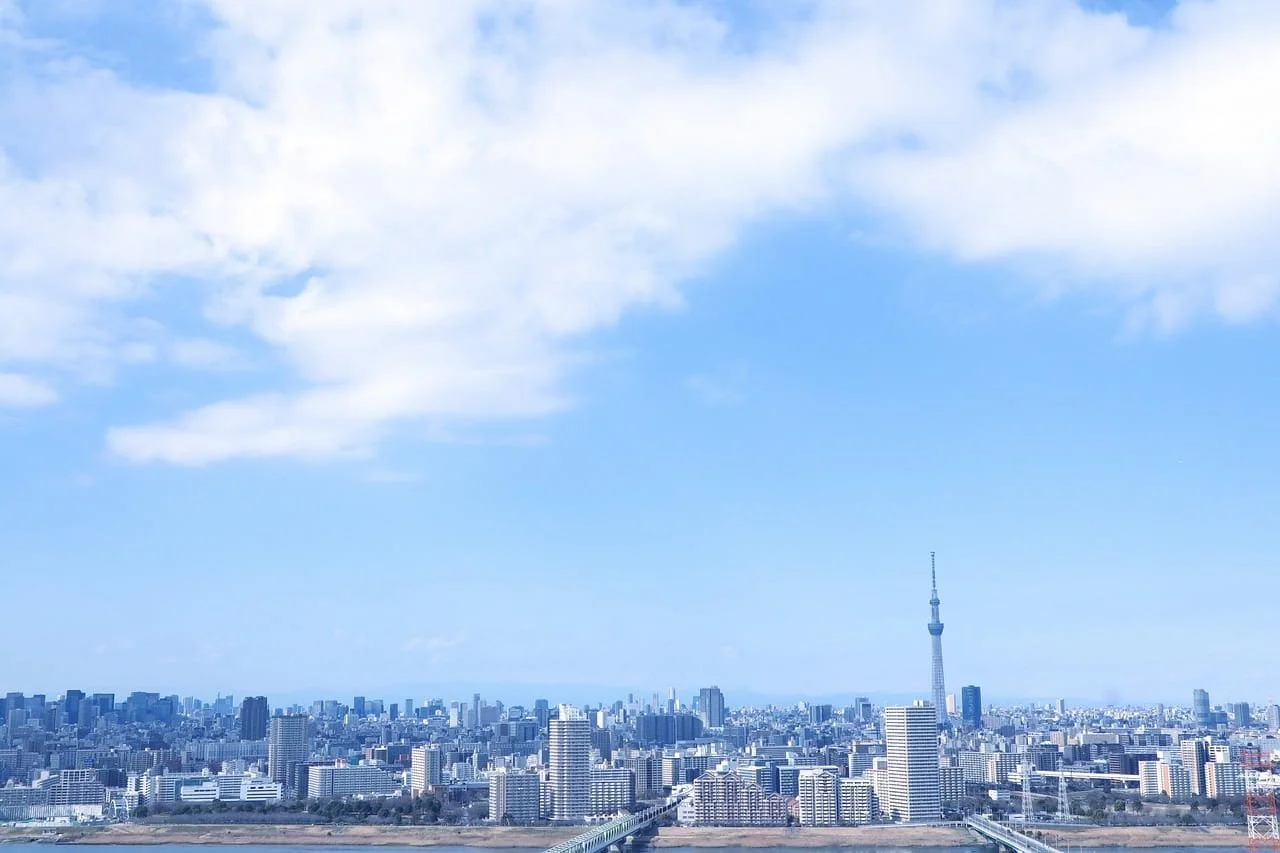
Funabori is in Edogawa ward, in the east of the city, where the rivers widen out toward Tokyo Bay and the neighbourhood is low-rise and residential and completely uninterested in tourism. Tower Hall Funabori is a community centre with a tower attached. The elevator takes you up 115 metres and opens onto a free observation deck where, on a clear day, you can see the Skytree rising above the surrounding rooftops, and beyond that the geometric spread of the shitamachi, the old low-city, threaded through with rivers and canals.
You will almost certainly be the only international visitor there. The view doesn't have the wow factor of Shinjuku at night or Fuji on the horizon, but it shows you something those views don't: what Tokyo actually looks like for most of the people who live in it. Quiet streets, cycling lanes, futons hanging out of apartment windows, the unhurried grid of a city getting on with things.
Getting there requires a train and then a short walk, which means you have a chance to explore a neighbourhood most tourists in Tokyo never even hear about.
After: Funabori is not a restaurant destination. That's also part of the deal. Find an izakaya near the station, the one where the menu is only in Japanese and there's a handwritten specials board in the window. Point at things, look up the photos posted on Google Maps and ask for anything that looks delicious. This is our approach and it always serves us well.
Tips for Visiting Tokyo Observation Decks
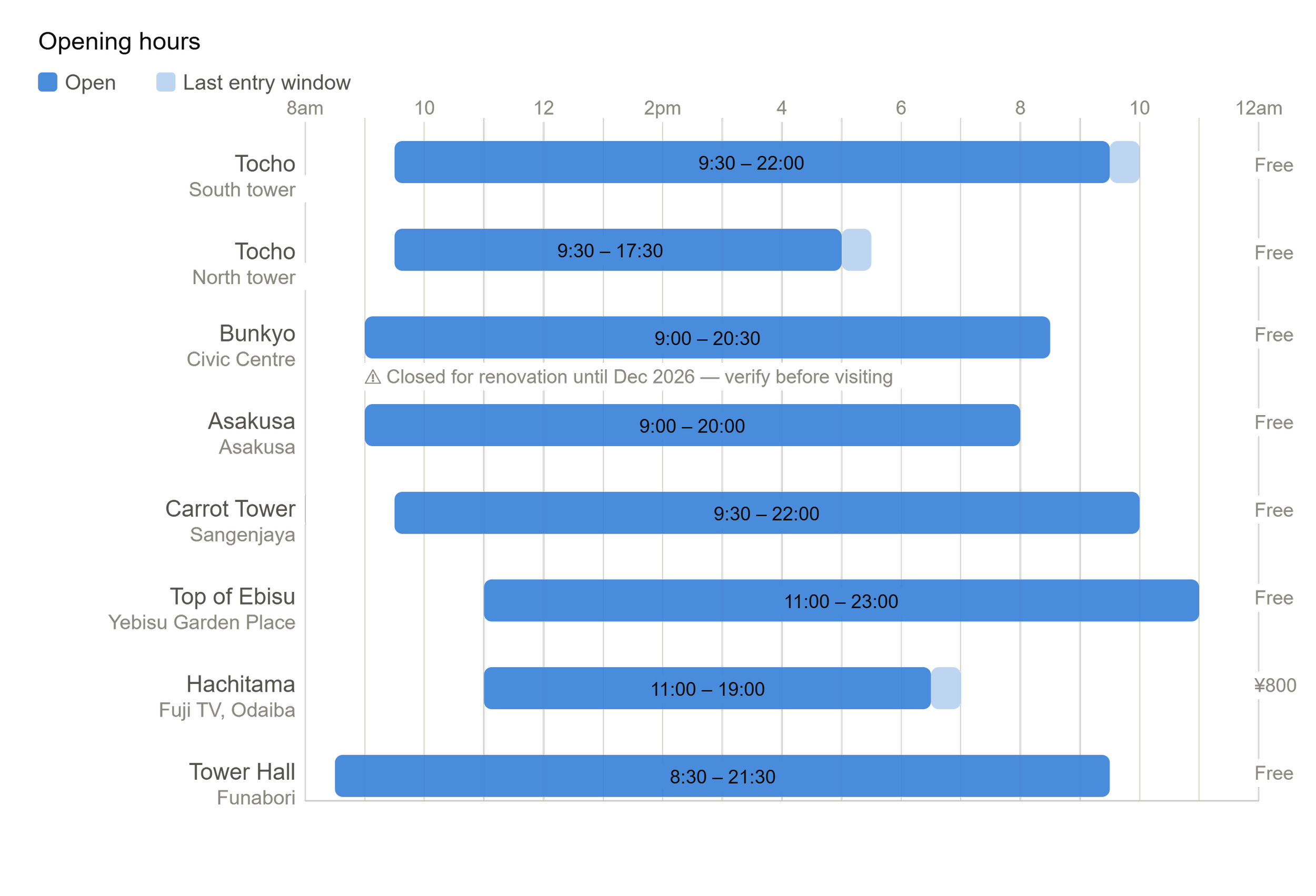
Observation Deck Opening Hours
How to see Mt. Fuji views
Winter is far better than summer. December through February, when the air is dry and cold, gives you the clearest sightlines. A rainstorm clearing is also good. Summer Fuji views are possible but rare.
How to avoid crowds
Weekday mornings at any of the free spots will be significantly quieter than weekend afternoons. Tocho is the exception. It's popular enough that lunchtime on any day can get busy.
The best Tokyo view I know
Looking at the city from the window of a Shinkansen pulling out of Tokyo Station. You may not have the height, but you’re up close, it’s personal, and as you move out of the crowded center of Tokyo it gives you a real feel of what Tokyo life feels like for most people who live here.
Frequently Asked Questions
-
As of July 2026, Tokyo has several good free observation decks, including the Tokyo Metropolitan Government Building in Shinjuku (202m), the Bunkyo Civic Centre in Bunkyo (105m), and the Carrot Tower in Sangenjaya (124m). The Asakusa Culture Tourist Information Centre also has a free 8th-floor deck with a direct view of Senso-ji Temple. The Top of Ebisu at Yebisu Garden Place in Ebisu is free and particularly good at night.
-
Both the Tokyo Metropolitan Government Building in Shinjuku and The Top of Ebisu at Yebisu Garden Place are excellent night time observation decks. Both are open late and very close to excellent food and drink hubs for dinner or a night out afterwards.
-
Weekday mornings are consistently quieter than weekend afternoons at most Tokyo viewpoints. The Tokyo Metropolitan Government Building can have queues at lunchtime, particularly on weekends. Spots like Tower Hall Funabori in Edogawa and the Carrot Tower in Sangenjaya attract very few international visitors and are rarely crowded.
-
The best visibility for Mt. Fuji from Tokyo is during the winter months, from December to February, when the air is cold and dry. Clear days after rain or snowfall are also reliably good. Summer visibility is limited by heat haze and humidity. The Bunkyo Civic Centre frames Fuji directly behind the Shinjuku skyline, and the Tokyo Metropolitan Government Building also offers good Fuji views from the west-facing windows.
-
The Bunkyo Civic Centre observation deck is currently closed for renovation and is expected to reopen in December 2026. Check the official website before visiting. When open, it is free to visit and located on the 25th floor of the civic centre building in Bunkyo, directly connected to Korakuen Station.
-
No. The outdoor rooftop Sky Deck at Roppongi Hills Mori Tower closed permanently in April 2024 and will not reopen to the general public. The indoor Tokyo City View observation deck on the 52nd floor remains open and is a worthwhile alternative, though it's a paid entry.
-
Hachitama is the spherical observation room inside the Fuji Television headquarters building in Odaiba. The building, designed by architect Kenzo Tange, features a 32-metre titanium sphere suspended within the building's structure approximately 100 metres off the ground. The sphere was built at ground level and hoisted into place during construction. The observation deck on the 25th floor offers a 270-degree view across the Tokyo waterfront, Tokyo Bay, Rainbow Bridge, and on clear days, Mt. Fuji. Entry costs ¥800.
-
The Asakusa Underground Street (浅草地下街, Asakusa Chikagai) is Japan's oldest underground shopping arcade, opened in 1955 and connected directly to Ginza Line Asakusa Station. It's a narrow, 50-metre passageway of standing bars, small restaurants, barber shops and old-fashioned shops that has retained its post-war Showa-era atmosphere largely unchanged. It was used as a filming location for Wim Wenders' 2023 film Perfect Days.