
Beijing Airport Layover Guide: What to Do However Much Time You've Got
Most people flying through Beijing spend their layover exactly where you'd expect: parked at a gate, scrolling flight radar, wondering if the ¥40 noodles are worth it. Whether you’re at Beijing Capital Airport (PEK) or Daxing Airport (PKX), it’s the same story. Meanwhile, less than an hour away by taxi, someone's watching a 787 clear a park fence low enough to feel it in their chest, or standing in front of a deer that only exists because an English duke had an unusual hobby a century ago. You could be that second person.
China's visa-free transit rules mean that yes, you can leave either of Beijing’s airports during a layover. For many nationalities, you can clear immigration and have up to ten days and 24 provinces to work with on nothing but your onward ticket. We're only using a few hours of that here, but it's the reason you're allowed to leave the terminal at all. It’s the same policy we covered in our Shanghai layover guide.
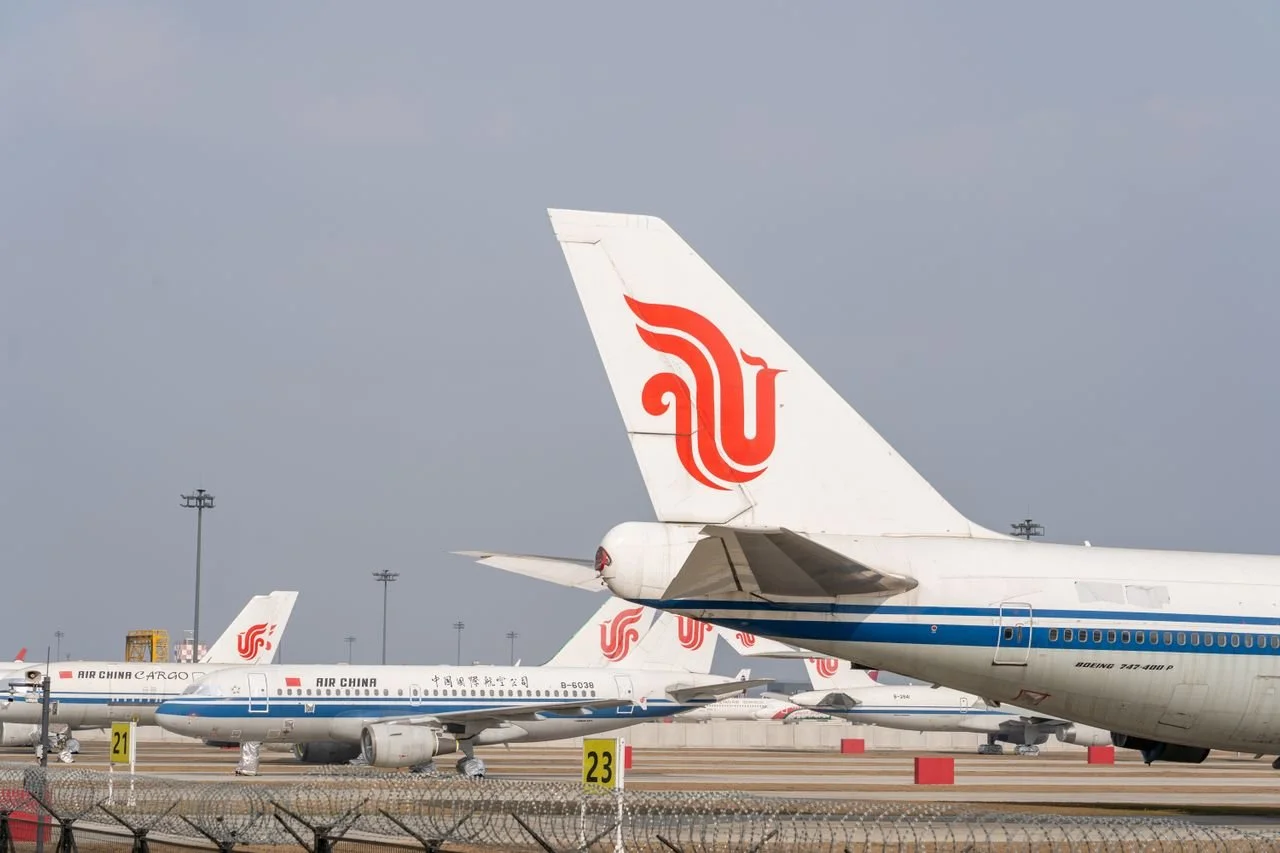
The gap isn't awareness of the rule, it's imagination about what to do with it. Ask most guides what's worth your ten hours and you'll get the same three answers back: Forbidden City, Mutianyu, Tiananmen Square. And almost nothing gets written about Beijing's second airport at all. Capital Airport (PEK), out in Shunyi, sits close enough to the city that a temple, a hutong, or a decent chunk of the Great Wall are all realistic. Daxing Airport (PKX), the newer one that sits an hour south, isn't close to anything historic, but the district around it has its own specific things going on.
Here's what to do with your time at each, organised by how much of it you've got. Every window below already builds in getting back to the terminal with at least two hours to spare before your flight, so you can get through immigration and security without feeling rushed.
PEK: Beijing Capital International Airport
Under 5 hours: watch planes at Xihu Park
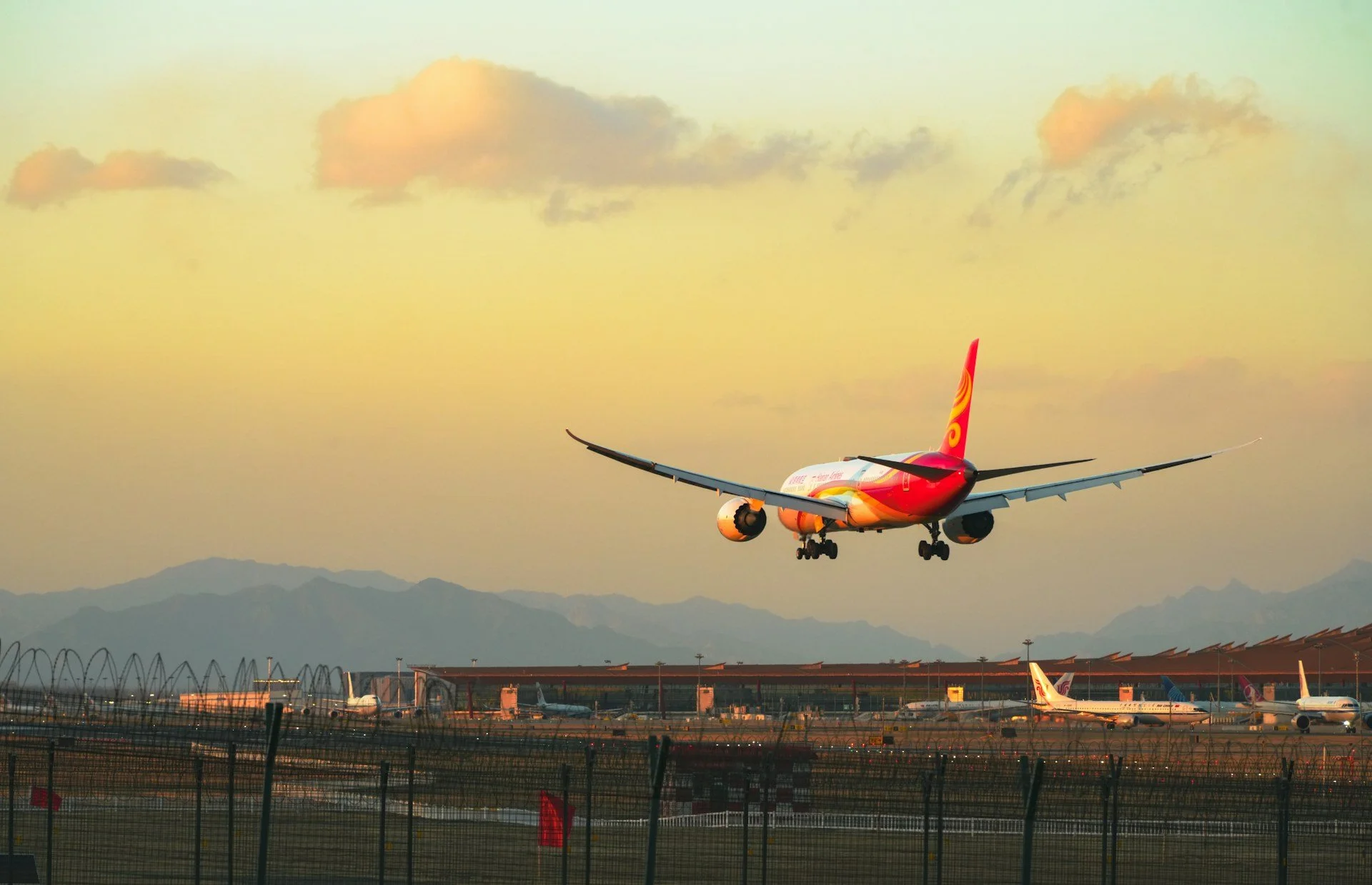
Skip the terminal entirely and head to Xihu Park (西湖园, Xīhú Yuán), a free public park built on leftover construction land from the airport's Terminal 3 expansion, sitting right against the runway fence. There's a viewing platform a few hundred metres from the tarmac, the bagua platform (八卦台, bāguà tái), where aircraft pass low overhead roughly every five minutes. It even shows up on lists of Asia Pacific’s best airport viewing spots, alongside Hong Kong, Singapore, and Sydney. A ten to fifteen minute taxi from the terminal, free to enter, and you'll have company: locals bring picnic blankets and let their kids run across the enormous lawn while a 787 clears the fence above them.
If Xihu Park is crowded or you want a different runway's worth of planes, Tianzhu Leisure Walking Park (天竺休闲步道园, Tiānzhú Xiūxián Bùdào Yuán) sits under the west runway's flight path instead. This one is less well known, but still gives you the chance to have a picnic while you watch planes taking off right above your head.
5 to 8 hours: Yonghegong Temple, Wudaoying Hutong, or 798 Art District
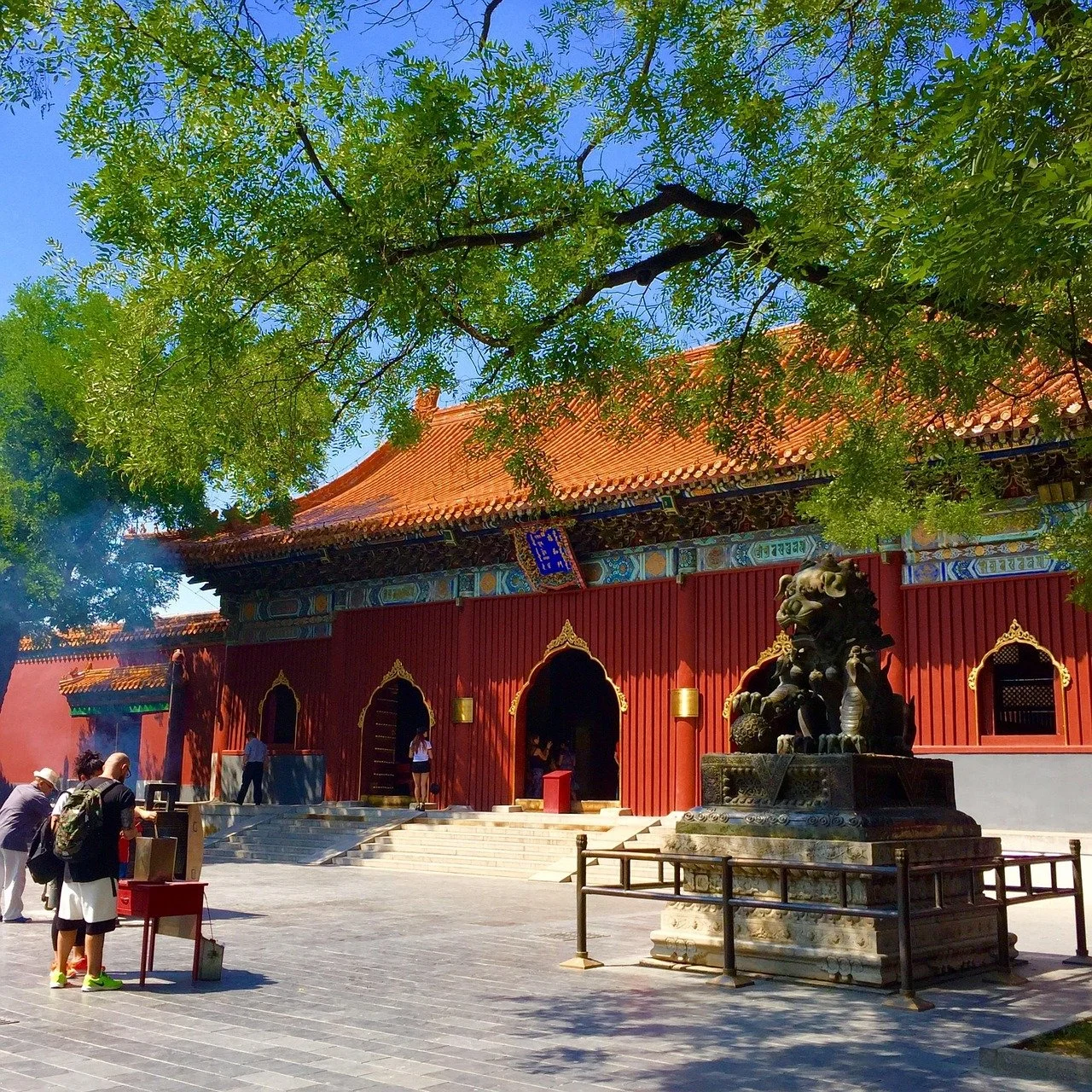
Yonghegong Lama Temple (雍和宫, Yōnghé Gōng), 30 to 60 minutes away by taxi depending on traffic, is the largest and best-preserved Tibetan Buddhist temple outside Tibet itself. If traffic's bad, the Airport Express to Dongzhimen (东直门, Dōngzhímén) followed by two stops on Line 2 is a genuinely easy alternative, about 45 minutes door to door either way. Incense smoke drifts across courtyards lined with increasingly grand halls, past worshippers spinning prayer wheels and roofs of glazed golden tile, working up to an 18-metre Maitreya Buddha carved from a single piece of sandalwood.
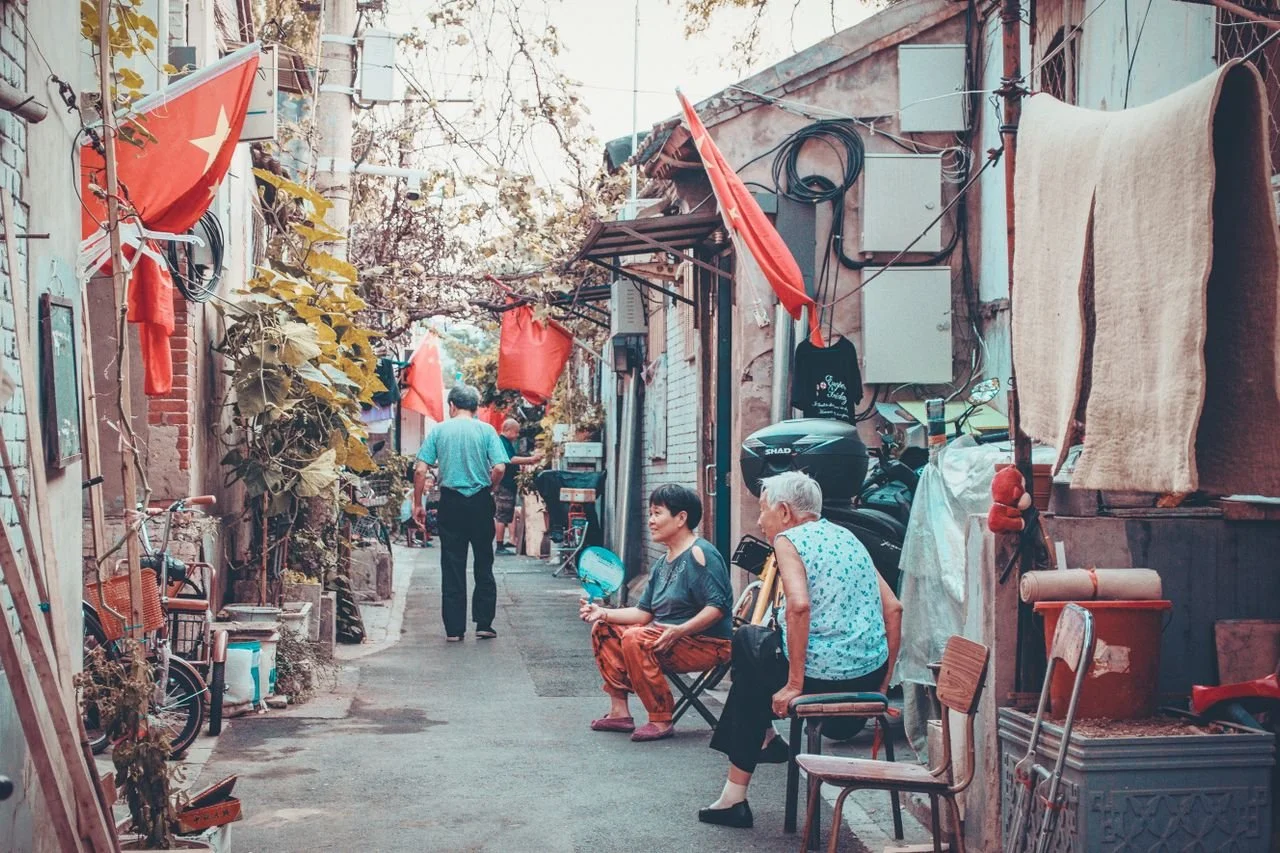
Walk out the side gate and you're in Wudaoying Hutong (五道营胡同, Wǔdàoyíng Hútòng). When I lived in Beijing, this was the place to be, either for a night out or a good meal in a setting you couldn't get anywhere else in the city. It's still one of the best introductions to Beijing there is, whether it's your first visit or your fifth. You’ll find old courtyard walls and narrow lanes, right alongside the boutiques, bars and restaurants that Beijing’s young, creative crowd have built. And Wudaoying is just one hutong among many. If you've got the time, you can wander into any of the interconnected hutongs that form a maze through this area of the city. Nearby, other hutongs like Fangjia Hutong, Baochao Hutong or Dongjiao Hutong offer similar vibes.
On Wudaoying Hutong itself, there are plenty of excellent choices for whatever kind of layover you’re looking for. For coffee, Metal Hands (铁手咖啡, Tiěshǒu Kāfēi) is the industrial-concrete cafe everyone points to first, and S.O.E Coffee has a rooftop terrace with a view across the neighbourhood. For food, Liùmiàn Shòumiàn (六面寿面), right at the Yonghegong end of the lane and looking straight across at the temple, does cheap, no-frills old Beijing noodles. The family-recipe braised sauce noodles (家传打卤面, jiāchuán dǎlǔ miàn) are the one to order, with free refills on noodles, sauce, and broth thrown in. Tang Chu (汤厨, Tāng Chú), a little further down the hutong, does a quieter, more composed version of old Beijing cooking, with menu items like a sugar pancake and a crispy-skinned roast goose. If you’re looking for a drink instead, Sirena (海妖酒吧, Hǎiyāo Jiǔbā) is recognisable by its blue railings and climbing vines out front. S.O.E Coffee is also a great place for an alcoholic drink, one of a good number of coffee shops across China that run a coffee menu throughout the day then switch to a cocktail bar in the evening, making the most of their space.
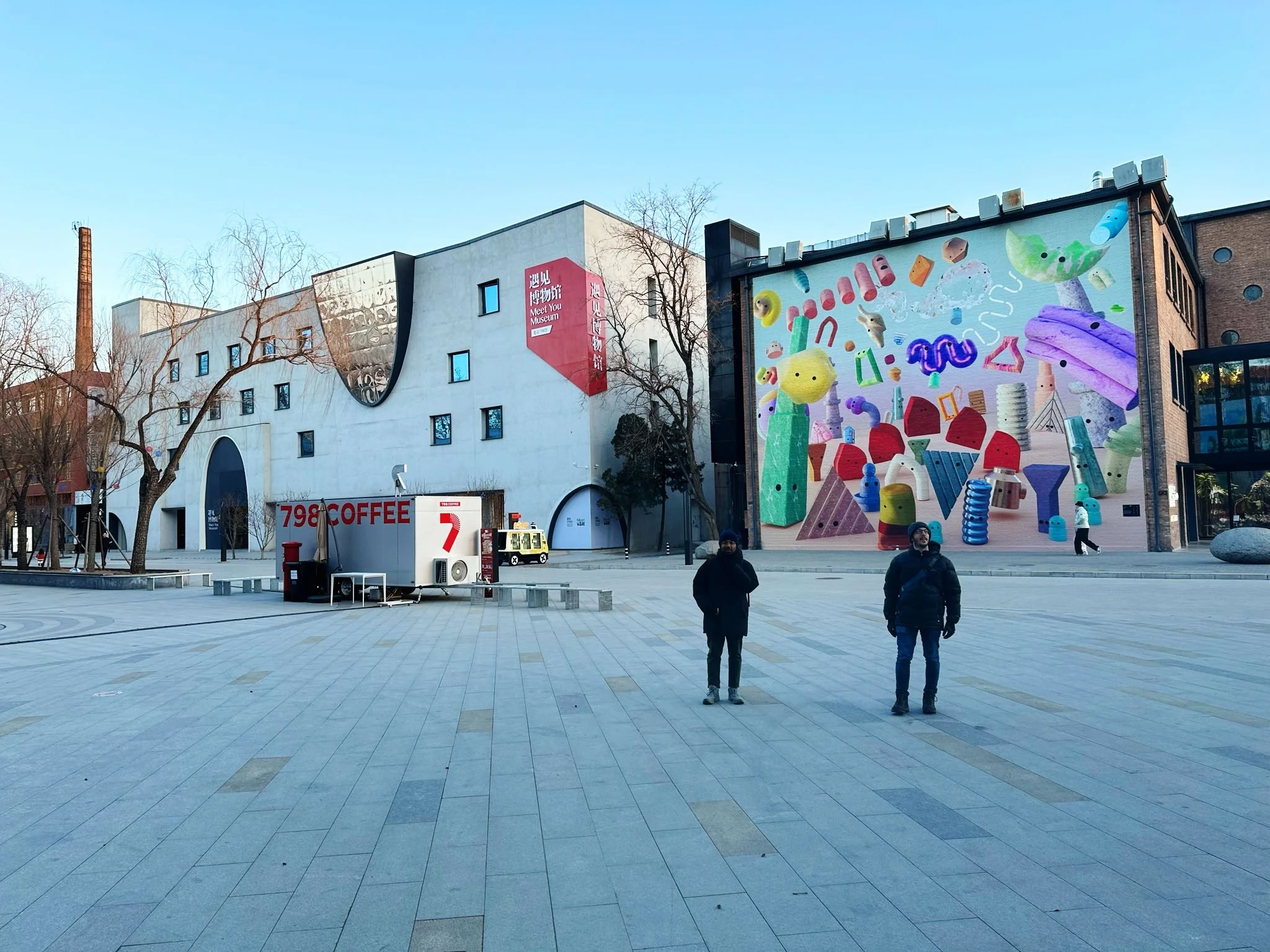
Another favourite of ours is 798 Art District (798艺术中心, Qī Jiǔ Bā Yìshù Zhōngxīn), a decommissioned military electronics factory from the 1950s, all Bauhaus-style brick and pipework, taken over by contemporary galleries, studios, and street art over the past two decades. I've had birthday parties here back when I lived in Beijing, and the real draw for me has always been ducking into whatever small gallery catches my eye. Contemporary Chinese art has been one of the hottest things in the global art world for years now, and 798 is where you can see a huge amount of what's exciting about it, all clustered within a short walk. UCCA (尤伦斯当代艺术中心, Yóulúnsī Dāngdài Yìshù Zhōngxīn) is the flagship gallery, a soaring OMA-designed hall that usually has the biggest names or the sharpest new artists working in China on show. Galleria Continua (常青画廊, Chángqīng Huàláng), an Italian gallery that's run its Beijing outpost since 2004, sits on the smaller, more intimate end of the gallery scale. I’ve always loved what this place has on show, and small galleries like it are scattered all through 798. Wandering and ducking into whichever one of these smaller galleries catches your eye is probably the best way to experience 798. The district is also full of genuinely lovely design shops. For years, my favourite has been Spin Ceramics, who put a modern spin on traditional Jingdezhen porcelain, working directly with artisans in Jingdezhen on every piece, while keeping prices surprisingly down to earth. Yànshì Fángjiān (厌式房间) is a homeware store covering everything from furniture to cups and cutlery to standalone art pieces. For food, Meng Lin's Kitchen (孟林厨房, Mènglín Chúfáng) is tucked into greenery inside the park itself, serving Sichuan-Beijing fusion. The soy-braised fish (酱香鱼, jiàngxiāng yú) and the stir-fried day lily with egg (黄花菜炒蛋, huánghuācài chǎo dàn) are the ones to order. Jiaodong Mama Liu's Juicy Dumplings (胶东刘妈妈肉汁饺子, Jiāodōng Liú Māma Ròuzhī Jiǎozi), down one of 798's internal lanes, does fresh-made dumplings of all kinds, with their seafood dumplings like mackerel and scallop being the standout items.
8+ hours: hike the Great Wall at Mutianyu or Simatai
If you've got a proper stretch of time, the Great Wall itself is realistic from Capital Airport, and you've got two genuinely different sections to suggest.
Mutianyu (慕田峪, Mùtiányù) is the closest and easiest, under an hour by taxi. This section of the Great Wall is fully restored, with wide, walkable stonework climbing along a forested ridge, a cable car up, and a toboggan run down if you want to finish the visit laughing. It was the first section of the wall I ever visited, on my first trip to Beijing, and despite being restored and easy underfoot, it still doesn't draw the crowds Badaling does. The wall also still connects west to some wild, unrestored stretches that hikers and photographers rave about. Afterwards, the roadside farmhouse restaurants (农家院, nóngjiā yuàn) clustered at the base of the wall are where you should look for two particular regional specialties: rainbow trout (虹鳟鱼, hóngzūnyú), farmed in the area's cold mountain spring water and served either grilled or in a light, clear broth; and chestnut braised pork (板栗红烧肉), made with chestnuts from the Ming-dynasty orchards still standing nearby, sweet against the fatty pork.
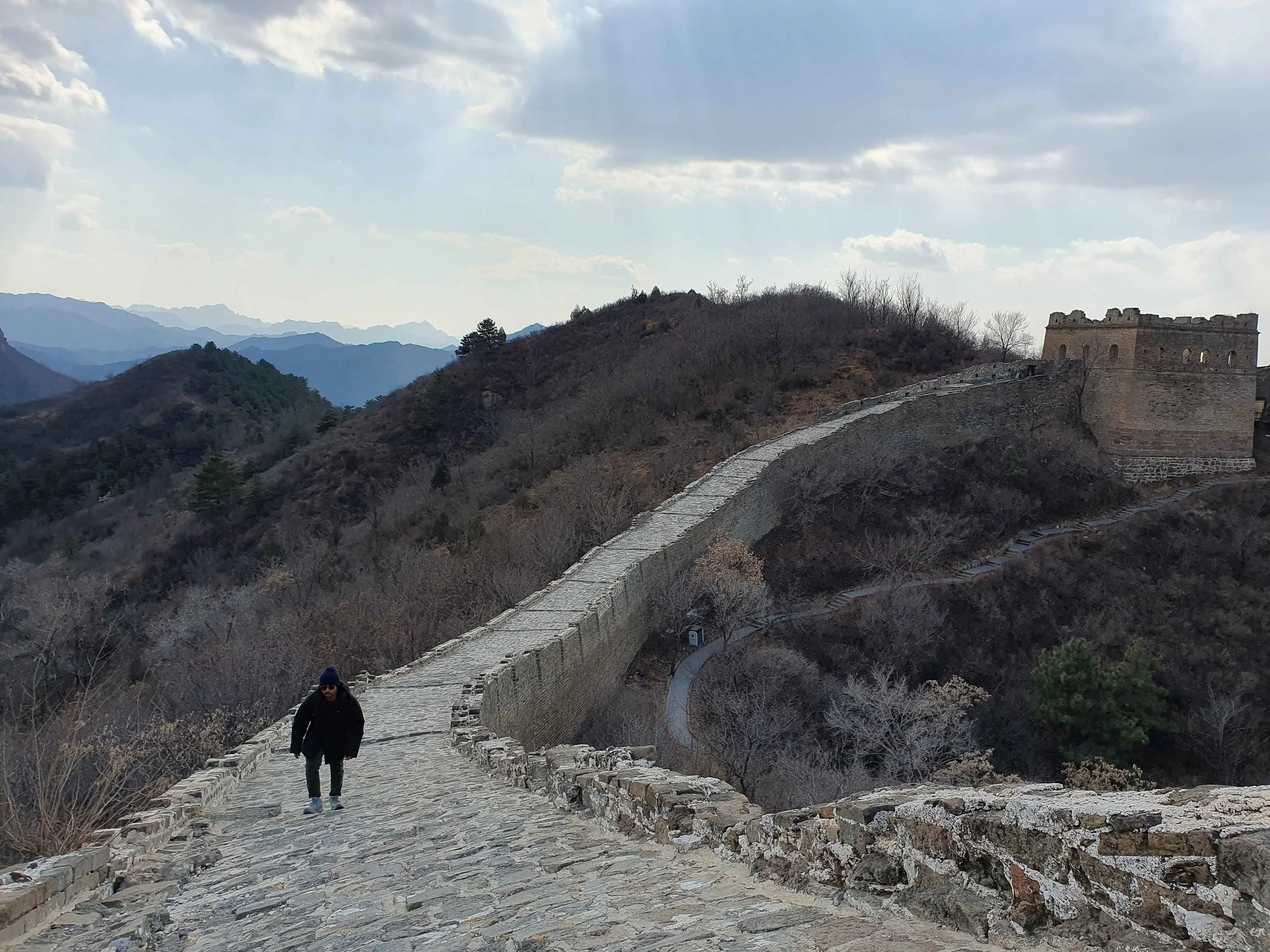
Simatai (司马台, Sīmǎtái), paired with Gubei Water Town (古北水镇, Gǔběi Shuǐzhèn) at its base, is the rugged alternative. It's the only section of the Great Wall that's never been restored, so you still have the original Ming dynasty stonework standing along a dramatic, knife-edge ridge, about 1.5 hours out from the airport. Gubei Water Town itself is a built canal town with waterways and food stalls, so you can find somewhere to sit down and eat afterwards. Order the "Miyun Three Roasts" (密云三宝, Mìyún Sānbǎo): roast pork (烧肉, shāoròu) tucked into a split-open sesame flatbread (烧饼, shāobǐng), washed down with Sima Xiaoshao (司马小烧, Sīmǎ Xiǎoshāo), a local sorghum liquor distilled right in the town. Miyun Reservoir fish (密云水库鱼, Mìyún Shuǐkù Yú), caught from the reservoir nearby, is also worth ordering if it's on the menu. Simatai also runs night visits with the wall lit up, so it’s still a good choice if your layover is in the evening.
If neither of these is enough Great Wall for you, we've written a full guide to the Great Wall sections worth the extra effort beyond Badaling, most of which are also feasible from PEK given enough time.
PKX: Daxing Airport
Under 5 hours: Beijing Wildlife Park or Pangezhuang watermelon town
The terminal itself is worth a glance before you even leave. Zaha Hadid designed the building in the shape of a starfish, with a rooftop garden built into the structure, and it’s worth a moment of appreciation if you’re an architecture buff or just appreciate good design.
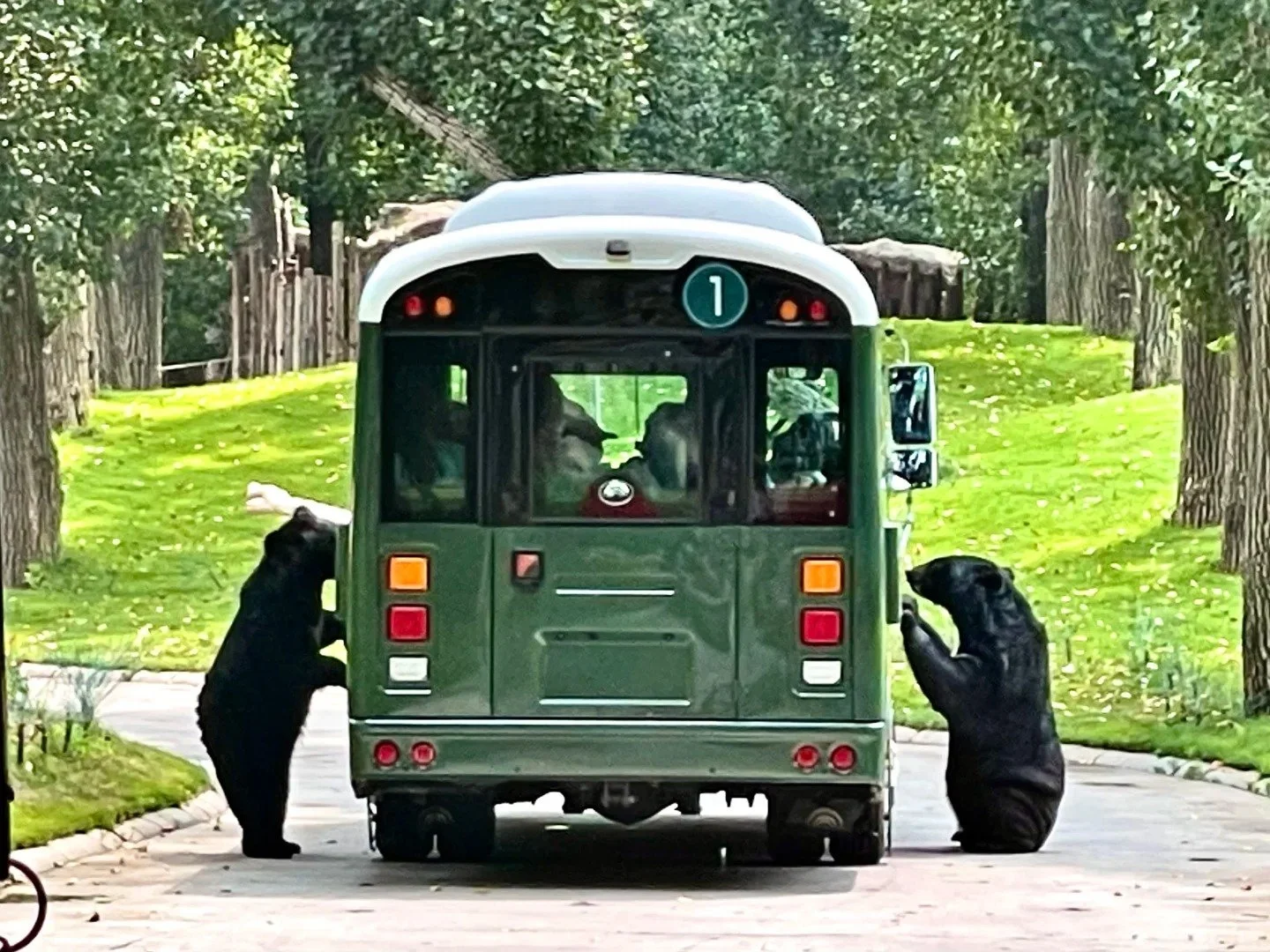
For an actual outing, Beijing Wildlife Park (北京野生动物园, Běijīng Yěshēng Dòngwùyuán), about 25 minutes by taxi, is a drive-through and walk-through safari park where lions and baboons share open enclosures and you can get close to pandas and golden monkeys. There's a walking zone plus a small train or caged safari bus through the animal areas, so you're not locked out just because you arrived by taxi.
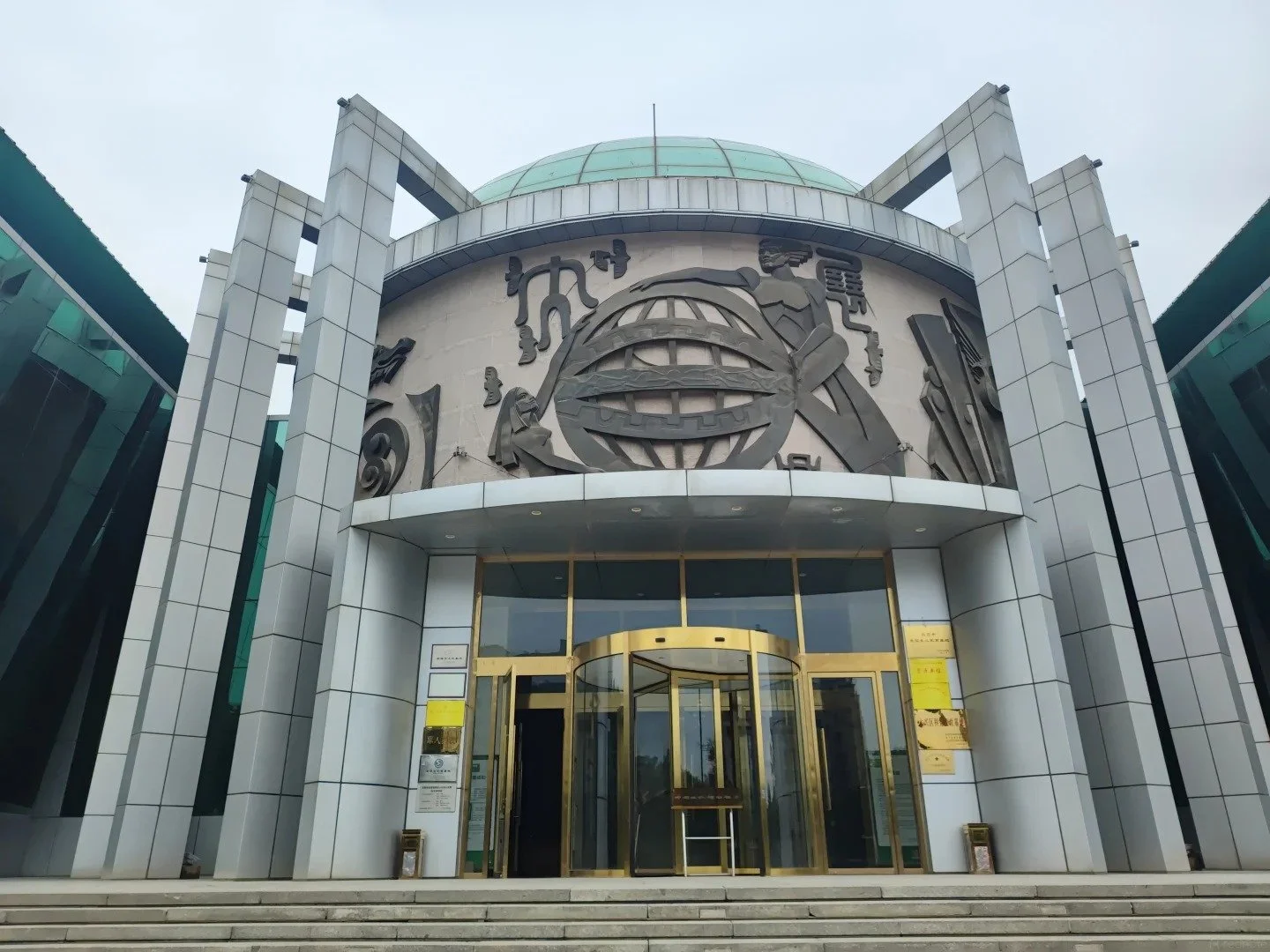
Or, depending on the season, head to Pangezhuang (庞各庄, Pánggézhuāng), Daxing's watermelon-growing region, sitting between the airport and Daxing's town centre. These aren't just any watermelons. They were an imperial tribute fruit from the Jin dynasty right through to the end of the Qing, and Empress Dowager Cixi was reportedly a fan. Roadside stalls along the main road sell them fresh-cut straight from the fields, or you can walk into one of the picking farms, choose your own melon off the vine, and have it cracked open on the spot while it's still warm from the sun. Locals don't waste the rind either. Stir-fried watermelon rind with egg (西瓜皮炒鸡蛋, xīguāpí chǎo jīdàn) is one of the more unique regional dishes, making sure the whole fruit gets used rather than binning half of it. This is also where you’ll find the Watermelon Museum (中国西瓜博物馆, Zhōngguó Xīguā Bówùguǎn), shaped like a giant melon flanked by two leaves, and a 35-plus year running watermelon festival with a "melon king" contest. This year's winner weighed 89 kilos. In spring, the same area runs a pear blossom festival around a 417-year-old imperial pear tree instead.
5 to 8 hours: the Milu Deer Park or Tanzhe Temple
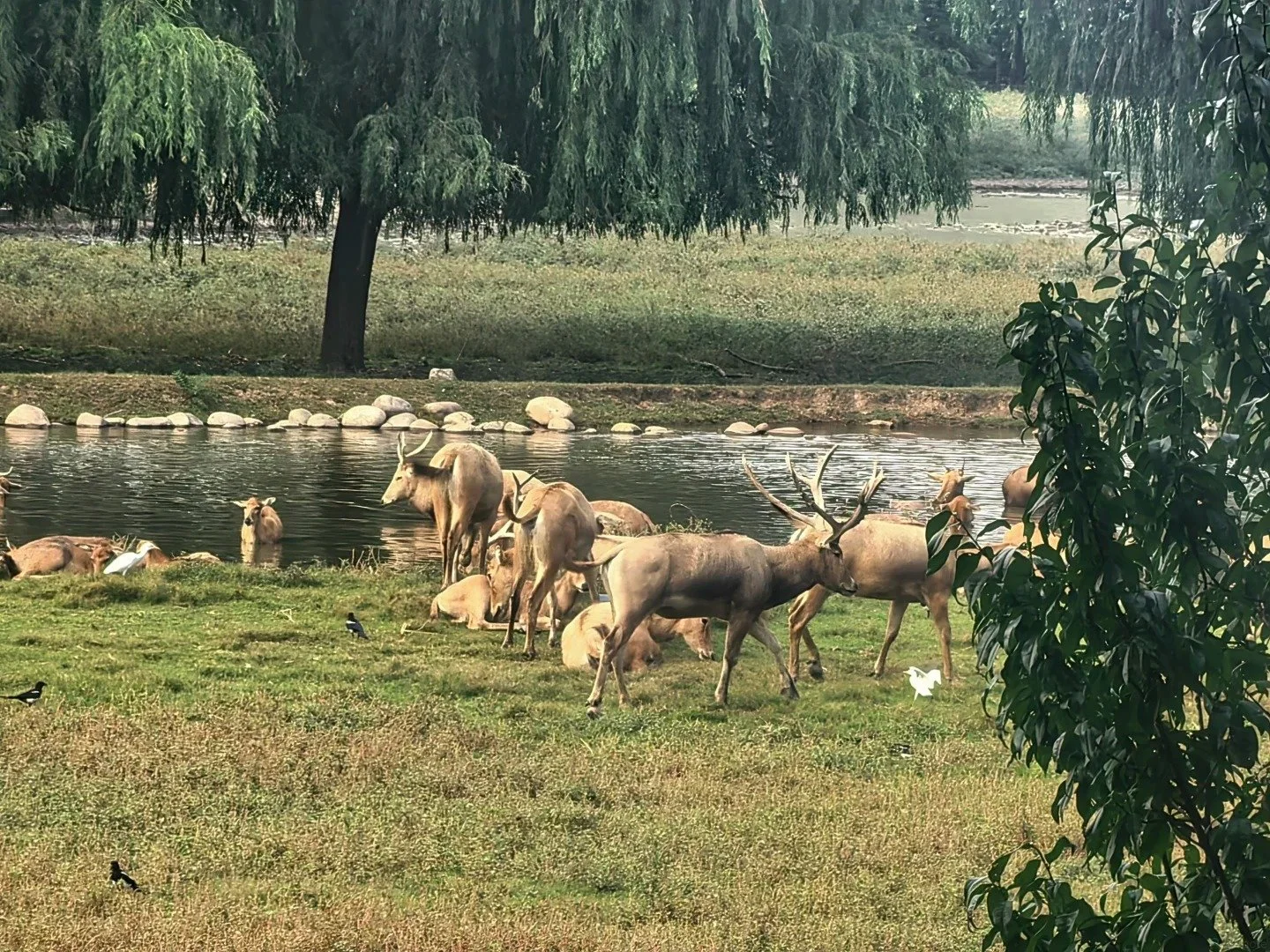
Nanhaizi Park (南海子公园, Nánhǎizi Gōngyuán) and the Milu Deer Park (麋鹿苑, Mílù Yuàn), about 40 to 50 minutes away by taxi, are home to the Milu deer. These animals are nicknamed sibuxiang (四不像, sìbùxiàng), the four unalikes, for having the antlers of a deer, the neck of a camel, the hooves of a cow, and the tail of a donkey. They lived exclusively in this exact imperial hunting ground for centuries before going extinct in China in 1900, when soldiers from the Eight-Nation Alliance looted and ate the last of the royal herd during the Boxer Rebellion. The species only survives today because an English duke had quietly been buying up scattered captive milu from European zoos through the 1890s and breeding them at Woburn Abbey. In 1985, after years of "milu diplomacy" between China and the UK, 22 deer were flown back to this exact site and released into the place they'd gone extinct 85 years earlier. Today, over 14,000 milu descend from that one shipment. The park is now part nature reserve, part small museum. Food stalls near the park entrance sell simple local snacks like guohong caihe (锅烘菜合, guō hōng cài hé), a pan-fried stuffed flatbread, and zha huitou (炸回头, zhá huítóu), a fried folded dumpling, crisp on the outside and quick to eat standing up.
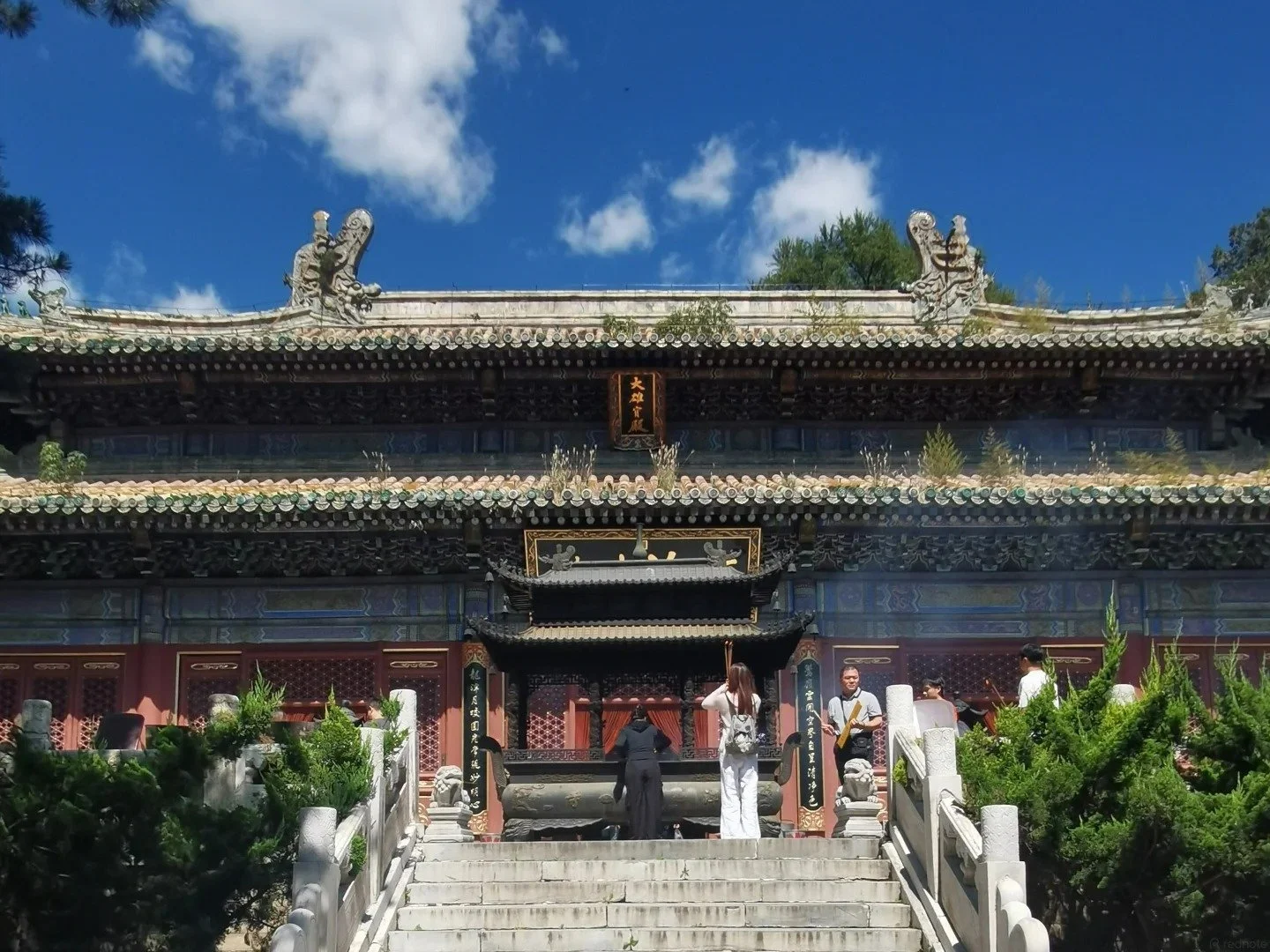
Tanzhe Temple (潭柘寺, Tánzhè Sì), about 1 hour 15 minutes by taxi, is the other option, easier to access from Daxing than it is from most parts of Beijing itself. There's a saying in Beijing that "first there was Tanzhe Temple, then there was Beijing", since the temple predates the city itself by centuries. I went years ago, and it's stuck with me as one of the few non-Great Wall trips Beijing has to offer, getting out into some nature and a part of the city I'd never been to and never would have found otherwise. The temple runs its own vegetarian restaurant (嘉福賔舍素食餐厅, Jiāfú Bīnshè Sùshí Cāntīng) just outside the main gate, and inside the grounds themselves, tucked into the pear tree courtyard, there's a small coffee spot called Jiafu Coffee (加福咖啡, Jiāfú Kāfēi). In addition to coffee, try the stone-fish dessert (石鱼甜点, shíyú tiándiǎn) if it's on, a nod to the temple's own carved stone fish that's said to bring luck.
8+ hours: a day trip to Tianjin
Daxing has its own high-speed rail station built directly into the terminal, and from there it's just under an hour to Tianjin, taking you to a completely different city rather than a Beijing suburb. It's actually much easier and faster to access Tianjin from Daxing Airport than it is to get to central Beijing.
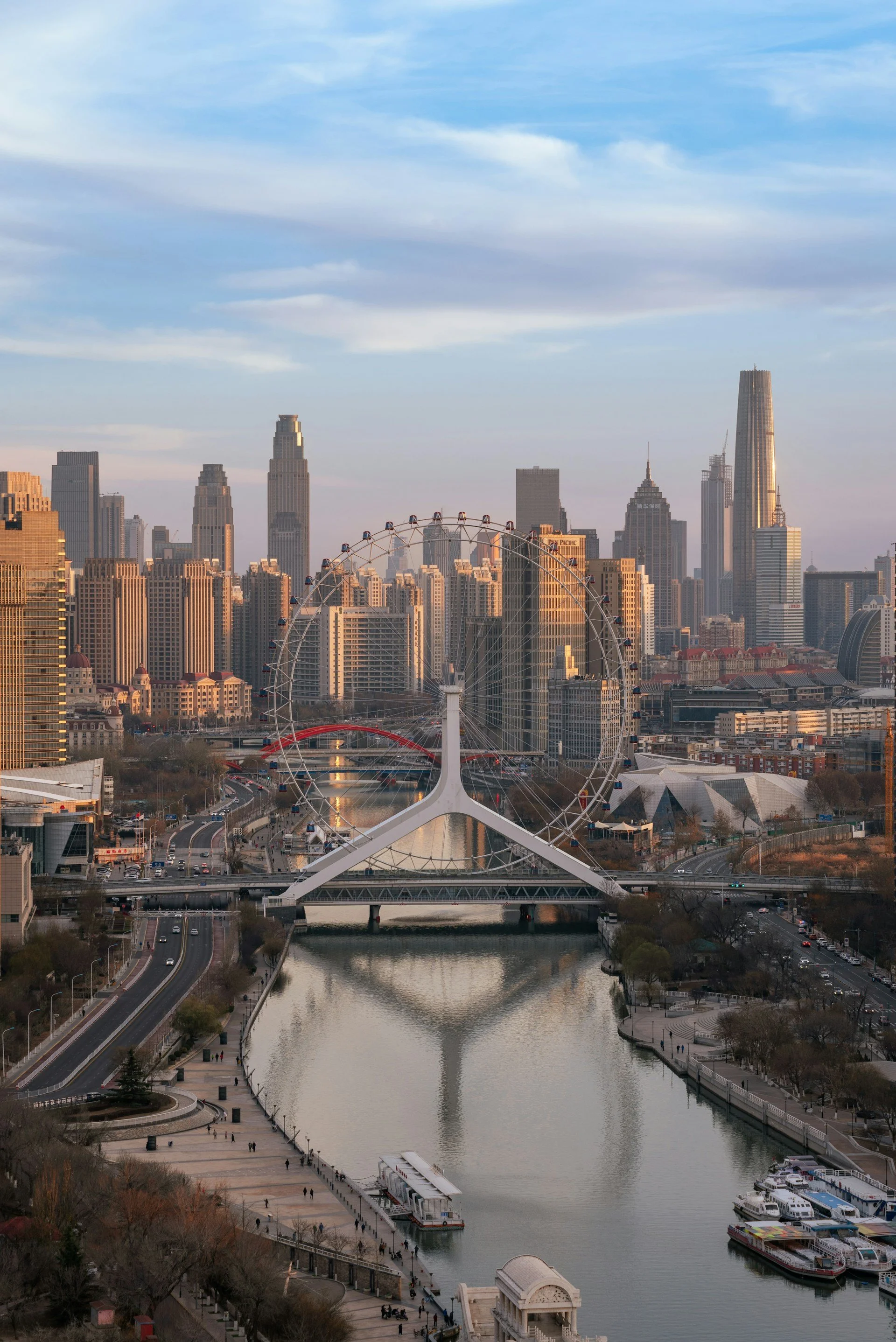
For a few hours in the city, Ancient Culture Street (古文化街, Gǔ Wénhuà Jiē) is the historic heart of Tianjin, a restored Qing-dynasty street built around Tianhou Palace, a temple to Mazu, goddess of the sea, lined with folk craft shops and street snacks. The Porcelain House (瓷房子, Cí Fángzi) is the genuinely strange one. It’s a private mansion a collector spent years covering inside and out with millions of antique porcelain shards, ancient vases, and shattered plates. Tianjin Eye (天津之眼, Tiānjīn Zhī Yǎn) is a Ferris wheel built directly on top of a bridge spanning the Hai River, one of very few in the world built this way, and from the top you get the whole sweep of the old city along the river in one turn, especially good once the bridge and riverbanks light up after dark. And Five Great Avenues (五大道, Wǔdàdào), the former foreign concession district, is Tianjin's answer to Shanghai's French Concession: hundreds of century-old European villas, many now converted into independent cafes, bookstores, and small galleries.
For food, keep an eye out for the "three great snacks" (天津三绝, Tiānjīn Sānjué): Goubuli baozi (狗不理包子, Gǒubùlǐ Bāozi), steamed pork buns pleated at least 18 times by hand; Eighteenth Street mahua (十八街麻花, Shíbā Jiē Máhuā), a crispy, slightly sweet fried dough twist; and Erduoyan fried rice cake (耳朵眼炸糕, Ěrduǒyǎn Zhágāo), a deep-fried glutinous rice cake with sweet red bean filling. If you’re looking for a full meal, then head to a Tianjin restaurant (津菜馆, jīncàiguǎn) for some local specialties. Start with Guota liji (锅塌里脊, Guōtā Lǐjǐ), pan-seared pork loin in a savoury egg batter, which is the ancestor of Japan's Tenshin-han rice dish. Lao baosan (老爆三, Lǎo Bàosān) is one of the city's real local delicacies, a combination of stir-fried pork liver, kidney, and lean pork meat. And zengbeng liyu (罾蹦鲤鱼, Zēngbèng Lǐyú) is a crispy sweet-and-sour carp fried whole with the scales left on, then doused in hot sauce at the table so it audibly sizzles. It's the signature dish at Hongqi Fanzhuang (红旗饭庄), a century-old institution that's been serving it, alongside other Tianjin specialties, at multiple branches across the city for decades.
Which airport you land at is going to change your layover completely, one actually taking you into Beijing, while the other gets you further from the typical tourist spots of the capital city. Take advantage of the visa-free transit, and next time you're routed through Beijing with hours to spare, you don't have to spend them at a gate.
FREQUENTLY ASKED QUESTIONS
-
Yes. China's visa-free transit policy allows eligible travellers to leave the airport, enter Beijing (or elsewhere in China), and stay for up to 240 hours (10 days) without a separate visa, as long as you have a confirmed onward ticket to a third country. Both Beijing Capital Airport (PEK) and Beijing Daxing Airport (PKX) are valid entry and exit points under this policy.
-
The current policy allows up to 240 hours, or 10 days, of visa-free transit for eligible nationalities. This replaced the earlier 144-hour policy in a 2024 expansion, and the eligible country list has continued to grow since.
-
A layover of at least 5 hours gives enough time to leave the airport, visit somewhere close by, and return with a safe buffer before your next flight. Under 5 hours, it's best to stay close to the terminal, such as one of the plane-spotting parks near PEK. Under about 3 hours total, staying in the airport is the safer choice.
-
PEK (Capital Airport) is closer to central Beijing, making a temple, hutong, or Great Wall visit realistic. Daxing (PKX) sits about an hour south of the city and isn't close to central Beijing's landmarks, but the surrounding district has its own attractions, including a wildlife park, a historic temple, and easy rail access to Tianjin. Neither is objectively better, the right choice depends on how much time you have and whether you want to reach central Beijing or explore closer to Daxing itself.
-
Yes, from PEK. The Mutianyu section is under an hour away by taxi and is fully restored with a cable car and toboggan run. The Simatai section, paired with Gubei Water Town, is about 1.5 hours away and is the only unrestored section of the wall. Both require at least 8 hours total for the layover to comfortably include travel time, time at the wall, and a safe return to the airport. The Great Wall is not realistically accessible from Daxing Airport within a normal layover window.