
Beyond Badaling: The Great Wall Sections Worth the Extra Effort
There are a lot of sections of The Great Wall of China near Beijing, and it can be hard to choose where to go. The most common experience of visiting the Great Wall of China is where you queue for a cable car to then shuffle along a perfectly restored battlement shoulder-to-shoulder with a few thousand people. That version exists at places like Badaling, and millions of people do it every year. If it's your only option, still go, because the Great Wall of China does not disappoint. It’s one of those places that, no matter how much you hear about it and how hyped it is, it still delivers.
Travellers who want to go one step further will usually visit Mutianyu, where the experience starts to open up. The first time I went to the Great Wall of China was over 20 years ago, and I visited Mutianyu. It remains genuinely spectacular in my memory. The views are stunning, the crowds more manageable, and the toboggan descent is one of the best things you can do at the Great Wall. Do not skip the toboggan.
This guide, though, is for everyone who wants to go further still.
What Is the Great Wall, and When Was It Built?
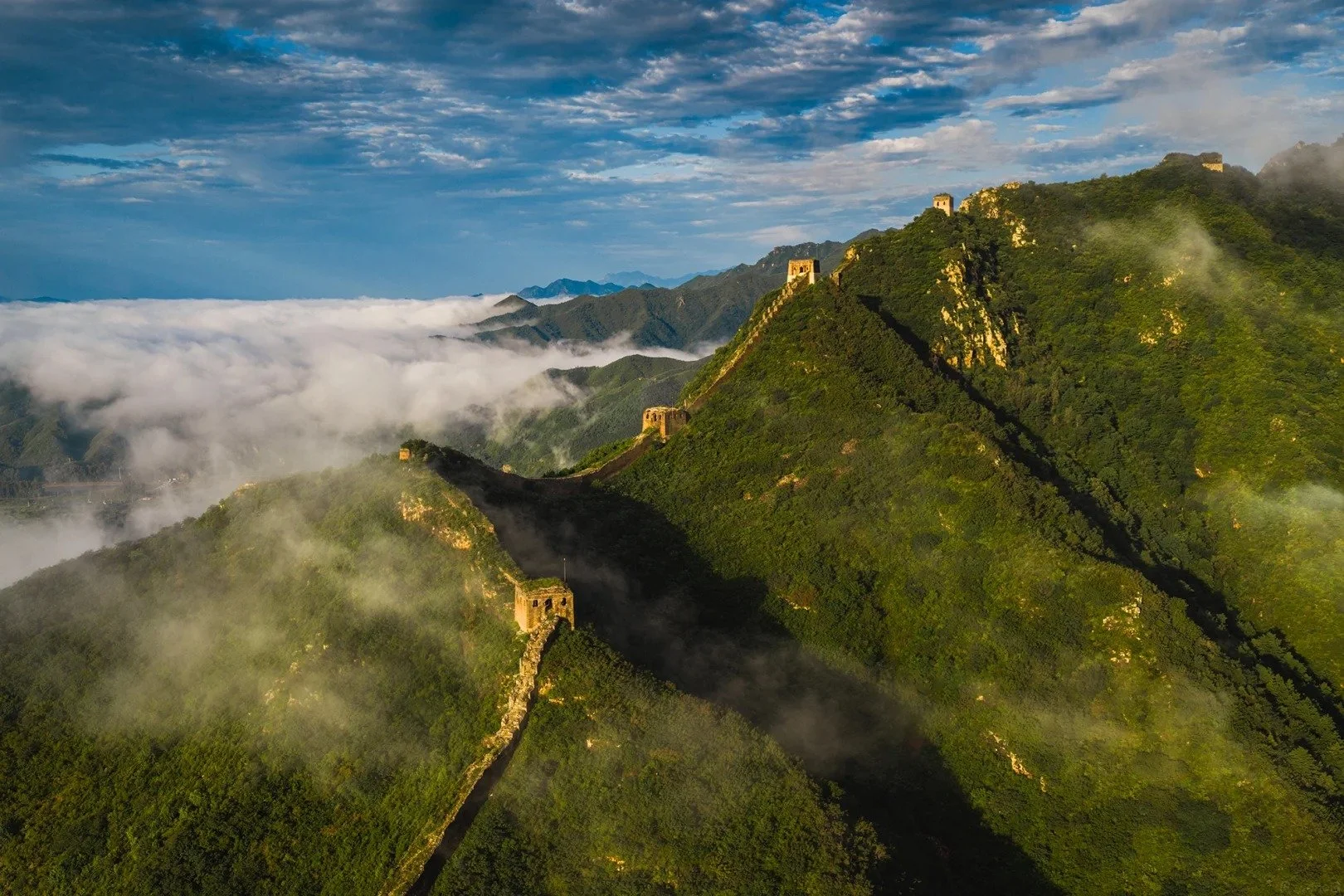
The Great Wall is not one wall. It is a vast network of fortifications, watchtowers, garrison stations and signal towers built across multiple dynasties and many centuries, stretching from the coast of Hebei Province in the east to the deserts of Gansu in the west. Its total length across all dynasties combined exceeds 21,000 kilometres.
Construction began during the Warring States period (475–221 BC), when rival kingdoms built separate walls to defend their own borders against each other and against the nomadic peoples of the north. After Qin Shi Huang unified China and founded the Qin Dynasty (221–206 BC), he connected many of these existing walls into a continuous barrier and extended it further. The Han Dynasty (206 BC–220 AD) pushed it westward into Central Asia, and the Northern Qi Dynasty (550–577 AD) added significant new sections. It was the Ming Dynasty (1368–1644), however, that carried out the most ambitious construction of all. Almost everything you can visit near Beijing today dates from this period, solid brick fortifications built over a span of nearly 300 years, designed to protect the capital from invasion from the north.
The result is one of the greatest engineering achievements in human history, and one of the most varied, now recognised as a UNESCO World Heritage Site. The wall looks completely different depending on where you stand on it. Some sections are built from smooth cut stone on mountain ridges. Others are compressed earth slowly dissolving back into the landscape. Some have been painstakingly restored to something close to their original condition. Others stand exactly as 500 years of weather and neglect have left them: crumbling and overgrown, but still extraordinary. And it makes for a great side trip if you’re visiting Beijing.
Polished, Wild, and Everything In Between
The Great Wall near Beijing ranges from fully restored tourist sections with cable cars and cafés, to completely unrestored 'wild wall' that hasn't been touched in 500 years.
At one end, fully restored sections offer smooth paving stones, metal guardrails, cable car access, and gift shops at the bottom. At the other end, the wild wall is exactly as the centuries have left it: watchtowers missing whole walls, trees growing through the brickwork, no infrastructure of any kind. In between, there are sections where well-maintained wall gives way without warning to crumbling, overgrown ramparts that feel genuinely ancient. None of these is objectively better than another. What matters is knowing which one you're heading to and whether your footwear is up to it.
Less Touristy Great Wall Sections Near Beijing
Shixiaguan (石峡关) — The One Hiding in Badaling's Shadow
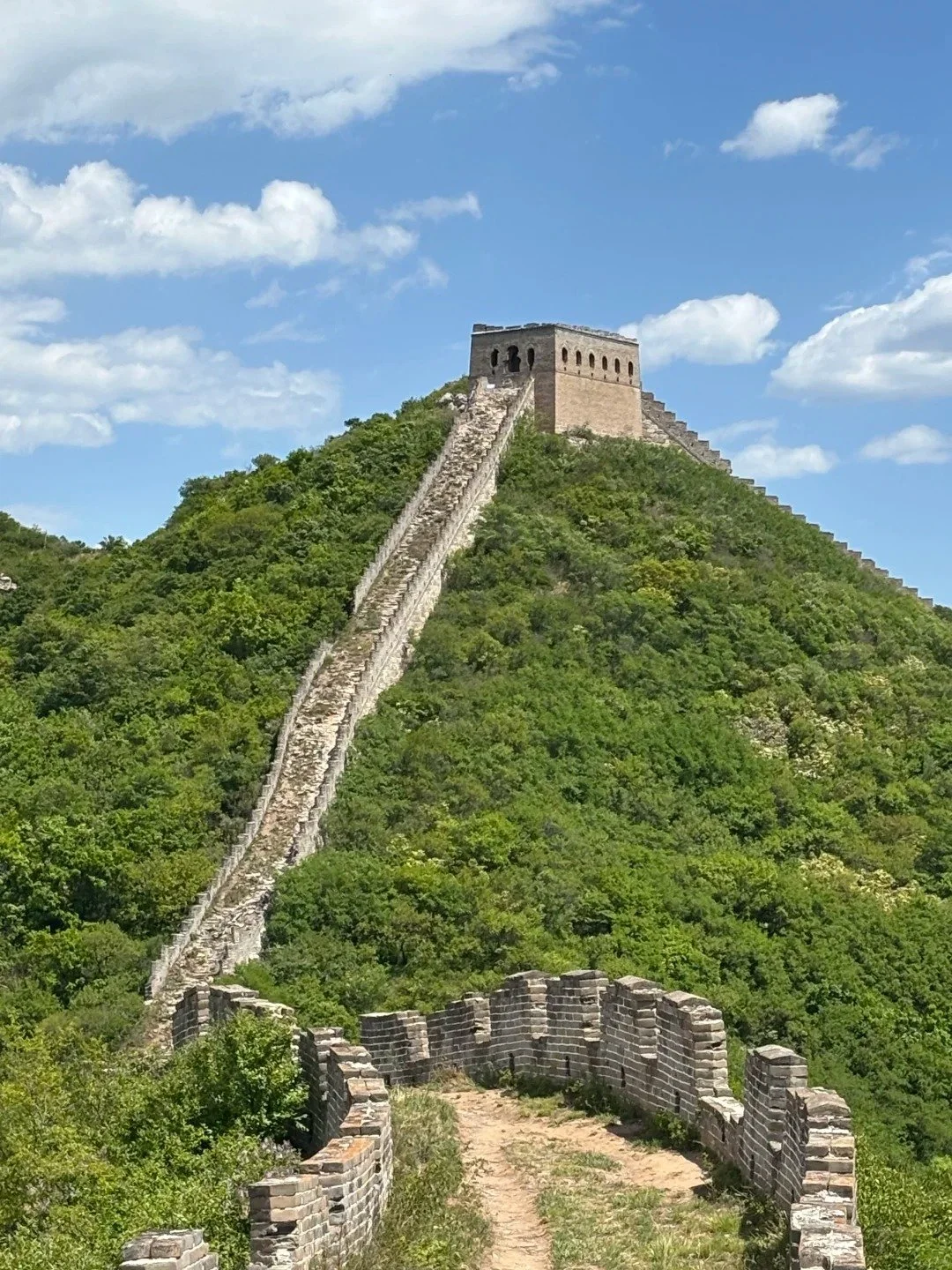
Most people who make the trip out to Badaling have no idea that a completely unrestored Ming dynasty pass sits on the southwestern edge of the same scenic area. Shixiaguan is an ancient mountain gateway, part of the same defensive network as the famous section nearby, but untouched, unpolished, and almost entirely overlooked.
Getting to Badaling is easy: a high-speed train from Beijing Qinghe station takes about half an hour. From there it is a short drive to Shixiaguan. The simplest approach is to hire a driver for the day and head directly here rather than being funnelled into the main scenic area with everyone else.
We haven’t yet walked this section ourselves, that’ll be happening during our China Wine Trail tour in September 2026, followed by a visit to the nearby Canaan Winery.
Huanghuacheng Lakeside (黄花城水长城) — Where the Wall Walks Into the Water
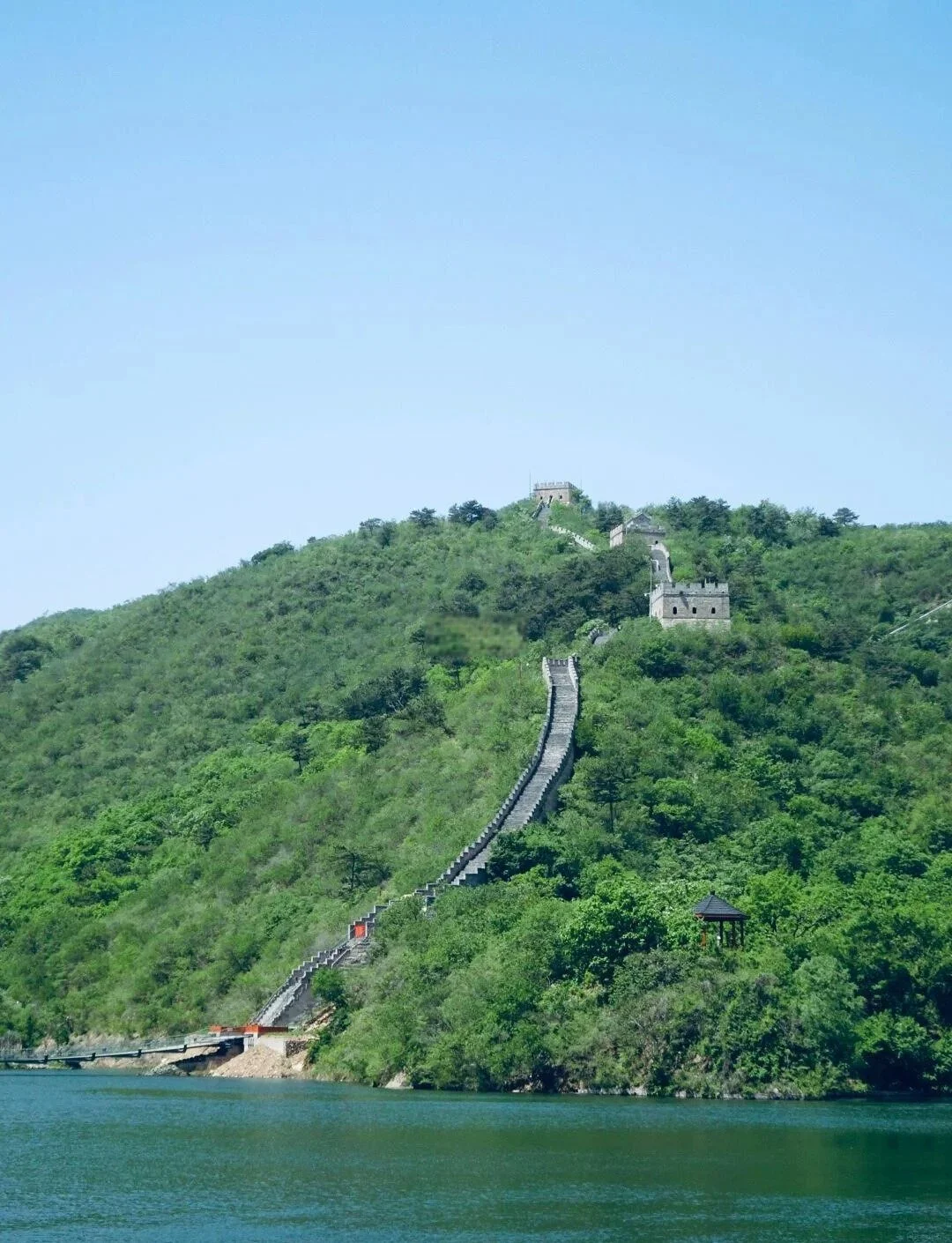
In the 1990s, a reservoir was built in a valley in Huairou District. The engineers did not move the wall. Sections of Ming dynasty fortification were simply submerged, and when the water rose, what remained was one of the strangest and most beautiful sights in the country: the Huanghuacheng Great Wall disappearing into a lake and re-emerging on the far side, as if it had simply kept going underwater. Crowds are minimal, the section is compact, and if you want a genuine wall experience without committing a full day or fighting for space with hundreds of other visitors, this is one of the best quick stops you will find anywhere near Beijing.
I visited this section years ago with my family, and it has really stayed with me. There is something genuinely surreal about seeing the battlement end at the waterline and reappear on the opposite bank. Nothing else I have visited or read about looks quite like it.
The section I accessed was fully unrestored. You walk up a dirt path and climb through an ancient, crumbling gate directly onto the wall, just a few minutes from the main road. You would never expect to find it there. The wall itself is rough underfoot and atmospheric in the best sense, the kind of place where you feel the history rather than reading about it.
Getting there: About 70km from central Beijing, around 1.5 to 2 hours. Best reached by private driver or taxi from Huairou.
Jinshanling (金山岭长城) — The One That Will Stay With You
If you can only do one section in this guide, make it Jinshanling.
It is about 130km from Beijing, roughly two and a half hours by car, and that distance is the best thing that ever happened to it. Far enough to deter casual day-trippers and close enough to be accessible. The result is a stretch of wall that feels, even on a weekend, more or less like your own.
I visited recently on a private tour, and we spent close to three hours on the wall without seeing more than ten other people. Those we did encounter were walking in the opposite direction, so we passed briefly, exchanged nods, and then the wall was ours again. For the better part of that day, there was nothing in any direction except mountains, the ridge dropping away below us, and the wall stretching as far as we could see, a watchtower on every peak, the whole landscape threaded with it.
The main section is fairly well restored, with a few less polished watchtowers along the route. As you hit the end of the restored section, you have the option to continue on to the wilder, fully unrestored part, where the hike gives way to rough stone and overgrown ramparts. We could have continued into the steeper, completely unrestored stretch beyond, but the descent was steep and the footing unreliable, and we made the sensible call to loop back down and call it a day. No regrets. What we had already walked was, genuinely, one of the best parts of any wall I have ever visited.
Getting there: Tourist buses run from Dongzhimen in Beijing and make a realistic public transport option. A private driver is more flexible and comfortable for this distance. If you can manage it, stay the night at the Jinshanling Great Wall Hotel right at the foot of the wall and get up early enough to walk before the day-trippers arrive. Sunrise over that ridgeline is not something you will want to miss.
Jiankou (箭扣长城) — For the Brave and the Photography-Obsessed
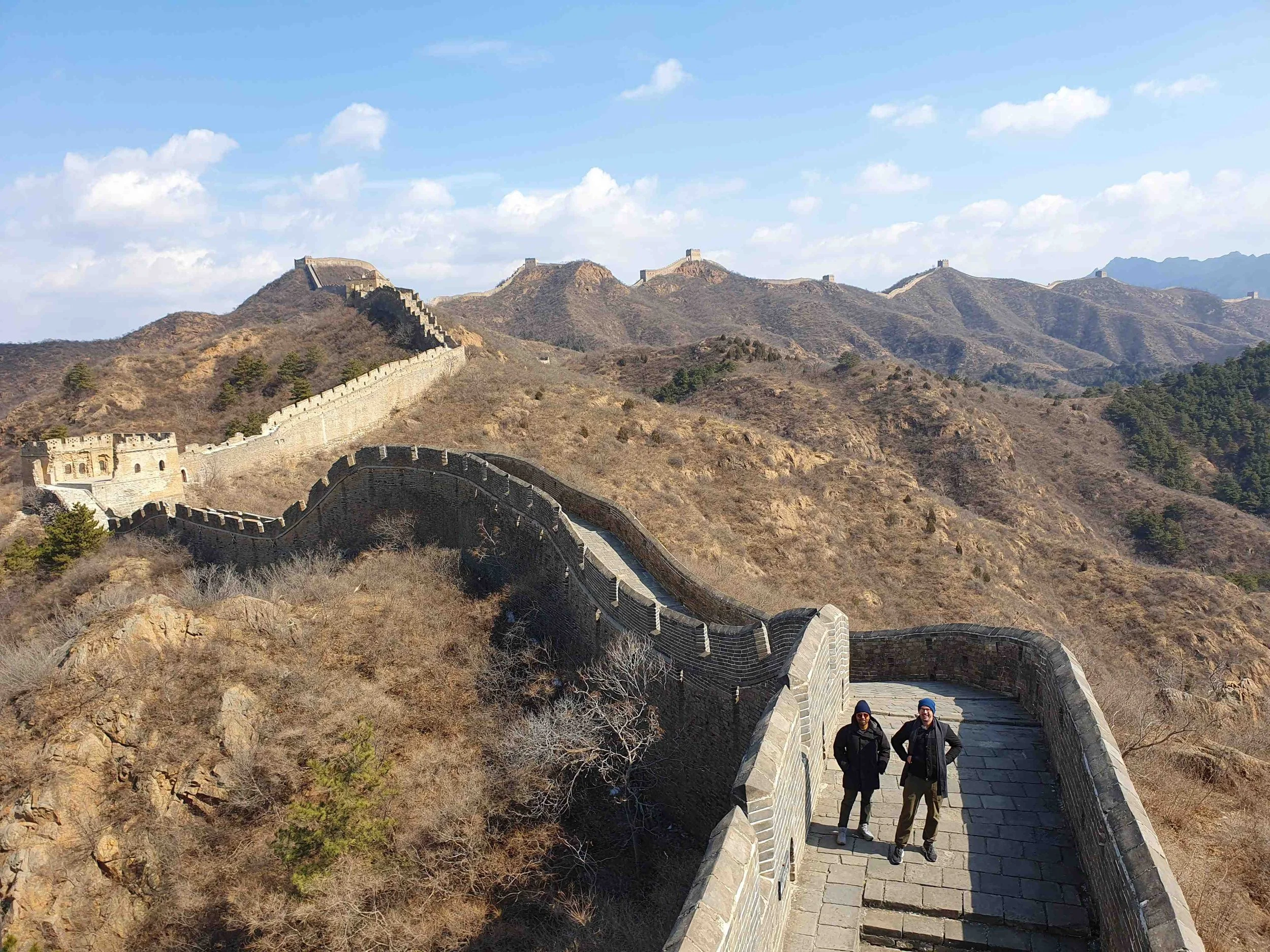
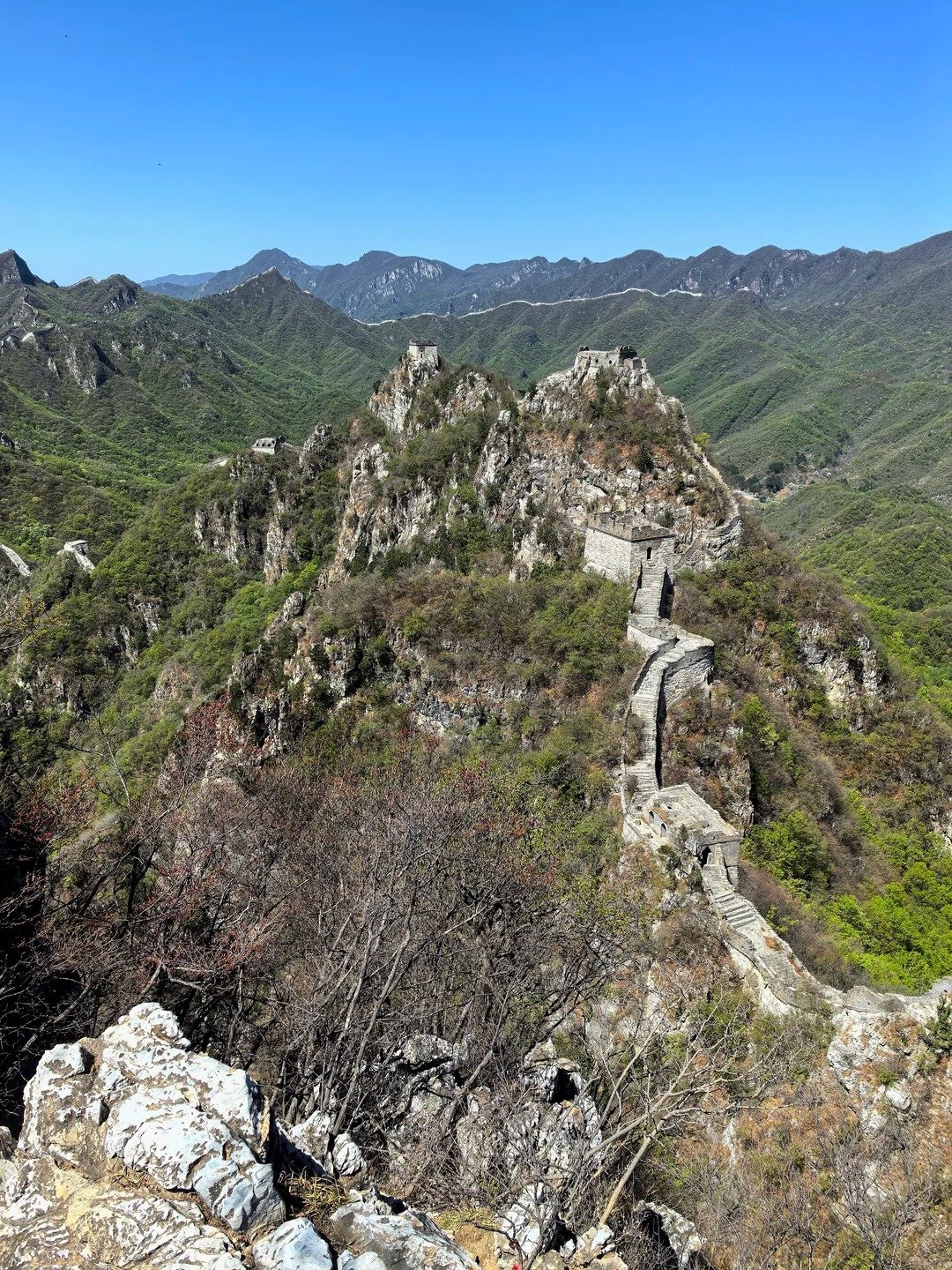
The photographs that define the Great Wall in the modern imagination, where the wall snakes along a knife-edge ridge with nothing but sky on either side, most of them were taken at Jiankou. The name means "arrow's notch," a reference to the way the wall curves across the mountain in a W-shape, like a bow drawn back ready to fire.
This is the wildest section near Beijing. It has never been restored, it is not officially maintained, and it is free to enter, largely because there is no one to collect a ticket. The standout landmarks are the stretch known as "Eagle Flies Upside Down" (鹰飞倒仰), where the gradient becomes so steep that even an eagle, the old saying goes, has to tip its head back to clear it, and "Beijing Knot," the dramatic point where three separate wall lines converge from different directions. The views in every direction are extraordinary.
It needs to be said clearly: Jiankou is not for everyone. Some sections require near-vertical scrambling. There are no guardrails and no safety infrastructure of any kind, and the trail can be genuinely dangerous in wet conditions or poor footwear. Come prepared, come in good weather, and if you are not confident, consider the easier northern approach, which still gives access to the same views with a more manageable climb.
Getting there: About 90km from Beijing. Public bus options exist but are limited and infrequent. A private driver is strongly recommended.
Gubeikou (古北口长城) — The Wild Wall With Bullet Holes
Most sections of the Great Wall preserve the distant past. Gubeikou preserves something closer as well.
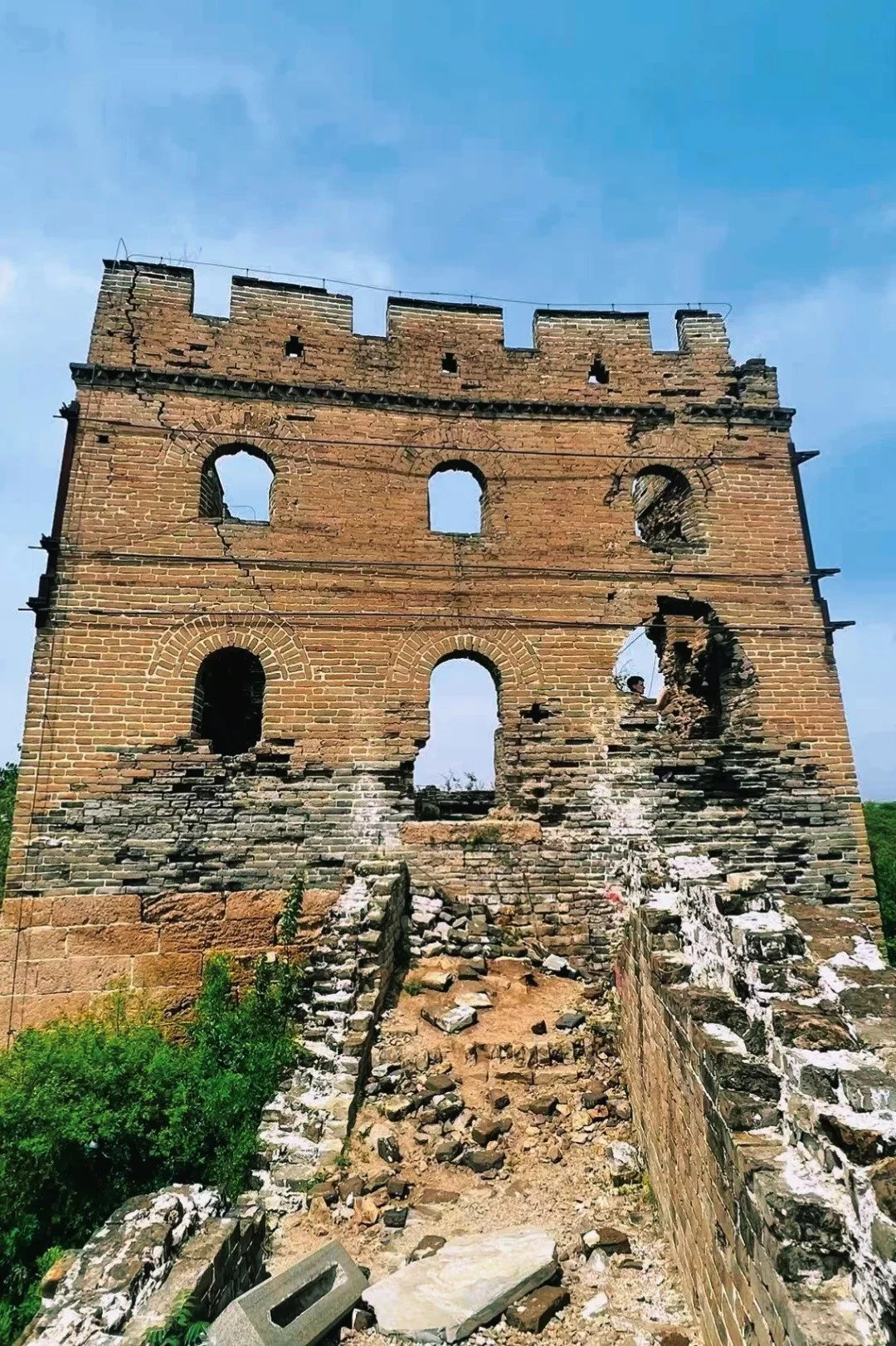
In 1933, Japanese troops invaded Beijing through this mountain pass. The battle lasted four months and left more than 5,000 soldiers dead on each side. You can still see the bullet holes in the watchtowers. Running your hand across brickwork pockmarked from a modern war, not an ancient one, is one of the stranger and more affecting things you can do at any historical site in China.
Beyond the military history, Gubeikou is one of the best places near Beijing to see multiple dynasties of construction in a single walk. Han dynasty fortifications and Ming dynasty walls sit layered on top of each other, two empires' ideas about defence in the same stretch of mountain. The section is completely unrestored and extraordinarily quiet, about 130km northeast of Beijing, sitting at the point where the mountains open into a pass that has been strategically significant for over a thousand years.
Getting there: Technically reachable by public transport via bus 980 from Dongzhimen to Miyun and then a local connection, but the logistics are slow and the schedule infrequent. A private driver makes this considerably more straightforward.
Simatai (司马台长城) — The Only One You Can Visit at Night
Every other section on this list closes at dusk. Simatai does not.
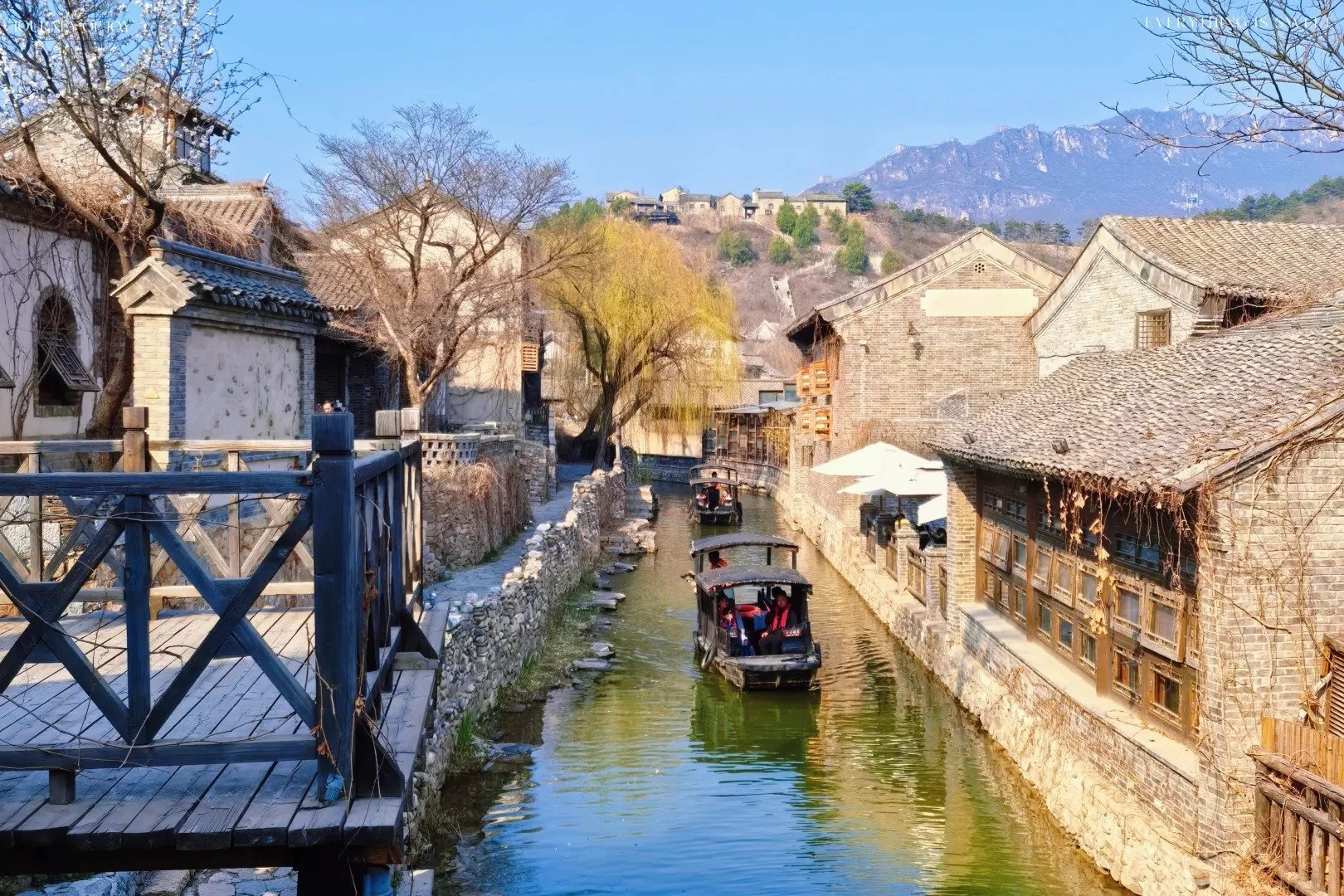
The night experience here, with the wall lit and visible from Gubei Water Town below, stone glowing gold against the dark mountain, is unlike anything else you can do at the Great Wall. It is also more commercial than any other section in this guide; the adjacent Gubei Water Town is a recreated heritage village that leans heavily into the atmosphere. Whether that bothers you depends on what you are looking for.
For anyone doing a two-day Great Wall trip, Simatai pairs naturally with Gubeikou. The sections connect, and doing a full day on the wild wall followed by an evening at Simatai is a very good use of 48 hours. On New Year's Eve 2025, the wall here was lit up alongside a thousand-drone light show and traditional iron fireworks, the kind of spectacle that reminds you China does spectacle like no one else.
Beyond the Wall: Making a Weekend of It
Stay at the Wall
The most affordable option in the area is a local farm homestay in one of the villages around Gubeikou. Simple rooms, home-cooked food, and in some cases the wall visible from the window. Guests consistently describe these stays as among the best experiences they have in China. The Jinshanling Great Wall Hotel sits right at the foot of the wall with the entrance two minutes away, along with plenty of local B&Bs and farmstays, making an early morning hike before any day-tripper from Beijing has had breakfast entirely feasible. For something more polished, Gubei Water Town below Simatai offers proper hotel infrastructure and evening wall access included, with everything from local homestays to high-end hot spring hotels like Beijing Wtown Resort.
Camp Under the Stars
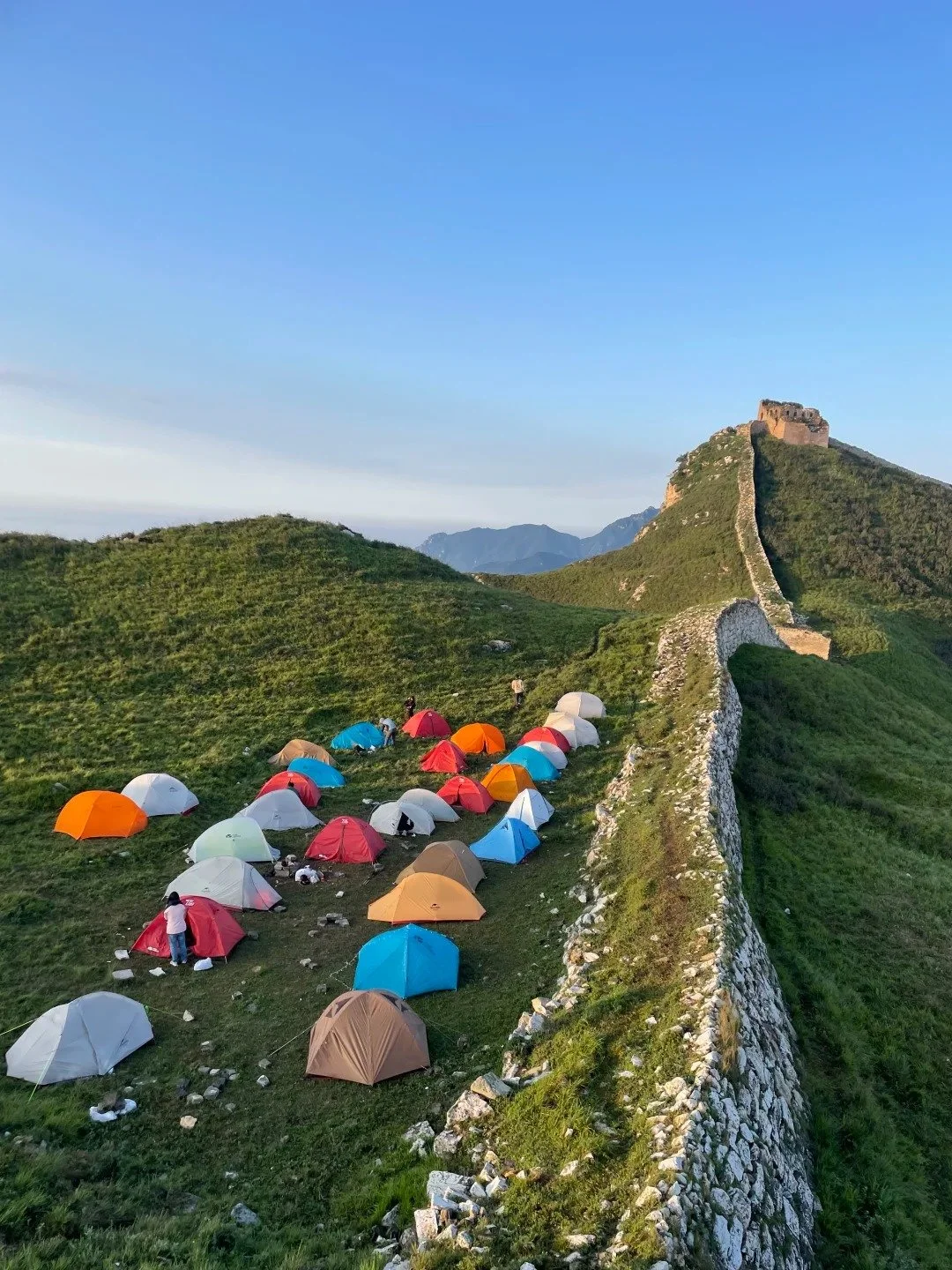
Wild camping near sections like Jiankou and Gubeikou has a long tradition among Chinese hikers, and the appeal is obvious. Waking up inside a crumbling Ming dynasty watchtower as the light comes over the ridge is an experience that doesn’t require much elaboration. You can do it yourself, or go with operators like Wild Great Wall who run organised overnight trips with proper logistics and safety support for those who would rather not navigate it independently.
Great Wall Festival
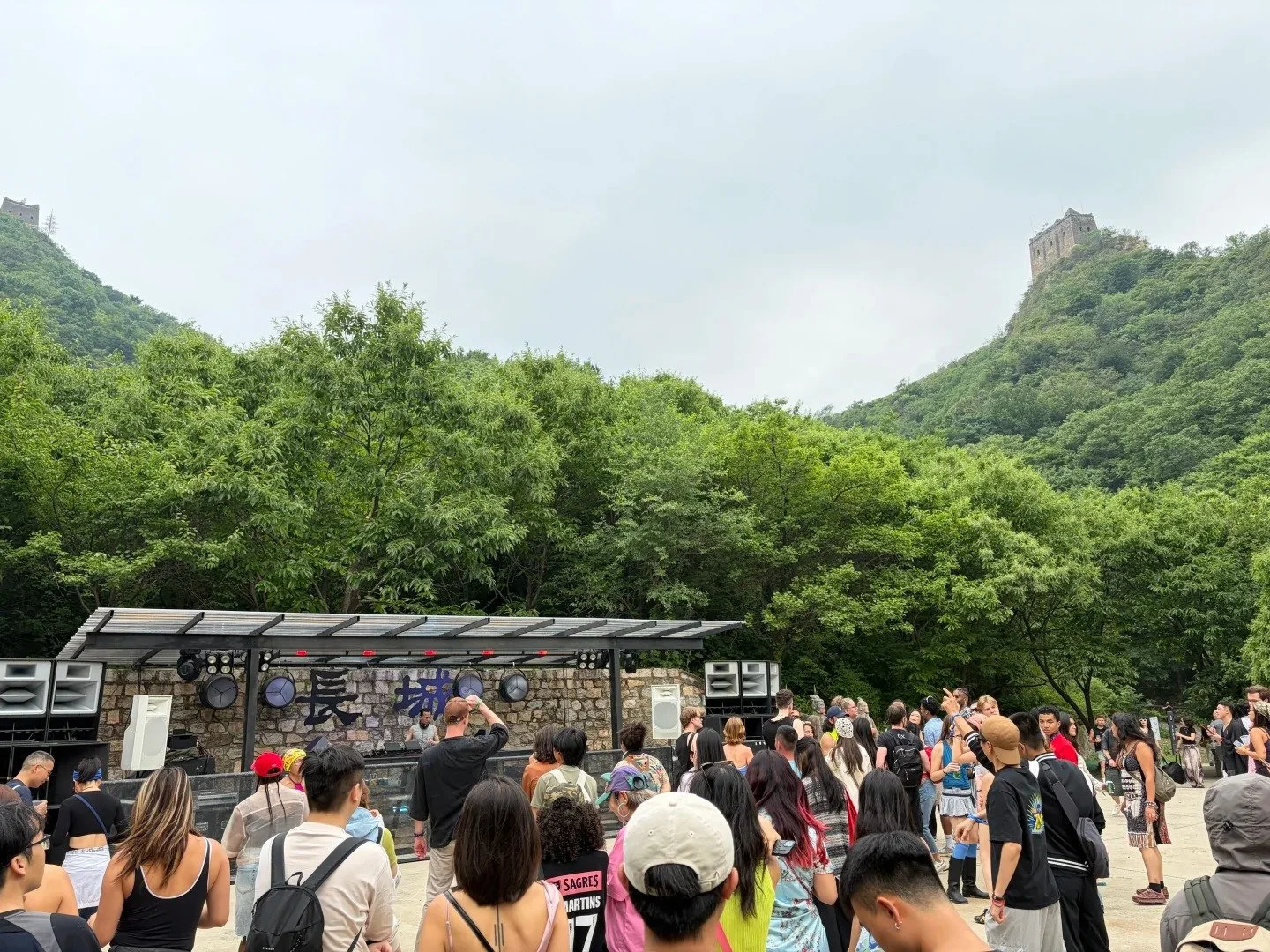
In May each year, Great Wall Valley in Huairou District hosts the Great Wall Festival, and it is exactly as awesome as it sounds. Multiple stages of electronic music set up in the very footpaths you walk on your way to reach the wall, camping near the festival grounds, and the kind of night that runs from sunset to sunrise. When I went Fatboy Slim was headlining, and more recently it’s been acts like Nina Kraviz and Mind Against. The image of a techno stage with a full light show against a Ming dynasty watchtower at midnight is an epic one that does not fade quickly.
Autumn Red Leaves
October and November bring spectacular foliage to the wall's mountain sections, particularly at Jinshanling. Grey stone and crumbling battlements against a hillside of red and gold is one of those things that photographs well and looks even better in person. This is worth planning around if you can.
How Do You Get to the Great Wall from Beijing?
For most of the sections in this guide, a private driver is the most practical option, particularly if you do not speak Mandarin. Sites like Viator, Klook and Trip.com all offer driver hire bookable in English. It isn’t the cheapest way to get to the wall, but you get a car and driver for the day without having to navigate slow connections or infrequent schedules in an unfamiliar language. For Jinshanling specifically, tourist buses run from Dongzhimen in Beijing and are a reasonable option if you are travelling solo or on a tighter budget. Downloading the essential apps for China in advance to make booking this much easier.
Entry costs vary by section. Wild sections like Jiankou are completely free, cheaper sections like Gubeikou cost 25 RMB, mid-range sections like Simatai cost around 40 RMB, and sections like Huanghuacheng and Jinshanling will get into the 60-70 RMB range.
The best times to visit are spring (April to early June) and autumn (September to early November), when temperatures are mild and the light is at its most photogenic. Winter brings snow and near-total solitude, which has its own considerable appeal. Avoid Chinese national holidays and Golden Week entirely if you value your sanity.
For wild sections, proper hiking boots and a sense of caution are non-negotiable. The wall is steep in places regardless of restoration level, and the surfaces, whether smooth stone or crumbling ancient brick, are unforgiving if you are underprepared.
One Wall, A Thousand Experiences
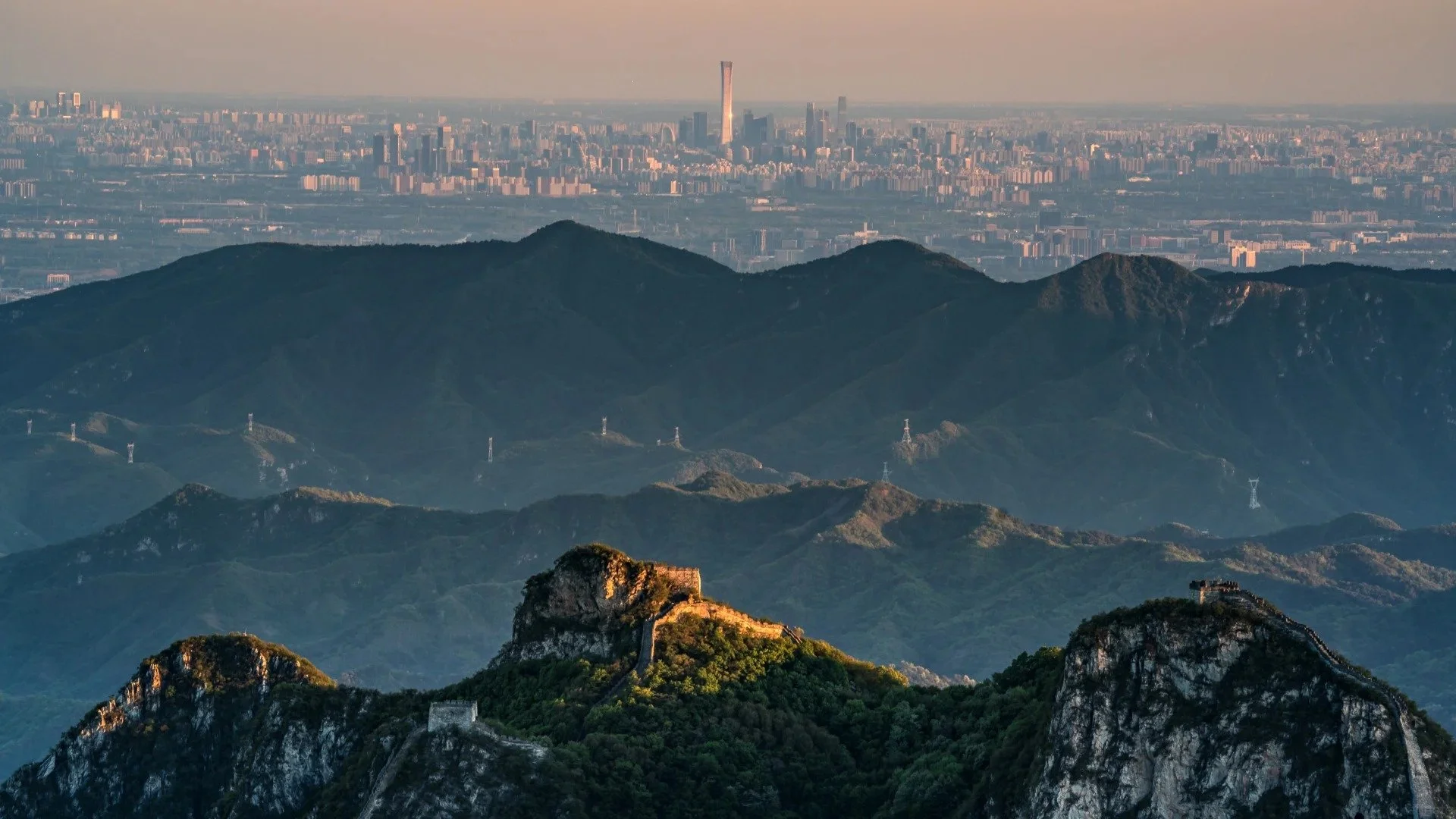
The Great Wall of China earns its name. Standing on it, whether you are surrounded by a crowd at Mutianyu or alone on a ridge at Jinshanling with nothing but mountains and silence in every direction, the scale of what the Ming Dynasty built here hits differently in person than in any photograph. There is a reason people come back to different sections, year after year, looking for another version of it.
And what we have covered here is only the beginning. The wall accessible from Beijing represents one chapter of a much longer story. The Han Dynasty earthworks slowly dissolving back into the Gobi desert, the ancient fortifications deep in the mountains of rural Guizhou, the place where the wall ends at the sea — that is a conversation for another day.
Frequently Asked Questions
-
Jinshanling and Gubeikou are consistently the least crowded sections accessible from Beijing. Jinshanling is about 130km from Beijing and sees a fraction of the visitors that Badaling and Mutianyu attract. Gubeikou is even quieter and more remote, though it requires more planning to reach. Jiankou is also uncrowded but is a challenging, unrestored section suited only to experienced hikers.
-
Jinshanling is the better choice for travellers who want a serious hiking experience with very few crowds. It is further from Beijing (around 130km versus 73km for Mutianyu) but offers a more varied and dramatic experience, with both restored and wild sections. Mutianyu is better for families, first-time visitors, or travellers with limited time, and offers a toboggan descent that Jinshanling does not.
-
Yes. Most Great Wall sections near Beijing are accessible as day trips, though travel times vary considerably. Badaling and Mutianyu are 1 to 1.5 hours from central Beijing by road. Jinshanling and Gubeikou take around 2 to 2.5 hours each way. For the more remote sections, an early start is recommended, especially if travelling by public transport.
-
Restored sections of the Great Wall have been rebuilt and maintained for tourism, with even paving, safety railings, and visitor facilities. Wild or unrestored sections have not been touched since the wall was abandoned and appear as they have for centuries: crumbling, overgrown, with no infrastructure. Most sections near Beijing fall somewhere between these two extremes, with a restored stretch near the entrance giving way to wilder wall further along.
-
Spring (April to early June) and autumn (September to early November) are the best times to visit the Great Wall near Beijing. Temperatures are mild, skies tend to be clear, and autumn brings spectacular foliage to the mountain sections. Summer is hot and humid but manageable. Winter offers snow and very few crowds, though some sections become icy and dangerous. Chinese national holidays and Golden Week (early October) should be avoided due to extreme overcrowding.
-
Most visitors spend two to three hours hiking the Jinshanling Great Wall section. The main restored section takes around 90 minutes to walk at a comfortable pace. Continuing into the unrestored section beyond adds time and considerably more physical effort. The hike is rated as moderate, with some steep sections, and proper footwear is essential.
-
Yes. Even at busier sections like Mutianyu, the scale and setting of the Great Wall exceed most visitors' expectations. For travellers concerned about crowds, sections like Jinshanling, Gubeikou, and Huanghuacheng offer a comparable or superior experience with significantly fewer visitors. The wall consistently delivers regardless of which section you visit.
Hello, World!