
The Japanese Knife Pilgrimage: Where to Go When the Knife is the Destination
Japan has been making blades for over a thousand years. The techniques developed for swords, like folding, tempering, and the obsessive attention to steel, were eventually turned on kitchen knives, and the result is an object that is both practical and beautiful in a way that functional things rarely are. The difference between a Japanese knife and a Western one isn’t just sharpness. It’s the angle of the edge, the hardness of the steel, and the fact that in many workshops the forging, sharpening, and handle-fitting are each done by a different specialist who has spent their entire career on that one stage and nothing else.
I came to understand this not because I’m a chef, but because I had clients who were. If you’re wondering where to buy Japanese knives in Japan, the short answer is: it depends entirely on what kind of experience you want. For a couple of serious cooks who wanted to bring home knives from Japan, Sakai was the answer. They needed someone to find not just where to buy them, but how to get inside a workshop and learn how they were made. That led us to Mr Enami, a fifth-generation bladesmith working out of a small factory with one apprentice, who spent an hour walking us through the full knife-making process, and even letting us get hands on with some of the machines. My clients left with about four knives each, I left with a santoku I hadn’t planned to buy. It’s become the knife I reach for every time I cook, and the one that makes me appreciate the exercise of cooking in a way I never had before.
Whether you’re a chef or a home cook, this guide will help you plan your own pilgrimage to one of Japan’s knife centres and find the perfect item to bring home.This guide covers the three main knife-making regions in Japan of Sakai, Seki, and Echizen, plus where to buy well if you're in Osaka or Tokyo without time for a dedicated trip.
What Kind of Japanese Knife Should I Buy?
Japanese knife culture has a knife for almost every task imaginable. There are knives designed specifically for slicing eel, knives for cutting soba noodles, knives for peeling vegetables in a single continuous ribbon. It’s a rabbit hole so we'll just tell you about the ones you might want to take home, but for a deeper dive, this guide from Oishya is a good place to start.
The main types of Japanese knives
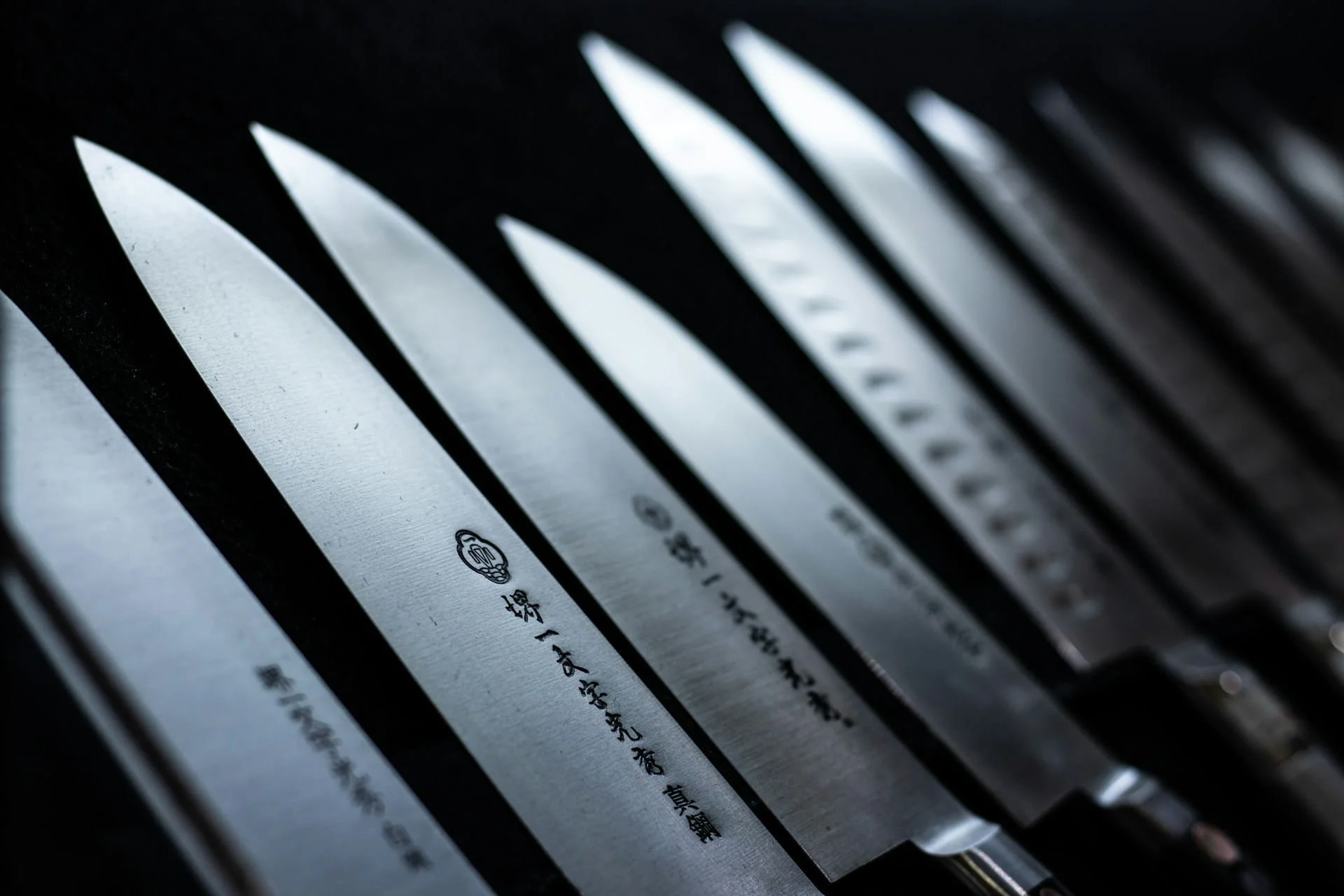
The santoku (三徳, santoku) is the right starting point for most home cooks. The name means “three virtues,” referring to meat, fish, and vegetables. It handles all three without fuss. It’s what I bought in Sakai, and for anyone who isn’t cooking professionally, it’s probably the right call. The gyuto (牛刀, gyuto) is the Japanese take on a Western chef’s knife: longer, slightly thinner, and better suited to the rocking cuts that Western-trained cooks tend to favour. If you’re used to a chef’s knife and want something familiar but significantly better, start here. The nakiri (菜切, nakiri) is a flat-bladed vegetable knife with a squared-off tip. No curve, no point, just a clean straight edge that makes short work of anything that grows in the ground. The petty knife (ペティナイフ, peti naifu) is a small utility knife for tasks that are too fiddly for your main knife: trimming, peeling, precision cuts.
Which is Better: Carbon or Stainless Steel?
Carbon steel is the more traditional material and, for many craftsmen, still the preferred one. It takes a sharper edge and is easier to resharpen on a whetstone. But it requires genuine commitment as carbon steel will rust and stain if you’re not careful with it. That means washing and drying immediately after every use, every time. If you’re the kind of cook who chops some vegetables, leaves it lying on the chopping board, the knife in the sink, and comes back to clean up an hour later, carbon steel will punish you for it with the steel already tarnishing in just a short amount of time. Stainless steel is more forgiving, lower maintenance, and still significantly better than anything you’re likely to own already. For most home cooks, high-grade stainless is the easy choice.
How to care for a Japanese knife
Whichever you choose, never put a Japanese knife in the dishwasher, never store it loose in a drawer, never leave it wet, and sharpen it on a whetstone when it starts to feel sluggish. That’s it. Most shops in Japan will sell you the tools for maintenance alongside the knives, and even some extra goodies for the real knife nerds, like oils and special sheaths for storage.
Sakai, Osaka — The Purist’s Choice
If there is a spiritual home of the Japanese kitchen knife, it is Sakai. The city, just thirty minutes south of Osaka on the Nankai Line, has been making blades since the 16th century, and by most estimates it supplies around ninety per cent of the knives used by professional Japanese chefs. What makes Sakai knives different from everywhere else isn’t just history. It’s the fact that the production is still divided between three different specialists: one who forges, one who sharpens, and one who attaches the handle. Each person spends their career on that single stage. The knife you buy in Sakai was touched by multiple people who were each, in their own way, extraordinary at something very narrow.
Where to go
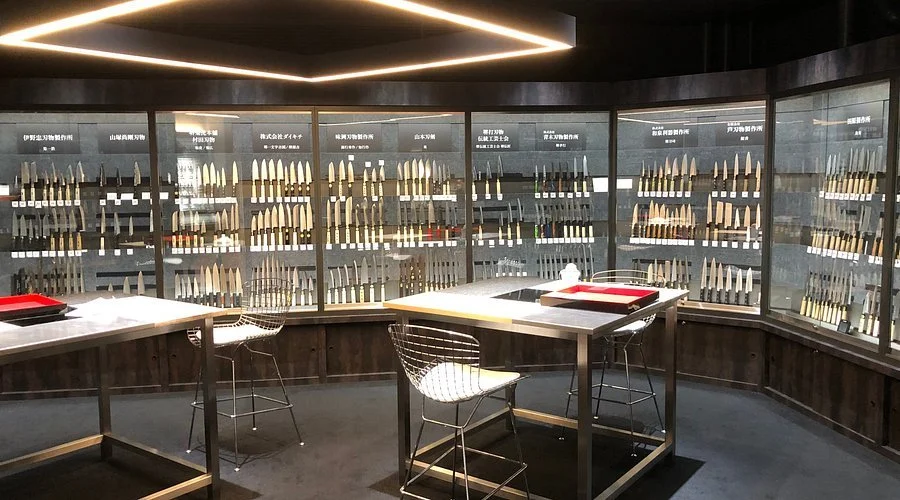
The natural starting point is the Sakai Traditional Crafts Museum and Knife Shop (堺伝統産業会館, Sakai-shi Dentou Sangyou Kaikan), where the ground floor operates essentially as a trade counter for two dozen master craftsmen. This is where I bought my santoku, and it’s a good place to orient yourself before you commit. The staff are helpful and patient, speak English well, and they can even engrave your name on your knife while you wait. A Sakai knife here typically costs between ¥15,000 and ¥50,000, but can range above or below that. They legitimately have something for every budget.
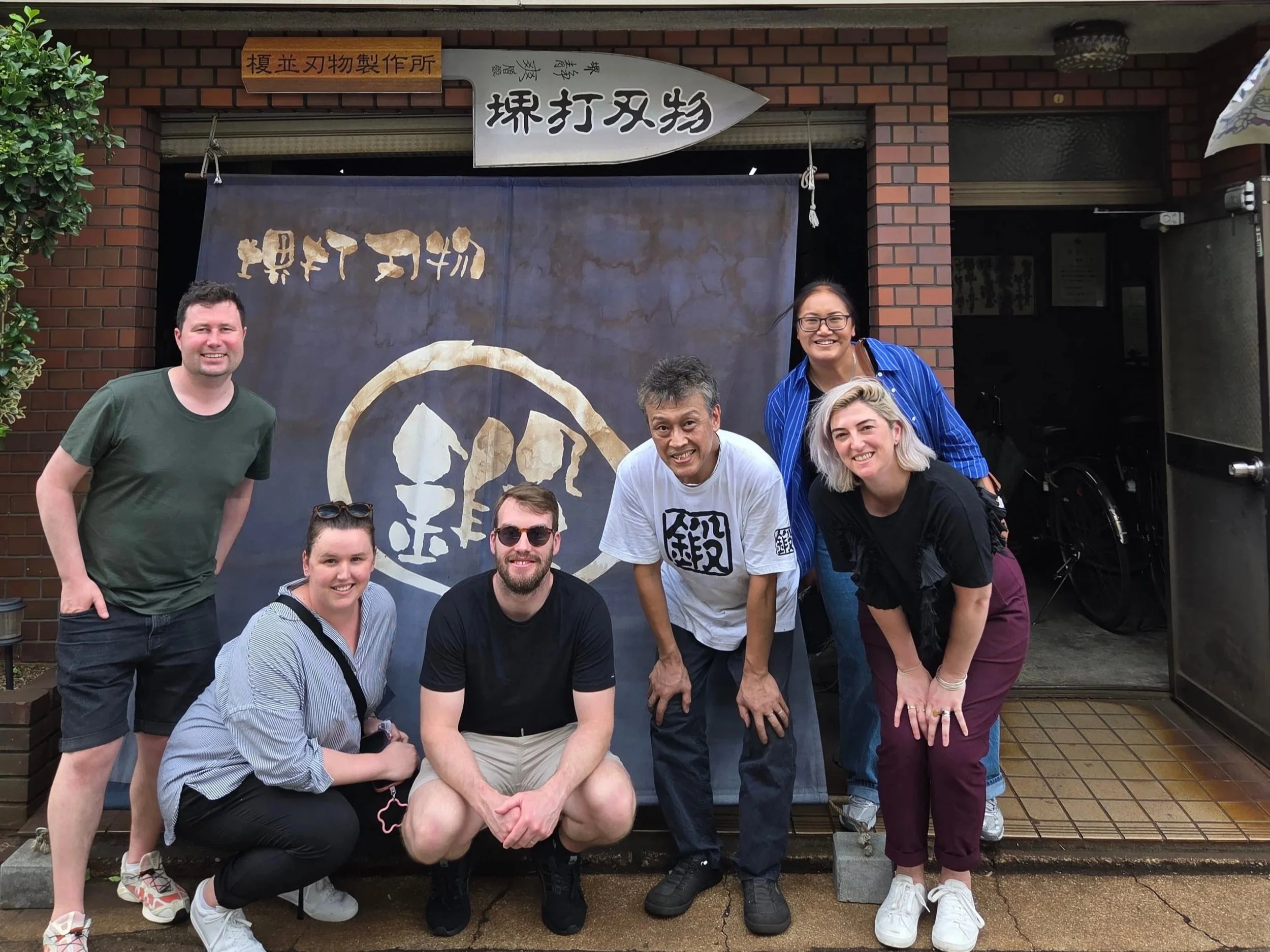
For the visit I’d most recommend to anyone serious about understanding what’s behind these knives, seek out Enami Cutlery Factory (榎並刃物製作所, Enami Hamono Seisakusho). Mr Enami runs his workshop with just one trainee, and the one-hour tour takes you through the full process — forging, tempering, sharpening, finishing — with some hands-on time. The visit is conducted in Japanese, so if your Japanese is limited it’s worth arranging a guide or translator, but the craft speaks fairly well for itself regardless. If you have the time and the inclination, Mr Enami also offers a full knife-making class, though he’ll need about two weeks after your visit to finish the knife for you.
If the Enami visit has given you an appetite for seeing more of how these things are made, a couple of other blacksmiths in Sakai also open their workshops to visitors. Sasuke and Mizuno Tanrenjo both offer workshop visits, and Mizuno has been forging blades since 1872. Worth checking their sites directly to confirm availability and book ahead, as visits are typically by appointment.
If you want to buy direct from the makers rather than through the museum, Baba Hamono and Kikumori are both well-regarded options where you’re buying from the source.
For an English-friendly knife-making experience in Japan, Wada Shouten is the most accessible option in Sakai, with a session that covers sharpening technique and handle attachment, and sends you home with a real Sakai knife as part of the price.
While you’re there
Sakai has more going on than knives. To start, head to the second floor museum at the Traditional Crafts Museum before leaving. There’s a huge array of specialty knives on display, as well as a room dedicated to the dozen or so other craft coming out of Sakai, with the occasional live demonstration. The Tomb of Emperor Nintoku (Daisen Kofun) is the largest ancient burial mound in Japan and, by surface area, one of the three largest tombs in the world alongside the Great Pyramid and the Mausoleum of the First Qin Emperor. You can’t go inside, but the scale of it, surrounded by three moats and dense green vegetation, is something you can walk around and slowly take in. The Sakai City Museum opposite has the archaeological context if you want it, and a great viewpoint over the mausoleum site. Sakai is also the birthplace of Sen no Rikyu, the 16th-century tea master who essentially codified the Japanese tea ceremony as we know it today, and the Sakai Plaza of Rikyu and Akiko not only tells his story, but is a great place to have a traditional tea ceremony experience. On weekends, the Sakai Dejima Fishing Port runs a seafood BBQ market run by the local fishing federation. You rent a grill, choose your ingredients from the stalls, and eat outside. It’s casual, local, and very good.
Seki, Gifu — The City of Swords
Where Sakai is the knife city, Seki is the sword city. Or at least, it was, for seven hundred years. When the Meiji government banned samurai from carrying swords in the 1870s, Seki’s craftsmen pivoted: they kept the techniques and turned them on kitchen knives, scissors, and tools. The result is a city that makes extraordinary blades in enormous variety, from handmade kitchen knives to nail clippers to replica katana. About an hour and a half from Nagoya by bus or train, Seki is a compact, easy place to navigate, and it wears its heritage without taking itself too seriously.
Where to go
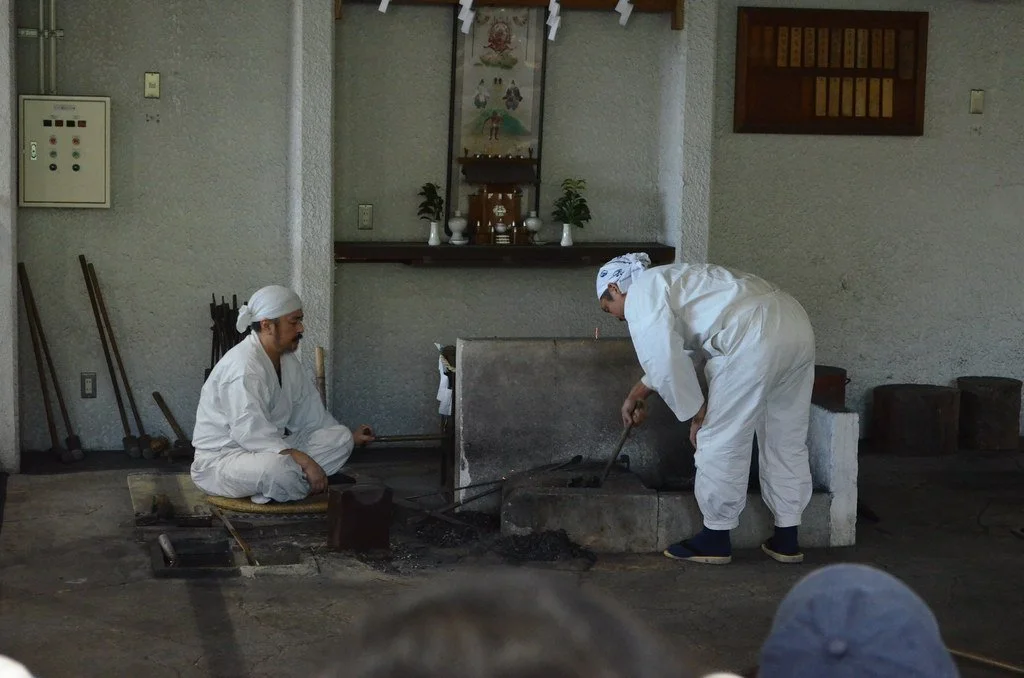
The Seki Swordsmith Museum (関鍛冶伝承館, Seki Kaji Denshokan) is your first stop, with displays covering every stage of sword and knife production, and on designated days, live demonstrations with smiths at work, sparks flying and all. If you’re there on January 2nd, the first forging of the year is accompanied by solemn rituals and festivities worth timing your trip around if you can manage it. The museum also runs a hands-on knife-making experience where you can make either a hunting knife or a kitchen knife from scratch.
For more immersive experiences, there are a few good options in and around Seki. G. Sakai offers a Damascus steel kitchen knife-making session where you choose your steel and handle, work through polishing, sanding, and bringing out the Damascus pattern, and leave with a knife sharp enough to take translucent slices off a tomato. Asano Kajiya runs a knife-forging session with a certified swordsmith. And if you want to go further down the rabbit hole, Katanakaji Masaya is a working swordsmith who offers both a forge-watching session with the chance to swing the large hammer yourself, and a two-day sword-making experience working with traditional tamahagane steel from forging all the way through to quenching.
The Gifu Cutlery Hall and adjacent Seki Terrace give you access to products from the city’s leading manufacturers at reasonable direct prices, plus walk-in knife-sharpening workshops that require no reservation.
While you’re there
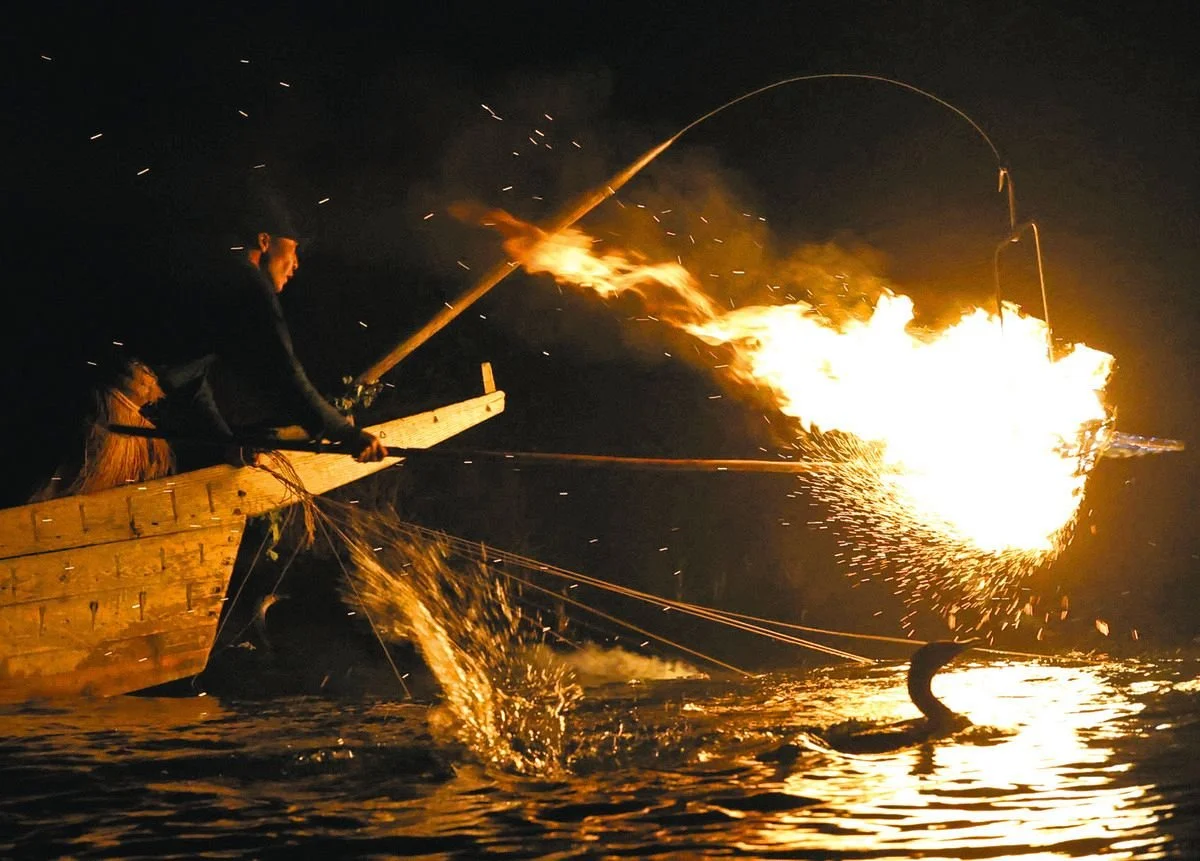
Seki sits on the Nagara River, and the cormorant fishing (鵜飼, ukai) that happens here from May to October is one of those things that sounds like a tourist trap and turns out to be quietly stunning. Fishermen work by firelight from traditional wooden boats, their cormorants diving and retrieving sweetfish (ayu) on long leads, in a practice that has continued here since the Nara period. The Oze Ukai operation specifically is worth looking into for booking details. The river also produces excellent freshwater eel if you want to build a meal around it. Away from the water, Seki Zenkoji Temple has an underground passageway that’s pitch black, that you crawl through with your hands on the walls, searching for a metal door handle said to lead to the realm of the dead. Strange and slightly unnerving in the best possible way. And if you can time your visit for late October, the Hamono Matsuri (刃物まつり, blade festival) brings the whole city out for two days of forging demonstrations, new sword exhibitions, and general cutlery-related spectacle. Nearly two hundred thousand people come for it.
A short detour from Seki will bring you to what’s locally known as Monet’s Pond (モネの池, Mone no Ike), a spring-fed pond in Gujo whose clear water and lily coverage really does look like a Monet painting, almost absurdly so.
Takefu Knife Village, Echizen — Where the Craft Began
Echizen blade-making has its origins around seven hundred years ago, when a Kyoto swordsmith named Chiyozuru Kuniyasu came looking for clean water to forge with, settled in what is now Echizen City, and began making sickles for local farmers. The tradition that grew from that single craftsman has continued without interruption ever since, adapting to each era. Sickles became knives, techniques were refined, and apprentices became masters through the generations. Throughout all this, the fundamental commitment to hand-forged blades never changed.
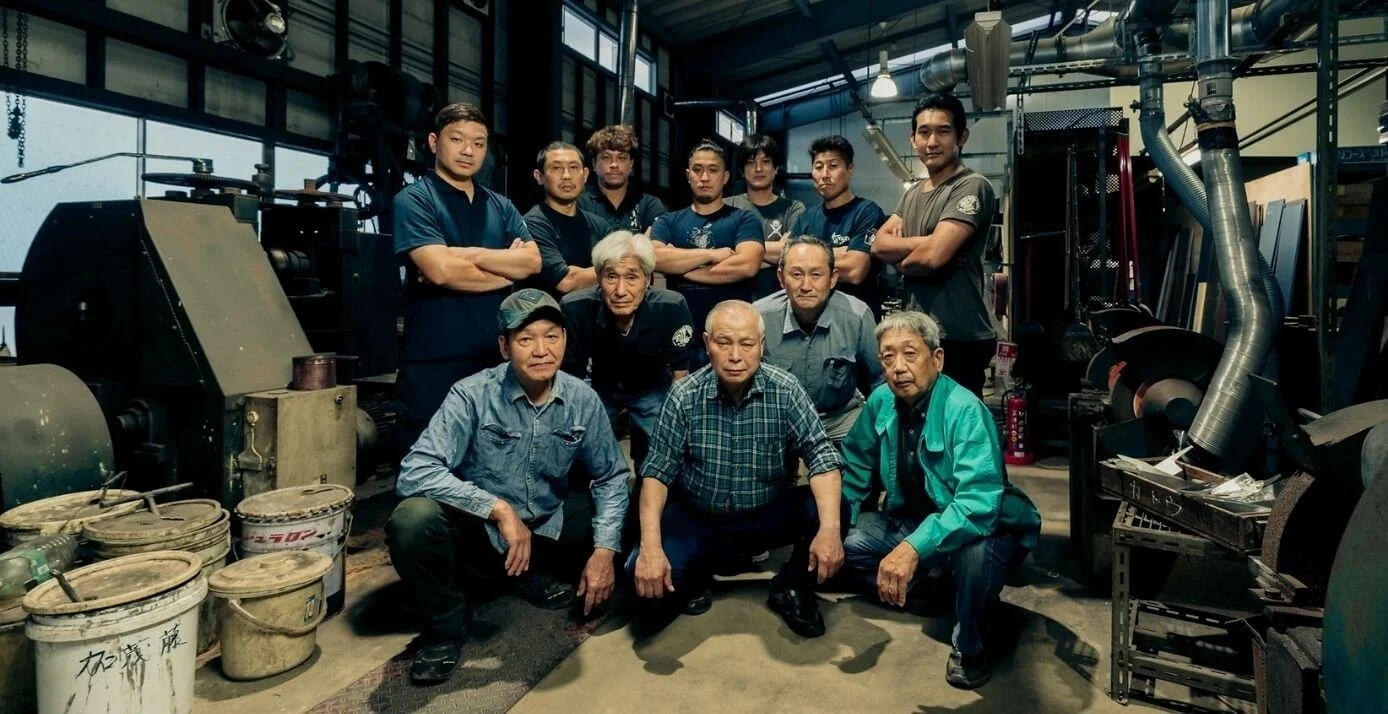
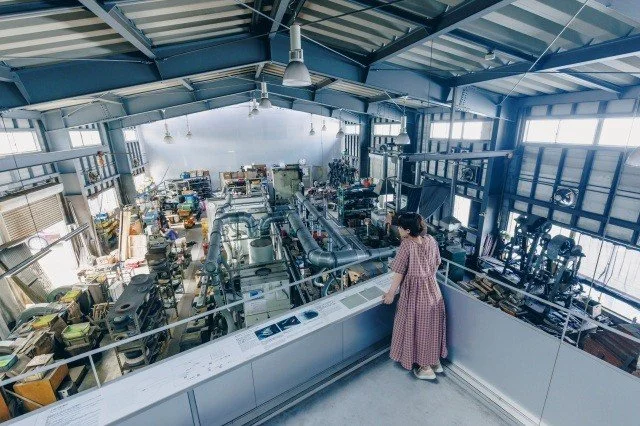
The modern iteration of that tradition is Takefu Knife Village (タケフナイフビレッジ), a cooperative born in the 1970s when a group of Echizen craftsmen did something unusual. Rather than compete individually against industrial production, they pooled their resources and moved into a shared workshop. Many masters work under one roof, each making their own knives, under their own names, using their own techniques. The result is a cylindrical building you can visit, with an observation deck overlooking the main workshop floor. On a working day you’ll have multiple craftsmen in view at once, each at a different stage, with forging at one end, grinding at another, finishing at a third. You get to see the whole process without having to travel too far.
Where to go
The Village runs a range of experiences, from a half-day sharpening class through to a full-day session covering traditional forging, power hammer work, wet-stone grinding, heat treatment, sharpening, and engraving. The full course is one of the most comprehensive knife-making experiences available anywhere in Japan and hard to find elsewhere. One detail worth knowing: because Echizen lacquerware (越前漆器, Echizen shikki) is made in the same region, some workshops offer the option of a lacquerware handle on your knife, a collaboration between two traditional crafts in the same place. There’s no obvious equivalent of this anywhere else. And if you happen to be there at midnight on New Year’s Day, the craftsmen carry out the first forging of the year dressed in black-lacquered headgear and white robes, an ancient ritual to pray for safety through the coming year.
The Village is a taxi ride from Echizen-Takefu Station, which is on the Hokuriku Shinkansen, making it an easy stop on the route between Osaka or Kyoto and Kanazawa. Check our Regional Rail pass guide for info on how to get there.
While you’re there
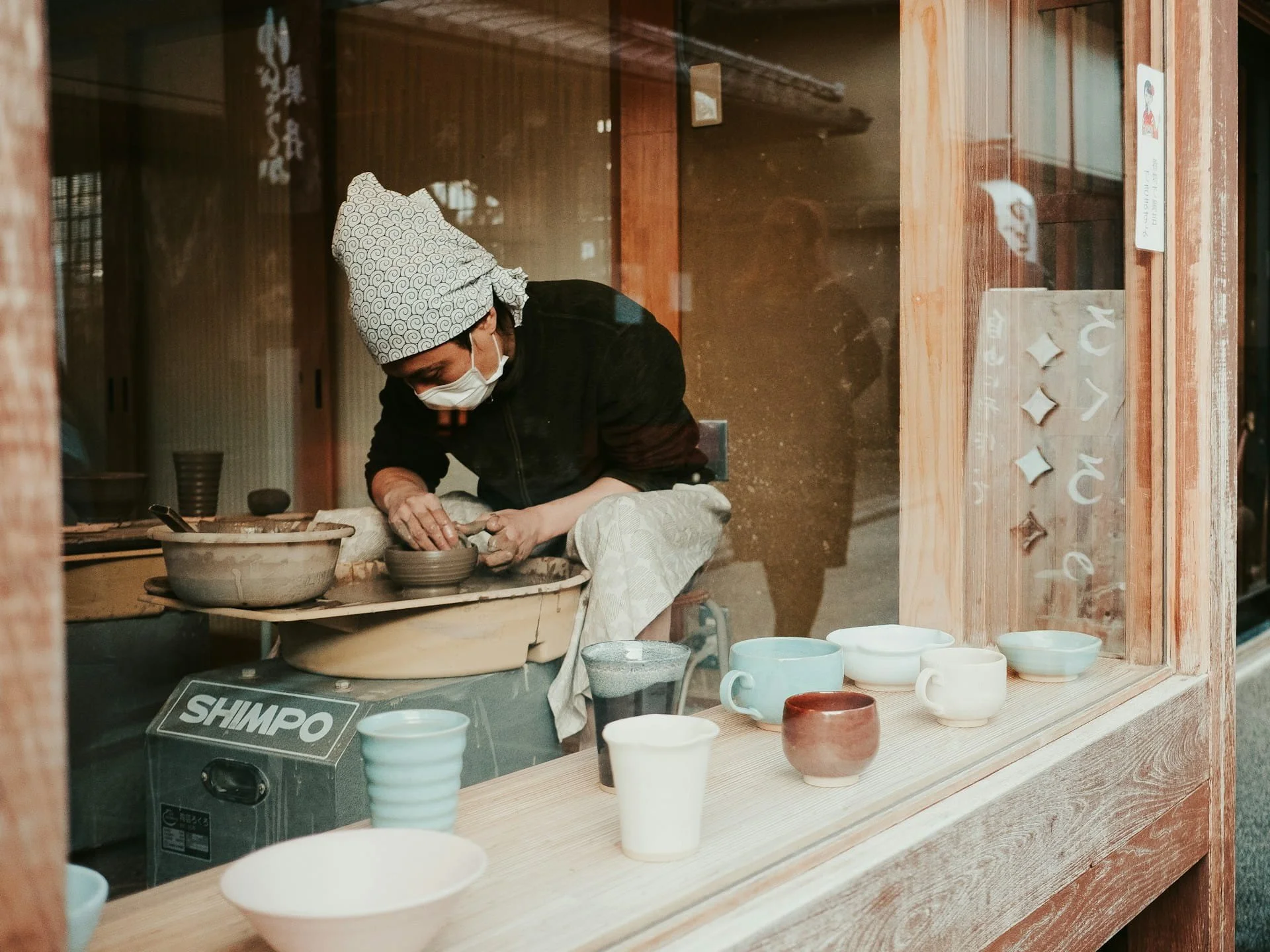
Echizen is one of the most craft-dense places in Japan. This is a region that has been making things by hand for over a thousand years. Echizen is one of the Six Ancient Kilns of Japan, and the Echizen Pottery Village (越前陶芸村, Echizen Togei Mura) is still a working community of potters producing the region’s distinctive iron-rich, unglazed stoneware. You can watch production and try throwing a pot yourself. Echizen Washi Village (越前和紙の里, Echizen Washi no Sato) is a working community of papermakers in a single district, with over sixty mills still operating and a tradition that goes back fifteen hundred years. The story goes that a goddess appeared to the local people and taught them to make paper. The district even has a shrine dedicated to the goddess of paper, one of the only ones in Japan. You can watch production, try making paper yourself, and buy some of the finest handmade washi in the country. In Kawada Village nearby, Echizen lacquerware has a tradition of equal antiquity, and the Echizen Lacquerware Hall runs workshops where you can decorate your own wooden bowl. When you get hungry, oroshi soba is the thing to order in Fukui. It’s a simple dish of cold buckwheat noodles with freshly grated daikon piled on top, sharp and clean.
Where Can I Buy Japanese Knives in Osaka and Tokyo?
Not every visit to Japan is built around a knife. If you’re not going to get to Sakai, Seki, or Echizen, you can still buy well.
Where to Buy Knives in Osaka
If you’re based in Osaka and a day trip to Sakai feels like too much, Sennichimae (千日前, Sennichimae) in Namba is the area to head to. It’s the city’s traditional kitchenware and restaurant supply district, with a concentration of knife shops along the main street. The standout is Sakai Ichimonji Mitsuhide, a Sakai knife specialist with a shop here that carries a serious selection of hand-forged Sakai blades. You’re buying in the city rather than at the source, but the quality is the real thing.
Where to Buy Knives in Tokyo
Kappabashi Street (かっぱ橋道具街, Kappabashi Dougu Machi) in Asakusa is the professional kitchenware district. It’s a long stretch of shops selling everything from custom knives to dishes and cutlery to restaurant-grade cookware. The Tsukiji outer market has a similar cluster. The selection is good and the prices are fair. What you won’t get is any connection to the craftsman who made what you’re buying. For some people, that’s fine. For others, it’s missing the point.
Wherever You Are in Japan
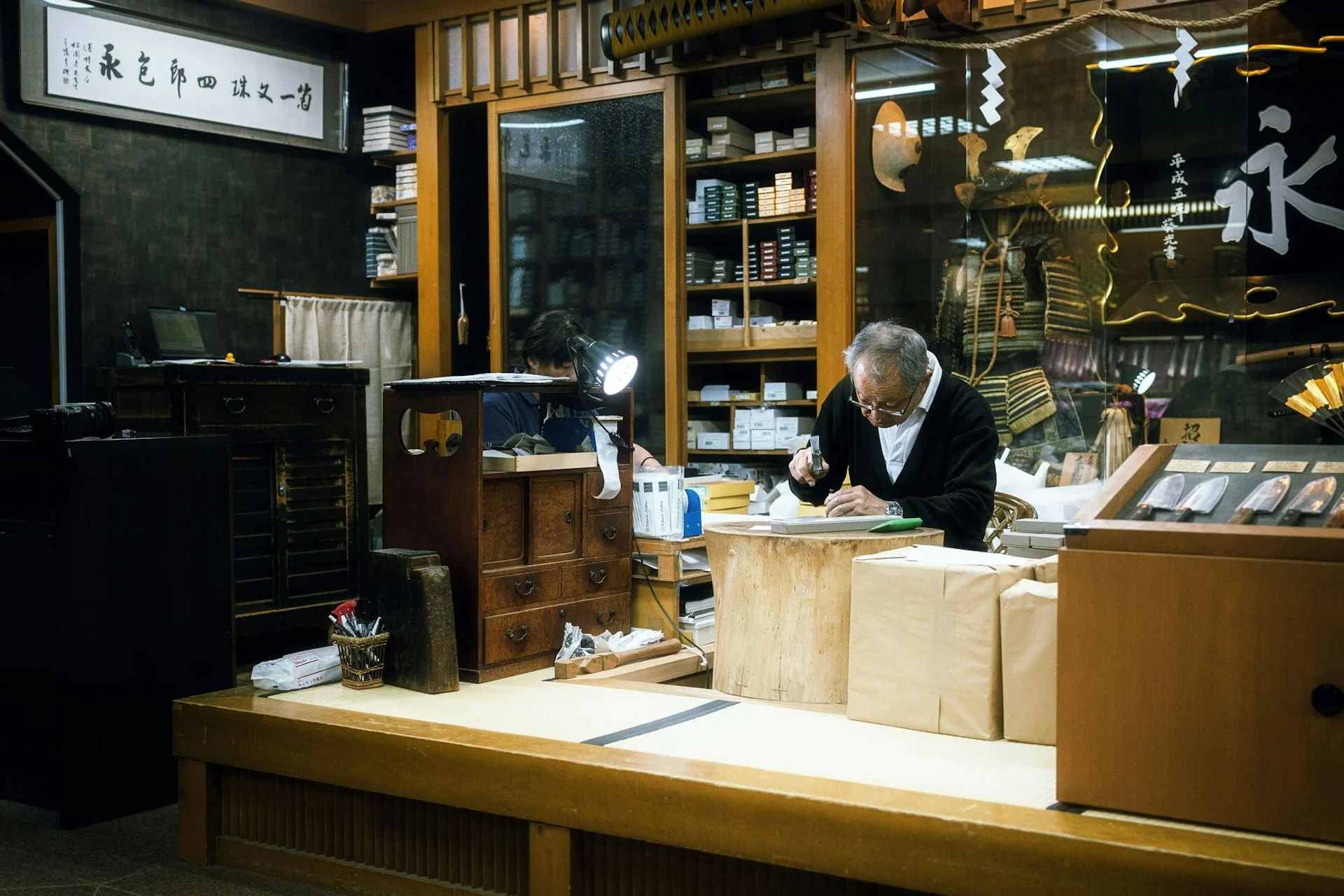
It’s worth keeping in mind that the three towns above are the famous ones, but they’re not the only ones. Japan has blacksmiths scattered across the country, some working in regional traditions that predate the famous centres, some who are simply the last person in their city making knives the way their family always has, some who went and trained with a master in one of these towns then moved home and started their own workshop. If you really want a blacksmith experience, it’s worth seeking out wherever you are. We’ve taken clients for visits at blacksmiths in Iwaki, Fukushima, in Miyakonojo, Miyazaki, and even right in Kanazawa. You usually need to pre-book a visit, but if you spot a workshop, go in and ask. The worst that will happen is a polite refusal.
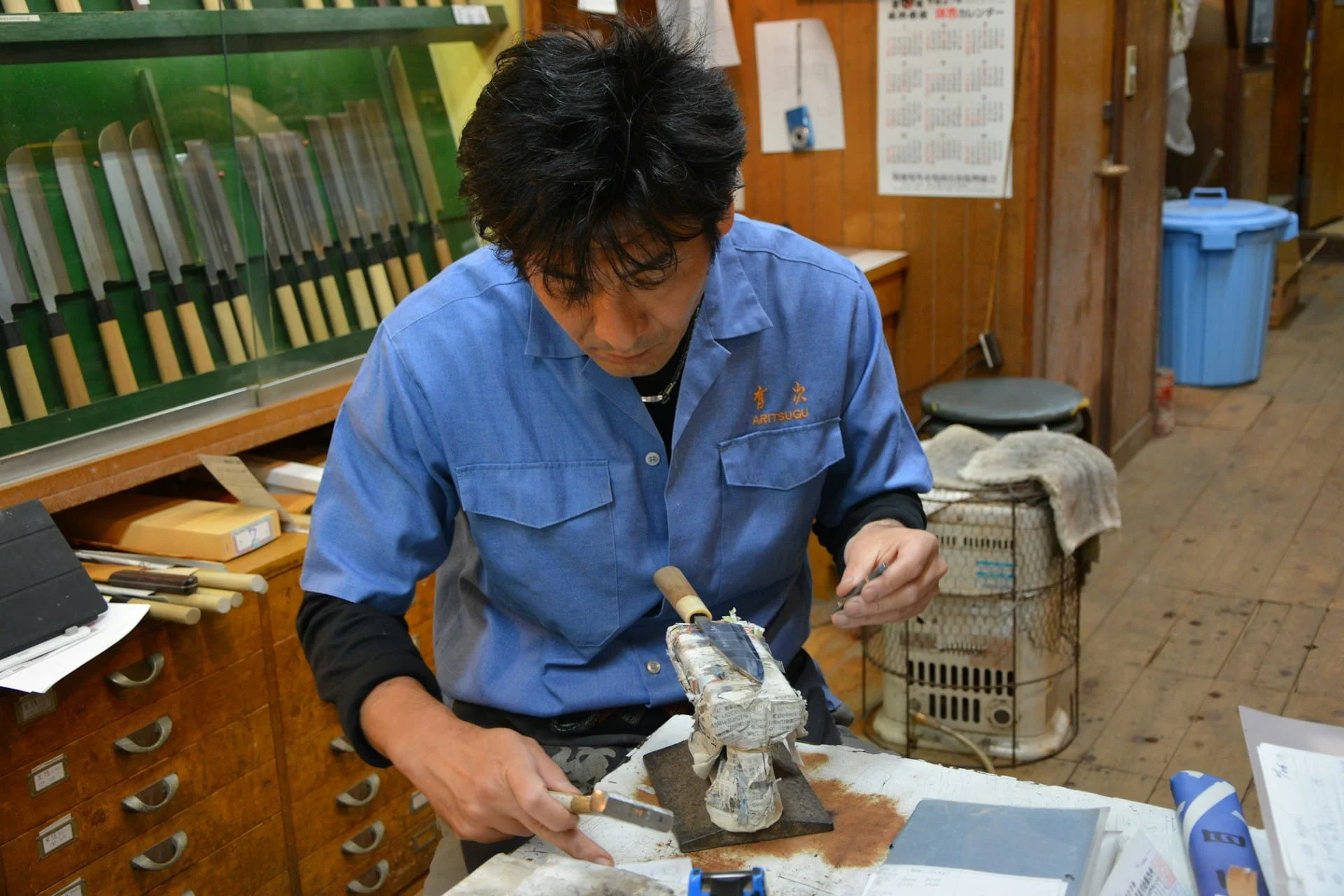
A Japanese knife bought from the person who forged it or directly from the workshop where it was made is a fundamentally different object from one bought in a department store. Not because the steel is different, though it might be. But because every time you use it, you know something about where it came from and who made it. It has a provenance. It transports you right back to that time and place, and your experience in the workshop with sparks flying. A good knife, properly cared for, lasts a lifetime and gets better the longer you have it. It’s the only souvenir you’ll bring home from Japan that earns its place every single day.
Frequently Asked Questions
-
The best places to buy Japanese knives in Japan are the three main knife-making regions: Sakai (near Osaka), Seki (in Gifu Prefecture), and Echizen (in Fukui Prefecture). In each, you can buy directly from workshops and in some cases watch or participate in the production process. For travellers in major cities, Kappabashi in Tokyo and Sennichimae in Osaka are well-stocked specialist districts.
-
Yes. Several workshops across Japan's knife-making regions are open to visitors, though most require advance booking. In Sakai, Enami Hamono, Sasuke, and Mizuno Tanrenjo all offer workshop visits. In Seki, the Traditional Swordsmith Museum runs live demonstrations, and G. Sakai offers hands-on knife-making sessions. Takefu Knife Village in Echizen has an observation deck overlooking a working workshop, plus a range of courses from half-day sharpening classes to full-day knife-making experiences.
-
Sakai is known for single-bevel knives made through a specialist division of labour — forger, sharpener, and handle-fitter are all separate craftspeople. Seki has a sword-making history and produces a wide range of knives, from artisan pieces to higher-volume production, with a particular strength in double-bevel blades. Echizen knives are made under a cooperative model at Takefu Knife Village, where individual craftsmen share a facility and are known for double-bevel knives in both traditional and contemporary styles.
-
Carbon steel Japanese knives develop a sharper edge and are easier to resharpen on a whetstone, but require careful maintenance — they must be washed and dried immediately after use to prevent rust and staining. Stainless steel is more forgiving and lower maintenance, making it a better choice for most home cooks. High-grade Japanese stainless knives are still significantly sharper and better-performing than most Western stainless knives.
-
A quality hand-forged Japanese knife from a workshop or specialist shop typically costs between ¥15,000 and ¥50,000 (roughly AUD$160–$530), depending on blade type, steel grade, and the maker. Budget around ¥20,000–¥30,000 for a well-crafted santoku or gyuto from a reputable source. Knives at the lower end of that range are still a significant step up from most Western knives, and you can even get knives for under ¥10,000. Tourists may be eligible for the 10% consumption tax exemption at participating shops.
-
The santoku is the most practical choice for most home cooks visiting Japan. Its name means "three virtues" — it handles meat, fish, and vegetables without specialisation. It's versatile, well-balanced, and available from most workshops and shops across Japan's knife-making regions. Those used to a Western chef's knife may prefer the gyuto, which is the Japanese equivalent and suits a similar cutting style.
-
Japanese knives should never be put in a dishwasher or stored loose in a drawer, and should always be washed and dried immediately after use. Carbon steel knives are especially sensitive to moisture and will rust quickly if left wet. Sharpen on a whetstone when the knife starts to feel sluggish — avoid steel honing rods, which can chip the harder steel. Most specialist shops in Japan sell whetstones and maintenance tools alongside the knives.