
How to Enjoy Japan's Sakura Season Without the Crowds
When the cherry blossom forecast drops, suddenly every flight to Tokyo, Kyoto, and Osaka quadruples in price, and accommodation in the major cities gets snapped up months in advance. Then when you finally make it to that famous sakura viewing spot you saw on socials to do a little hanami, you're suddenly shoulder to shoulder with thousands of other people trying to capture the same photo.
Here's what most people don’t realise about Japan’s sakura season: the cherry blossoms don’t bloom all at once, and it doesn't only happen in the big cities. The sakura bloom from late January in Okinawa all the way through to mid-May in Hokkaido. That's nearly four months to experience hanami if you know where to look.
In this sakura season guide you’re not going to find completely empty parks. The best sakura spots in Japan are popular with Japanese visitors - and for good reason. What we're helping you avoid is the international tourist crowds that descend on Tokyo, Kyoto, and Osaka during peak season, and find a more authentic hanami experience. Head to regional cities and you'll still find lively hanami parties, which is exactly what hanami is about, and you may just be one of the few foreigners there.
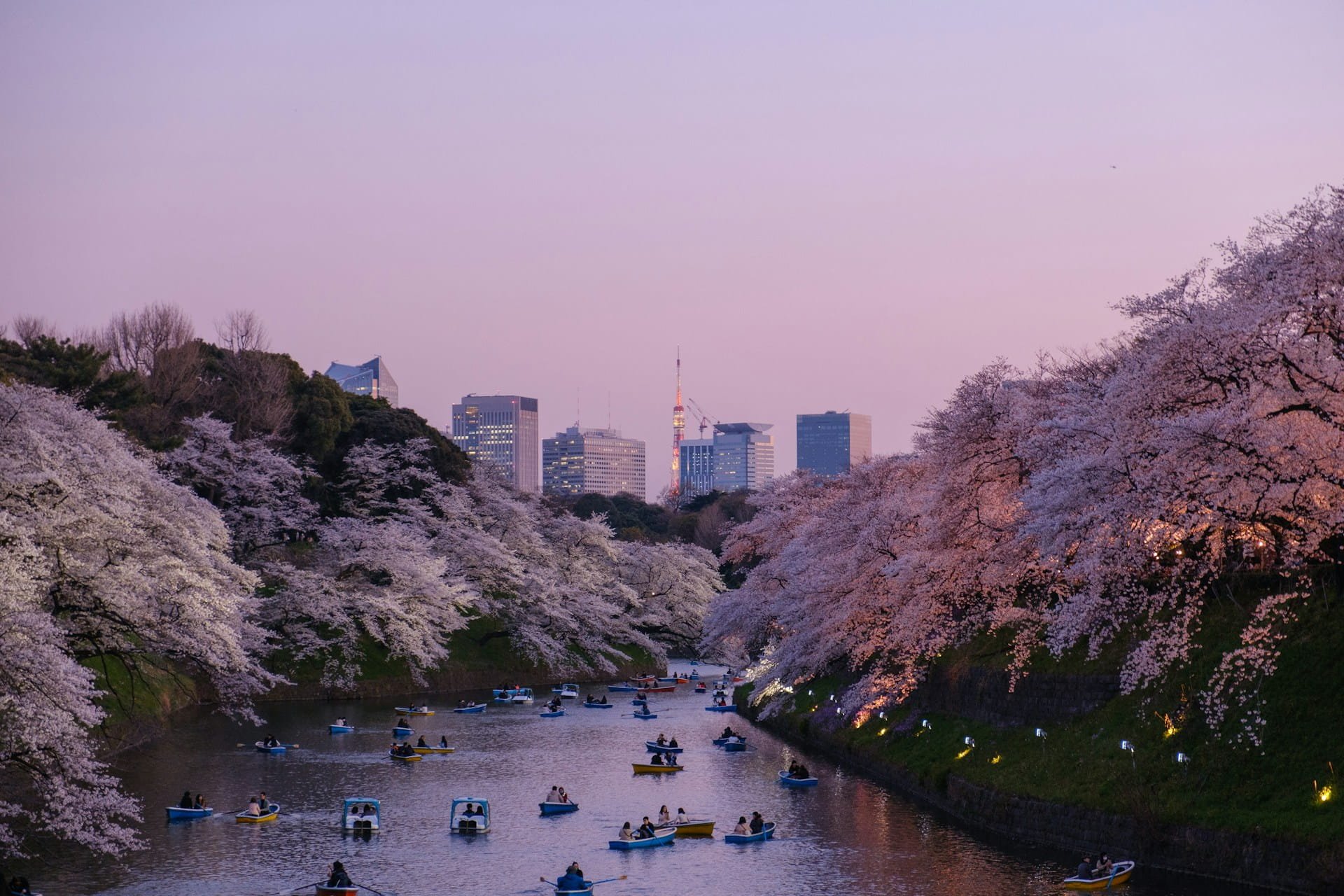
What Makes Sakura Season Special?
Before we get into where and when, let's talk about why sakura season matters so much in Japan.
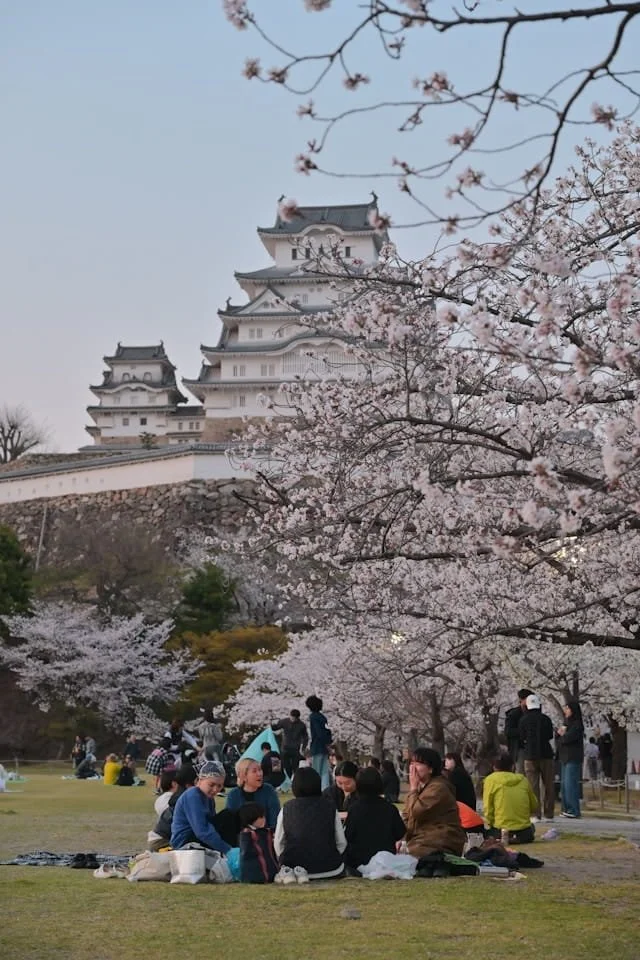
Hanami literally means "flower viewing", but it's so much more than just looking at pretty trees. It's about gathering with friends, spreading out a tarp under the blossoms, and spending hours eating, drinking, and enjoying the fleeting beauty of the season - it’s poetic, but it’s also a party. The atmosphere is infectious. There are families with bento boxes, groups of salarymen with beer, students celebrating, and everyone's in the best mood.
In the regional spots we're recommending, hanami becomes an even better experience. Japanese people are often curious to test their english and are friendly during sakura season (the sake helps with both). Pack some snacks to share, bring something to drink, and don't be surprised if you end up chatting with the group next to you and then joining them for karaoke later. Some of the best cultural exchanges happen over shared food paired with a little bit of sake to loosen things up.
Even if you're not up for a full hanami session, just walking through these tree-lined streets and people-watching is amazing. Between the blossoms, the crowds, and bustling atmosphere, the energy is completely different from the rest of the year.
The Timing Strategy: Follow the Sakura Front
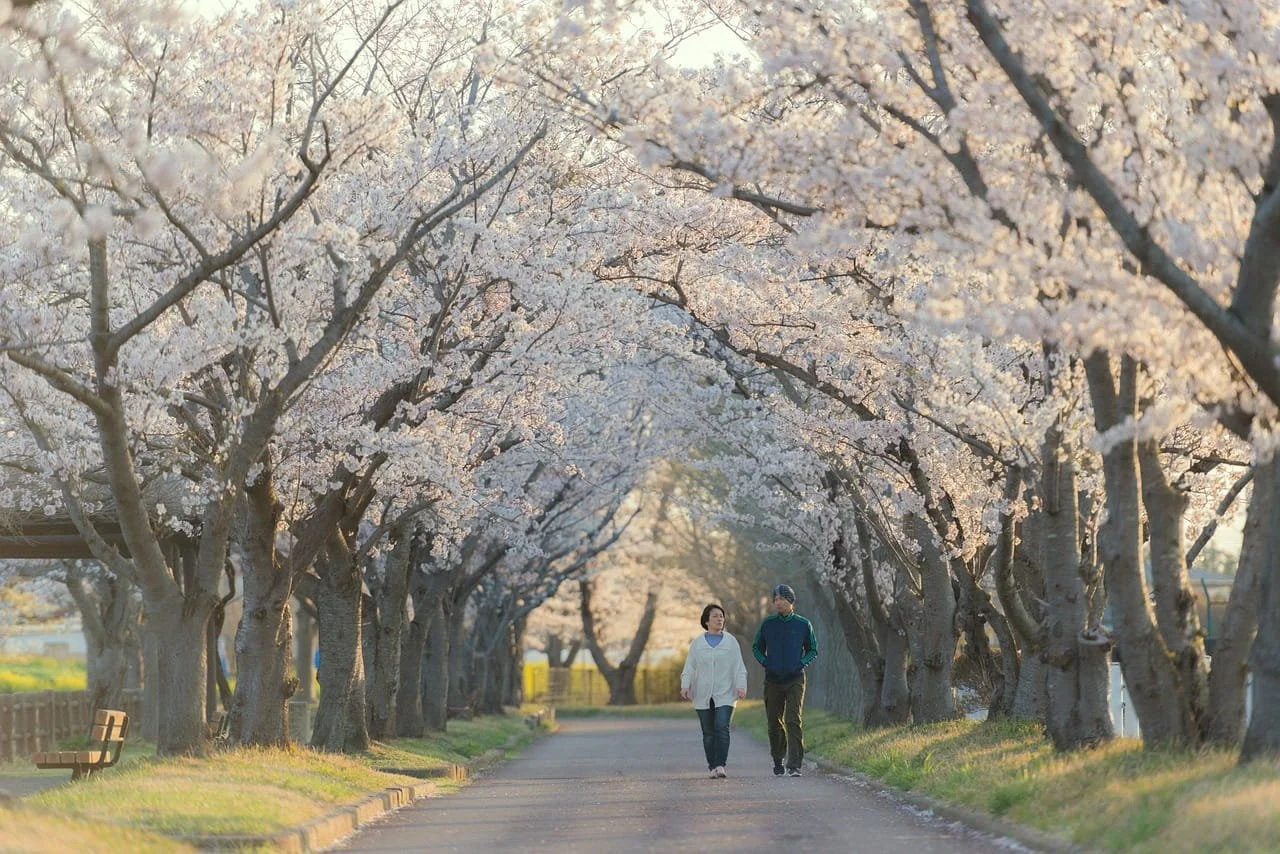
The sakura blooms follow a predictable pattern from south to north, which the Japan Meteorological Corporation tracks as the "sakura front." Their website is in Japanese, but the map is easy enough to understand. They also post updates regularly in English, or you can follow along in the Sakura Navi app or on their Instagram.
Here's the general timeline:
Late January to Early March: Okinawa and the earliest bloomers
Late March to Early April: Kyushu and western Honshu
Early to Mid-April: Central Honshu and Tohoku
Late April to Mid-May: Hokkaido
This progression means you could theoretically chase sakura for months, experiencing different varieties and different parts of Japan. Or you could strategically plan to visit one region when Tokyo is already past peak, avoiding the worst of the tourist rush entirely.
Regional Sakura Spots Worth the Journey
Okinawa: Japan's Earliest Sakura
When: Late January to early February
Okinawa's sakura season happens when most people think it's far too early. The Kanhizakura variety here is deeper pink, almost magenta, compared to the pale Somei Yoshino you'll see later in the season.
Nago Castle Ruins (名護城跡): Over 2,000 Kanhizakura trees bloom around the ruins with views over Nago Bay. It's a steep walk up, but worth it for the combination of pink blossoms and ocean views.
Kyushu: Where Spring Begins
When: Late March to early April
Isshin Gyō no Ōzakura (一心行の大桜), Kumamoto: A single 400-year-old cherry tree standing in the middle of a field, with Mt Aso as the backdrop and yellow rapeseed flowers surrounding it. This is the kind of view that makes you understand why people travel across the country for a single tree.
Takamori Tōge Senbonzakura (高森峠千本桜), Kumamoto: About 7,000 cherry trees line this mountain pass, with spectacular views of the Aso Five Peaks. It's a winding road through pink tunnels of blossoms.
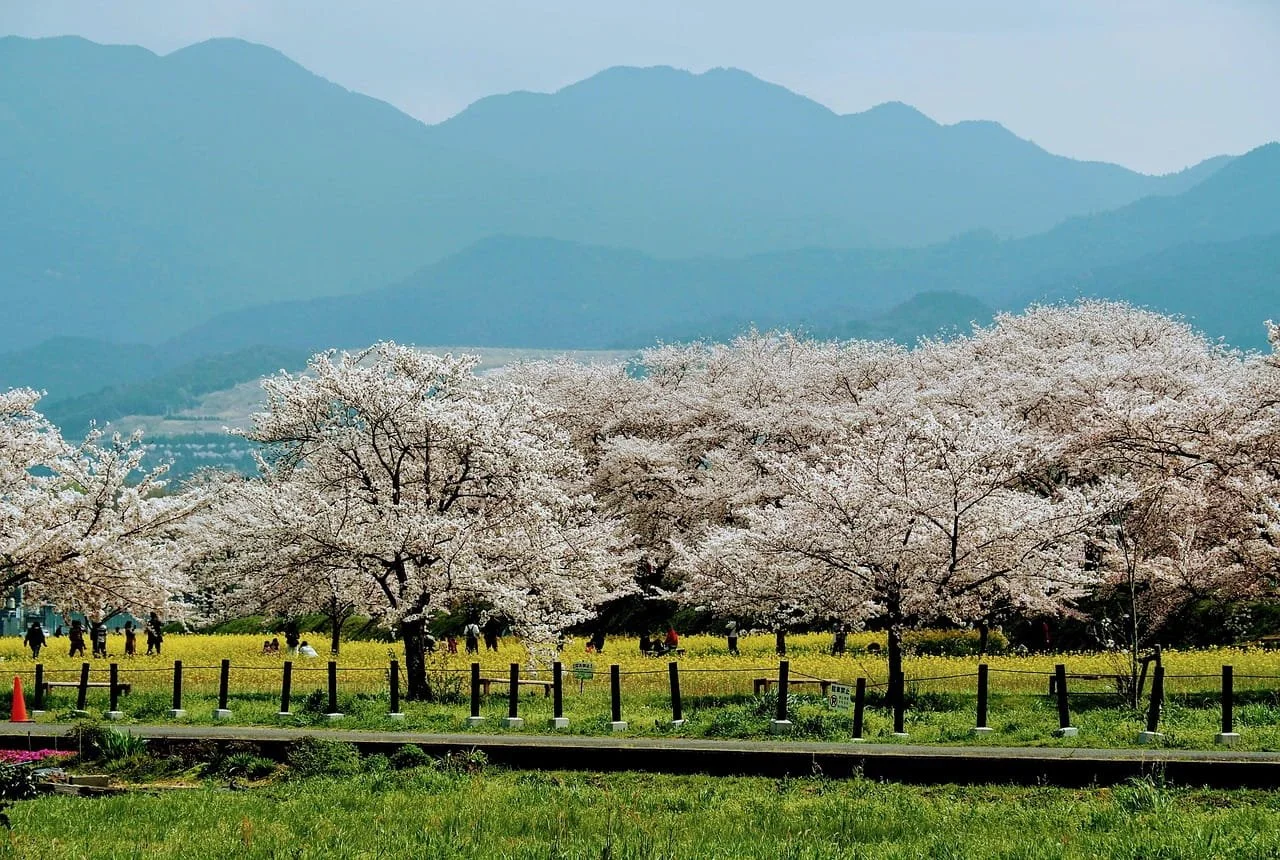
Western to Central Honshu: Peak Season
When: Late March to early April
Itsukushima Shrine, Hiroshima: Yes, Miyajima gets tourists, but nothing like Kyoto. The combination of the famous floating torii gate, the shrine, and cherry blossoms creates one of Japan's most photogenic scenes. Go early in the morning and you'll have a much better experience.
Takato Castle Park (高遠城址公園), Nagano: Known as one of Japan's three great sakura viewing spots (alongside Yoshino and Hirosaki), Takato is famous for its unique Takatoo-kohigan variety. Unlike the pale Somei Yoshino, these blossoms stay a deeper pink even when fully open. About 1,500 trees cover the castle ruins. The sakura matsuri runs throughout the bloom period with evening illuminations.
Tohoku: Late Season Beauty
When: Early to mid-April
This is where we used to live, so naturally it's our preferred region for sakura season. It also happens around Beth’s birthday so it holds a very special place in her heart By the time the blossoms reach Tohoku, most international tourists have already come and gone. The major cities of central Japan are past peak, but up north, spring is just beginning.
Nichichūsen Shidare Zakura Namiki (日中線しだれ桜並木), Fukushima: This was hands down the best spot in Fukushima when we lived there. It's a 3-kilometre stretch of an old railway line, now a walking path lined with 1,000 weeping cherry trees. When you're walking under that canopy of pink, with an old train carriage sitting in the middle as a reminder of what this place used to be, it's one of those moments where you're glad you went off the beaten track. The atmosphere during hanami here is fantastic. Locals spread out their tarps, bring their food and drinks, and you're welcome to join in.
Hirosaki Park (弘前公園), Aomori: About 2,600 cherry trees, including 52 different varieties. Hirosaki Castle surrounded by blossoms is stunning, and the city holds one of Tohoku's biggest sakura festivals. Despite its popularity, it's nowhere near as crowded as Kyoto.
Kakunodate (角館), Akita: The weeping cherry trees along the samurai district streets are what people imagine when they think of traditional Japan. The town has kept its historic character, and walking through during sakura season feels like stepping back in time.
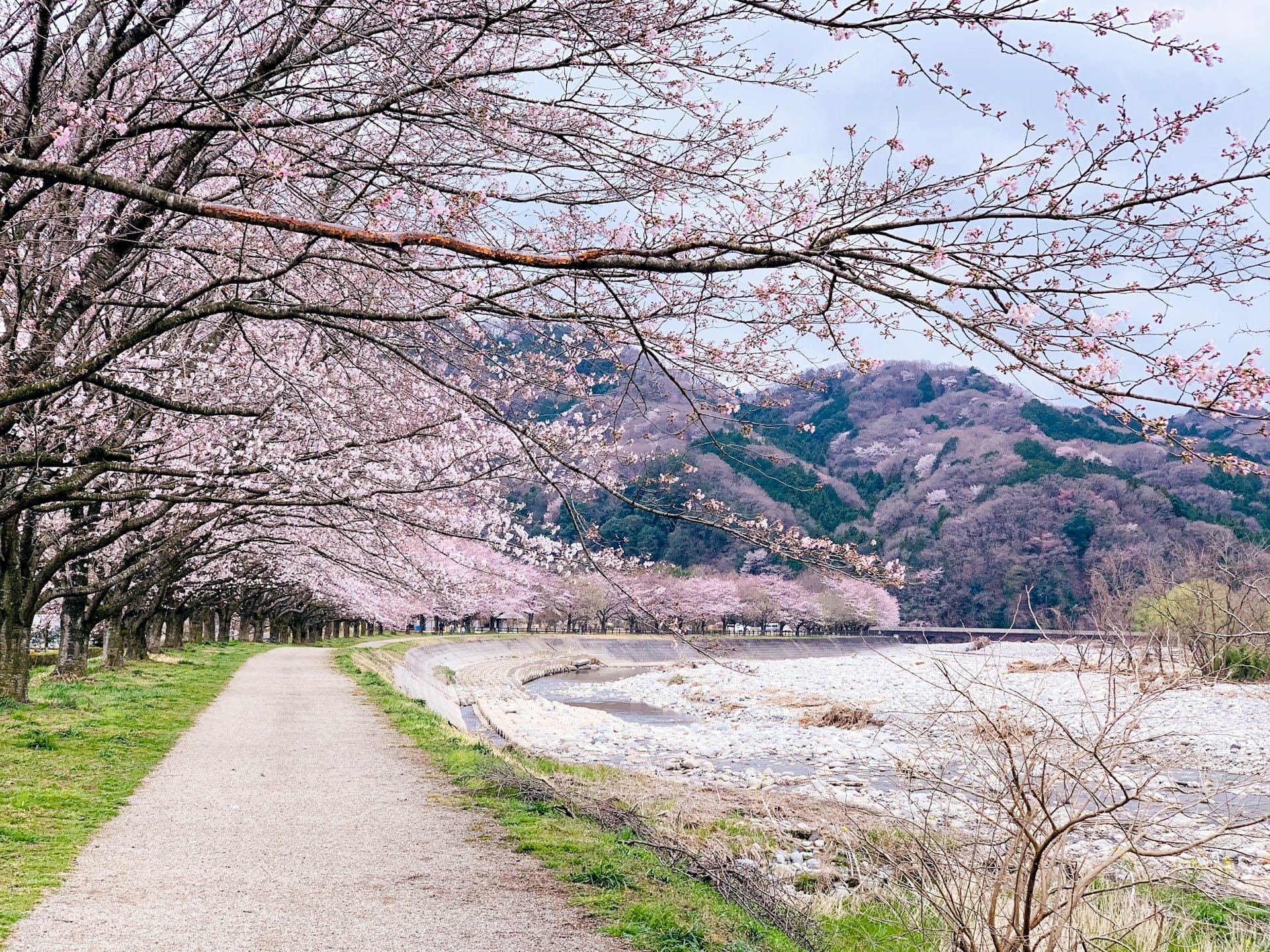
Hokkaido: The Final Bloom
When: Late April to mid-May
By the time sakura reaches Hokkaido, the rest of Japan has moved on to early summer. This is your last chance to catch the blossoms, and often the least crowded time.
Goryōkaku Park (五稜郭公園), Hakodate: A star-shaped fort with 1,500 cherry trees. Climb the observation tower and you can see the pink star formation from above.
Nijūkken Dōro Sakura Namiki (二十間道路桜並木), Shinhidaka: A dead-straight 7-kilometre road lined with over 2,000 cherry trees. It's one of Japan's 100 Famous Sakura spots, but being in Hokkaido means far fewer international tourists make it here.
Shikoku: The Overlooked Island
When: Late March to early April
Shikoku is Japan's least-visited main island, which makes it perfect for avoiding crowds during sakura season.
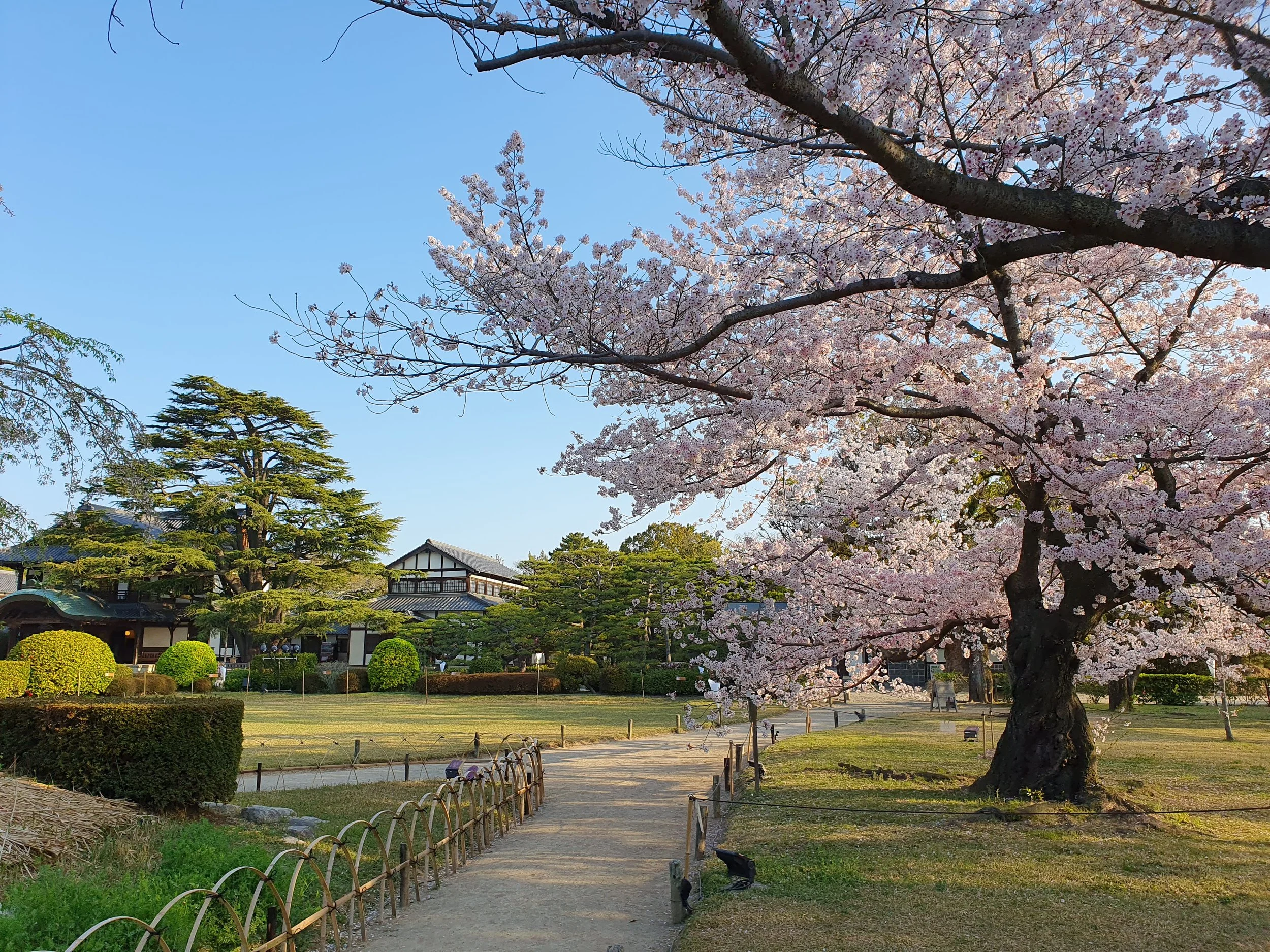
Ritsurin Garden (栗林公園), Takamatsu: One of Japan's most beautiful landscaped gardens, Ritsurin has about 300 cherry trees spread throughout the garden in multiple varieties, including Somei Yoshino, Edohigan, weeping cherry, and Yamazakura. The different varieties mean you can catch blossoms at various stages throughout the season. I visited towards the end of sakura season and the park still had various varieties in bloom. There are lovely evening illuminations but if you want fewer crowds, arrive early in the morning when the park opens and you'll have the place largely to yourself.
Matsuyama Castle: The castle grounds have about 200 cherry trees, and from the top, you get views over the city and the Seto Inland Sea. Matsuyama is also famous for Dōgo Onsen, so you can combine sakura viewing with one of Japan's oldest hot springs which inspired the film Spirited Away.
Japan's Three Great Sakura: Ancient Trees You Have to See
If you're a nature lover or someone who appreciates the historical significance of these trees, the Three Great Sakura are worth building an itinerary around. These gorgeous trees are living monuments that have been designated National Natural Monuments.
Miharu Takizakura (三春滝桜), Fukushima
Age: Over 1,000 years
Type: Weeping cherry (Benishidarezakura)
Best time: Mid-April
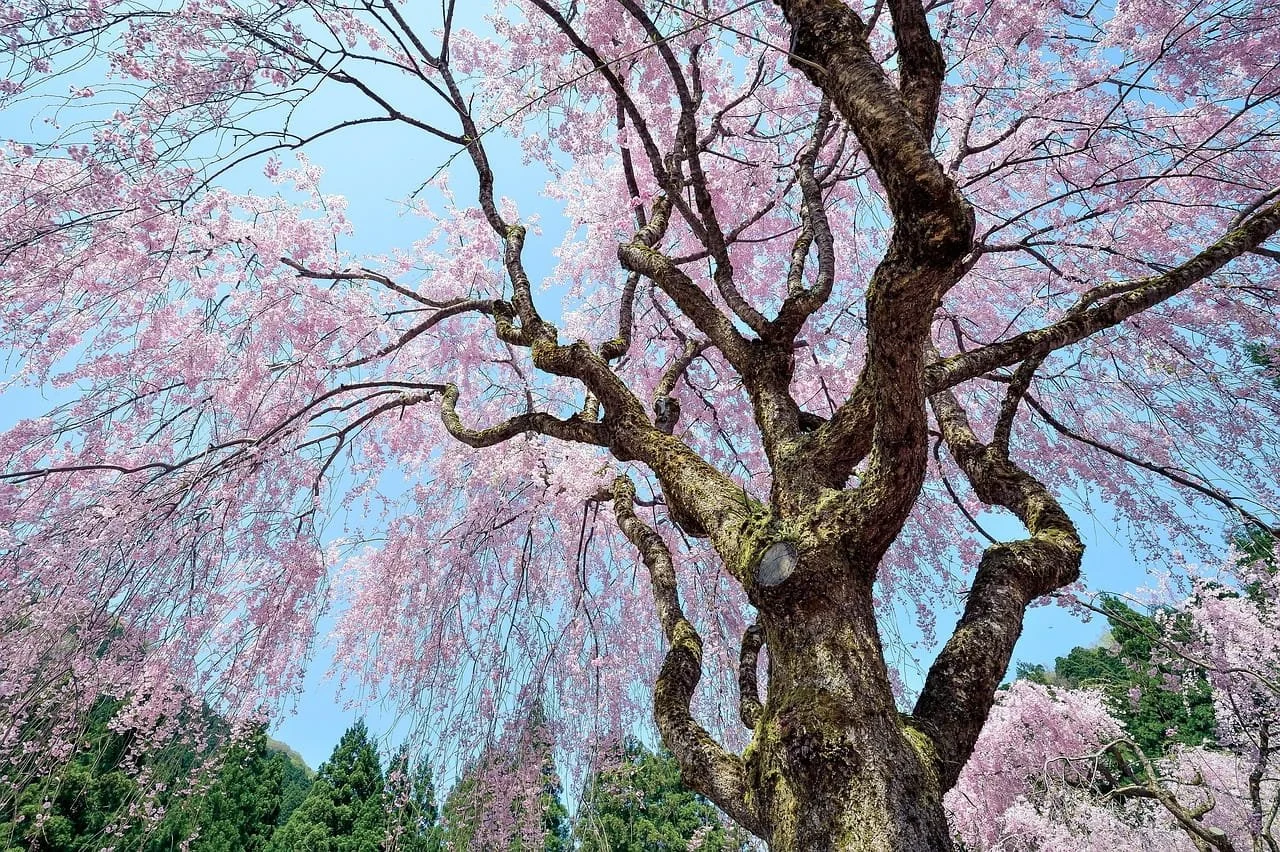
This was the first sakura tree ever designated as a National Natural Monument back in 1922, very close to where we used to live. When you're standing in front of a 1,000-year-old weeping cherry tree like this, it literally looks like a pink waterfall cascading down (the name "Taki" means waterfall). Yes, it gets busy with Japanese visitors, but the tree itself is so impressive that it doesn't matter. You're witnessing something that's been blooming for a millennium.
Usuzumi Zakura (淡墨桜), Gifu
Age: Over 1,500 years
Type: Edohiganzakura
Best time: Early April
The name means "pale ink," referring to the unique colour of the petals. They bloom white, turn pale pink, then fade to a greyish colour before falling. The tree has been supported and preserved for centuries, and legend says it was planted by Emperor Keitai in 467 AD.
Jindai Zakura (神代桜), Yamanashi
Age: Nearly 2,000 years (Japan's oldest tree)
Type: Edohiganzakura
Best time: Early April
Located at Jissō-ji Temple, this is considered Japan's oldest cherry tree. The trunk is thick and gnarled, held up by supports, and when it blooms, it's a reminder that this tree was already ancient when samurai were first becoming a thing.
Why visit these specifically: Beyond the impressive sight of these ancient trees, they're usually located in areas worth exploring more deeply. Use them as anchors for a longer stay in the region. Around Miharu Takizakura in Fukushima, you've got other excellent sakura spots, local food culture, and onsen towns, and we’re headed there in June. The same goes for the areas around the other two trees.
Off-Season Sakura: Extend Your Window
If you can't make it during the main sakura season, Japan has several varieties that bloom at different times of year.
Winter Bloomers (November-February)
Fuyuzakura (冬桜) at Sakurayama Park, Gunma When: Mid-November to mid-December
About 7,000 winter cherry trees bloom here, starting in late autumn and continuing into winter, creating the unique spectacle of pink sakura blossoms alongside the last of the red and gold autumn leaves at the start of the season. It's designated as both a National Scenic Beauty and Natural Monument. The combination is stunning and completely different from spring sakura.
Kawazuzakura (河津桜) in Shizuoka When: Late January to early March (peak mid-February)
These bloom earlier and darker pink than the Somei Yoshino variety. The town of Kawazu, where this variety originated, has about 8,000 trees total, with 850 lining a 4-kilometre riverside path. The Kawazu Zakura Matsuri runs from early February through early March, and the area often pairs the pink blossoms with fields of yellow rapeseed flowers. It's become increasingly popular, but still nothing compared to peak season in the major cities.
Autumn Bloomers (September-December)
Shikizakura (四季桜) in Obara, Aichi When: September to December, then again March to April
The Obara District in Toyota City has about 10,000 four-season cherry trees, Japan's largest concentration. These bloom during autumn, giving you that incredible combination of pink blossoms and autumn colours. The Shikizakura Matsuri runs from early November through early December.
Festival Note: Many of these off-season sakura spots hold festivals during their bloom periods, with evening light-ups and local food stalls. It's worth checking dates in advance if you want to time your visit with the festivities.
Practical Tips for Avoiding the Crowds
Book accommodation in regional cities, not major ones: If you're visiting during peak season in late March to early April, stay in Fukushima, Aomori, Sendai, or Hakodate instead of Tokyo or Kyoto. You can always day-trip to busier spots if needed.
Weekdays over weekends: This is especially important for the famous spots that will be packed with Japanese visitors on weekends and holidays. If you visit the Three Great Sakura on a Tuesday, you'll have a much better experience.
Go early or late in the day: The busiest time at any sakura spot is midday. Arrive at opening time or go for evening light-ups (many popular spots illuminate the trees after dark). Evening will be busier than early morning with people who’ve been enjoying hanami all day.
Bring hanami supplies: Even if you're not planning a full hanami session, pack a picnic blanket, some snacks and a drink. You might find a perfect spot under the trees and want to stay longer than planned. And as mentioned earlier, having something to share makes it easy to connect with locals.
Check the forecast, but don't obsess: The sakura forecast is updated throughout the season, but cherry blossoms are unpredictable. A warm week can bring them out early and cold weather can extend the season. Have a backup plan, and remember that even past-peak or early bloom can be beautiful.
Consider the regional context: The best sakura experiences often come from spending a few days in a region, not just hitting one famous spot and leaving. Around Fukushima's Miharu Takizakura, you've got Aizuwakamatsu with its castle and samurai history, Kitakata with its ramen and sake breweries, and numerous onsen towns. Build your sakura viewing into a deeper exploration of the area.
So there you go. Yes, sakura season in Japan can be crowded, but it doesn't have to be. By understanding the bloom timeline and being willing to venture beyond the major tourist cities, you can experience hanami the way it's meant to be: relaxed, joyful, and full of new friends.
The ancient trees will take your breath away; the tree-lined streets will make you want to stay longer than planned; and sitting under the blossoms with locals, sharing food and drinks and stories, is exactly what sakura season is all about and why it’s worth experiencing.
You just need to know when and where to go - and now you do!
Common Questions About Japan's Sakura Season
-
Hanami literally means "flower viewing" but refers to the centuries-old tradition of gathering under blooming cherry trees to eat, drink, and celebrate with friends and family. The practice celebrates the fleeting beauty of the sakura blossoms, which only last 1-2 weeks, embodying the Japanese concept of mono no aware (the bittersweet appreciation of impermanent beauty). Today it's both a cultural tradition and a massive social event, with millions of Japanese people participating in hanami parties each spring.
-
Late April to mid-May in Hokkaido, or early April in Tohoku. These regions bloom after Tokyo and Kyoto's peak season ends.
-
Nearly four months total, from late January in Okinawa through mid-May in Hokkaido.
-
Yes! Winter-blooming varieties in November-February (Gunma, Shizuoka) and autumn-blooming varieties September-December (Aichi).
-
Regional cities in Tohoku (Fukushima, Aomori) and Hokkaido see far fewer international tourists than Tokyo, Kyoto, or Osaka.
-
A picnic blanket or tarp, food and drinks to share, and warm layers (spring evenings get cold). Having snacks to share with nearby groups is a great way to connect with locals during hanami.
-
Absolutely, if you appreciate ancient trees and natural history. These 1,000-2,000 year old trees are National Natural Monuments and located in regions worth exploring beyond just the single tree. Use them as anchors for a longer regional stay.