
Japan’s Dirty Michelin: The Restaurants That Don’t Need a Star
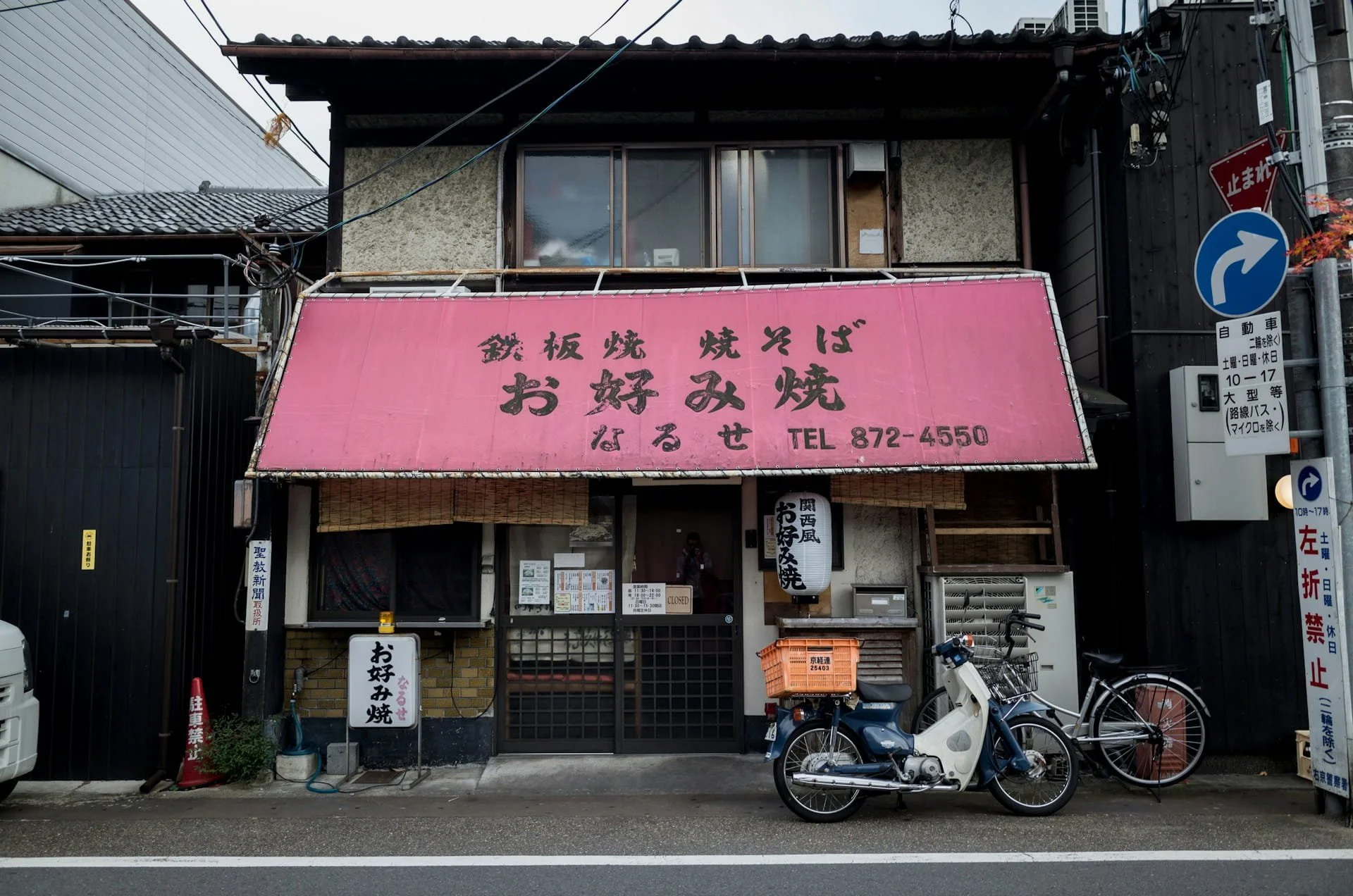
Whenever I’m in Japan I’m looking for the restaurants that most people walk past without a second glance: the place with the sign you can barely read, the noren curtain so faded it tells you the shop has been there forever, the smell of something cooking that stops you mid-stride. If I see an old person stooped over a single dish they’ve been making their whole life, I’m going in. I’ve been doing this for years without ever having a name for it. Then I discovered the Dirty Michelin (きたなシュラン, kitanashuran), and everything made sense.
What Is Japan’s Dirty Michelin?

Japan’s Dirty Michelin is a cultural concept that celebrates hole-in-the-wall restaurants with terrible exteriors and extraordinary food, that are some of the best and cheapest restaurants in Japan. It started as a segment on Tonneruzu no Minasan no Okage Deshita, one of Fuji TV’s most beloved long-running comedy shows. The name is a portmanteau of kitanai (きたない), meaning dirty or grimy, and Michelin, a deliberate, gleeful parody of the world’s most famous restaurant guide.
The premise was simple: find restaurants that a Michelin inspector would walk straight past, and celebrate them anyway. Ugly-fronted, grease-blackened, sun-damaged, lopsided, possibly structurally compromised, but serving extraordinary food. The show’s hosts would eat, argue briefly, and award anywhere from zero to three stars. Half stars were available. The whole thing was cheerfully, unapologetically arbitrary.
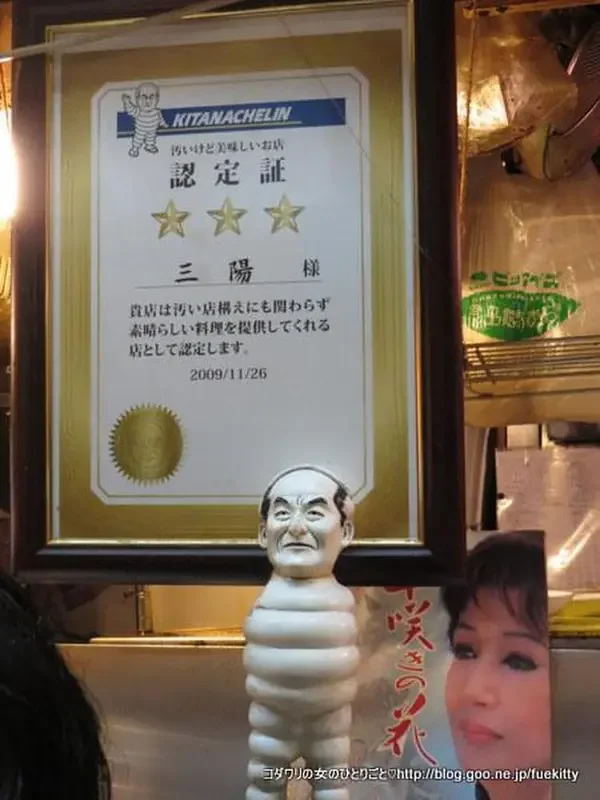
Michelin apparently had thoughts about being parodied. Partway through the show’s run, the segment was quietly renamed the Dirty Restaurant (kitanatoran, きたなトラン), the Bibendum-style trophy swapped out for a new design, and a narrator explained it was due to “the producer’s wishes.” Whether the real Michelin Guide’s legal team were involved is unconfirmed. Either way, the original name stuck in popular culture, and the concept of celebrating restaurants that pour everything into the food and nothing into appearances became its own kind of institution.
The segment ran from 2009 until the show ended in 2018. It even spawned a book: Kitana Umai Mise (きたな美味い店), published by Fusosha in 2011, covering 50 featured restaurants with their star ratings, the hosts’ commentary, and, brilliantly, a dedicated “Dirty Point” (kitanaPOINT, きたなPOINT) score rating each venue on the specific character of its dilapidation. Collapsed signage. Grease stalactites. Layers of faded posters and ads that had accumulated for decades. The more comprehensively ruined, the better.
What “Dirty” Actually Means
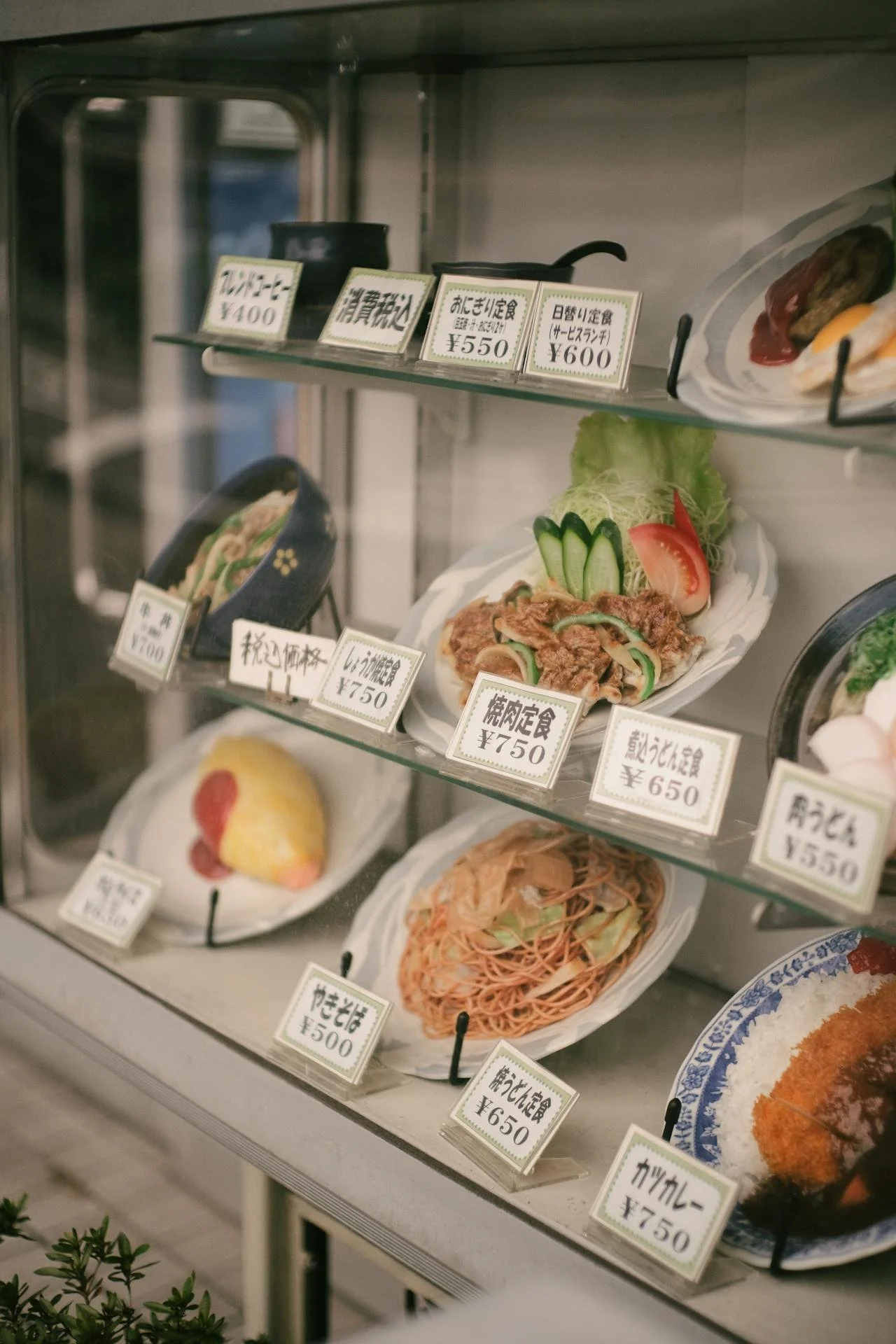
Before you imagine a health inspector’s nightmare, let’s be clear about what we mean. These places aren’t dangerous or unhygienic. They’re just aesthetically unbothered. Decades of yellowed walls, sun-blistered food samples in the window, handwritten menus on strips of paper that have been stuck and re-stuck to the walls. The food is often cleaner and more carefully made than anywhere with a polished fit-out, because the person making it has been making exactly this thing for thirty or forty years.
How Does the Dirty Michelin Star Rating Work?
The Dirty Michelin used the same scale as Michelin, awarding zero to three stars. That’s where the similarity ends.
Where Michelin deploys trained anonymous inspectors over multiple visits, applying five formal criteria (ingredient quality, technique, originality, cost-performance, and consistency), the Dirty Michelin sent two comedians in once, they ate the food, argued for a minute, and held up a number. Three stars was rare. Getting there required both extraordinary food and extraordinary grubbiness, evaluated entirely by feel.
It is, in other words, the most honest restaurant rating system ever devised.
Why These Places Are Actually Special
Here’s the thing about the Dirty Michelin that the TV framing slightly undersells: the “dirty” element is almost incidental. What these restaurants really have in common is something much harder to manufacture.
Many have been in the same family for two, three, or even four generations, with recipes and techniques passed down in person, adjusted by experience, and never written down anywhere. The owner of Food Hall Iga (食堂 伊賀, Shokudo Iga) in Tokyo told a reporter that customers who first came in as new salarymen are now retiring. That’s fifty years of the same hamburger patty, formed by the same hands, served to people at every stage of their lives.
There’s also the matter of focus. These are not restaurants trying to be several things. The menu at Wasabi Rice Tsuzuku (元祖わさびめし つず久, Ganso Wasabimeshi Tsuzuku) in Tokyo is handwritten across every surface of the walls, dozens of dishes, but the thing everyone comes for is the wasabi rice (wasabi meshi): freshly grated Hokkaido mountain wasabi piled onto freshly cooked rice with soy sauce and shredded nori, ¥550. That’s it. The building has been slowly leaning since it was constructed before the war. When it was featured on the show, their “automatic door” was just a piece of rubber. The owner communicates almost entirely through puns.
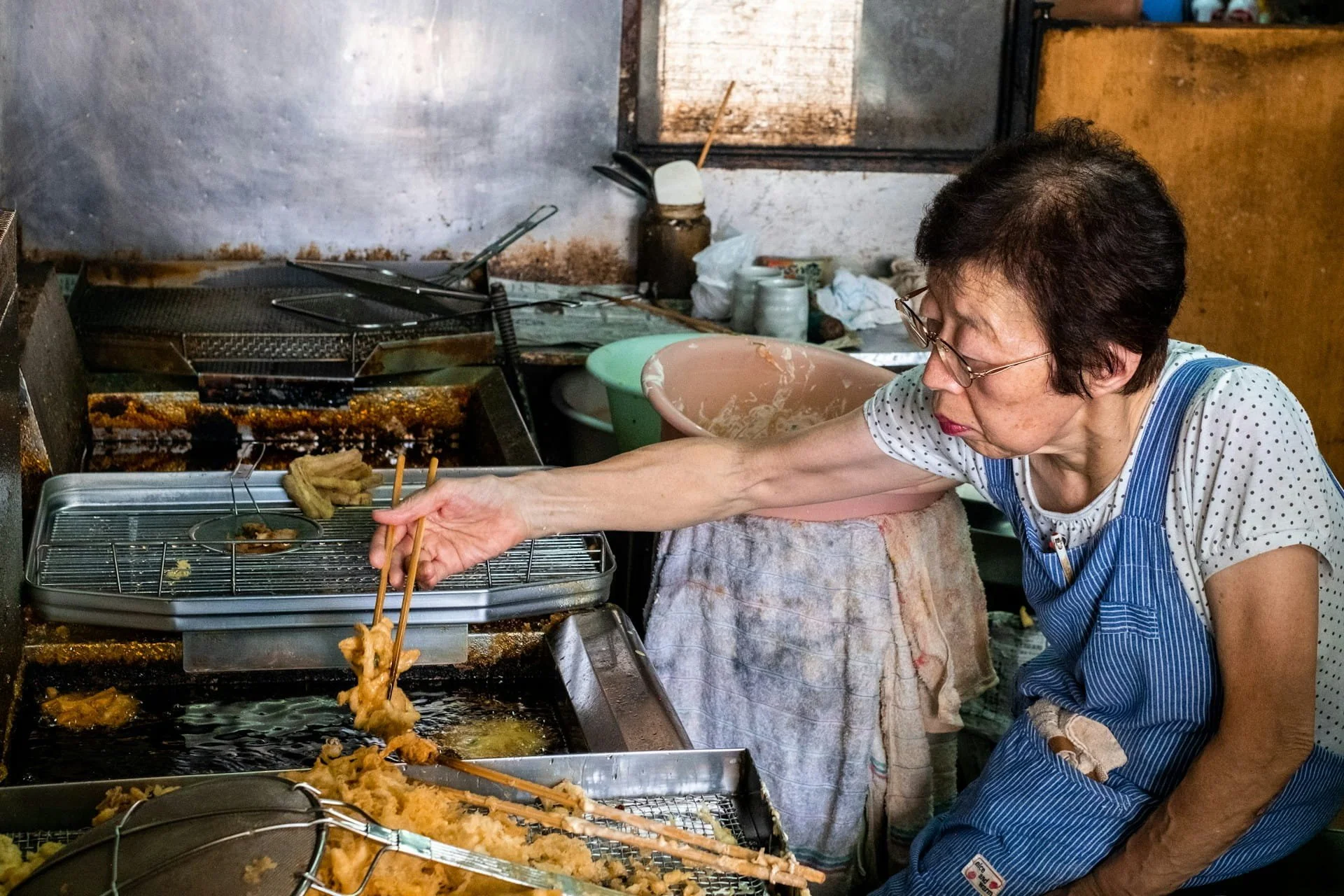
And then there’s the price. These places are almost universally cheap. Not budget-travel cheap, but genuinely, sincerely cheap, because they have no interest in charging what the market might theoretically bear. The food costs what it costs, the rent is what it is, and the owner has probably been here long enough that the mortgage is paid off. A three-star Dirty Michelin meal will rarely set you back more than ¥1,000.
The Opposite of Noma
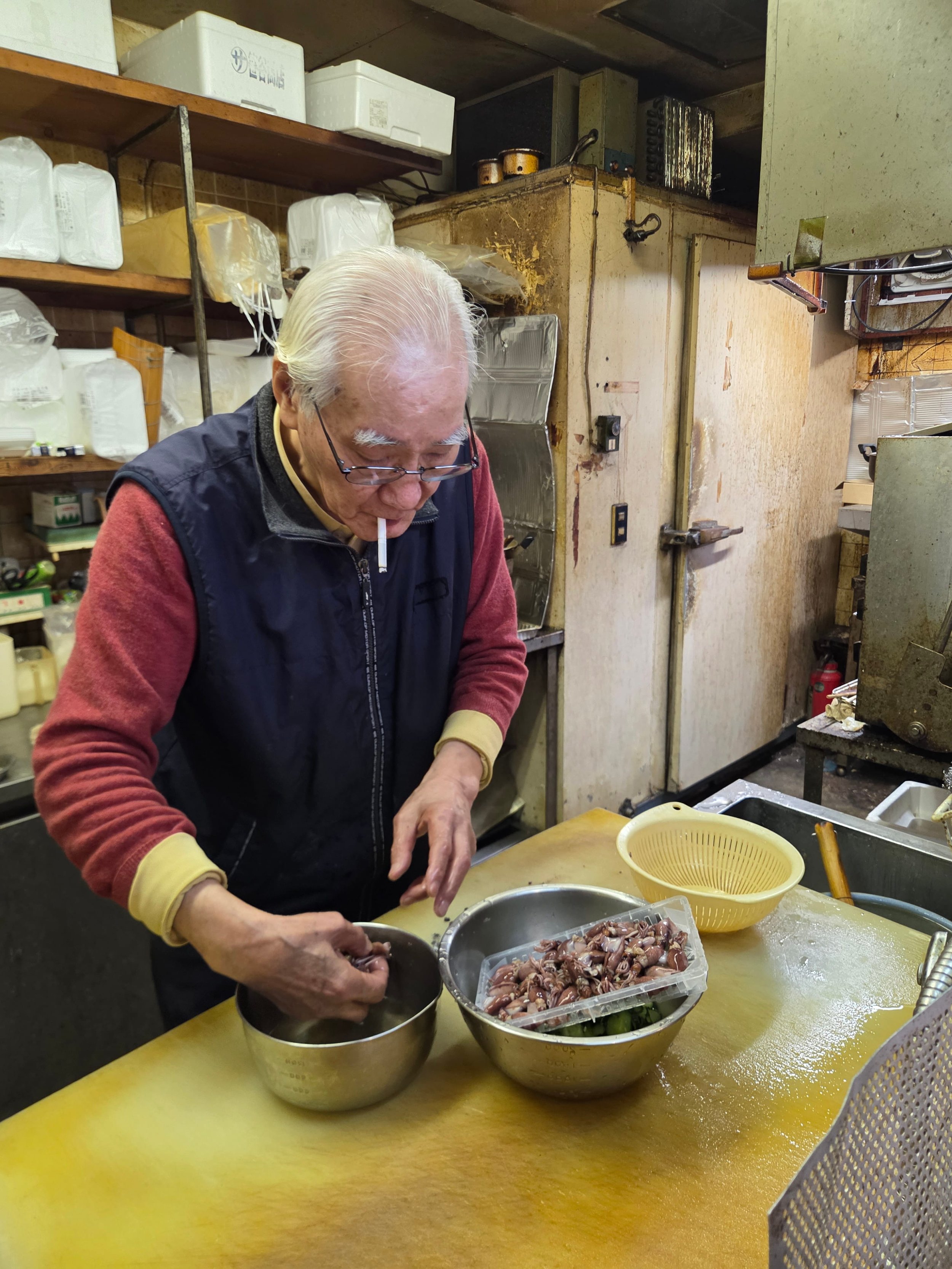
In March 2026, a New York Times investigation published accounts from 35 former employees of Noma, once ranked the world’s best restaurant, describing a pattern of physical assaults, psychological abuse, body shaming, and threats stretching back years. René Redzepi resigned shortly after. The LA pop-up charging $1,500 a head opened to protests amidst the controversy.
None of this was entirely surprising to anyone who had been paying attention. The cult of the visionary chef, the idea that culinary genius justifies almost any working condition, had been building for decades. Michelin stars as social currency, kitchen brigades modelled on military hierarchies, unpaid internships treated as a rite of passage. The system rewards obsession with prestige and treats the humans inside it as acceptable casualties.
The Dirty Michelin exists at the absolute opposite end of that spectrum. The owner of Sanyo (三陽, Sanyo) in Yokohama has been serving his “Mao Tse-tung would be shocked” garlic gyoza in the Noge drinking district since 1968. He named his ramen dishes things I shouldn’t repeat in a family-friendly publication (which we are not, as you’ll soon learn). He is not chasing anything. He has never chased anything. He found his thing, he got good at it, and he’s been doing it, in that room, for almost sixty years.
Michelin itself apparently objected to being parodied by a TV segment celebrating humble food. A guide that evaluates restaurants partly on their journey-worthiness had concerns about associating its brand with places that couldn’t afford a new coat of paint. The Dirty Michelin disagreed.
A Starter List (The Concept Is the Point)
More than a checklist of restaurants, the Dirty Michelin is a way of looking at the world. Once you understand what you’re looking for, you’ll find these places everywhere, which is, honestly, the best possible outcome of reading this article. The show is finished and the book is out of print, and while many of the places listed no longer exist, many of the places it celebrated are still there, and the spirit of Dirty Michelin is very much alive. Here are six to get you started, spread across the country.
New Light (ニューライト, Nyu Raito) — Osaka ★★★
The exterior of New Light in Osaka’s Amerikamura district is completely papered in hip-hop and reggae event flyers, stickers, and handwritten signs. You would walk past it every day for a year and never guess it was a restaurant. It has been there since 1959.
I walked past it on a trip and stopped, because something about the door piqued my curiosity. Sadly it was closed. On my next trip I went back. The inside perfectly matched the outside - dingy, presided over by a very old man making fried rice, single guys quietly eating their lunch, and one random couple where the man was spoon-feeding his girlfriend like they were the only two people in the room.
The thing to order is the Ceylon Rice (seiron raisu, セイロンライス): beef and onions fried with curry powder, folded into a special demi-glace sauce that has been developing since the year the shop opened, served over rice. It’s not curry as such, yet is somehow familiar. I ordered it with katsu and loved every bite. All for under ¥1,000.
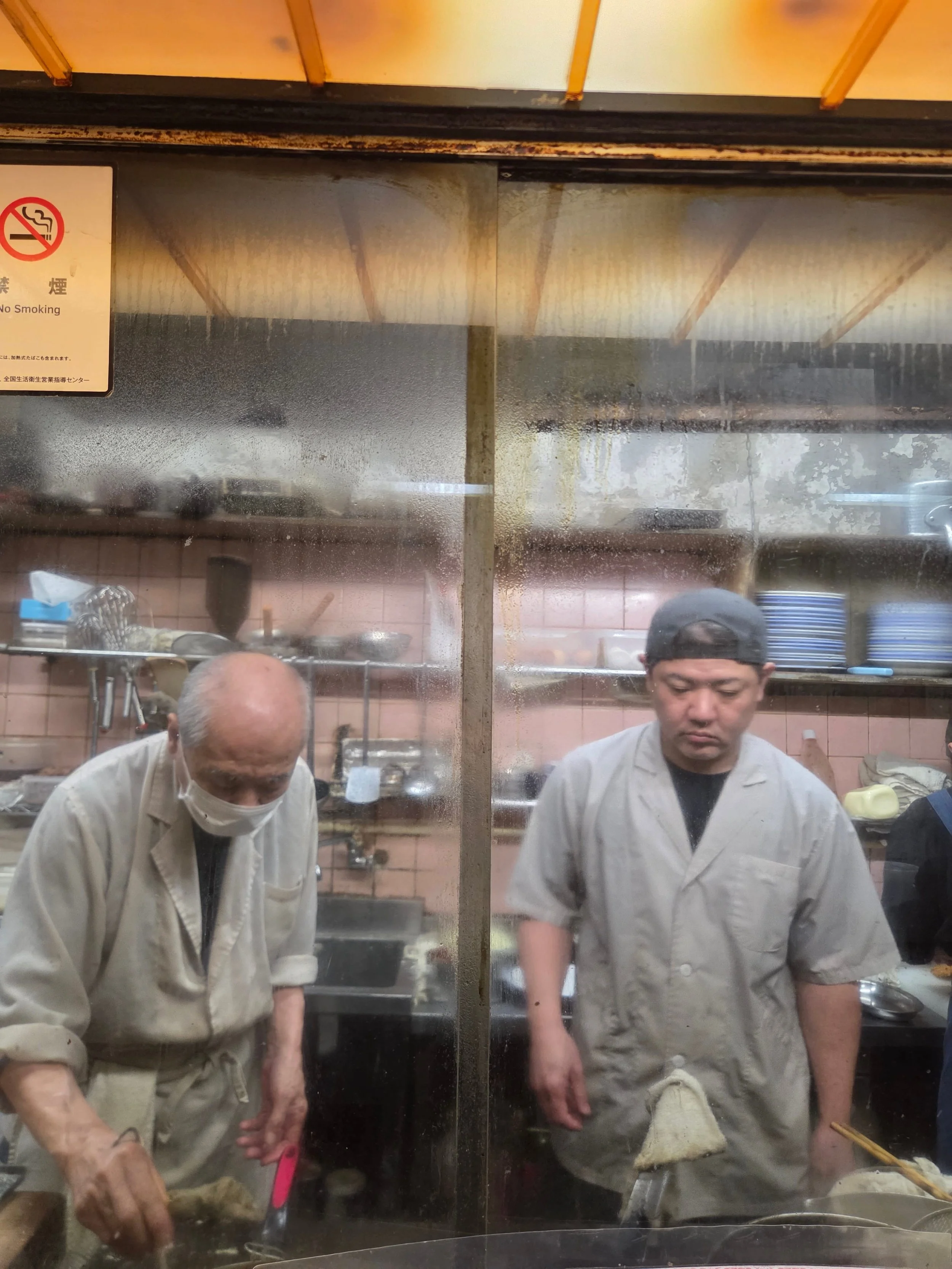
Food Hall Iga (食堂 伊賀, Shokudo Iga) — Tokyo ★★
Near Nakano station in Tokyo, in a wooden building that forms part of a row of old shopfronts, the owner of Shokudo Iga has been making the same food since 1977. He’s from Iga city in Mie Prefecture, hence the name. He runs the place alone.
The Dirty Michelin certificate on the wall has been repaired with gaffer tape. The most popular dish is the Hambag set (hambagu teishoku, ハンバグ定食). Note the intentional misspelling: hambagu becoming hambag, which is either a typo that stuck or a joke that nobody explained. The owner forms each patty by hand after you order. It costs around ¥780.
Sanyo (三陽, Sanyo) — Yokohama ★★★
In the Noge district of Yokohama, historically the city’s working-class drinking neighbourhood and the place you go when you want to get properly drunk away from the respectable parts of town, Sanyo has been running since 1968. It was one of the very first places featured on きたなシュラン (kitanashiran), earning three stars on the show’s debut episode in December 2009.
The gyoza are the reason people come. The owner calls them “Mao Tse-tung would be shocked” gyoza, a name that seems to exist purely because it is outrageous enough to remember. The ramen menu requires a moment of preparation: it includes Dick Ramen (chinchin ramen, チンチンラーメン), Do the Dirty Ramen (chomechome ramen, チョメチョメラーメン), and Big Bush Ramen (bobo ramen, ボーボーラーメン). The owner has been running on the same unhinged energy for nearly six decades, and the food is genuinely excellent.
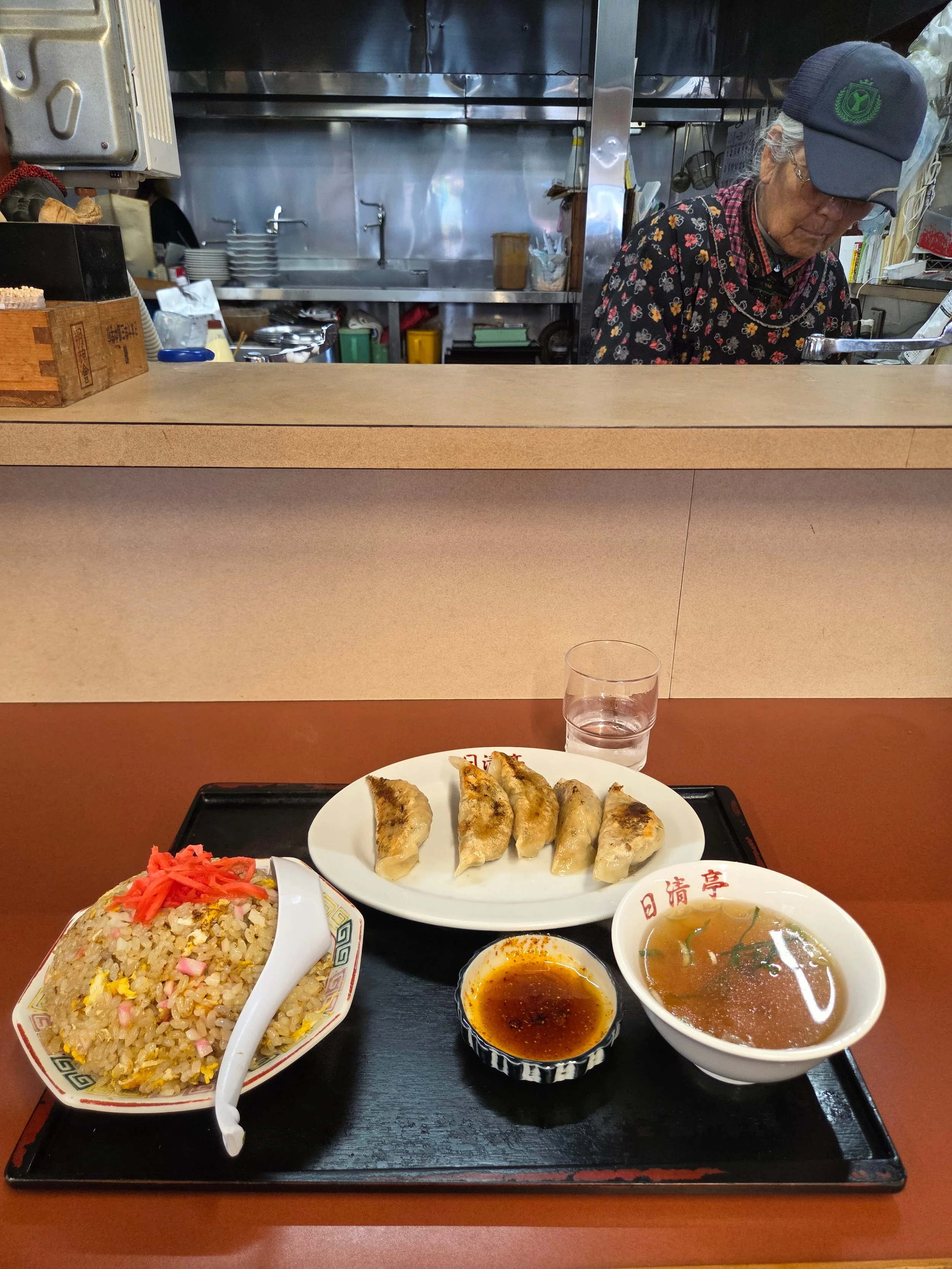
Yatai KENZO Cafe (屋台 KENZOカフェ, Yatai Kenzo Kafe) — Fukuoka ★★★
Kenzo-san ran a street stall (yatai, 屋台) for years before moving indoors on Fukuoka’s Ginnan-dori. He kept the entire yatai menu, grilled skewers, goma saba (sesame mackerel), yakitori, and added a few more things. He called the place a cafe because a regular once described being there that way, and he thought it sounded funny.
The signature dish is the grilled ramen (yaki ramen, 焼きラーメン), ¥700-800 for ramen noodles pan-fried with the stall’s original sauce, crisp at the edges, rich all the way through. The three-star Dirty Michelin trophy still sits on the counter. It is missing one arm, for reasons nobody has been able to explain.
Imai Shokudo (今井食堂, Imai Shokudo) — Kyoto
Near Kamigamo Shrine (上賀茂神社, Kamigamo Jinja), a UNESCO World Heritage site, Imai Shokudo has been simmering mackerel for long enough that the fish comes out of the pot pitch black. The cross-section looks like something from a geology textbook. One reviewer, only half joking, suggested the mackerel should be listed for UNESCO protection alongside the shrine.
The set meal (teishoku, 定食) built around the simmered mackerel (saba ni, 鯯煮) is the thing to order: rice, miso soup, pickles, and a piece of fish that has been cooking in the same accumulated stock for longer than most restaurants have been open.
It’s Dirty Michelin certified, and although I can’t find the star count, the credibility is unquestioned.
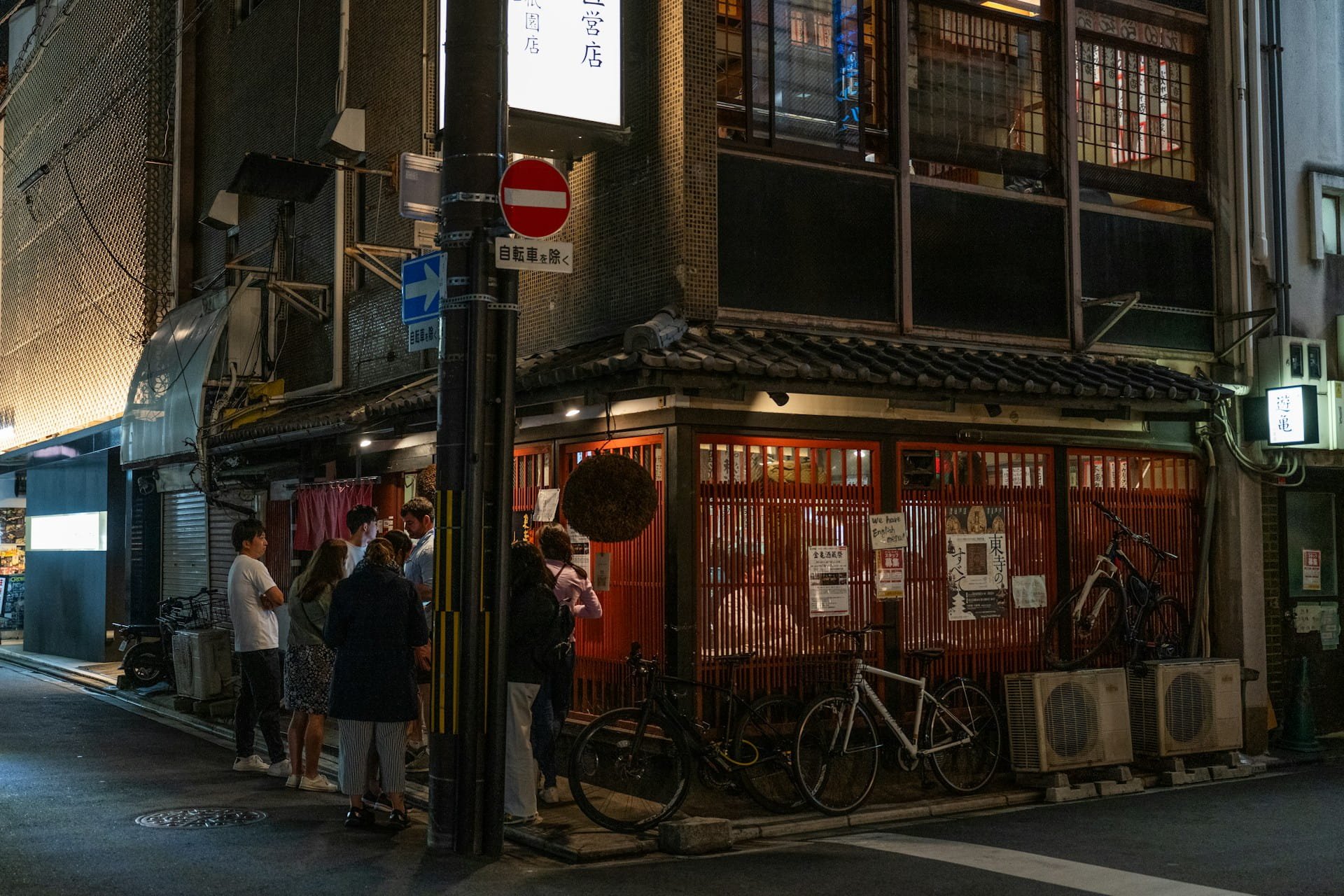
The Dirty Michelin State of Mind
The Dirty Michelin segment ran for nine years, covered a few hundred places, and then ended. So did the listings. But the thing it was highlighting, the decades-deep craft, the absence of ego, the utter indifference to appearances in service of the food, didn’t start with a TV segment and it certainly didn’t go away when it ended. These places exist all over Japan, completely outside any official recognition, waiting for whoever is curious enough to walk through the door.
Sumiyoshi Shokudo (すみよし食堂, Sumiyoshi Shokudo) — Kurokawa Onsen, Kumamoto
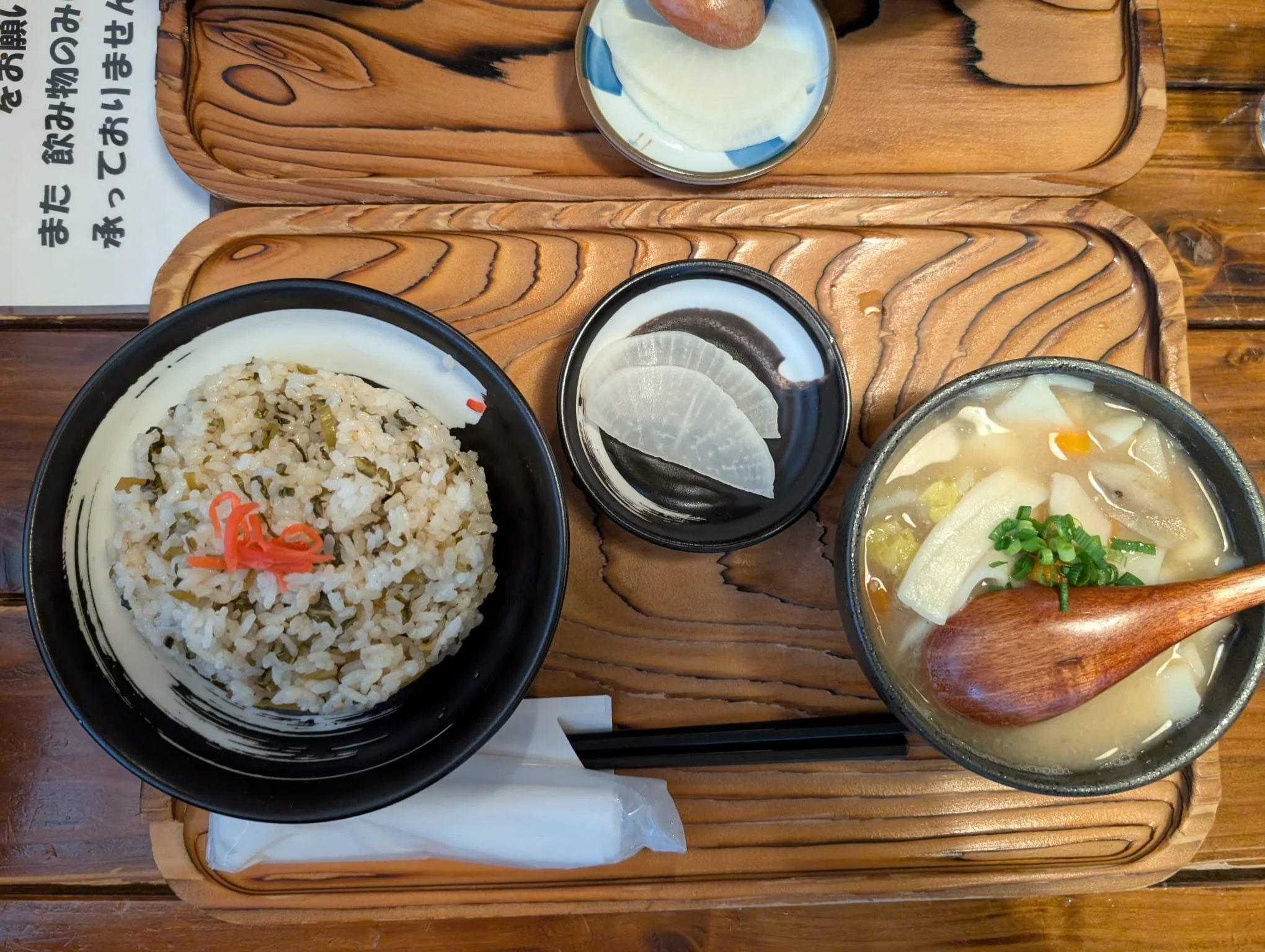
A favourite of mine that I found on my travels is in Kurokawa Onsen (黒川温泉), a mountain hot spring town in Kumamoto Prefecture. There’s a tiny place marked by a red lantern above the river, with seven or eight seats, run by a husband and wife. The specialty is takana rice (takana meshi, 高菜めし), and they also serve katsu-don and chanpon, all made with local rice and vegetables. Kurokawa is an onsen town and onsen towns are not known for being cheap, but Sumiyoshi is both excellent and absurdly good value.
If you need the bathroom, you’ll find it through a door at the back. That door leads into their house, which is when you realise you’ve been eating in someone’s home all along. The walls of the dining room are papered with Japan’s most wanted posters, serious crimes, full descriptions, just in case you happen to recognise anyone over your takana rice. No explanation is offered. Everyone at the table must order their own dish. No sharing, no sitting without eating.
No stars here, and not officially on the list. But it’s exactly what Dirty Michelin would have been looking for.
How to Find Dirty Michelin Restaurants in Japan
This is actually the hard part. The show ended in 2018 and the book is out of print. You cannot Google “Dirty Michelin near me” and get useful results.
The best tool available is Tabelog (食べログ, Tabelog), Japan’s dominant restaurant review platform. The search function is primarily in Japanese, and the most useful results come from Japanese-language reviews, which means either using a translation tool or learning to recognise a few key phrases. Reviews that mention きたなシュラン (kitanashuran) or きたなトラン (kitanatoran) are a strong signal. So are phrases like 老舗 (shinise, long-established) and 創業 (sogyo, founding year).
Beyond that, trust your instincts. The signals are consistent: a shopfront that looks like it’s been in the same family since before you were born, a menu handwritten rather than printed, a queue of local salarymen at 11:45am, an owner who doesn’t look up when you walk in because they’re busy doing the thing they’ve been doing for decades. It’s kind of like trying to find your favourite hole in the wall restaurant back home.
There’s a slightly philosophical version of this question, which is: what happens when one of these places renovates? Kitchen Bulldog (キッチンぶるどっく, Kicchin Burudokku) in Morishita, Tokyo, held three Dirty Michelin stars for its beef stew and omurice, then rebuilt the premises. It’s now clean. Someone online asked with complete sincerity whether it could keep its rating. The answer, presumably, is no. The food is the same. Something else has changed.
And just as a reminder that the concept doesn’t always make sense. Soba Restaurant Masaya (そば処 まさや, Sobadokoro Masaya) in Fukuoka earned three Dirty Michelin stars. It’s a soba restaurant, but it’s famous for its chanpon, a Nagasaki-style noodle soup that has nothing to do with soba. Nobody seems to know why. It’s excellent.
Somewhere in Japan right now, someone is doing the same thing they’ve been doing for forty years. Same dish, with the same technique, in the same room. They are not trying to earn a star,they are not optimising for a ranking or building a brand or cultivating a mythology, they’re not even interested in your opinion of their decor.
They got good at one thing, and they kept doing it, and the result, after enough decades, is a kind of excellence that no amount of ambition can replicate. The food is cheap because it was always cheap. The room looks the way it looks because nobody ever had time to care about the room. The sign out front is faded because it’s been there long enough to fade.
And you know what? That’s the whole point. The lack of ego isn’t incidental to the quality. It’s the reason for it. Next time you’re in Japan, take a punt on a place that might look a little grimey, have a look around and see what everyone else is eating, point and say “kore onegaishimasu” (this please) and then you too will understand the Dirty Michelin state of mind.
Frequently Asked Questions
-
Japan's Dirty Michelin (きたなシュラン, kitanashiran) is a cultural concept originating from a segment on the Fuji TV comedy show Tonneruzu no Minasan no Okage Deshita, which ran from 2009 to 2018. The segment awarded zero to three stars to restaurants that looked dilapidated or rundown but served exceptional food. The name parodies the Michelin Guide by combining the Japanese word kitanai (dirty) with Michelin.
-
The Dirty Michelin used a zero to three star scale, awarded in half-star increments. Unlike the real Michelin Guide, which uses trained anonymous inspectors applying five formal criteria over multiple visits, Dirty Michelin stars were given by two TV comedians after a single visit. Ratings were based on how extraordinary the food was and how comprehensively terrible the restaurant looked. Three stars was rare and required both outstanding food and standout dilapidation.
-
Yes. Dirty Michelin restaurants are aesthetically rundown but not unhygienic. Japan has strict food safety standards, and many of these restaurants have been serving the same food for decades with an exceptionally careful approach to preparation. "Dirty" refers to the appearance of the exterior and interior, not food safety.
-
Many of the restaurants featured on the original TV segment are still operating. The show ended in 2018, but a number of the places it featured — including New Light in Osaka (est. 1959), Food Hall Iga in Tokyo (est. 1977), and Sanyo in Yokohama (est. 1968) — continue to trade. It is worth checking Tabelog (食べログ) for current opening status before visiting.
-
The most reliable method is searching Tabelog (tabelog.com), Japan's dominant restaurant review platform, using the Japanese terms きたなシュラン (kitanashiran) or きたなトラン (kitanatoran). Japanese-language reviews will return significantly more results than English searches. Look for phrases like 老舗 (rosho, long-established) and 創業 (sogyo, founding year). Physically, look for handwritten menus, faded exteriors, and queues of local workers forming before midday.
-
Most Dirty Michelin restaurants charge between ¥600 and ¥1,500 per person, including a full meal. Three-star restaurants typically charge under ¥1,000. Prices are low not because the food is cheap to produce but because these restaurants have been operating long enough that their costs are stable and their owners have no interest in charging what the market might bear.
-
The Michelin Bib Gourmand is an official Michelin Guide designation for restaurants offering exceptional food at moderate prices (under approximately ¥5,000 in Japan). The Dirty Michelin (きたなシュラン) is an unofficial cultural concept from a TV parody segment, recognising restaurants that look terrible from the outside but serve extraordinary food, typically for under ¥1,500. Some restaurants may qualify for both in spirit, but they are entirely separate systems.