
China's food has a reputation for going further than most people's comfort zones. And we’re not just talking super spicy. There’s a lot of weird food in China. There are fried insects on sticks, hotpots built on the stomach fluids of a cow, and century eggs that look like they've been through something extremely unpleasant. Offal gets its own section of a lot of menus, if not entire restaurants dedicated to it. And the bigger the market, the more you'll find that you can't quite identify.
This isn't that list. After more than 20 years of eating our way around the country, we've tried a lot of weird food in China, and much of it doesn't make our must-order pile. What follows are the weird things we'd actually send you out to find: the ones that smell strange, look like a dare or take some convincing, and turn out to be delicious. After all, to the people who grew up eating it, these are some of their favourite snacks and dishes, things that millions of people wouldn’t really think twice about. If you want the short version, the weird foods we'd send you out to find are donkey burgers, rabbit head, fermented bamboo, luosifen, Dongpo pork, stinky tofu, duck neck, fish mint root, chicken feet and blood tofu. We’ve given the Chinese characters and pinyin for every dish, so you can point to it on a menu or show it to a waiter.
At Off The Eaten Track, we have a saying: “Do it for the flavour library.” You may not like everything. You may not eat it again. Or you may end up loving what you try. At the end of the day, you come away with a memory of place, tied to the food, that gives you an experience or flavour you may have never encountered before, and very well may never again. So if you’re headed to China, use this list and do it for the flavour library.
Donkey burger in Beijing
My love of donkey started in Hunan, all the way back in 2007. I was travelling with friends, and at every restaurant we'd ask what they recommended and what the specialty was. The first suggestion was always dog. No thank you. The second was always donkey. No thank you again. After two nos, they'd tell us to just figure it out for ourselves. This went on for a few days, until a friend who spoke Chinese jumped in before our second no thank you and ordered the donkey. We loved it so much that we went back to the same restaurant for lunch the next day.
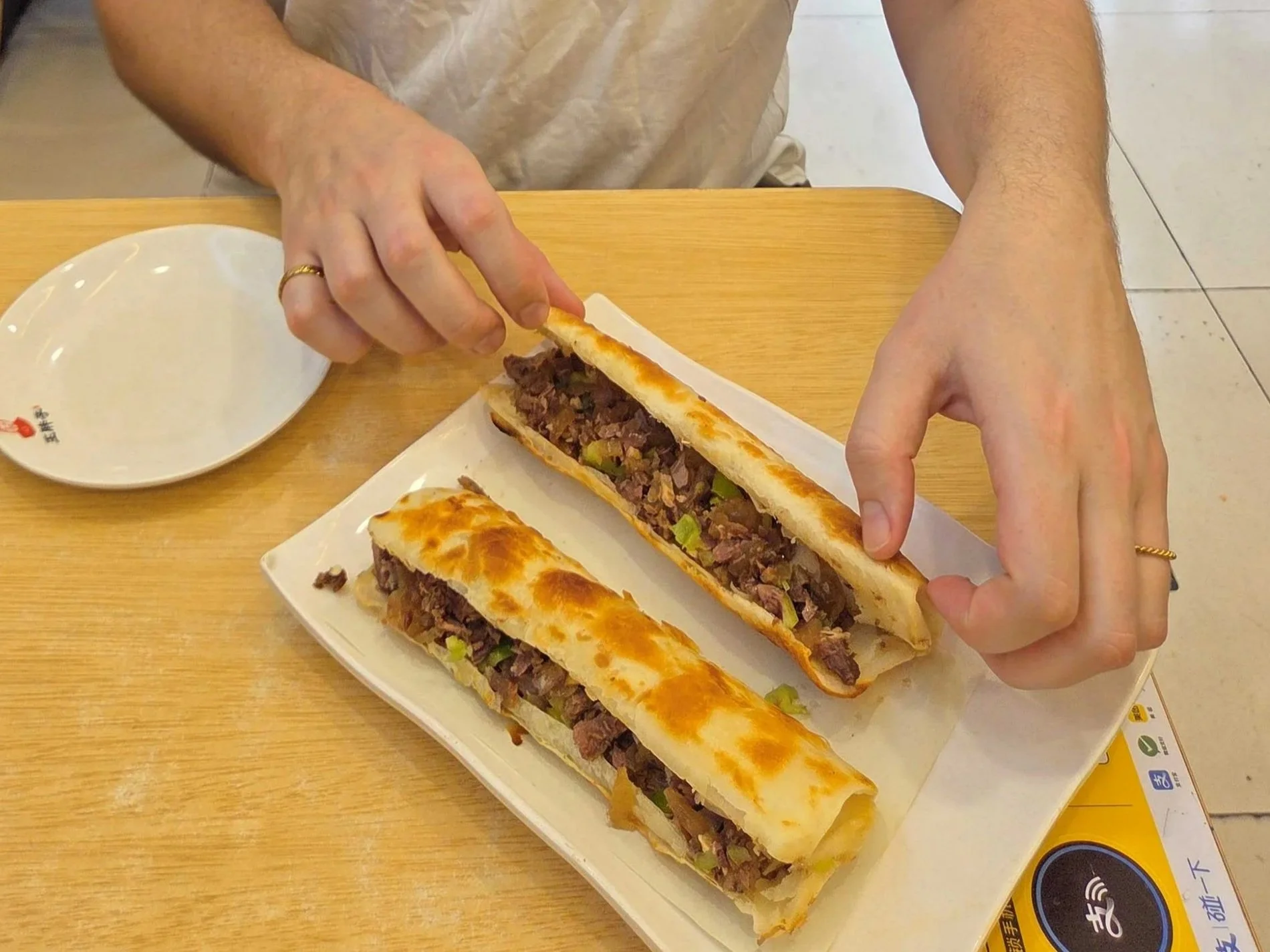
When I moved to Beijing in 2009, I found out about the donkey burger (驴肉火烧, lü rou huo shao) and couldn't wait to try it. Now I take everybody. The dish comes from Hebei, around Baoding and Hejian, but it’s a Beijing staple now. Braised donkey meat is chopped up with green peppers and then stuffed into a flatbread. The bread is a big part of the appeal. It's usually freshly baked, a little crispy on the outside with sesame seeds, soft on the inside, and just really wonderful. I always describe the meat as being like pastrami, tender and savoury with a deep, slightly gamey flavour.
Rabbit head in Chengdu
I ate my first rabbit head (兔头, tu tou) at Shuangliu Laoma Rabbit Head in Chengdu, where it's a classic snack, braised in numbing, spicy mala spices and best eaten with a beer. It looks confronting on the plate, and the way you eat it is potentially even more confronting, because you eat every part. First, you pull the jaw apart, ripping the head in half to eat the cheek meat. Then you tug out the tongue and eat that. Next you pop out the eye and eat that. Finally, you pull off the skull and eat the brain. You're really ripping this head to pieces and eating every weird bit of it.
It's easier than it sounds, especially if someone teaches you the order. You usually get gloves, so the mess is manageable, and what you end up with is a run of different textures that are spicy, numbing and honestly so good.
Fermented bamboo in Yunnan
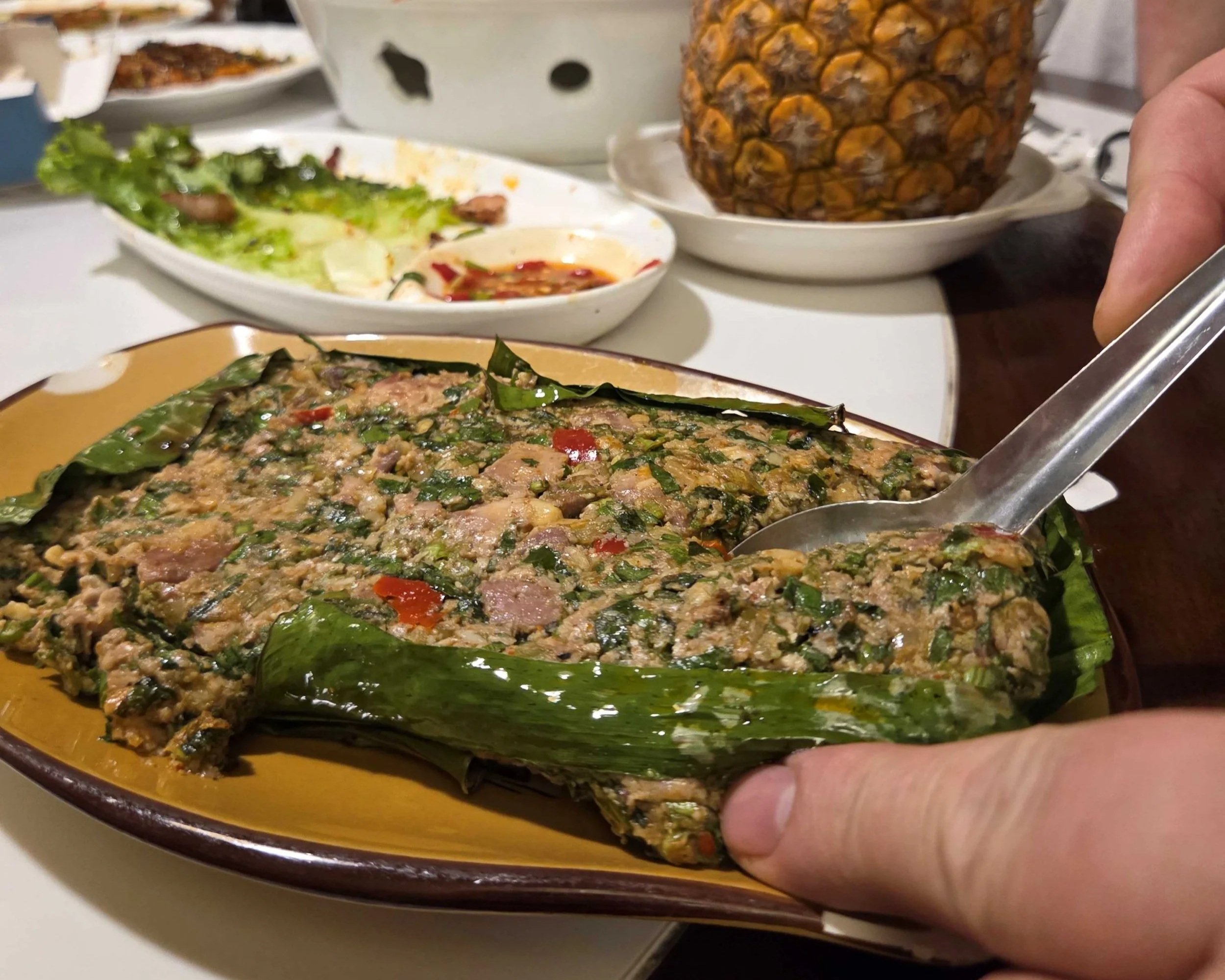
Fermented bamboo shoots (酸笋, suan sun) smell horrible, and the smell is the part you have to get past. The shoots are sliced and packed into jars until they turn sour, and they're a staple of Dai cooking in Yunnan, as well as Thai and Lao cooking. I had my first one at Yingjiang, a Dai restaurant I love in Kunming, wrapped in banana leaf and baked with herbs and spices, and despite the smell, it was probably the best thing on the table that night.
It comes in other forms as well. Sour bamboo is simmered with fish, chicken or river snails, where it gives the broth a sharp, savoury tang. It's shredded and served cold with chilli oil, garlic, coriander and soy as a quick appetiser. And the dried version is sometimes brewed like tea with boiling water, chilli and salt to make an instant soup.
Stinky noodle soups
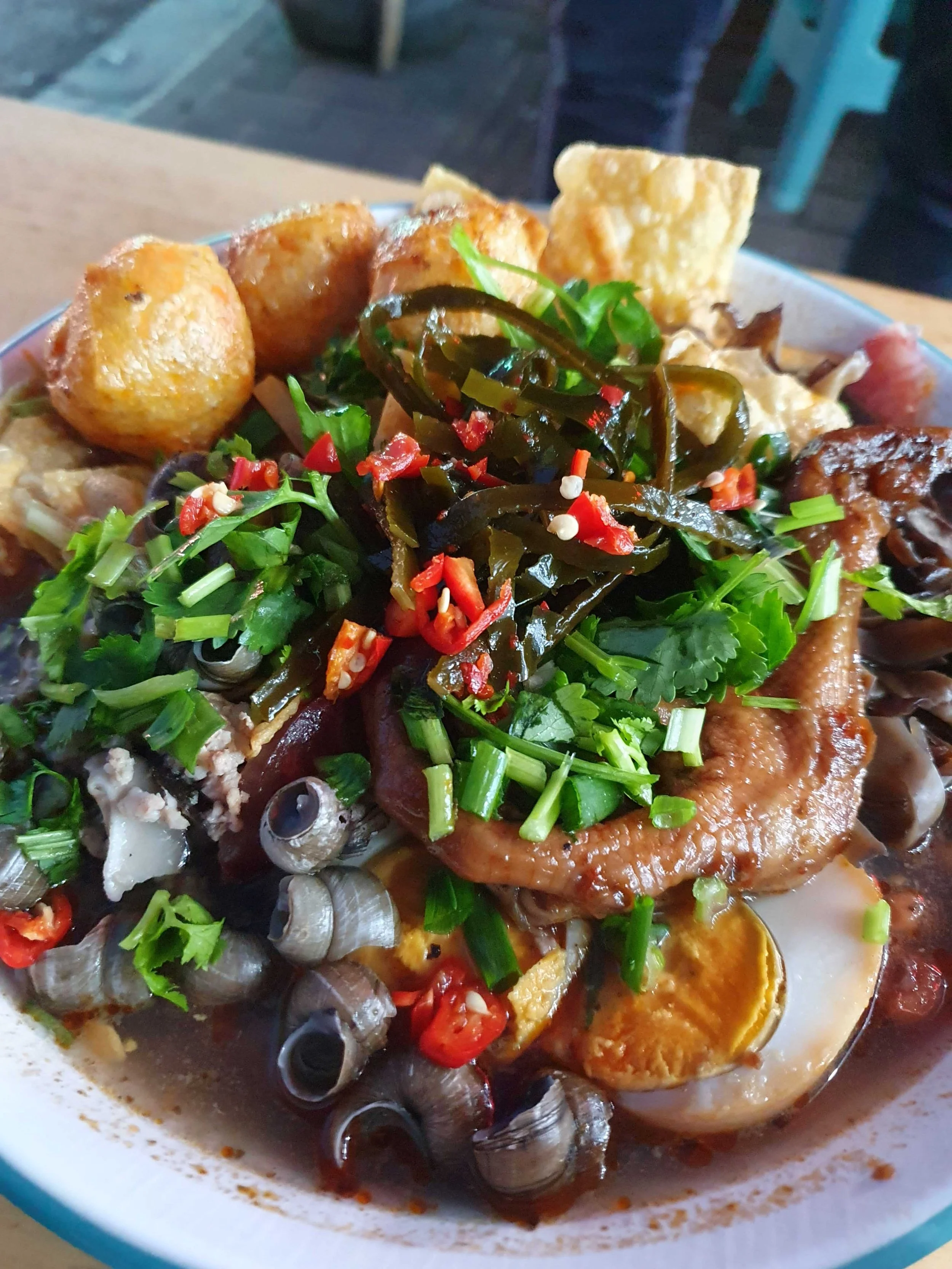
Keeping on the theme of stinky and delicious, China has plenty of stinky noodles, all of which I love. In fact, if a noodle smells stinky, I pretty much know it’s going to be good. Luosifen (螺蛳粉, luo si fen) are the most famous example. They come from Liuzhou in Guangxi, where they took off in street stalls in the 1970s. The broth is simmered from river snails and made with sour bamboo, which is where the smell comes from, and it's topped with chilli oil, peanuts, tofu skin and vegetables. In most Chinese cities, you can find a luosifen shop by following your nose. I had my first bowl in Yangshuo and I've had it more than once since. The flavour is sour, pungent, savoury and spicy, and it's a good example of a type of noodle soup in the south and southwest that stinks and then turns out to be absolutely delicious.
Pork fat
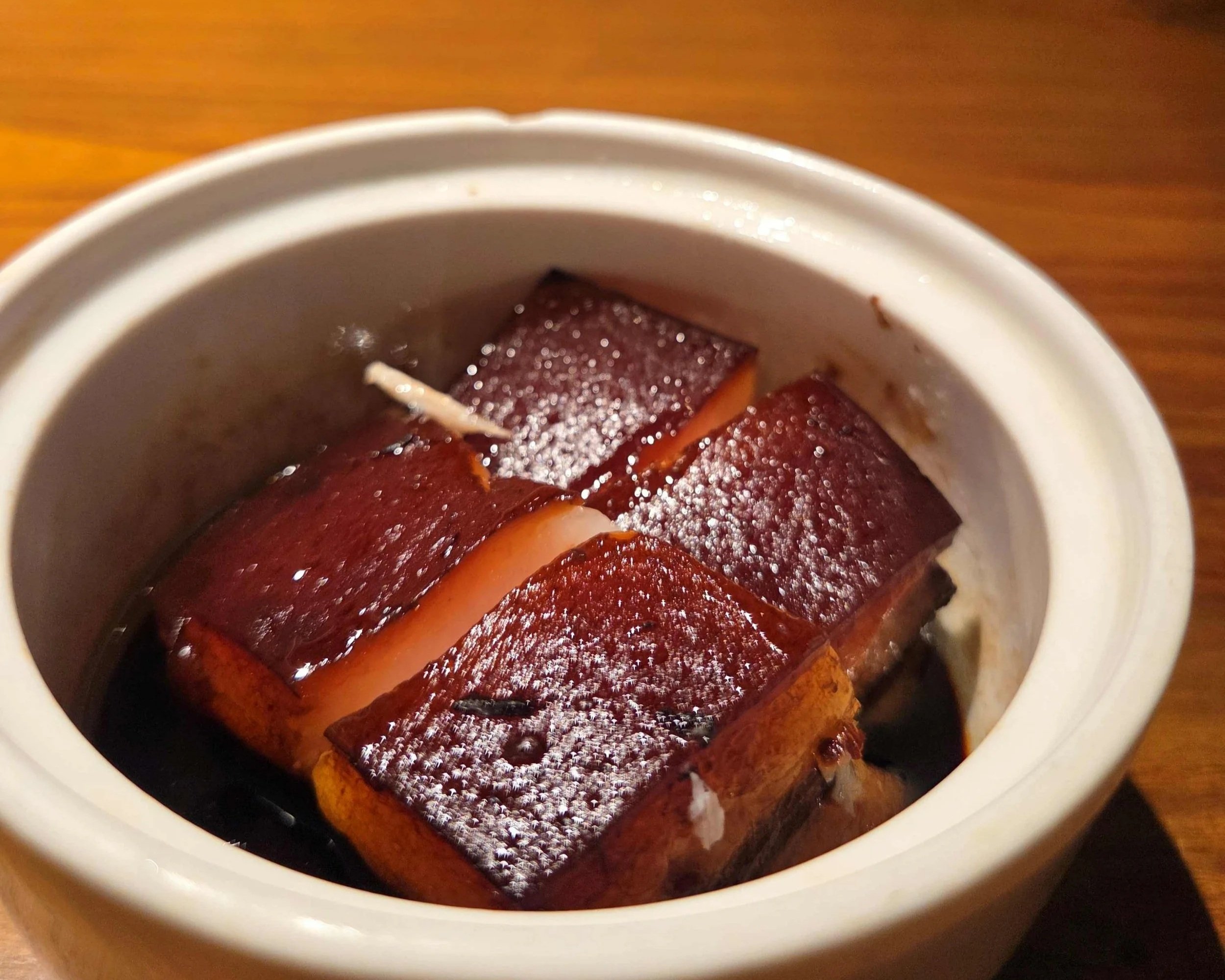
Pork fat is a hard sell in the West, and I used to feel that way about it. A lot of the time, I still do, to be honest. I was kind of grossed out by it, right up until my first Dongpo pork (东坡肉, dong po rou). It was like butter. The fat was so melty and rich, it balanced perfectly with the meat, and the sauce was incredible. The dish is most associated with Hangzhou and named after the Song dynasty poet Su Dongpo. It’s a dish of pork belly braised slowly in soy sauce and Shaoxing wine until it barely holds together. Portions are small, often a single piece or just a few bites, so you never end up with too much grease and a heavy stomach. Qunle, a classic Hangzhou restaurant far from the crowds of the West Lake, does an excellent version.
Then there's red braised pork (红烧肉, hong shao rou), which was Mao Zedong's favourite dish and is a staple on menus all over the country. Some versions are fattier and some are leaner, but it's the classic fatty pork dish of China. It's less refined than dong po rou, and not every version is great, but plenty of them are very good.
Stinky tofu
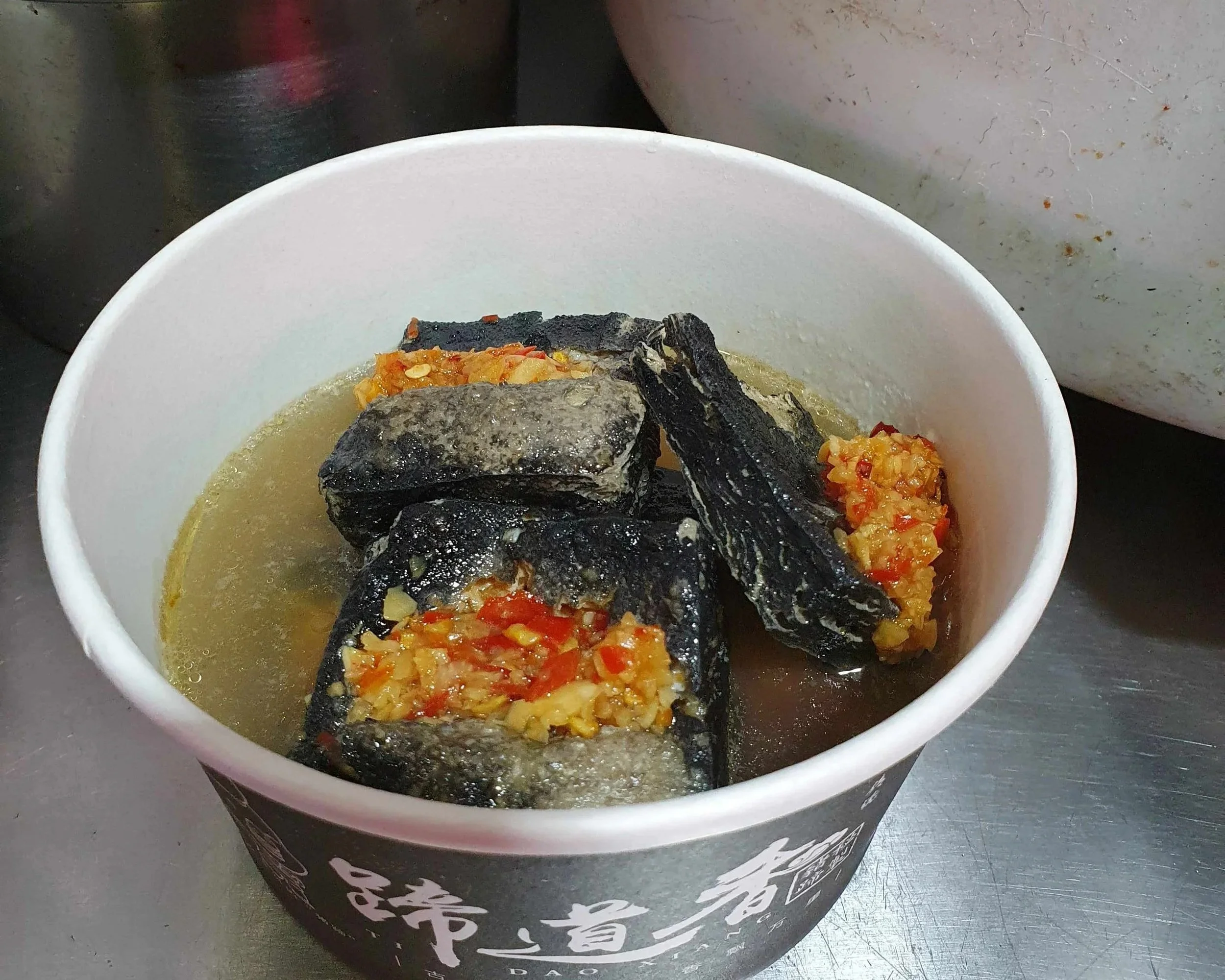
Stinky tofu (臭豆腐, chou dou fu) is the one where you smell the stall before you see it, and I've had some very bad ones. I’ve also had some amazing ones. Everything comes down to the fry. A good one has a crisp shell and a soft centre, and once the sauces go on top it all balances out. The smell is much stronger than the flavour, which ends up fairly mild and a bit funky, like a funky cheese. Changsha is famous for its black, deep-fried version, and Shanghai has its own street-stall tradition. My first stinky tofu was at a street stall in Qibao, the water town outside Shanghai, when I was a student in 2005. This was before the subway opened, so it meant an hour on a bus from downtown. Now it’s just a short subway ride from the city centre. The tofu came topped with chilli, garlic, pickles, a sweet fermented bean paste and coriander, and it's still the version I judge all the others against. If you’re headed to Shanghai and want to try it, read about where in our Shanghai neighbourhood guide.
Duck neck
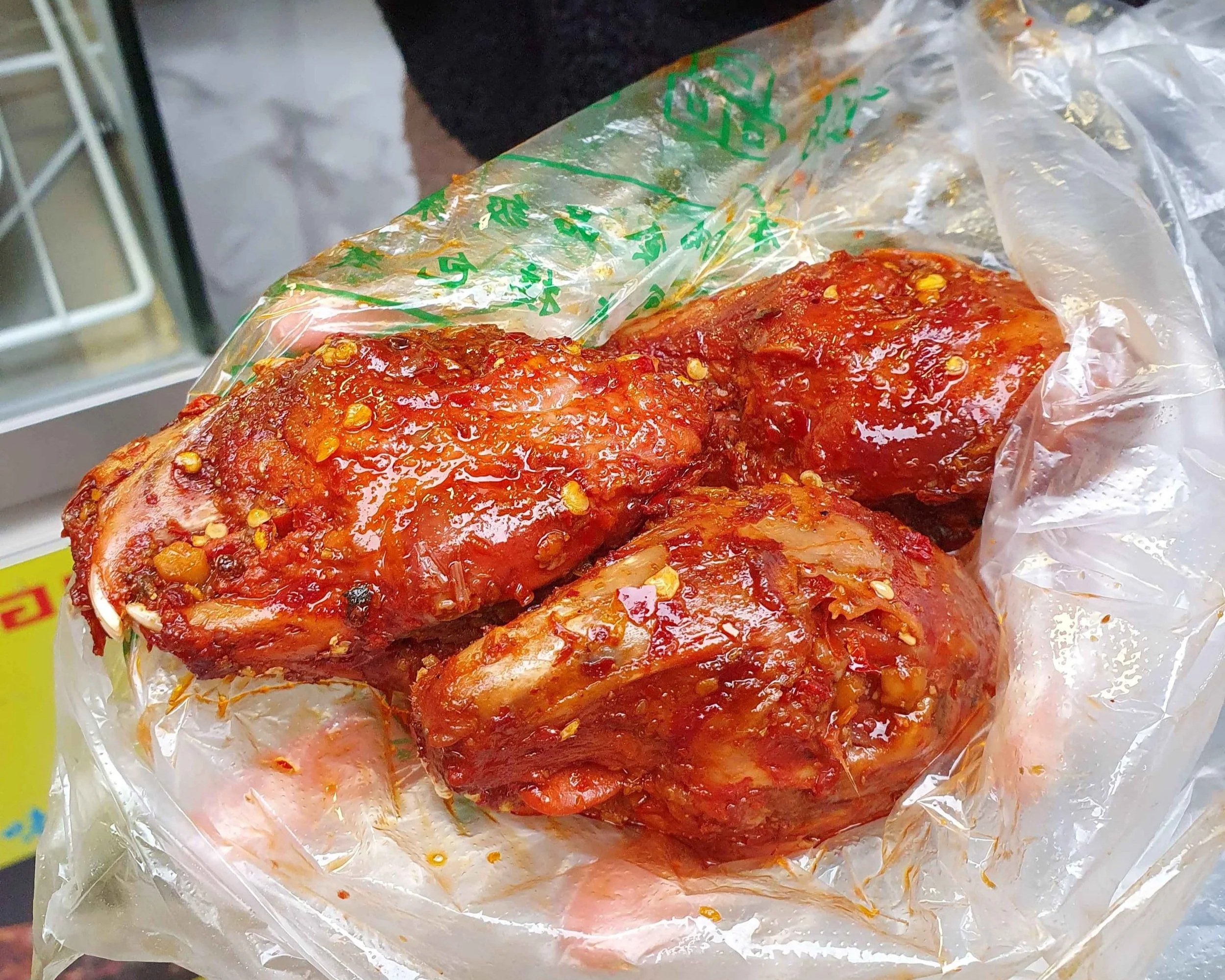
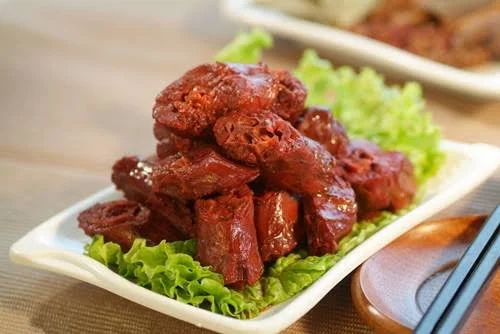
Duck neck (鸭脖, ya bo) is sold by weight and in vacuum-sealed packs at shops all over China, with Wuhan as its spiritual home. The necks are braised in a spiced, chilli-heavy brine, and you eat them by gnawing slowly around the small bones. There isn't much meat, so it's a snack that keeps your hands busy, and it goes very well with a cold beer.
Fish mint root in Yunnan
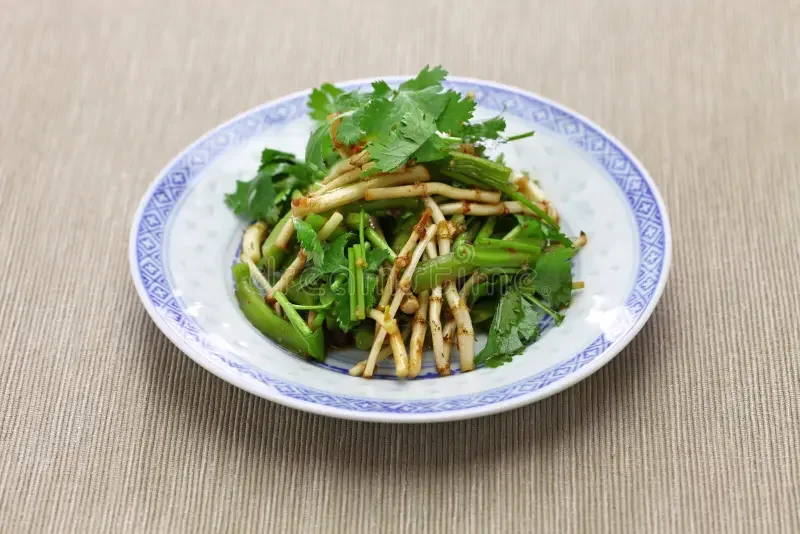
I first came across fish mint root (折耳根, zhe'er gen) in Yunnan. It's the southwest's most divisive vegetable, and locals joke that if you don't love it, you can't really call yourself from there. It's often served cold and crunchy, tossed in chilli oil, soy and vinegar, but it also turns up as a small addition in other dishes. Every so often you get a bite that's bitter, sharp and kind of fishy, and that's the zhe'er gen. Even dishes that you’re used to from other parts of China, like the typical wood-ear mushroom salad most restaurants serve, throw fish mint root in when you’re down in the southwest. It takes some time, but it grows on you, and it adds a lot of depth to otherwise very standard dishes.
Chicken feet in Guangdong
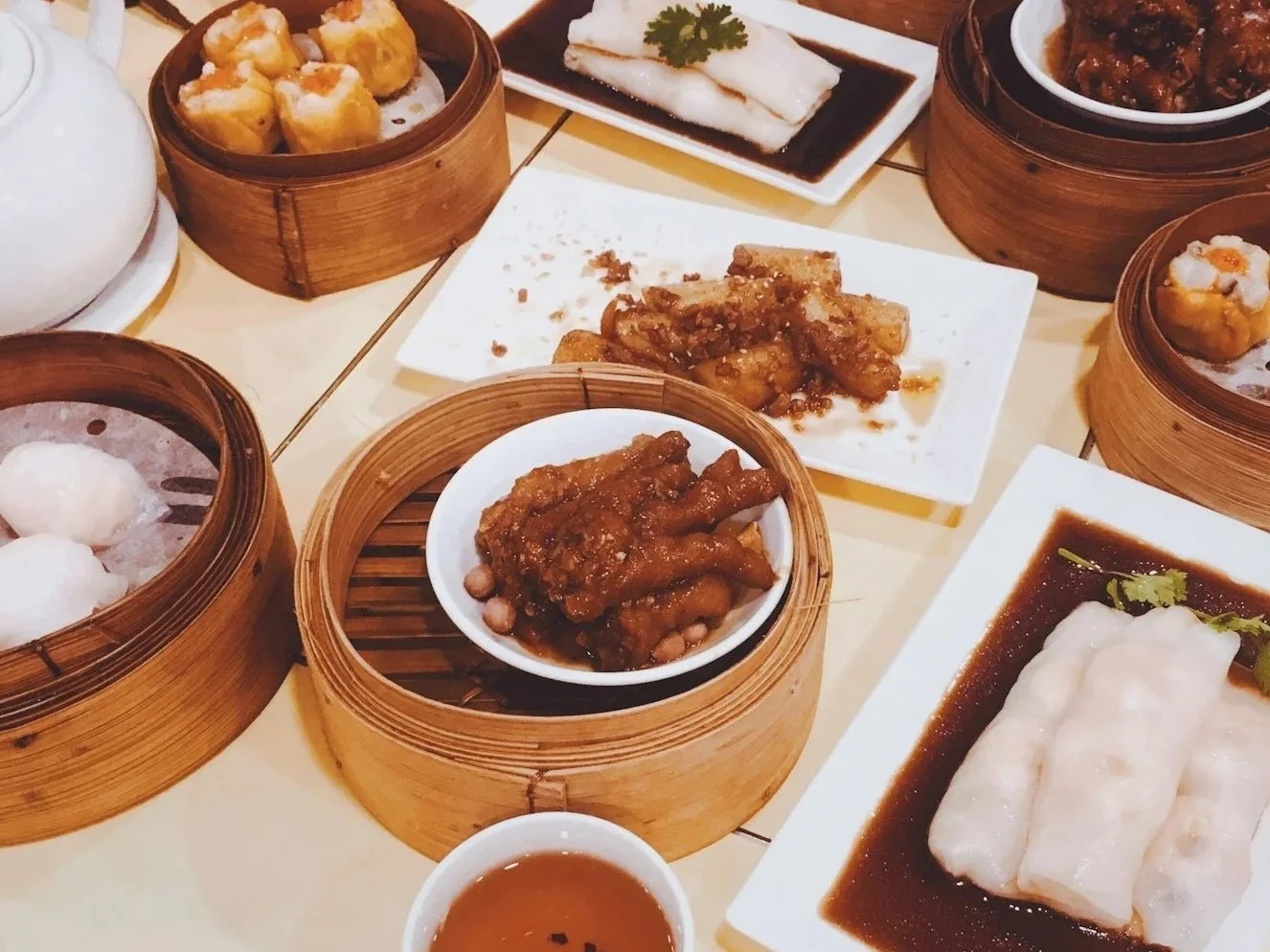
You'll find chicken feet (凤爪, feng zhua) everywhere in China, and not only on menus. They're sold vacuum sealed in convenience stores and supermarkets, braised, marinated or pickled with chilli. I'm picky about them, though, and I leave most of those versions to other people. The one I recommend is the Cantonese dim sum version that you find all over Guangdong. Here, it’s known as phoenix claws, and the feet are fried then steamed until the skin turns soft and sticky in a black bean and chilli sauce. It's all texture, and the bones slide out cleanly. They're also prized for their collagen, which many people in China believe is good for your skin and joints, a large part of why they’re so popular.
Blood
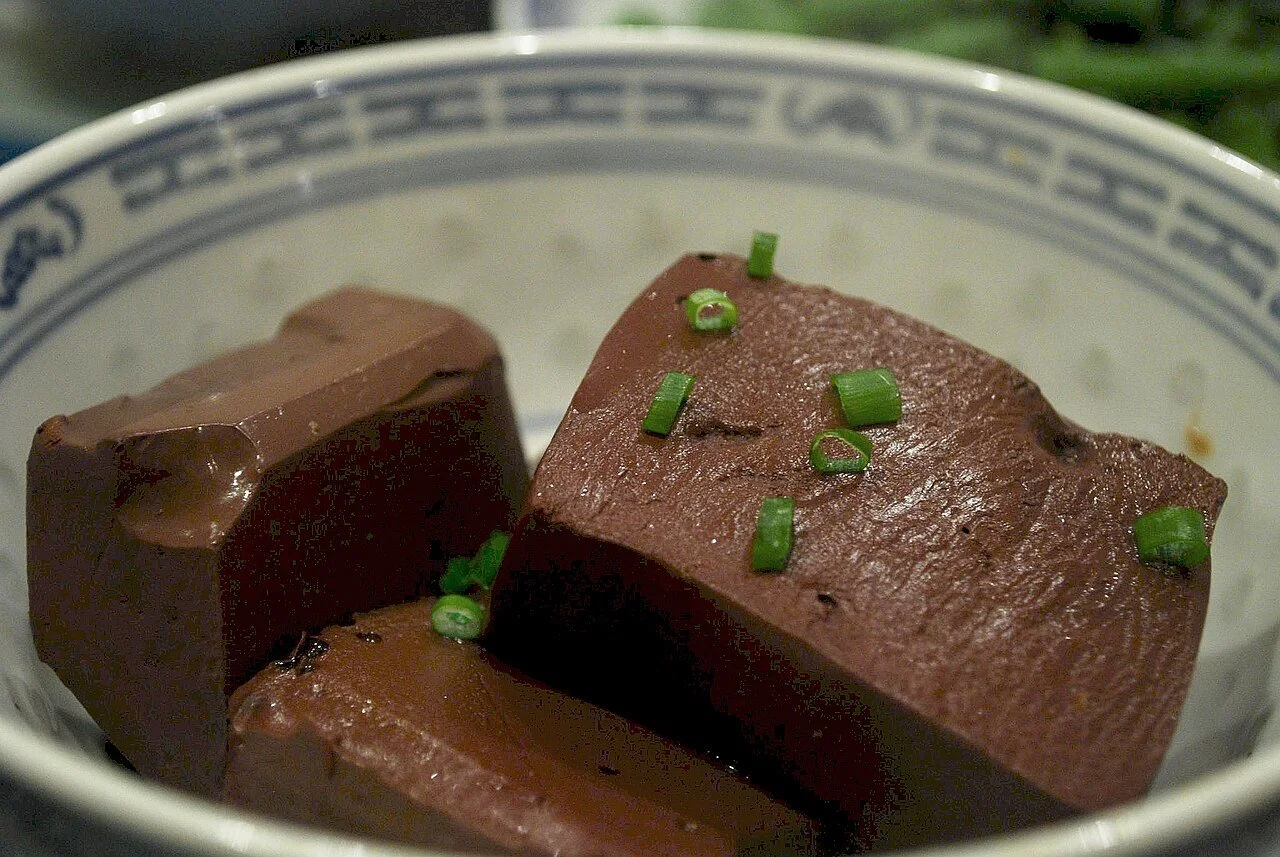
Duck or pig blood, set into silky cubes (血旺, xue wang), is a staple of Sichuan and Chongqing hotpot, and our Chongqing city guide will tell you exactly where to find it. But it shows up all over the country, including plenty of places in the north. You'll find it in soups, in noodles, in mala tang and in mala xiangguo. It sounds like the hardest thing on this list to get past, but it's closer to firm tofu than anything you'd associate with blood. It tastes mild and a little minerally, not like blood at all, and the flavour comes more from soaking up the broth or chilli that it's served in. Texture is another big part of the appeal on this one. But it’s valued for more than just texture and flavour. In China, blood is traditionally eaten to replenish your own blood, and it does contain iron the body absorbs well. Plenty of people also credit it with cleansing the lungs, though nutritionists say there’s no evidence for that.
Most of this is far less intimidating in the mouth than it is on the plate. Start with whichever dish worries you least, and when a local suggests something you hadn't planned on, say yes. That's how a no thank you in Hunan turned into a lunch we went back for the next day. There's a lot we haven't covered, and we'd rather tell you about the things we love than tick off every strange food in the country. If you'd like to eat your way through China with someone who can do the ordering, that's what our China tours are for. And if you've tried any of these, or you have a weird favourite of your own, we'd love to hear about it.
Frequently Asked Questions
-
Donkey burgers in Beijing, spicy rabbit head in Chengdu, luosifen snail noodles from Liuzhou, stinky tofu, Dongpo pork, duck neck, chicken feet at dim sum and blood tofu are among the unusual Chinese foods most worth trying. All are everyday foods for people who grew up eating them. Fermented bamboo shoots in Yunnan and fish mint root in the southwest are also worth seeking out.
-
Stinky tofu and luosifen are two of the best known. Stinky tofu gets its smell from the fermented brine it is soaked in, and luosifen from the fermented sour bamboo shoots in its broth. Both taste milder and more complex than they smell.
-
Stinky tofu tastes mild and slightly funky, similar to a strong cheese, even though it smells much stronger than it tastes. It is usually deep-fried so the outside is crisp and the centre soft, then topped with chilli, garlic and sweet bean paste. Changsha is known for a black, deep-fried version, and the water town of Qibao in Shanghai is a popular place to try it.
-
A donkey burger (驴肉火烧, lü rou huo shao) is braised donkey meat chopped and stuffed into a baked flatbread. It comes from Hebei, around Baoding and Hejian, and is now a staple in Beijing. The meat is savoury and slightly gamey, often compared to pastrami, and the bread is crisp outside and soft inside.
-
Rabbit head is eaten by hand, usually with disposable gloves. Pull the jaw apart and eat the cheek meat first, then pull out and eat the tongue, pop out and eat the eye, pull off the skull and eat the brain. It is braised in spicy, numbing mala seasoning and is a popular snack in Chengdu with beer.
-
Blood tofu (血旺, xue wang) is duck or pig blood set into soft cubes, common in hotpot, noodles and soups across China. It tastes mild and slightly mineral, and the texture is closer to firm tofu. It contains iron the body absorbs well, but the popular belief that it cleans the lungs has no scientific support.
-
Chicken feet (凤爪, feng zhua) are eaten for their gelatinous, collagen-rich texture rather than for meat. The Cantonese dim sum version, known as phoenix claws, is fried, then steamed in a black bean and chilli sauce. They are also sold vacuum-packed in convenience stores and supermarkets across China.