
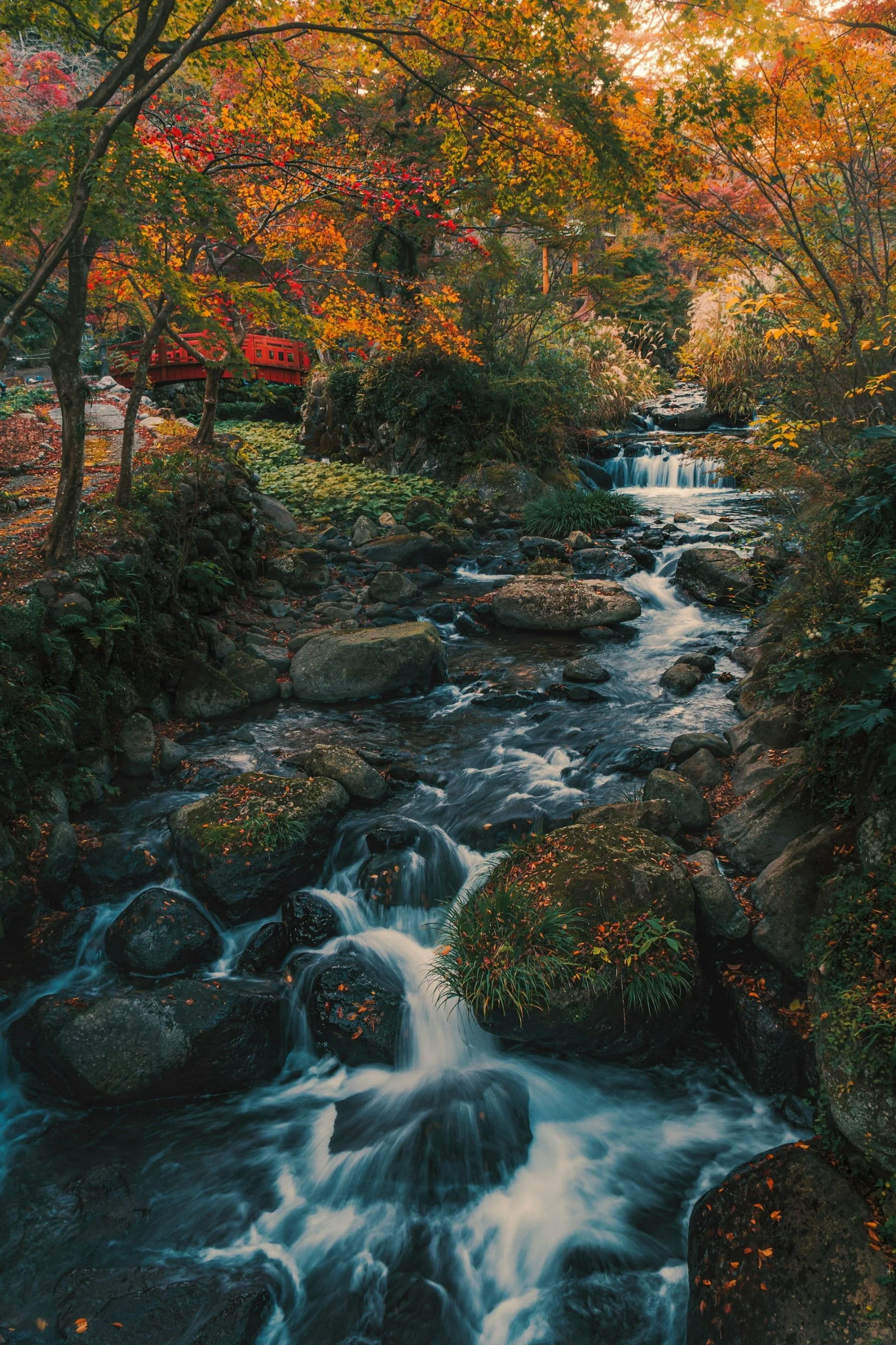
Autumn is my favourite season in Japan, and it begins with a small obsession. As soon as the heat of summer starts to lift, I'm watching the mountains for the first patch of colour. Autumn leaves in Japan start turning in early September on Hokkaido's high slopes and reach Tokyo, Kyoto and Osaka from late November into early December. One tree turning orange on a hillside is enough to send me out the door, and plenty of people in Japan do the same, driving deep into the hills to be the first to spot it.
Chasing autumn leaves in Japan has its own word, momijigari (紅葉狩り), which translates as leaf hunting. It's an excuse to hike, to take the long way somewhere, and to get outside in the first cool weather after months of heat and humidity.
If you've read our guide to cherry blossoms in Japan without the crowds, you'll know that sakura moves from south to north over almost four months. Autumn leaves, known as koyo (紅葉), run the other way, starting up north in Hokkaido as early as September, works its way down through Tohoku and the Alps in October, and reaches the lowlands and the big cities in late November and early December. That's a window of about three months, which means you don't have to build a trip around one weekend in Kyoto.
This guide has two halves. The first covers places worth building a stop around, from Hokkaido down to Kyushu. The second is for anyone staying in Tokyo, Kyoto or Osaka who wants a day among the leaves without planning a whole trip.
Where to Chase the Colour Across Japan
These are ordered the way the colour travels, from north to south.
Hokkaido: Daisetsuzan, Sounkyo and Lake Shikotsu
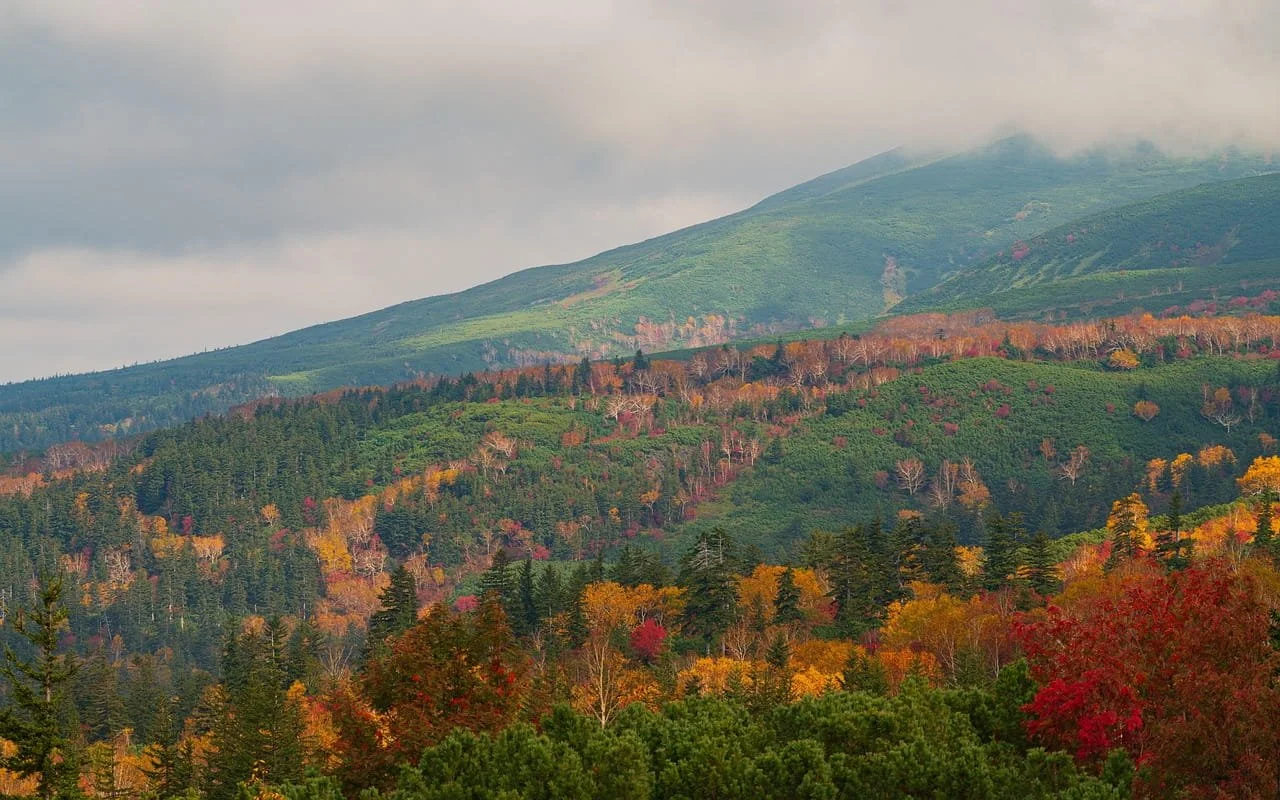
Hokkaido gets the first colour in Japan. It begins in early September on the high slopes of Daisetsuzan, where stone birch turns yellow and rowan goes red, and you don't need to be a mountaineer to see it. From the onsen town of Sounkyo, the Kurodake Ropeway lifts you to the fifth station in about seven minutes, with the autumn forest spread out under the gondola. By early to mid October the colour has made it down to the gorge itself, where cliffs of columnar rock rise over the river and the maples of Momijidani are a fifteen minute walk from the hot spring streets. The river through the gorge is the Ishikari, which shares its name with ishikari nabe (石狩鍋), the salmon hot pot Hokkaido cooks when the fish return in autumn.
Closer to Sapporo, Lake Shikotsu has one of my favourite onsen in Japan. Marukoma Onsen, the one in our onsen guide, has an outdoor bath right on the shore, close enough to the edge that you can almost dangle your feet over the lake, with the mountains ringing the far side. It takes a bit of effort to reach and it's totally worth it. The lake is the northernmost in Japan that never freezes over, and it's clear enough that the maples and lindens along the shore reflect almost perfectly when the colour peaks in the second half of October, with Eniwa-dake and Fuppushi-dake facing each other across the water. The town of Shikotsu is about 45 minutes by bus from Chitose Station.
Tohoku: Oirase, Naruko and Kitakata
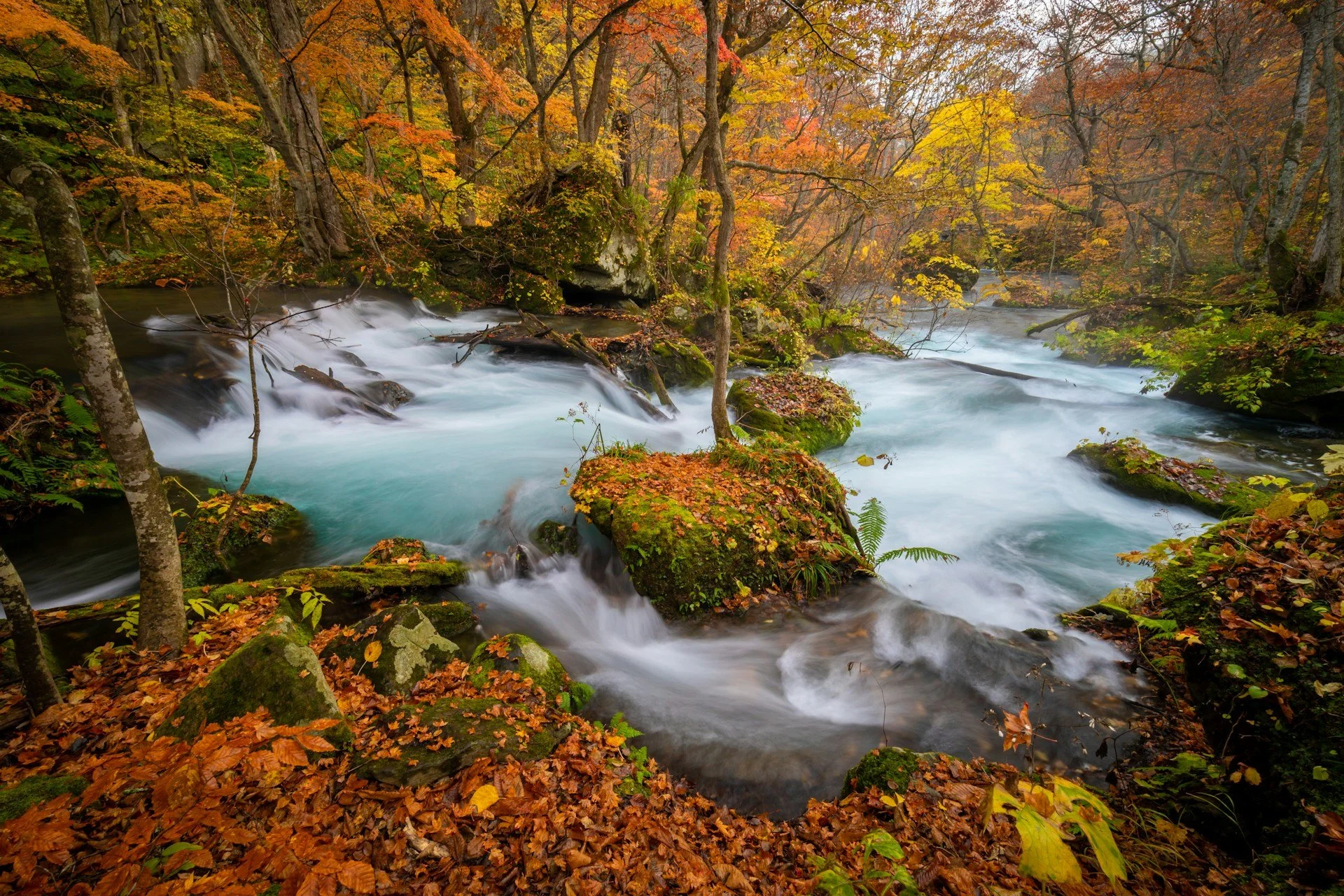
Tohoku has some of the most famous autumn gorges in the country. Oirase Stream in Aomori is the big name, 14 kilometres of river running from Lake Towada through beech forest, flat and easy enough that most people can walk the full length in about four hours. The colour peaks in the second half of October and the path gets busy, so here are some quieter alternatives. Naruko Gorge in Miyagi has cliffs about 100 metres high, and trains crossing the railway bridge slow down in leaf season so passengers can look out. In Iwate, Genbikei near Ichinoseki has a gorge of strange rock and emerald water, and a local speciality called flying dango (空飛ぶだんご), where the dango arrive from the shop on the opposite bank in a basket that slides along a rope, until around the end of November. Aomori's Nanbu region is also home to senbei-jiru (せんべい汁), a hot soy broth with vegetables and meat or fish, with chewy Nanbu crackers cooked into it.
Then there are two corners of Fukushima that I know through living in Japan back in 2007. I lived in Iwaki, on the Pacific coast, and its best autumn spot is Shiramizu Amidado, the only National Treasure building in Fukushima, where the Pure Land garden has a pond in which the ginkgo and maples reflect in early to mid November. A little further inland, the Natsui River Gorge is a rocky stream that you can also see from the window of the Ban'etsu East Line.
On the other side of Fukushima is Kitakata, where Beth lived. It's a town best known for ramen, and it has the autumn spot I'd take anyone to. Shinguu Kumano Shrine has a ginkgo said to be about 800 years old and 30 metres tall, growing in front of a hall with 44 pillars, a thatched roof, and no walls or doors. You take your shoes off and sit inside while the leaves come down in front of you. The peak runs from mid to late November, with night illuminations at the same time, and afterwards you can do what Kitakata does best and eat a bowl of ramen. Kitakata ramen is counted among Japan's big three, alongside Sapporo and Hakata, with flat, curly, chewy noodles in a clear soy sauce broth and a generous layer of tender chashu pork on top. This small town has more than 100 ramen shops, a ramen shrine, and even ramen ice cream.
Chubu: Atera Valley and the Kurobe Gorge Railway
Most people heading to Nagano's famous spots go for Narai-juku or Kamikochi, and both are stunning desitnations that deserve the visit. But if you want to avoid the crowds, Atera Valley is my pick. The river runs for about 15 kilometres through the forest in a shade of emerald known as Atera blue, and a short walking path follows it past pools like Tanuki-ga-fuchi, where foxes and tanuki are said to have used the water as a mirror to check their disguises. I visited outside autumn and it was some of the clearest water I've ever seen, with no tourists at all, even with Narai-juku and Kamikochi drawing the crowds nearby. The colour usually runs from mid October to mid November.
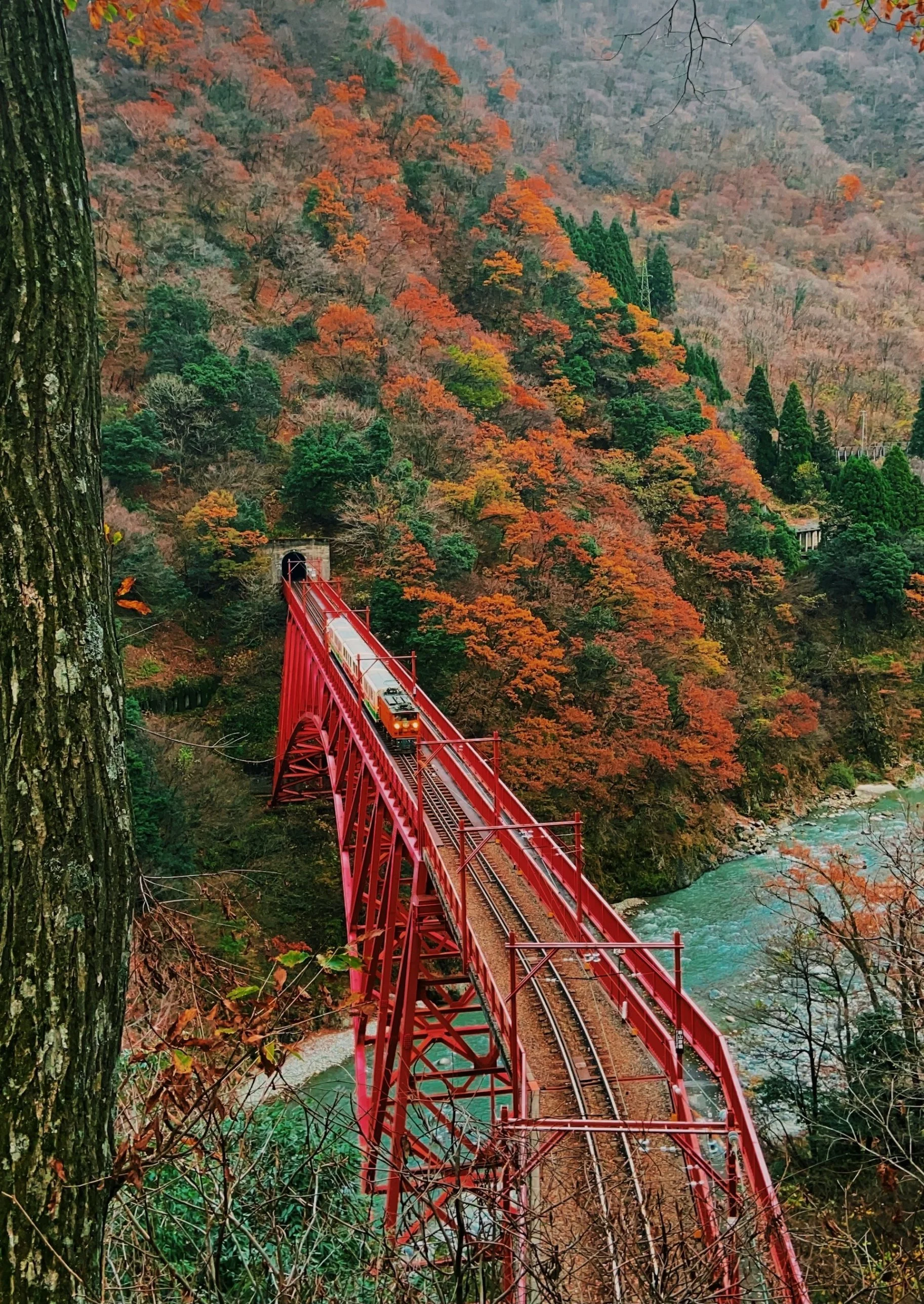
In Toyama, a ride on the Kurobe Gorge Railway takes you through Japan's deepest V-shaped gorge. The little trolley train runs from the hot spring town of Unazuki to Nekomata, and the gorge walls turn red and yellow from mid October to mid November above the Kurobe River. Autumn is its busiest season, so booking ahead is sensible. Toyama's signature dish is masu-zushi (ますの寿司), trout pressed onto vinegared rice.
Shikoku: Omogo Gorge and Shodoshima
Iya Valley in Tokushima draws the crowds with its vine bridges and steep gorge walls. Omogo Gorge in Ehime is a quieter alternative on the southern side of Mt Ishizuchi, the highest peak in western Japan. A path follows the river over white granite riverbeds, and the water is clear enough that you can see the bottom from the walkway. The colour peaks from late October to early November, and the road in is nicknamed the Momiji Line. Right beside Goshiki Bridge, Seiryu Omogo (清流 面河) is a simple noodle shack on the riverside serving udon with views of the gorge.
Out in the Seto Inland Sea, Kankakei on Shodoshima is counted among Japan's three great gorges. It's a volcanic landscape from about 13 million years ago, with more than 50 kinds of plants turning colour, and the ropeway to the summit takes under five minutes. The colour usually peaks around mid November, and it can still be green at the base while the summit station is already turning. Shodoshima is also where the Olive Beef in our guide to wagyu beyond Kobe comes from, raised on toasted olive pulp left over from the island's olive oil production, so a day on the mountain can end with an Olive Beef burger at Komame Shokudo (こまめ食堂) above the Nakayama rice terraces, or the roast beef set at FARM'S TABLE Chuzaemon (忠左衛門).
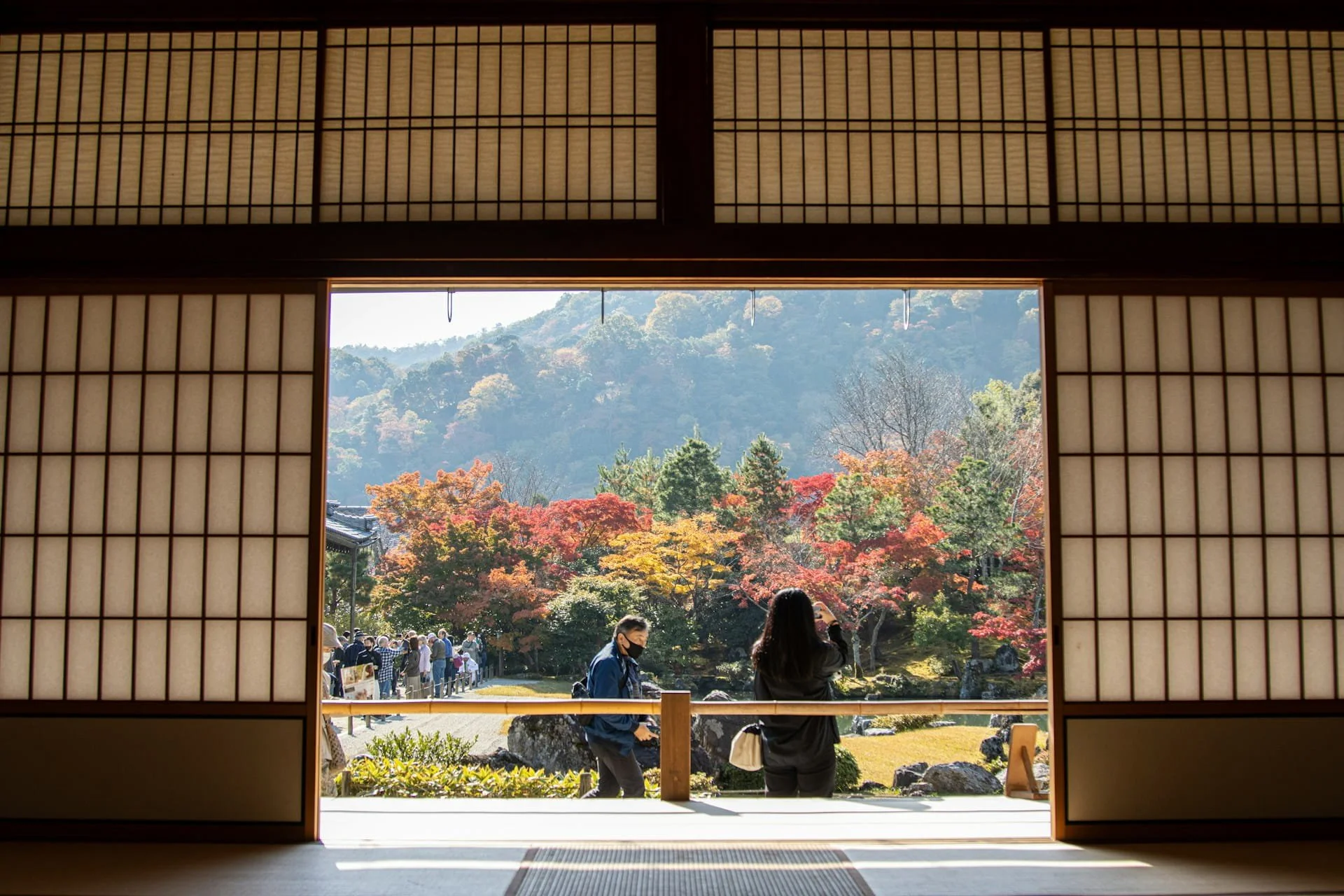
Kyushu: Kaeda Valley and Kikuchi Gorge
Takachiho Gorge in Miyazaki is the picture-perfect postcard destination, with basalt cliffs and rowboats drifting beneath a waterfall. But to do anything here, you need to fight crowds and book your rowboat far in advance. Kaeda Valley is a quieter place to walk. It's an eight kilometre trail along a river near Miyazaki city, easy to get to and quiet enough that you don't need to plan around it. We found it through the couple who run SALVAGE+, a cosy, homely pizza and pasta place in the city, where the pastas lean on Miyazaki chicken and the cakes are baked in house. They moved from Nagano to live closer to nature, and they told us Kaeda Valley is where all the locals go to get into nature. The water is stunningly clear, and the colour usually peaks in early November. We weren't there in autumn, so I can't tell you what the leaves look like, but I'd send anyone to that water. For something more Japanese afterwards, chicken nanban (チキン南蛮) is Miyazaki's most famous dish, born in Nobeoka, with fried chicken dunked in a sweet vinegar sauce and topped with tartar sauce. It sounds weird. It is kind of weird. But it's also kind of amazing.
In Kumamoto, Kikuchi Gorge has a spot named Momijigase, which means maple shallows. Maples grow on both banks and lean out over fast water, and when the leaves fall they sometimes cover the surface like a carpet. It sits on the shorter of the gorge's two walking paths, in a shaded, mossy section. Kumamoto's dagojiru (だご汁), a hot soup with dumplings made from kneaded flour, is home cooking that suits a cool day in the trees.
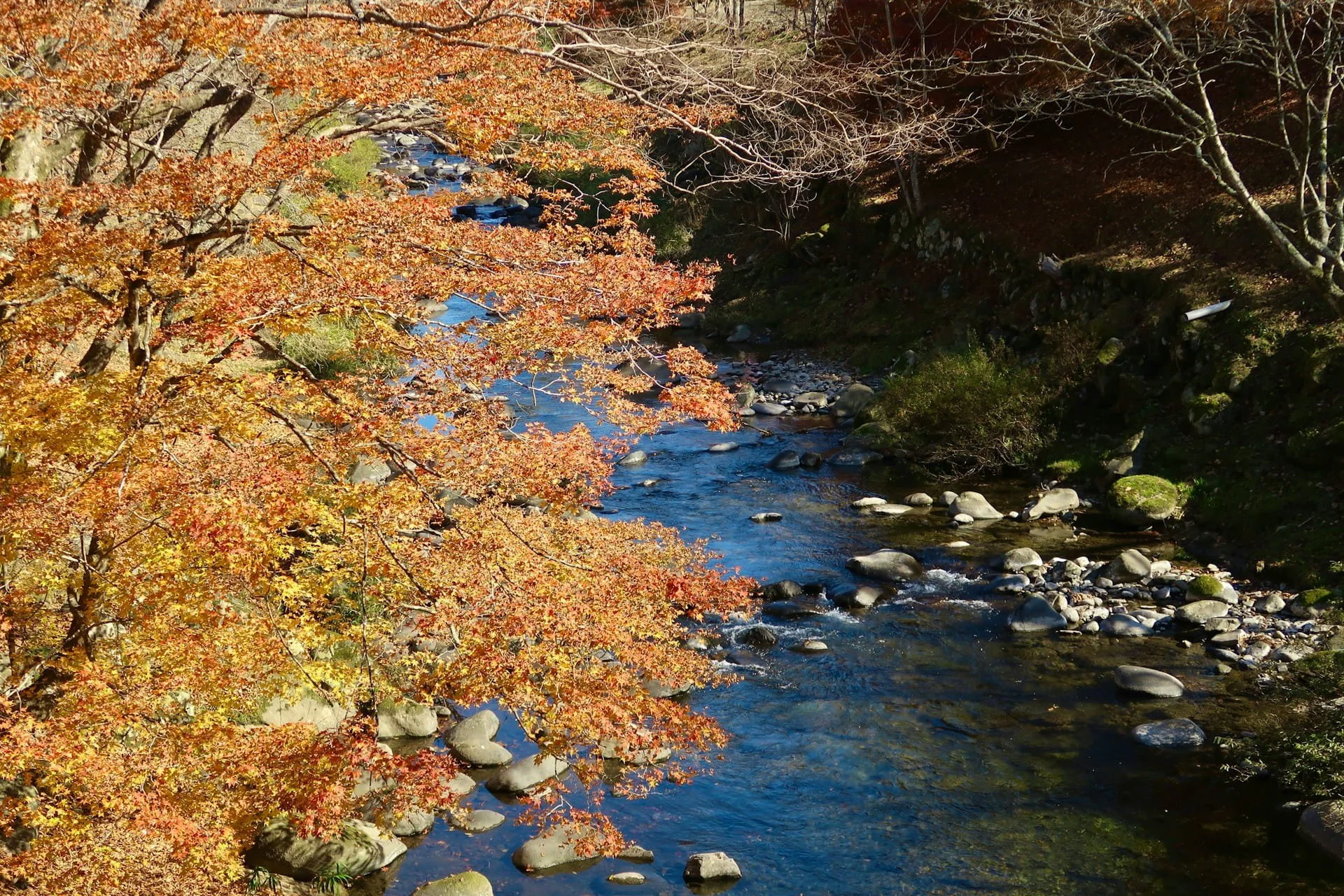
Autumn Leaves Near Tokyo, Kyoto and Osaka
You can stay on the golden route and still spend a day among the leaves. Each of these is a day trip or a long afternoon, reachable by train from the city.
Autumn Leaves Near Tokyo
Rikugien is the one you can reach without leaving the city, a couple of minutes from Komagome Station. The strolling garden dates to 1695, and its 560 or so maples, ginkgo and other trees turn from mid November to early December. The evening illuminations run from late November into December, and the teahouse by the pond, Fukiage Chaya (吹上茶屋), serves matcha with a set of wagashi.
For something that feels like leaving the city, Mt Takao and Hatonosu Gorge both lie west of Shinjuku, and how far you go depends on how much time you have. Takao is the close one, about 50 minutes on the Keio Line, a 599 metre mountain with a cable car and trails through maples and beech, and peak colour from mid November to early December. The slopes are known for tororo soba (とろろそば), soba with grated mountain yam. Hatonosu is further, under two hours from Shinjuku on the JR Ome Line, where the Tama River runs between boulders under 40 metre cliffs and a suspension bridge crosses the gorge. The colour comes a little earlier, from early to late November. Hatonosu-so (奥多摩の風 はとのす荘) offers day baths with an outdoor bath that looks down on the gorge, and lunch built around local produce.
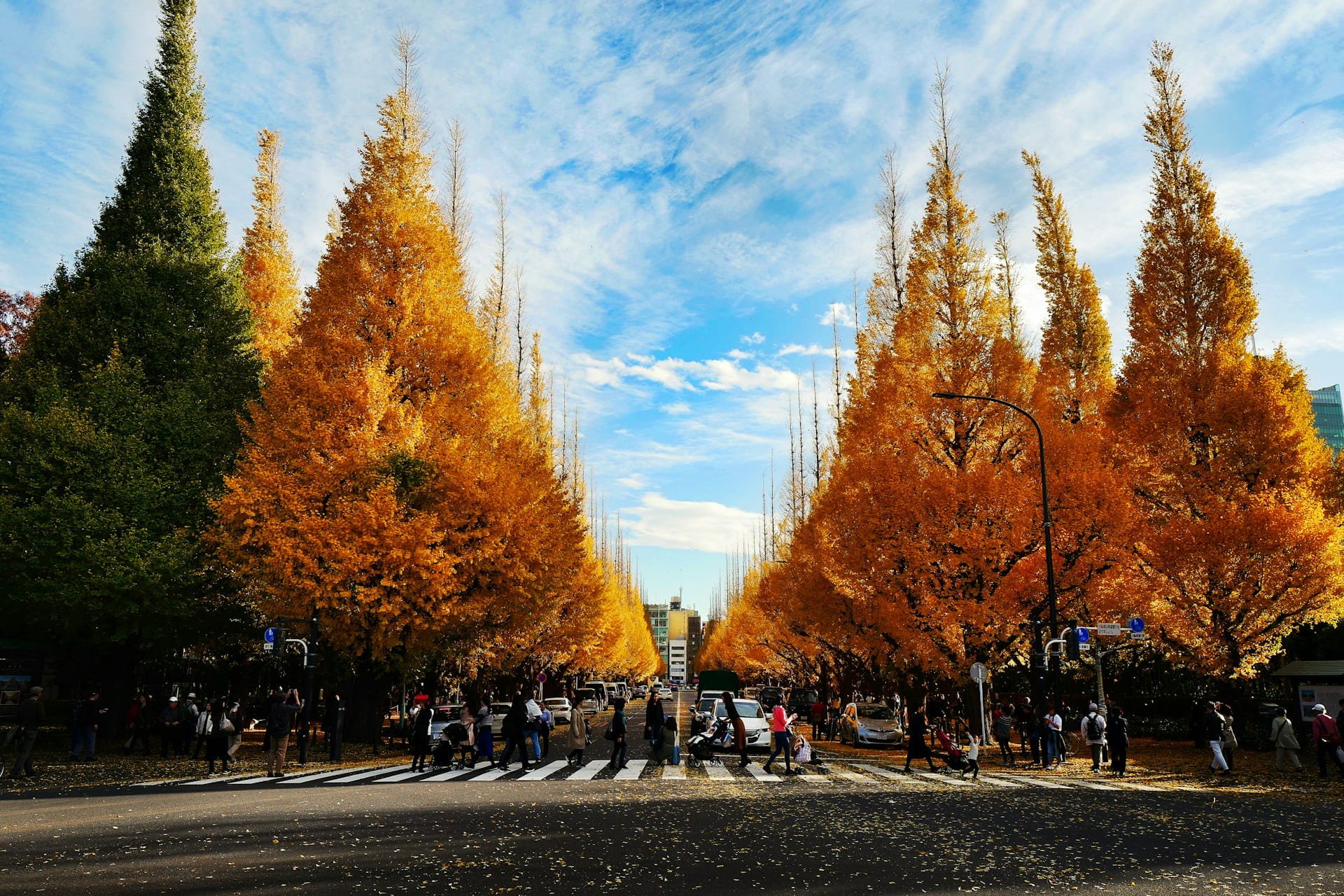
Autumn Leaves Near Kyoto
You can still see classic Kyoto temples and gardens, just not the ones everyone has on their list. Shisen-do in Ichijoji, Jissoin in Iwakura and Bishamondo in Yamashina all sit outside the tourist centre. Shisen-do is an Edo-period retreat whose garden is framed by the veranda like a painting. Jissoin has a polished black floor in the Taki-no-ma room that reflects the maples, a view called yuka-momiji (床もみじ), and photography is not allowed. Bishamondo is a monzeki temple, historically headed by members of the imperial family, with a stone stairway to its gate lined with maples, and sliding door paintings nicknamed moving fusuma. The colour arrives from mid November, and Ichijoji, where Shisen-do sits, is also Kyoto's ramen district.
For a day out of the city, Kurama and Kibune in the hills to the north make a walk that ends in a hot spring. From Demachiyanagi Station, the Eizan Electric Railway takes about 30 minutes, and between Ichihara and Ninose stations the line runs through a tunnel of maples. A giant tengu statue meets you at Kurama Station. The trail over the mountain to Kibune Shrine is about 2.2 kilometres and takes around an hour and 40 minutes, with the colour peaking from mid to late November. Walking it from Kibune towards Kurama ends close to Kurama Onsen, a sulphur spring with an outdoor bath that looks out over the mountain.
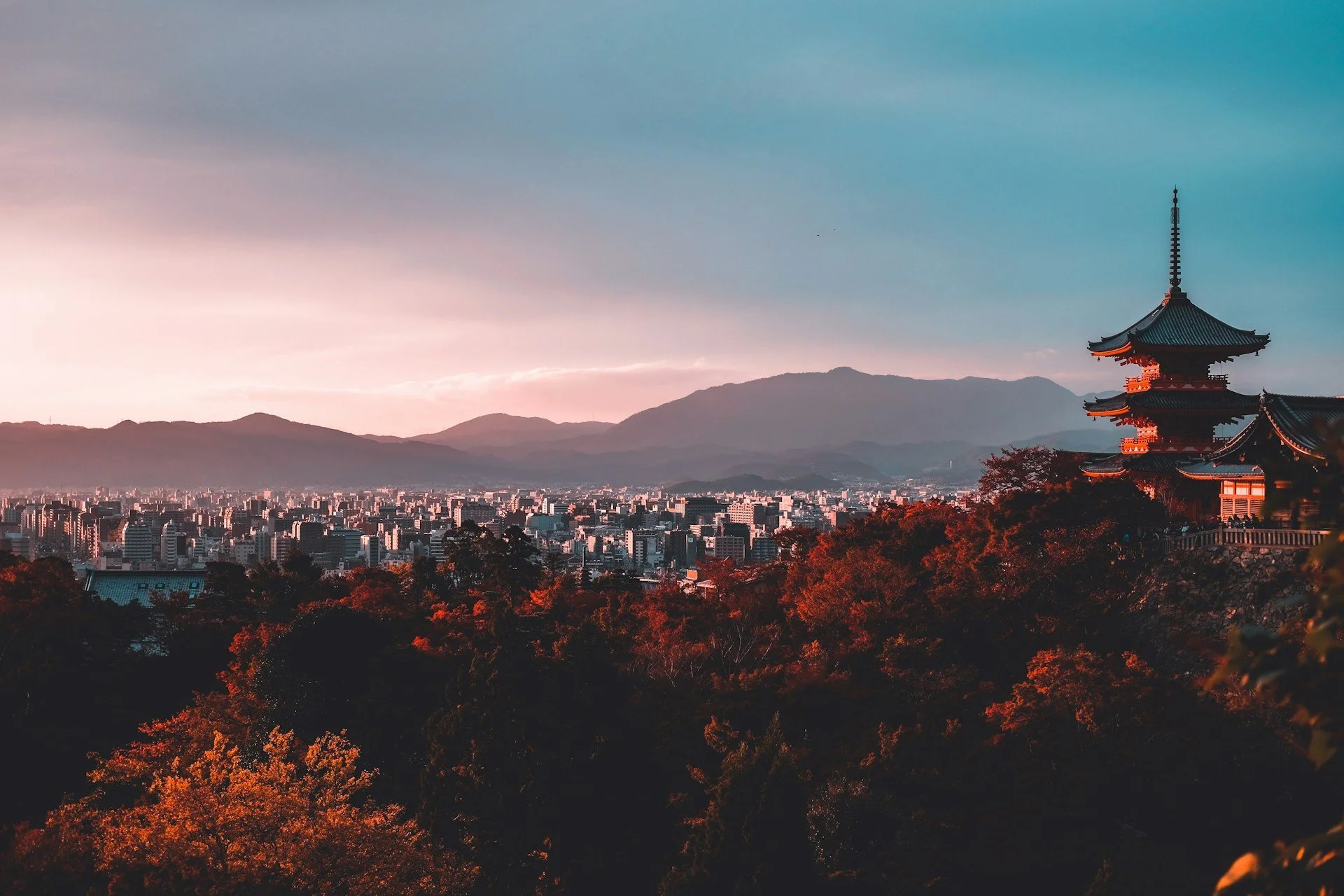
Autumn Leaves Near Osaka
Minoh is the Osaka classic, about 22 to 24 minutes from Umeda on the fastest Hankyu train. The walk up the river to the 33 metre Minoh Falls takes around 40 minutes and runs under trident, Japanese and mountain maples, with the colour usually peaking from mid November to early December, when parts of the path are lit up in the evenings. Along the way, shops fry maple leaves in a sweet batter to make momiji no tempura (もみじの天ぷら), a crunchy snack that dates back about 1,300 years to the mountain ascetic En no Gyoja, who is said to have fried the leaves to feed visitors. The leaves are a special edible variety, salted for more than a year before frying.
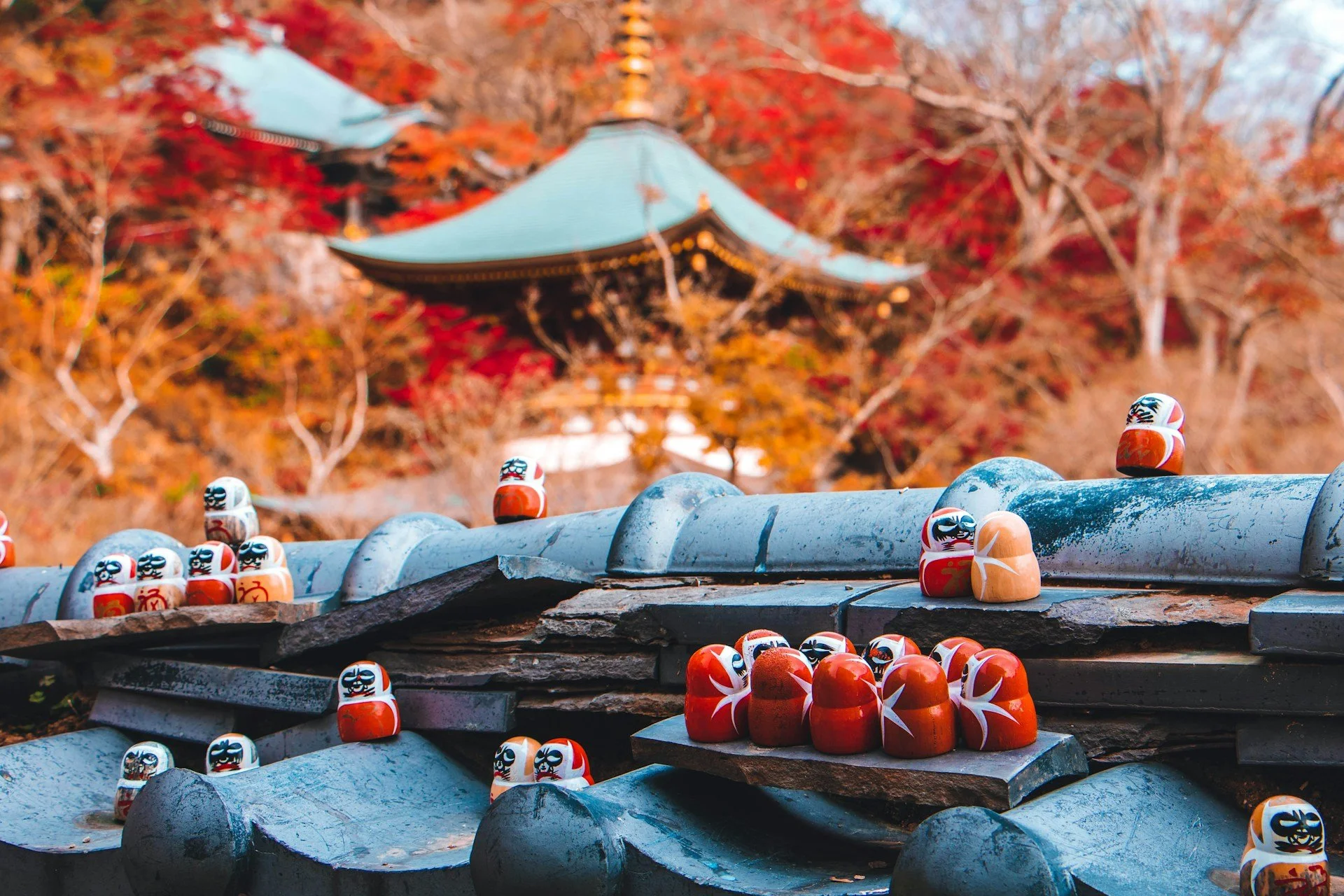
Katsuo-ji (勝尾寺) is a short bus ride from Minoh-Kayano Station, about 20 minutes on the direct Hankyu bus. It's known as the temple of winning, and its grounds are crowded with red kachi-daruma (勝ちダルマ) dolls left by people whose wishes came true, set among maples across roughly 26 hectares. The colour peaks from mid November to early December, and on weekends and holidays in November the temple is lit up in the evening.
Daisen Park in Sakai is the quieter option, sitting between two enormous keyhole-shaped tombs, including the Nintoku Tomb, counted among the world's three great tombs. The ginkgo avenue at the north entrance turns gold in late November, and the Japanese garden inside is lit in the evenings in autumn. It's a short walk from Mozu Station and combines well with a knife trip. When I took chef clients to Sakai, we visited the workshop of a fifth-generation bladesmith and went knife shopping at the Sakai City Traditional Crafts Museum. Our Japanese knife pilgrimage guide covers the whole day, and the leaves make a good excuse for a walk afterwards.
When Is the Best Time to See Autumn Leaves in Japan?
Autumn leaves in Japan peak at different times depending on altitude and latitude. The colour starts in early September on Hokkaido's mountains, reaches Tohoku and the Japanese Alps in October, and arrives in Tokyo, Kyoto and Osaka from mid November to early December.
| Area | Where to go | Typical peak |
|---|---|---|
| Hokkaido mountains | Daisetsuzan | Early September |
| Hokkaido gorge | Sounkyo | Early to mid October |
| Hokkaido lake | Lake Shikotsu | Second half of October |
| Tohoku | Oirase Stream | Second half of October |
| Chubu | Atera Valley | Mid October to mid November |
| Shikoku | Omogo Gorge | Late October to early November |
| Kyushu | Kaeda Valley | Early November |
| Seto Inland Sea | Shodoshima | Mid November |
| Tokyo, Kyoto and Osaka | Rikugien, Minoh, Kurama | Mid November to early December |
The colour doesn't arrive on a fixed date, so check the forecasts as you go. Weathernews and tenki.jp publish autumn leaf forecasts and photo reports from early September, and your browser can translate them. Altitude matters too. The colour starts on the high ground and works its way down, so a gorge that's still green at the bottom can be at its peak a few hundred metres higher.
Many gardens and temples light up their maples in the evening for a few weeks, usually on set dates. Some, like Katsuo-ji, only do it on weekends and holidays, so check before you go. And plan a hot spring for the end of the day wherever you can. After a morning in cool air, it's the best part.
The Bottom Line
Some years you'll arrive early. Some years you'll arrive late. If you're still hunting after the leaves have dropped, Sakurayama Park in Gunma has about 7,000 winter cherry trees that bloom from mid November to mid December, so you get pink blossom against red and gold leaves, which we covered in our cherry blossom guide.
If you arrive before the colours turn, that shouldn't stop you from visiting any of these places. Even without the autumn leaves, walk the gorge anyway. You'll still get the cool air, the quiet trail and a hot spring afterwards, and you'll know exactly where to come back to once the colour turns.
Autumn Leaves in Japan: Frequently Asked Questions
-
Autumn leaves in Japan peak from early September to early December, moving from north to south and from high ground to low. Hokkaido's mountains turn first in early September, Tohoku and the Japanese Alps follow in October, and Tokyo, Kyoto and Osaka peak from mid November to early December. Weathernews and tenki.jp publish forecasts from early September.
-
Momijigari (紅葉狩り) is the Japanese custom of travelling to see autumn leaves, and it translates literally as leaf hunting. Koyo (紅葉) is the autumn colour itself, the red and gold change in maple, ginkgo and other leaves, and it is a term widely used in English-language guides. People hike, drive into the hills, or visit gardens and temples to see it.
-
Quieter options include Lake Shikotsu in Hokkaido, Atera Valley in Nagano, Omogo Gorge in Ehime and Kaeda Valley near Miyazaki city. In Kyoto, Shisen-do, Jissoin and Bishamondo sit outside the central tourist area. Colour timing differs for each, so check a forecast before choosing dates.
-
Rikugien is a garden a couple of minutes from Komagome Station, with colour from mid November to early December. Mt Takao is about 50 minutes from Shinjuku on the Keio Line, with peak colour from mid November to early December. Hatonosu Gorge is under two hours from Shinjuku on the JR Ome Line, with colour from early to late November.
-
From Kyoto, Kurama and Kibune are about 30 minutes from Demachiyanagi Station on the Eizan Electric Railway, with colour peaking from mid to late November. From Osaka, Minoh is about 22 to 24 minutes from Umeda on the fastest Hankyu train, with a walk of around 40 minutes to the 33 metre Minoh Falls.
-
Yes. Many gardens and temples light their maples for a few weeks, usually from mid November to early December. Rikugien in Tokyo runs evening illuminations from late November, and Katsuo-ji near Osaka lights up on weekends and holidays in November. Dates change each year, so check the venue before visiting.
-
Many gorges, gardens and onsen towns are worth visiting before the peak for the walking, scenery and hot springs. Colour also changes with altitude, so higher spots can be at their peak while lower ones are still green.